No portrait yet
Yeke Erotic
Bunkeya and the surrounding Lufira plains in the former Katanga Province, southeastern Democratic Republic of the Congo, with many now living in Katanga's mining cities
Kiyeke (Bantu, close to Sumbwa and Nyamwezi), now largely ceremonial; daily speech in Kisanga (Bantu, Luba group), Katanga Swahili and French
Predominantly Christian (Catholic and Protestant, including the Brethren-founded Garenganze church), alongside veneration of royal ancestors
A composite people: a Sumbwa Nyamwezi founding core from western Tanzania merged with Sanga, Lamba, Luba and Lunda families of Katanga; part of the wider Bantu-speaking world
About Yeke People
The Yeke, also called Bayeke or Garanganze after the kingdom they built, are one of the few peoples in Central Africa whose beginning can be dated almost to the year. They started as a caravan. Around 1856 a Sumbwa Nyamwezi trader named Msiri, from the Tabora region of what is now western Tanzania, settled in the copper country of Katanga with a following of armed elephant hunters, and the name Yeke is usually traced to that hunters' guild. Within a generation he had turned a trading camp into a state with its capital at Bunkeya, taking tribute from Sanga, Lamba, Luba and Lunda communities and marrying into many of them. His power rested on position. Bunkeya sat where trade routes from both oceans met: copper, ivory, salt and slaves went out to Swahili merchants from the Zanzibar coast and to Ovimbundu caravans bound for Benguela in Angola, and guns and cloth came back. That wealth brought the scramble for Katanga to his door. He turned away a British South Africa Company envoy in 1890, and on December 20, 1891, he was shot dead in a confrontation with the Stairs Expedition, sent in the name of Leopold II's Congo Free State. Yeke oral history holds that the expedition carried off his head, and what became of it has never been settled.
After Msiri
His successor accepted Free State rule and the kingdom shrank to a chieftaincy, but it never disappeared. The ruler still carries the title Mwami Mwenda and still sits at Bunkeya, on the plains near the Lufira River. The best known modern holder was Godefroid Munongo, interior minister of breakaway Katanga in the early 1960s and a name long tied to the killing of Patrice Lumumba, who was enthroned in 1976 and reigned until his death in 1992. The anniversary of Msiri's death is still marked at Bunkeya each December. Language shows how thoroughly the founders were absorbed. Kiyeke, a close relative of Sumbwa, survives mainly in songs, praise names and court ritual, while daily life runs in Kisanga, Katanga Swahili and French. Most Yeke are Christian. The Scottish Brethren missionary Frederick Stanley Arnot reached Bunkeya in 1886, and the church network that grew from his mission still carries the name Garenganze. Catholic parishes are just as present, and respect for the royal ancestors sits alongside both. The Yeke remain a small people with an outsized place in Katangan politics and memory.
Related ethnic groups
Groups that share Yeke's homeland, region, language, or religious tradition. These are likely candidates for comparative phenotype reference.
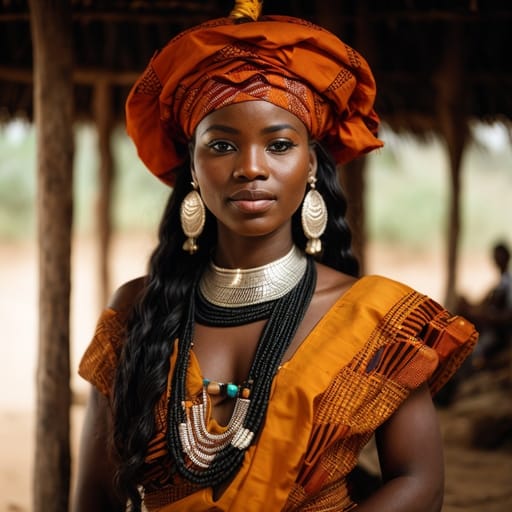
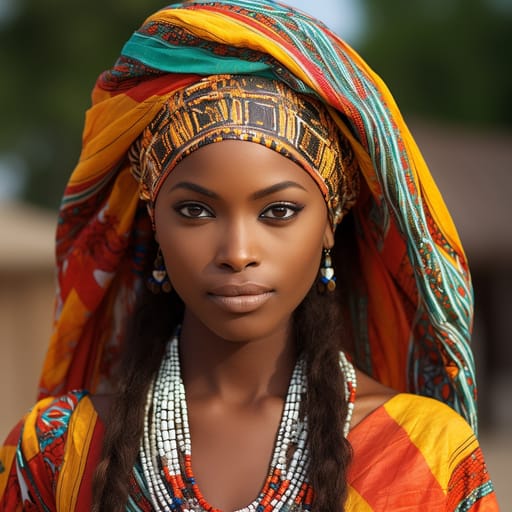
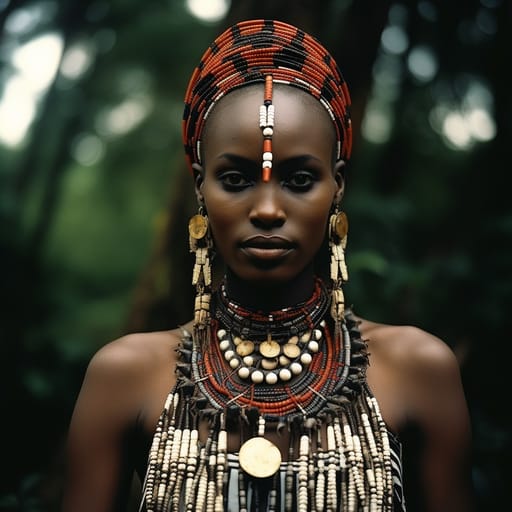
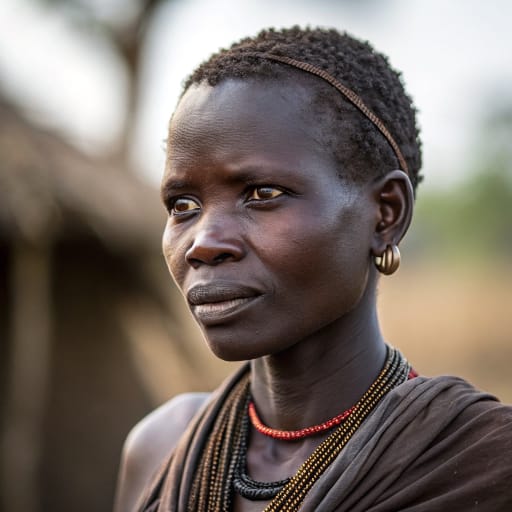
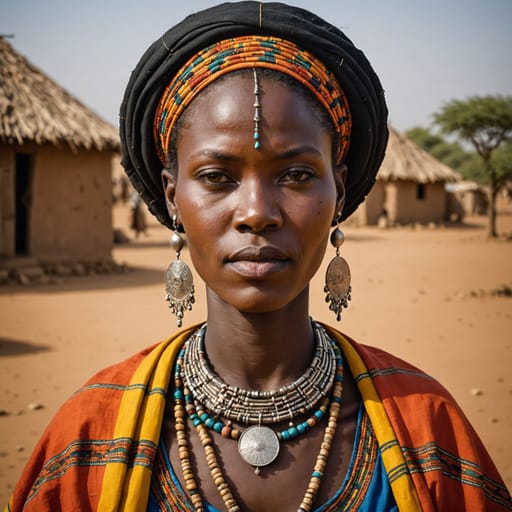
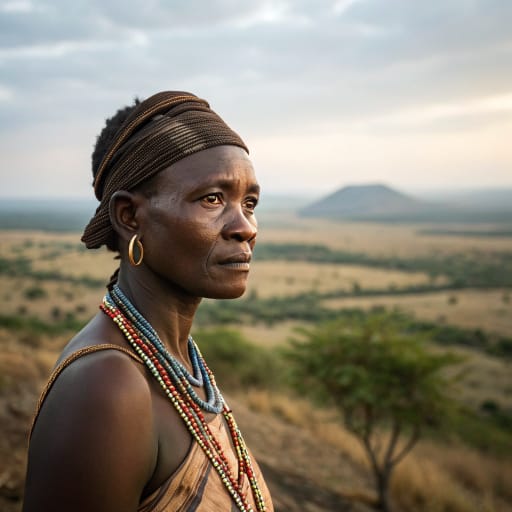
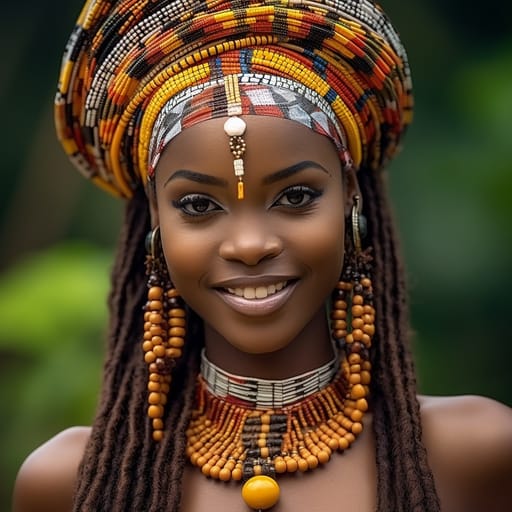
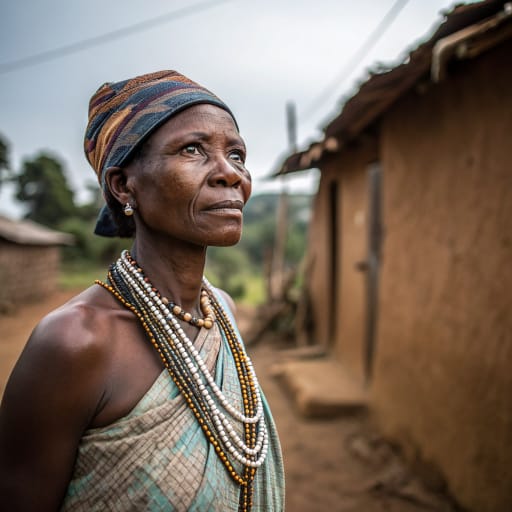
Typical Yeke Phenotypes
Reference for AI generation: hair, eyes, skin, facial structure, build
Yeke Body & Anatomy Reference
Anatomy by feature, Bantu / Central African Niger-Congo phenotype
Yeke Boobs & Breasts
Yeke tits and boobs run medium-to-large cup, full, projecting, the classic Bantu / Central African Niger-Congo bust profile. Yeke nipples and areolas show deep-brown areolar pigmentation against the deep-brown skin tone, with areolar diameter typically in the 32-48mm range and forward-set positioning rather than the smaller East African conical profile. Yeke breasts trend fuller projection than East African; comparable to West African norm, a function of the mesomorph with strong gluteal-femoral fat deposition body habitus and the mean adult female BMI 23-26. For anatomically accurate AI-generated Yeke nudes the render preserves the medium-to-large cup, full, projecting shape, 32-48mm areolas with deep-brown pigmentation, and the torso proportions of the Bantu / Central African Niger-Congo phenotype.
Yeke Ass & Hips
Yeke hips and butt usually read as full, projected, wide-set glutes. The skeletal base is broad iliac crests, gynoid pelvic pattern, the Bantu / Central African Niger-Congo pattern. Set against the slim narrow-hip Cushitic East African profile, the difference is easy to see, and the hip-to-waist ratio is often what identifies Yeke women in photos.
Yeke Vagina & Pussy
Expect deep-brown labial pigmentation, fuller labia minora on Yeke women, in keeping with Bantu / Central African Niger-Congo ancestry. The pubic hair is tightly-coiled coarse texture, dense distribution. Coloring should run evenly from the deep-brown skin of the thighs to the labia, and Yeke nude imagery should keep the hair's tightly-coiled coarse texture.
Yeke Dicks & Penis
Yeke dick and penile anatomy in adult AI generation should anchor on the regional reference data: regional mean ~14cm erect, above-average girth, and deep-brown shaft pigmentation. The Yeke cock profile reflects the Bantu / Central African Niger-Congo population's anthropometric measurements. The shaft pigmentation should track the surrounding deep-brown skin tone, and the pubic hair should keep its tightly-coiled coarse texture in the typical inverted-V escutcheon.
Yeke Body, Curves & Build
Yeke body type: mesomorph with strong gluteal-femoral fat deposition, with mean adult female BMI 23-26. This is the typical Bantu / Central African Niger-Congo build. Height range, shoulder-to-hip ratio and fat distribution all follow from it, which is what an accurate Yeke nude body should show.
Yeke Skin Tone & Hair Texture
Yeke skin tone falls in the deep-brown (Fitzpatrick VI) band, the surface signal most often miscalibrated by generic AI nude generators. Yeke hair texture is typically tight 4A-4C coil, characteristic of the Bantu / Central African Niger-Congo phenotype. In Yeke nude renders the skin should hold that band consistently across the body.
Explore phenotype categories
Structured taxonomy with peer-reviewed scales · 22 anatomical categories
Erotic Poses & Sex Positions
From the pose catalog: 219 named positions with reference skeletons
Frequently asked questions about Yeke people
Where is the Yeke homeland?
The Yeke homeland is Bunkeya and the surrounding Lufira plains in the former Katanga Province, southeastern Democratic Republic of the Congo, with many now living in Katanga's mining cities in Central Africa.
What language do Yeke people speak?
Yeke people primarily speak Kiyeke (Bantu, close to Sumbwa and Nyamwezi), now largely ceremonial; daily speech in Kisanga (Bantu, Luba group), Katanga Swahili and French.
What religion do Yeke people practice?
The predominant religion among Yeke people is Predominantly Christian (Catholic and Protestant, including the Brethren-founded Garenganze church), alongside veneration of royal ancestors.






Make your own Yeke images
Five a day, free, no credits to buy. The studio starts from this group's phenotype data, so you can set body type, pose and style and keep the traits accurate.
Start with Yeke