Help us get this right
Does this portrait look right for Mankon?
Nobody has judged this one yet. You would be the first.
Mankon Erotic
The Mankon fondom, covering much of the city of Bamenda and nearby villages in Mezam Division, Northwest Region, Cameroon
Mankon, a Ngemba language (Grassfields Bantu, Niger-Congo); Cameroonian Pidgin English and English are widely used
Mostly Christian (Catholic, Presbyterian, Baptist), alongside ancestor veneration and palace rites
A Ngemba-speaking Grassfields people of the Bamenda plateau; internally a federation of patrilineal clans under one Fon; closely related to Bafut, Mundum, Pinyin and other Ngemba groups
About Mankon People
The Mankon are the people of a single kingdom, and the kingdom now sits inside a city. Their fondom covers much of the lower town of Bamenda, the capital of Cameroon's Northwest Region, where the main market and Commercial Avenue stand on Mankon land, while the palace on the outskirts remains the place where identity is settled. To be Mankon is to belong to one of the clans, nine by the usual count, that federated under a single Fon, each clan carrying its own account of where it came from. The language, also called Mankon, belongs to the Ngemba cluster of Grassfields Bantu languages, close kin to the speech of neighboring Bafut, Mundum and Pinyin. Most people also move through the day in Cameroonian Pidgin and English, since this is the Anglophone part of the country.
The Fon is more than a figurehead. The French anthropologist Jean-Pierre Warnier, who worked in Mankon for decades, described him as a pot-king: a body that holds ancestral substance and gives it out, most visibly at the annual palace dance, when he sprays raffia wine from his mouth over his dancing subjects as a blessing. A Fon does not die. He is said to have disappeared, which is how the palace announced the passing of Angwafo III in 2022 after a reign that began in 1959. He was an agronomist by training, a member of parliament, a senior figure in the ruling party, and the author of a memoir, all while Bamenda outside his gates became the birthplace of the country's main opposition party in 1990. His successor, Angwafo IV, inherited the palace, its regulatory society, the Kwifo, and a museum of royal objects opened in the 2000s.
Mankon memory keeps one date close: January 1891, when its fighters, with Bafut allies, routed a German column led by the explorer Eugen Zintgraff and his Bali Nyonga auxiliaries. A punitive expedition a decade later ended that independence, and the German station on the escarpment above the town became Bamenda. Missions followed, and today most Mankon are Christian, whether Catholic, Presbyterian or Baptist, with the Catholic cathedral of the Bamenda archdiocese standing in Mankon itself. Church membership sits alongside obligations to ancestors, compound heads and the palace without much sense of contradiction. Since 2017 the Anglophone conflict has hit Bamenda hard, with lockdown days, shuttered schools and families displaced to Douala, Yaoundé and abroad, where Mankon cultural associations now carry much of the community's work.
Related ethnic groups
Groups that share Mankon's homeland, region, language, or religious tradition. These are likely candidates for comparative phenotype reference.
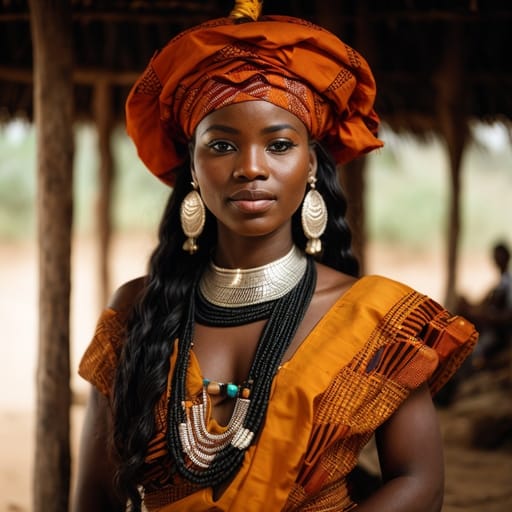
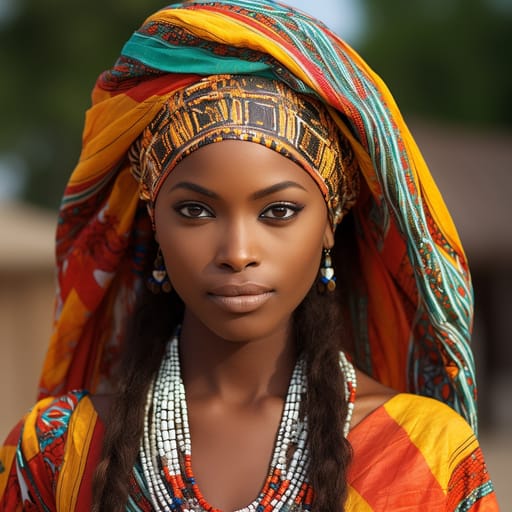
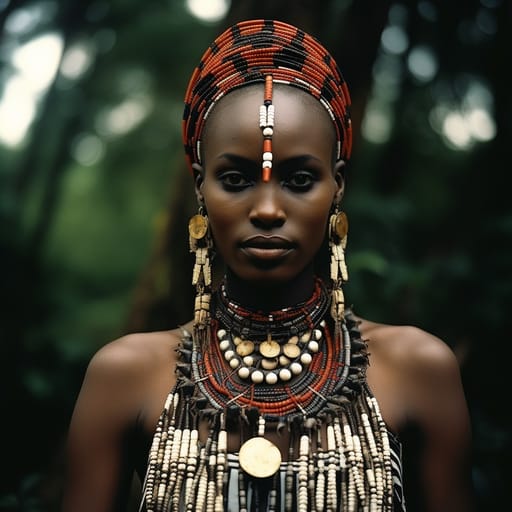
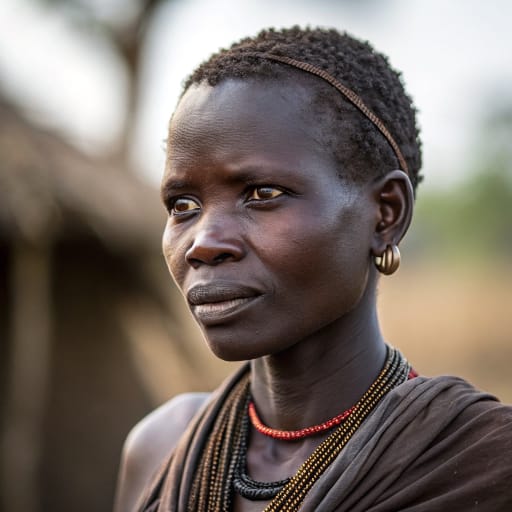
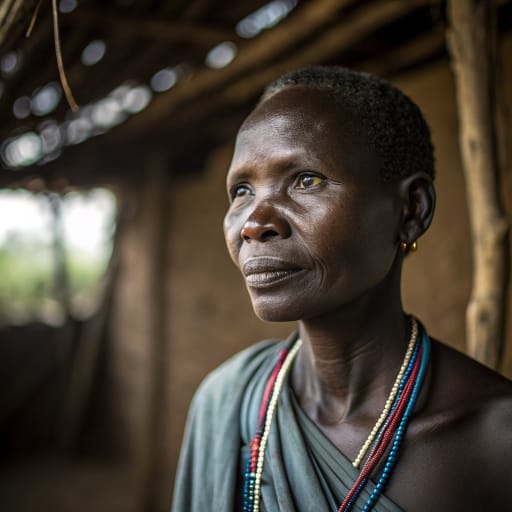
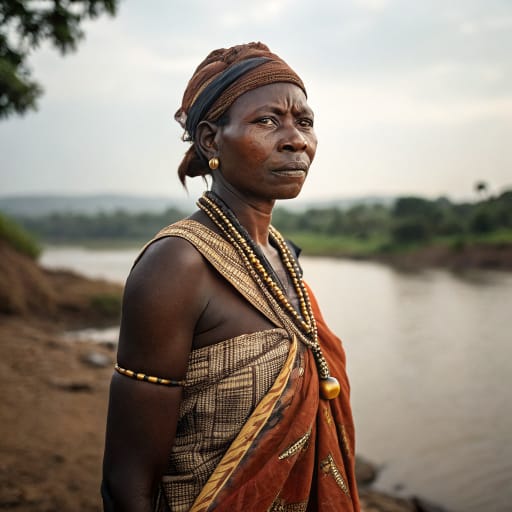
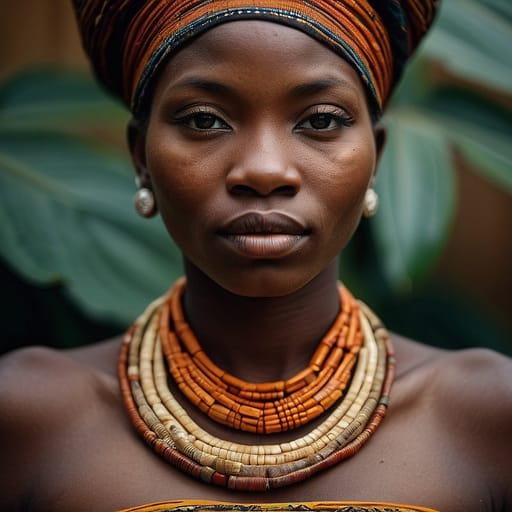
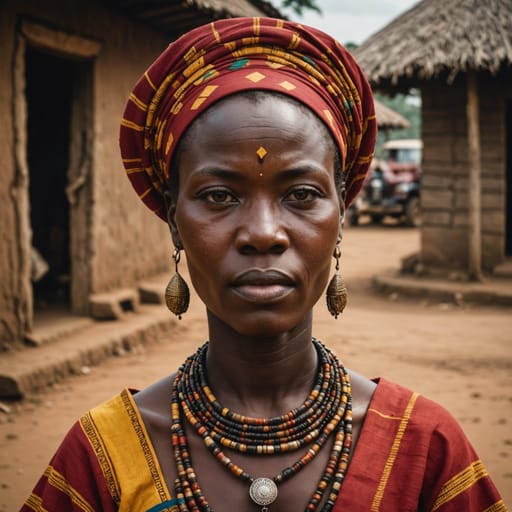
Typical Mankon Phenotypes
Reference for AI generation: hair, eyes, skin, facial structure, build
Mankon Body & Anatomy Reference
Anatomy by feature, Bantu / Central African Niger-Congo phenotype
Mankon Boobs & Breasts
Mankon boobs follow the Bantu / Central African Niger-Congo profile: medium-to-large cup, full, projecting. Areolar diameter is usually 32-48mm, and the coloring is deep-brown areolar pigmentation against the deep-brown skin tone. Breast shape tracks body composition (mesomorph with strong gluteal-femoral fat deposition, mean adult female BMI 23-26), so Mankon breasts tend to be fuller projection than East African; comparable to West African norm. Expect a forward-set shape, not the smaller East African conical profile.
Mankon Ass & Hips
Mankon ass and hip morphology presents as full, projected, wide-set glutes, distinctly different from the slim narrow-hip Cushitic East African profile. The Mankon pelvic profile shows broad iliac crests, gynoid pelvic pattern, anchored in the Bantu / Central African Niger-Congo skeletal pattern. Mankon butt shots in adult AI imagery should render the full, projected, wide-set glutes silhouette with the overall build (mesomorph with strong gluteal-femoral fat deposition) and the fat distribution typical of the Bantu / Central African Niger-Congo phenotype.
Mankon Vagina & Pussy
Mankon pussy anatomy typically shows deep-brown labial pigmentation, fuller labia minora. Pubic hair is usually tightly-coiled coarse texture, dense distribution. In AI-generated Mankon nudes, labial color should blend into the deep-brown skin with a gradual transition, and the hair should keep its tightly-coiled coarse texture.
Mankon Dicks & Penis
Penis reference for Mankon men: regional mean ~14cm erect, above-average girth. Coloring: deep-brown shaft pigmentation. An accurate Mankon cock in AI imagery matches the surrounding deep-brown skin rather than a generic porn default. Circumcision depends on religion and custom, not ancestry.
Mankon Body, Curves & Build
The Mankon figure is generally mesomorph with strong gluteal-femoral fat deposition, with mean adult female BMI 23-26, characteristic of Bantu / Central African Niger-Congo ancestry. AI image tools tend to flatten regional body types into a few stock shapes; here the Mankon build is kept as its own reference.
Mankon Skin Tone & Hair Texture
Skin: deep-brown (Fitzpatrick VI). Hair: tight 4A-4C coil. Both are typical of Bantu / Central African Niger-Congo ancestry. The most common mistake in AI nudes of Mankon women is a body rendered lighter than the face.
Explore phenotype categories
Structured taxonomy with peer-reviewed scales · 22 anatomical categories
Erotic Poses & Sex Positions
From the pose catalog: 219 named positions with reference skeletons
Frequently asked questions about Mankon people
Where is the Mankon homeland?
The Mankon homeland is The Mankon fondom, covering much of the city of Bamenda and nearby villages in Mezam Division, Northwest Region, Cameroon in Central Africa.
What language do Mankon people speak?
Mankon people primarily speak Mankon, a Ngemba language (Grassfields Bantu, Niger-Congo); Cameroonian Pidgin English and English are widely used.
What religion do Mankon people practice?
The predominant religion among Mankon people is Mostly Christian (Catholic, Presbyterian, Baptist), alongside ancestor veneration and palace rites.






Make your own Mankon images
Five a day, free, no credits to buy. The studio starts from this group's phenotype data, so you can set body type, pose and style and keep the traits accurate.
Start with Mankon