No portrait yet
Yazoo Erotic
The lower Yazoo River and the bluffs near its confluence with the Mississippi, in what is now Warren and Yazoo counties, Mississippi, United States.
Yazoo, surviving only in fragments and usually grouped with Koroa and Tunica (Tunican), though many linguists leave it unclassified.
Indigenous Lower Mississippi Valley religion built around a tended temple fire and mortuary ritual; a short-lived French Jesuit mission in the 1720s won no lasting converts.
One of the small lower Yazoo River nations, closely allied with the Koroa, Ofo and Tioux and often lumped with the Tunica; survivors absorbed into the Chickasaw and Choctaw.
About Yazoo People
The Yazoo were a small Native nation of the lower Mississippi Valley, living on the bluffs along the Yazoo River in what is now western Mississippi until the early 1730s, when war with the French broke them apart and the survivors were taken in by the Chickasaw and Choctaw. What made them a people, in the eyes of nearly everyone who wrote about them, was location and company. They held the last stretch of river before it empties into the Mississippi near present-day Vicksburg, and they lived cheek by jowl with a cluster of other small nations: the Koroa, the Ofo, the Tioux, and for a time the Tunica. These groups traded, intermarried, and went to war together, and French officers who tried to count them kept mistaking one for another. By the time of sustained contact in the 1690s, epidemic disease had already done its work up and down the valley. The Yazoo were numbered in the hundreds, not the thousands, and their villages stood among earthworks raised by earlier inhabitants whose relationship to them is still argued over.
Almost nothing of their language survives. A handful of words taken down by missionaries suggests it belonged with Koroa and Tunica in what linguists call Tunican, but the evidence is thin enough that careful scholars call it unclassified and leave it there. Even the meaning of the name Yazoo is unsettled, despite the confident translations that circulate. Their religious life is known mostly by inference from better documented neighbors: a sacred fire kept in a temple, mortuary practice organized around it, ceremony tied to the sun and the harvest. The French planted Fort St. Pierre on their river in 1719 and installed a Jesuit, Jean Souel, to work on them. He got nowhere. In late 1729, when the Natchez rose and destroyed Fort Rosalie downriver, the Yazoo and Koroa killed Souel and then took the garrison at Fort St. Pierre. The reprisal, most of the fighting done by France's Native allies, finished them as a nation within a few years. The name outlasted the people, sitting now on the river, a Mississippi county, the town of Yazoo City, and a basin of some of the most heavily worked farmland in North America. There is no Yazoo nation today and no roll to be on. Small peoples of the valley did not so much vanish as get folded into larger ones under pressure, and the Yazoo were folded fast.
Related ethnic groups
Groups that share Yazoo's homeland, region, language, or religious tradition. These are likely candidates for comparative phenotype reference.
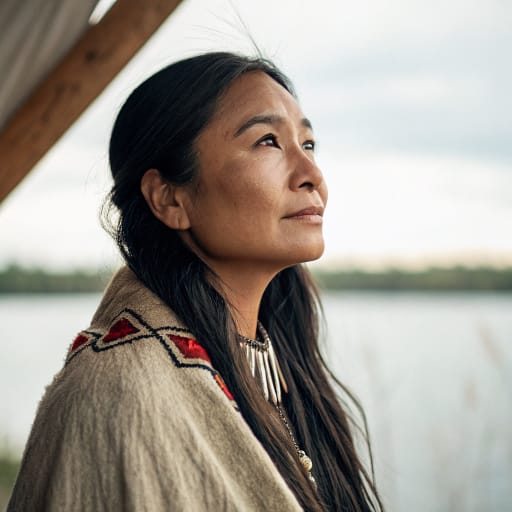
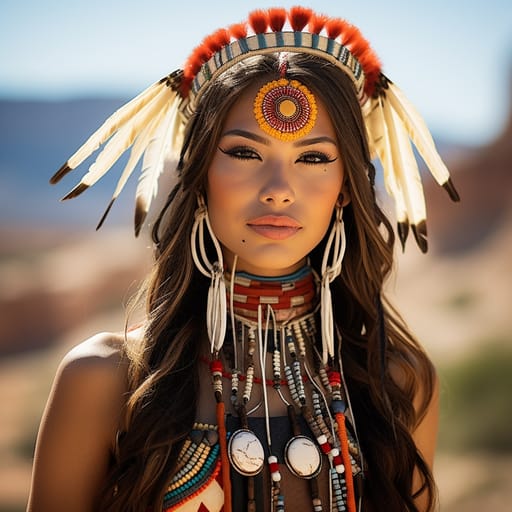
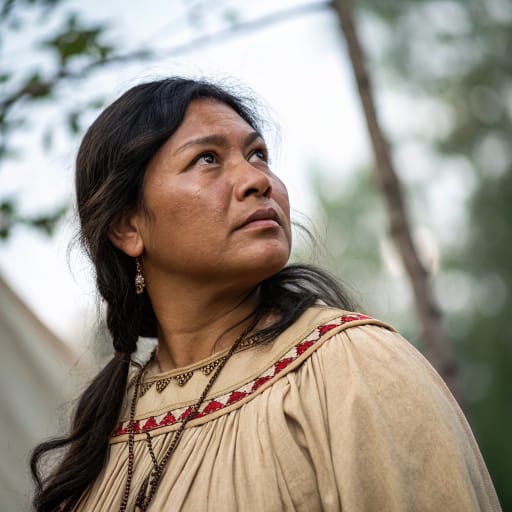
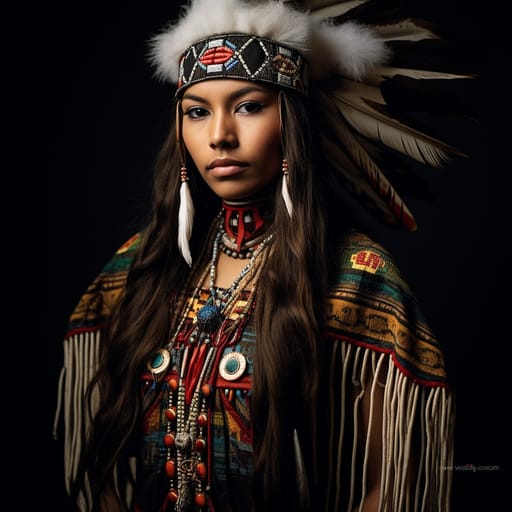
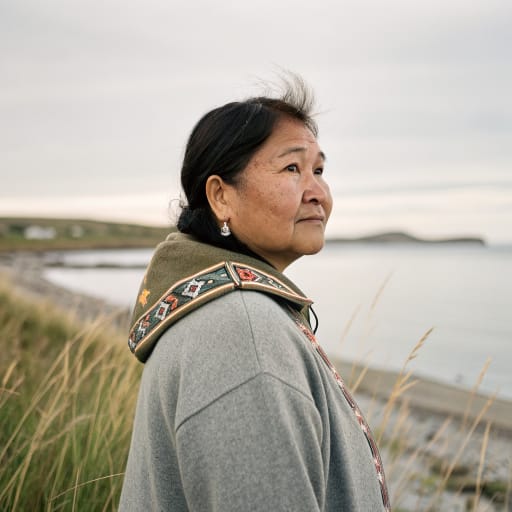
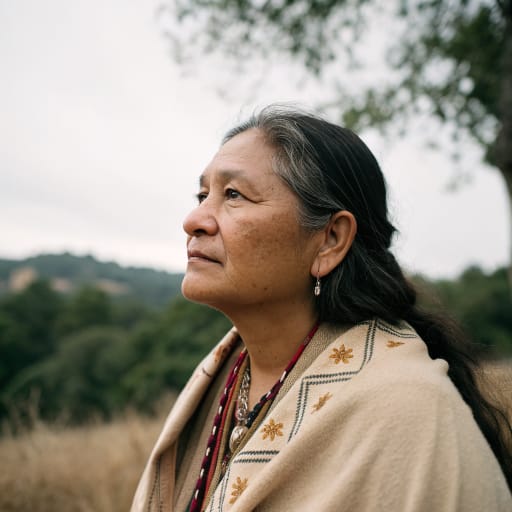
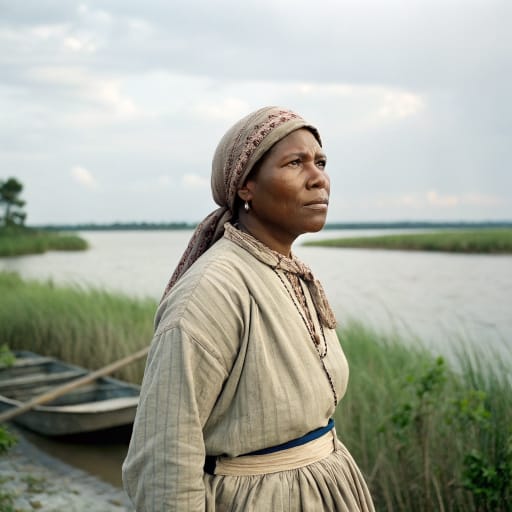
Typical Yazoo Phenotypes
Reference for AI generation: hair, eyes, skin, facial structure, build
Yazoo Body & Anatomy Reference
Indigenous Northern American / Algonquian-Iroquoian phenotype: anatomy reference for AI nude generation
Yazoo Boobs & Breasts
Yazoo boobs follow the Indigenous Northern American / Algonquian-Iroquoian profile: medium cup, moderate projection. Areolar diameter is usually 30-44mm, and the coloring is medium-brown areolar pigmentation against the copper-to-medium-brown skin tone. Breast shape tracks body composition (mesomorph, broader frame in northern Indigenous populations, mean adult female BMI 25-28), so Yazoo breasts tend to be full and moderate projection. Expect a forward-set shape, not the smaller East Asian bust.
Yazoo Ass & Hips
Yazoo ass and hip morphology presents as medium, moderate-to-full projection, distinctly different from the slim East Asian narrow-hip profile. The Yazoo pelvic profile shows medium iliac crests, anchored in the Indigenous Northern American / Algonquian-Iroquoian skeletal pattern. Yazoo butt shots in adult AI imagery should render the medium, moderate-to-full projection silhouette with the overall build (mesomorph, broader frame in northern Indigenous populations) and the fat distribution typical of the Indigenous Northern American / Algonquian-Iroquoian phenotype.
Yazoo Vagina & Pussy
Yazoo pussy anatomy typically shows medium-brown labial pigmentation. Pubic hair is usually straight medium-coarse texture. In AI-generated Yazoo nudes, labial color should blend into the copper to medium-brown skin with a gradual transition, and the hair should keep its straight medium-coarse texture.
Yazoo Dicks & Penis
Penis reference for Yazoo men: regional mean ~13cm erect, moderate girth. Coloring: medium-brown shaft pigmentation. An accurate Yazoo cock in AI imagery matches the surrounding copper to medium-brown skin rather than a generic porn default. Circumcision depends on religion and custom, not ancestry.
Yazoo Body, Curves & Build
The Yazoo figure is generally mesomorph, broader frame in northern Indigenous populations, with mean adult female BMI 25-28, characteristic of Indigenous Northern American / Algonquian-Iroquoian ancestry. AI image tools tend to flatten regional body types into a few stock shapes; here the Yazoo build is kept as its own reference.
Yazoo Skin Tone & Hair Texture
Skin: copper to medium-brown (Fitzpatrick III-V). Hair: straight 1A, dark-brown to black, often thick and dense. Both are typical of Indigenous Northern American / Algonquian-Iroquoian ancestry. The most common mistake in AI nudes of Yazoo women is a body rendered lighter than the face.
Explore phenotype categories
Structured taxonomy with peer-reviewed scales · 22 anatomical categories
Erotic Poses & Sex Positions
From the pose catalog: 219 named positions with reference skeletons
Frequently asked questions about Yazoo people
Where is the Yazoo homeland?
The Yazoo homeland is The lower Yazoo River and the bluffs near its confluence with the Mississippi, in what is now Warren and Yazoo counties, Mississippi, United States. in North America.
What language do Yazoo people speak?
Yazoo people primarily speak Yazoo, surviving only in fragments and usually grouped with Koroa and Tunica (Tunican), though many linguists leave it unclassified..
What religion do Yazoo people practice?
The predominant religion among Yazoo people is Indigenous Lower Mississippi Valley religion built around a tended temple fire and mortuary ritual; a short-lived French Jesuit mission in the 1720s won no lasting converts..






Make your own Yazoo images
Five a day, free, no credits to buy. The studio starts from this group's phenotype data, so you can set body type, pose and style and keep the traits accurate.
Start with Yazoo