No portrait yet
Wuji Erotic
Songhua, Mudan and lower Amur river basins and the Changbai foothills of Manchuria, north of Goguryeo: today's Heilongjiang and Jilin in China, reaching into Russia's Primorye and Amur lands.
Unrecorded; generally presumed to be an early Tungusic language (Tungusic), close to the speech of the later Mohe and Jurchens. Chinese sources say it was unlike neighboring languages.
Indigenous animist and shamanic practice, inferred from later Tungusic peoples; documented veneration of Mount Tutai (Changbai/Paektu) and distinctive seasonal burial rites.
Successors of the Sushen and Yilou, forerunners of the Mohe. Later sources list seven divisions: Sumo, Boduo, Anchegu, Funie, Haoshi, Heishui and Baishan. Ancestral to the Jurchens and Manchus.
About Wuji People
The Wuji were a forest and river people of Manchuria, recorded in Chinese histories of the fifth and sixth centuries in the Songhua and Mudan valleys north of Goguryeo, in what is now Heilongjiang and Jilin. They did not vanish so much as get renamed: by the Sui period the same population was being written down as the Mohe, and through the Mohe they stand in the ancestral line of the Balhae kingdom, the Jurchens, and ultimately the Manchus. Chinese chroniclers treated them as heirs of the older Sushen and Yilou, the far northeastern peoples known since antiquity for stone-tipped arrows. Nearly everything known about them comes from outsiders, chiefly the Book of Wei, which drew on what Wuji envoys told the Northern Wei court. The first, recorded as Yilizhi, came in the 470s. He came upriver by boat, sank the boats, and finished the trip overland, then announced that his people had destroyed ten Goguryeo villages and were weighing a joint attack with Baekje. The court counseled peace. The Wuji kept pushing anyway, and their pressure on the old kingdom of Buyeo was heavy enough that its royal house surrendered to Goguryeo in 494. The chroniclers called them the strongest of the eastern peoples and noted that their speech was unlike any neighbor's. Nothing written in it survives, but it is generally taken to have been Tungusic, and the name is often linked to a Tungusic word for forest, the root of Manchu weji.
They had no king. Each settlement answered to its own chief, and later sources count seven divisions, from the Sumo on the upper Songhua to the Heishui on the Amur. Families lived in pit houses dug behind earthen banks, roofed like a burial mound and entered by ladder through the top. They grew millet and wheat, plowing with paired human labor because they kept horses and great numbers of pigs but no cattle, and brewed liquor from chewed grain. Hunters coated their stone arrowheads with a poison cooked in late summer. Men dressed in pig and dog hides, women in cloth skirts, and tiger or leopard tails were worn on the head. They held Mount Tutai, today's Changbai or Paektu, in such awe that travelers carried their own waste off its slopes and nobody dared kill its bears and leopards. Parents who died in spring or summer were buried at once under a small shelter against the rain. Those who died in autumn or winter were laid out as bait for sable, which says a good deal about how much the fur trade already mattered in those forests.
Related ethnic groups
Groups that share Wuji's homeland, region, language, or religious tradition. These are likely candidates for comparative phenotype reference.
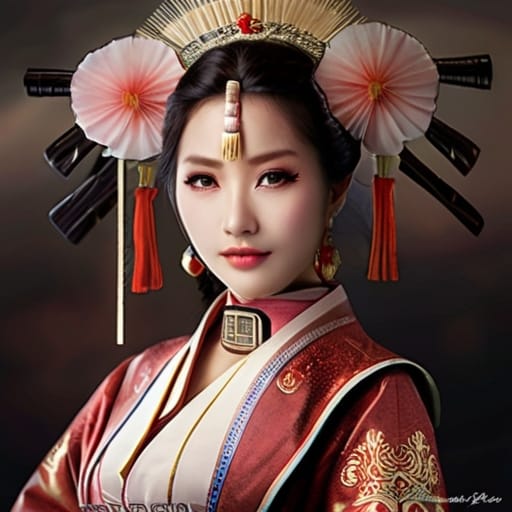
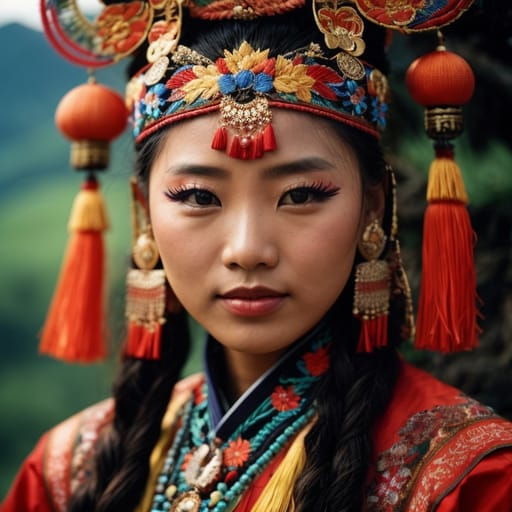
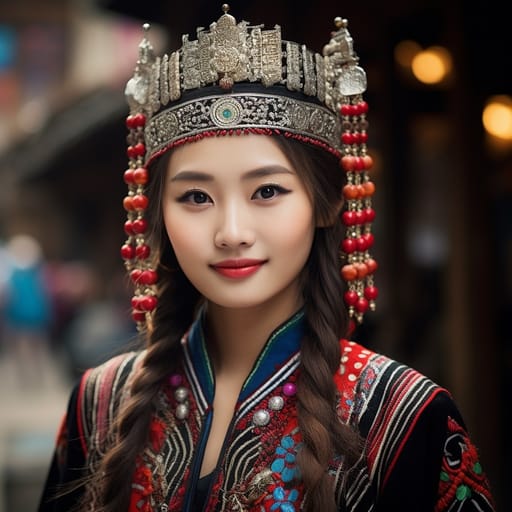
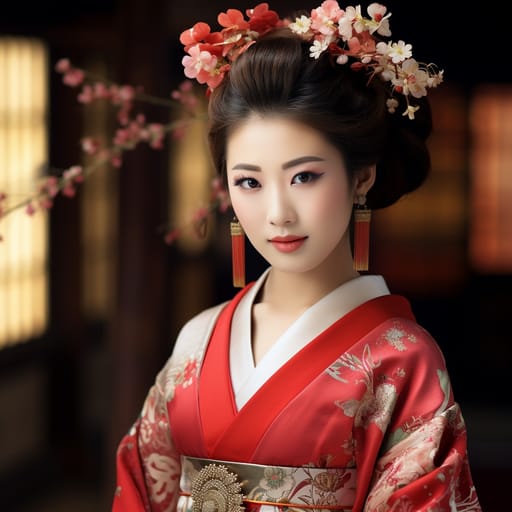
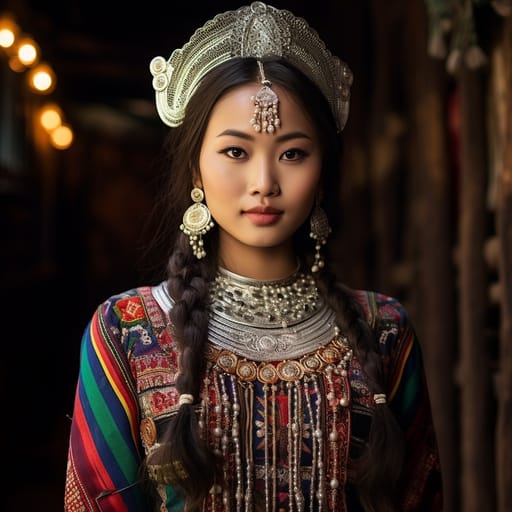
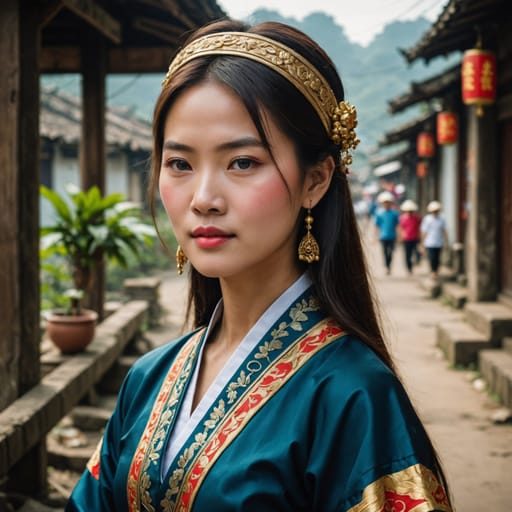
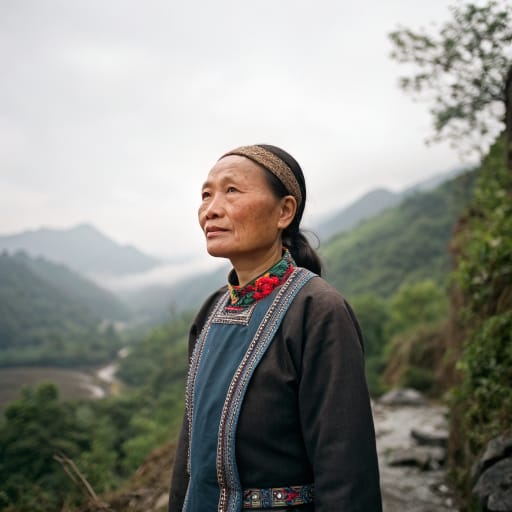
Typical Wuji Phenotypes
Reference for AI generation: hair, eyes, skin, facial structure, build
Wuji Body & Anatomy Reference
East Asian Sinitic / Mongoloid phenotype: anatomy reference for AI nude generation
Wuji Boobs & Breasts
Bust reference for Wuji women: small-to-medium cup, modest projection, which is typical of East Asian Sinitic / Mongoloid ancestry. Areolas measure about 26-36mm across, with light-pink to medium-brown pigmentation. Body type (ectomorph-to-mesomorph, lean frame) shapes the bust as well, so Wuji tits are usually firm and modestly projecting; smaller cup size than the South Asian or Western Asian average. In AI imagery, keep the forward-set shape rather than drifting toward the fuller South Asian or Levantine bust profile.
Wuji Ass & Hips
The Wuji ass is typically small-to-medium, modest projection, narrower hip profile, which sets it apart from the fuller projected glutes of the West African or Polynesian phenotype. Underneath, the pelvis shows narrower iliac crests, less gluteal-femoral fat deposition, part of the East Asian Sinitic / Mongoloid skeletal pattern. For Wuji butt pics and AI renders, match that silhouette and the overall build (ectomorph-to-mesomorph, lean frame).
Wuji Vagina & Pussy
Wuji pussy and vulvar anatomy presents light-pink to medium-brown labial pigmentation, smaller labia minora, consistent with the East Asian Sinitic / Mongoloid phenotype's pigmentation pattern. Wuji pubic hair is typically straight fine texture, sparser distribution than the South Asian norm, in the inverted-triangle pattern. For anatomically accurate Wuji pussy renders the labial coloration should match the surrounding light to medium skin tone with a continuous gradient, and the hair should keep its straight fine texture.
Wuji Dicks & Penis
Wuji dicks follow the East Asian Sinitic / Mongoloid reference data: regional mean ~11-12cm erect; moderate girth; light-brown shaft pigmentation. Shaft color should track the light to medium skin tone with a smooth change toward the glans, and Wuji pubic hair keeps its straight fine texture.
Wuji Body, Curves & Build
Wuji body type and overall build presents as ectomorph-to-mesomorph, lean frame, with mean adult female BMI 20-23: the characteristic East Asian Sinitic / Mongoloid habitus. Wuji curves and proportions should keep the regional skeletal frame (height, shoulder-to-hip ratio, limb proportions) rather than a generic mesomorph default.
Wuji Skin Tone & Hair Texture
Wuji skin sits in the light to medium (Fitzpatrick II-IV) band. Hair is typically straight 1A, fine-to-medium, predominantly black, in keeping with the East Asian Sinitic / Mongoloid phenotype. In nude renders the skin should stay one even tone from face to body, and body, pubic and head hair should match.
Explore phenotype categories
Structured taxonomy with peer-reviewed scales · 22 anatomical categories
Erotic Poses & Sex Positions
From the pose catalog: 219 named positions with reference skeletons
Frequently asked questions about Wuji people
Where is the Wuji homeland?
The Wuji homeland is Songhua, Mudan and lower Amur river basins and the Changbai foothills of Manchuria, north of Goguryeo: today's Heilongjiang and Jilin in China, reaching into Russia's Primorye and Amur lands. in East Asia.
What language do Wuji people speak?
Wuji people primarily speak Unrecorded; generally presumed to be an early Tungusic language (Tungusic), close to the speech of the later Mohe and Jurchens. Chinese sources say it was unlike neighboring languages..
What religion do Wuji people practice?
The predominant religion among Wuji people is Indigenous animist and shamanic practice, inferred from later Tungusic peoples; documented veneration of Mount Tutai (Changbai/Paektu) and distinctive seasonal burial rites..






Make your own Wuji images
Five a day, free, no credits to buy. The studio starts from this group's phenotype data, so you can set body type, pose and style and keep the traits accurate.
Start with Wuji