Wet'suwet'en Erotic
Bulkley and Morice river valleys and surrounding lake and mountain country in north-central British Columbia, Canada, around Smithers, Houston and Burns Lake
Witsuwit'en, a dialect of Babine-Witsuwit'en (Athabaskan, Na-Dene); English
Christianity, largely Catholic, alongside traditional beliefs tied to the land and the balhats feast system
Five matrilineal clans (Gilseyhu, Laksilyu, Gitdumden, Laksamshu, Tsayu) divided into house groups; bands include Witset and Hagwilget; closely allied with the Gitxsan
About Wet'suwet'en People
The Wet'suwet'en are organized less by village than by house. Their territory covers about 22,000 square kilometers of river valley, lake country and mountain in north-central British Columbia. It is divided among house groups, and each is overseen by a hereditary chief who holds a name passed down through that house. Salmon anchor the year. At the canyon on the Bulkley River at Witset, the village long called Moricetown after a missionary priest, fishers still work the white water with gaffs and dip nets when the runs come through.
Their language, Witsuwit'en, is one dialect of Babine-Witsuwit'en, part of the Athabaskan family, with Dakelh (Carrier) spoken next door to the east. Outsiders once filed the Wet'suwet'en under Western Carrier. Their deepest social ties run west, though, to the Gitxsan, whose Tsimshianic language is unrelated. Long intermarriage and trade gave the two peoples a shared feast system and similar crest clans, so an Athabaskan-speaking people keeps institutions that look toward the Northwest Coast. Most fluent speakers today are elders, and community and school programs are working to widen that circle.
Descent follows the mother's line. Every Wet'suwet'en belongs to one of five clans: Gilseyhu (Big Frog), Laksilyu (Small Frog), Gitdumden (Wolf and Bear), Laksamshu (Fireweed and Owl) and Tsayu (Beaver). Each is divided into houses. Serious business happens in the feast hall, the balhats. Chiefly names change hands there, obligations after a death are settled and rights to territory are affirmed. The guests who witness it all are paid, and that payment is what makes the record stand. Christianity came with Catholic missionaries and is widely practiced, but the church sits beside the feast hall rather than replacing it.
That system eventually went to court. In Delgamuukw v. British Columbia, a case brought by Gitxsan and Wet'suwet'en hereditary chiefs, the Supreme Court of Canada ruled in 1997 that oral histories can serve as evidence of Aboriginal title. No treaty ever gave up the land, and the question of who speaks for it came to a head over the Coastal GasLink pipeline. Several elected band councils, a structure created under the Indian Act, signed agreements with the company, while the hereditary chiefs refused consent. In 2019 and 2020 the RCMP moved against camps on the route, including Unist'ot'en, which set off solidarity rail blockades across Canada. Later in 2020 a memorandum committed Ottawa and British Columbia to negotiating Wet'suwet'en rights and title. The pipeline was built anyway, but the dispute made the house chiefs a national reference point on Indigenous jurisdiction.
Related ethnic groups
Groups that share Wet'suwet'en's homeland, region, language, or religious tradition. These are likely candidates for comparative phenotype reference.
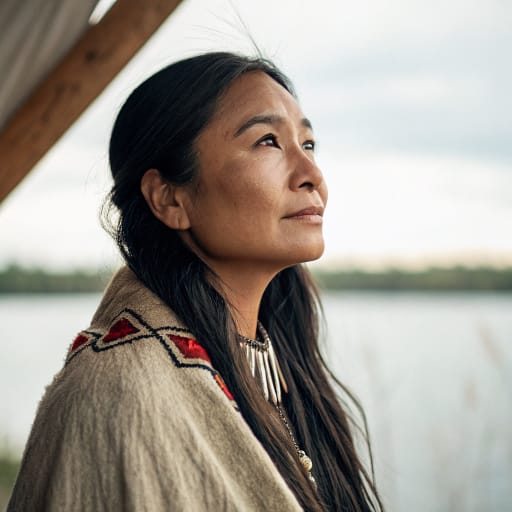
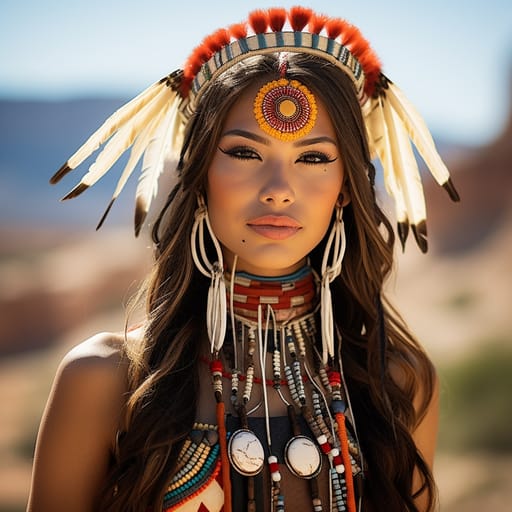
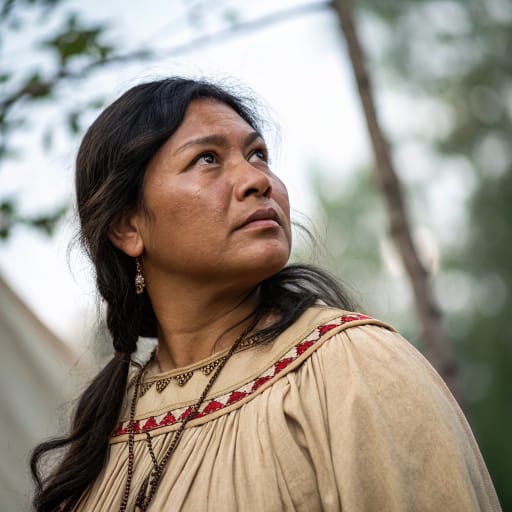
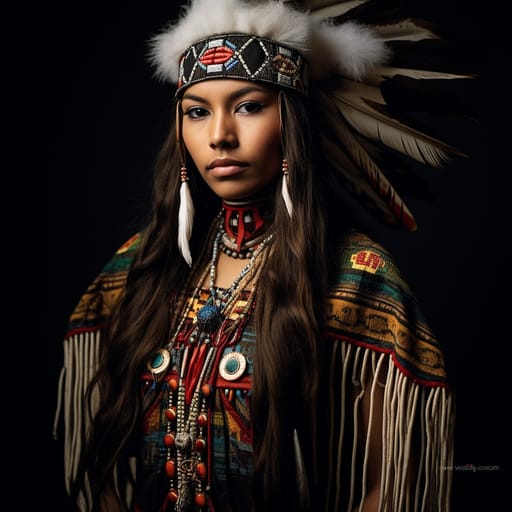
Typical Wet'suwet'en Phenotypes
Reference for AI generation: hair, eyes, skin, facial structure, build
Wet'suwet'en Body & Anatomy Reference
Per-feature anatomical profile for AI nude generation: Indigenous Northern American / Algonquian-Iroquoian phenotype
Wet'suwet'en Boobs & Breasts
The typical Wet'suwet'en bust is medium cup, moderate projection, in line with the wider Indigenous Northern American / Algonquian-Iroquoian pattern. Areolas usually fall in the 30-44mm range, with medium-brown areolar pigmentation against the copper-to-medium-brown skin tone. Compared with the smaller East Asian bust, Wet'suwet'en breasts sit forward and are generally full and moderate projection. A faithful AI render of Wet'suwet'en tits keeps that shape and areola size.
Wet'suwet'en Ass & Hips
Butt shape among Wet'suwet'en women: medium, moderate-to-full projection, over medium iliac crests. This follows Indigenous Northern American / Algonquian-Iroquoian ancestry and looks quite unlike the slim East Asian narrow-hip profile. An accurate Wet'suwet'en ass in adult AI imagery keeps both the silhouette and the overall build (mesomorph, broader frame in northern Indigenous populations) instead of a generic average.
Wet'suwet'en Vagina & Pussy
Vulvar anatomy among Wet'suwet'en women: medium-brown labial pigmentation. Pubic hair tends to be straight medium-coarse texture, in the usual inverted-triangle pattern. Both follow Indigenous Northern American / Algonquian-Iroquoian pigmentation, which is why Wet'suwet'en pussy renders should not fall back on a pale, sparse Western template.
Wet'suwet'en Dicks & Penis
The Wet'suwet'en cock profile, from Indigenous Northern American / Algonquian-Iroquoian anthropometric data: regional mean ~13cm erect; moderate girth; medium-brown shaft pigmentation. Pubic hair has a straight medium-coarse texture and forms the usual inverted-V pattern. Whether Wet'suwet'en men are circumcised follows religious and cultural practice rather than phenotype.
Wet'suwet'en Body, Curves & Build
Build and curves among Wet'suwet'en women follow the Indigenous Northern American / Algonquian-Iroquoian pattern: mesomorph, broader frame in northern Indigenous populations, mean adult female BMI 25-28. Proportions matter as much as skin tone, so Wet'suwet'en figures should keep their regional height and limb ratios.
Wet'suwet'en Skin Tone & Hair Texture
The Wet'suwet'en skin range is copper to medium-brown (Fitzpatrick III-V), and hair tends to be straight 1A, dark-brown to black, often thick and dense. That combination marks the Indigenous Northern American / Algonquian-Iroquoian phenotype, and skin tone is the trait AI generators most often get wrong for Wet'suwet'en women.
Explore phenotype categories
Structured taxonomy with peer-reviewed scales · 22 anatomical categories
Erotic Poses & Sex Positions
From the pose catalog: 219 named positions with reference skeletons
Frequently asked questions about Wet'suwet'en people
Where is the Wet'suwet'en homeland?
The Wet'suwet'en homeland is Bulkley and Morice river valleys and surrounding lake and mountain country in north-central British Columbia, Canada, around Smithers, Houston and Burns Lake in North America.
What language do Wet'suwet'en people speak?
Wet'suwet'en people primarily speak Witsuwit'en, a dialect of Babine-Witsuwit'en (Athabaskan, Na-Dene); English.
What religion do Wet'suwet'en people practice?
The predominant religion among Wet'suwet'en people is Christianity, largely Catholic, alongside traditional beliefs tied to the land and the balhats feast system.






Make your own Wet'suwet'en images
Five a day, free, no credits to buy. The studio starts from this group's phenotype data, so you can set body type, pose and style and keep the traits accurate.
Start with Wet'suwet'en