No portrait yet
Wenatchi Erotic
Wenatchee River valley and the nearby Columbia River, north-central Washington, United States; today mostly the Colville Reservation, Washington
Nxaʔamxcín, Wenatchi dialect of Columbia-Wenatchi (Interior Salish, Salishan); English
Traditional Plateau guardian-spirit and first-foods practice, alongside Catholicism and other Christian churches
One of the twelve Confederated Tribes of the Colville Reservation; some descendants enrolled in the Yakama Nation. Interior Salish, closely related to the Entiat, Chelan and Columbia (Moses) bands.
About Wenatchi People
The Wenatchi are the river people of the Wenatchee valley in north-central Washington. They are an Interior Salish community whose name is now on a city, a lake, a river and a national forest, even though most of the people were forced off that ground more than a century ago. They are also known as P'squosa. Today they are one of the twelve bands of the Confederated Tribes of the Colville Reservation, and some descendants are enrolled with the Yakama.
Their country ran from the Cascade crest east to the Columbia. It followed the Wenatchee River down from Lake Wenatchee, through a tight canyon and out to the big river. The year moved with the food. Families spent winter in villages along the lower valley. In spring they dug bitterroot and other roots on the open slopes. Summer was fishing season, when chinook and sockeye ran upriver, and fall meant trips into the mountains for huckleberries and deer. The most important fishing place was where Icicle Creek meets the Wenatchee, near present-day Leavenworth. Neighboring peoples came there to fish and trade. Trails over the Cascade passes linked the Wenatchi to Salish peoples on the coast side.
They speak Nxaʔamxcín, usually called Columbia-Wenatchi in English. It is an Interior Salish language shared, with dialect differences, by the Chelan, Entiat and Columbia peoples. That set them apart from the Sahaptin-speaking Yakama and Kittitas to the south, though the groups married into each other. The name Wenatchi itself is generally traced to Sahaptin. Very few fluent speakers remain, and the Colville tribes run programs to keep the language going. Spiritual life centered on the guardian spirit. A young person went alone into the hills to seek a spirit power, which came with a song, and those songs were sung at winter dances. First-foods ceremonies still give thanks for roots and salmon before the harvest is eaten. Catholic missionaries worked the valley in the 1800s. Many families are Catholic now and still keep the older observances.
The turning point came in 1855. The Wenatchi were brought into the Yakama Treaty, which promised them a fishing reservation six miles square at the Icicle Creek fishery. The land was surveyed in the wrong place and never secured for them. In the 1890s the government extinguished the claim in a deal made with the Yakama, not the Wenatchi. With no land of their own, most Wenatchi families ended up on the Colville Reservation to the northeast. The dispute over the fishing rights promised in 1855 has since gone to federal court, and the Wenatchi remain a distinct band with a clear claim to the valley that carries their name.
Related ethnic groups
Groups that share Wenatchi's homeland, region, language, or religious tradition. These are likely candidates for comparative phenotype reference.
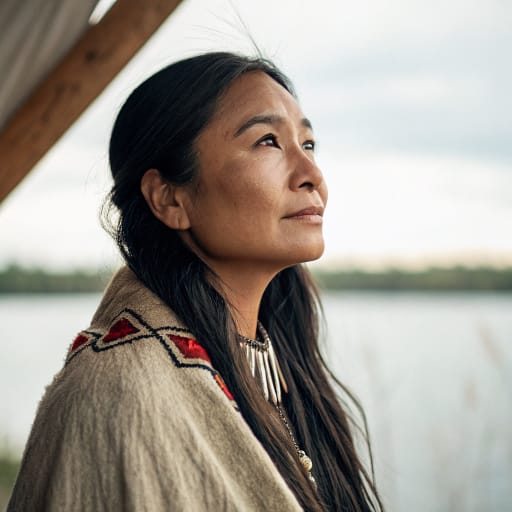
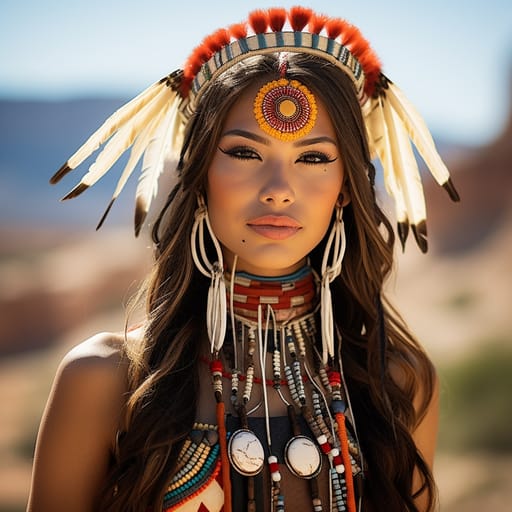
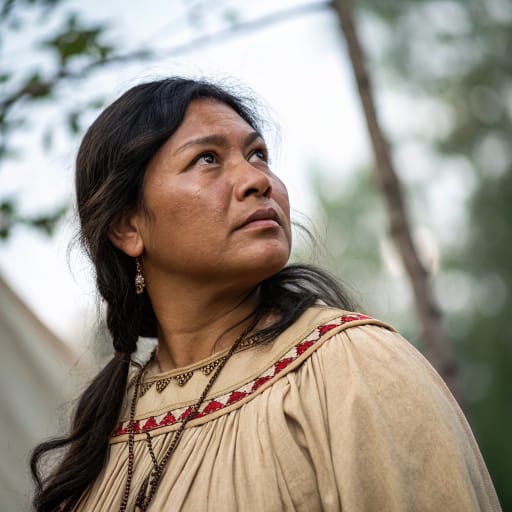
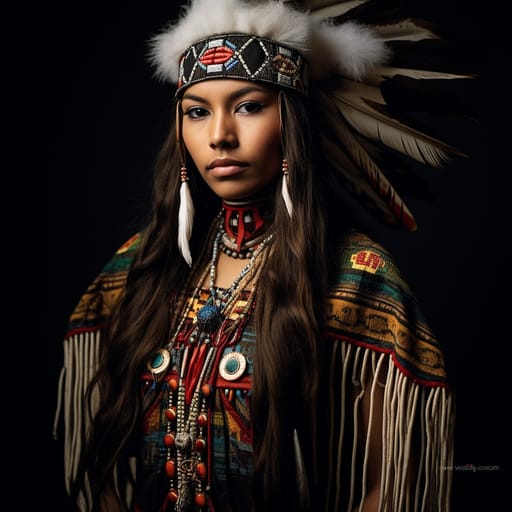
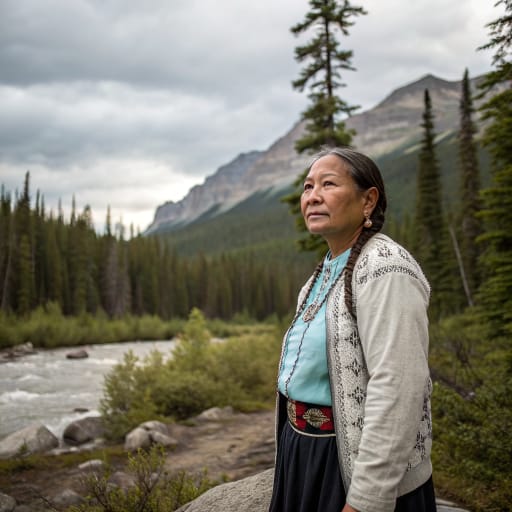
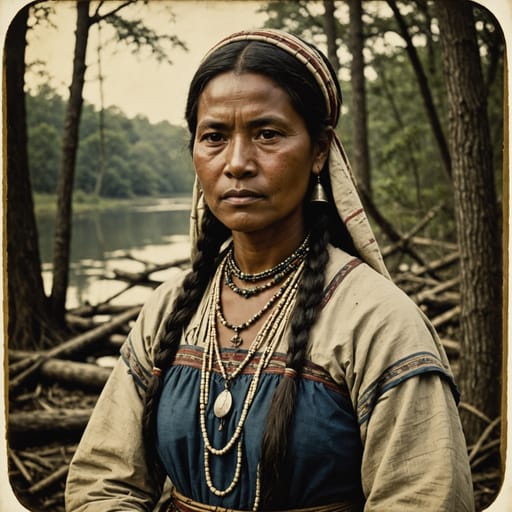
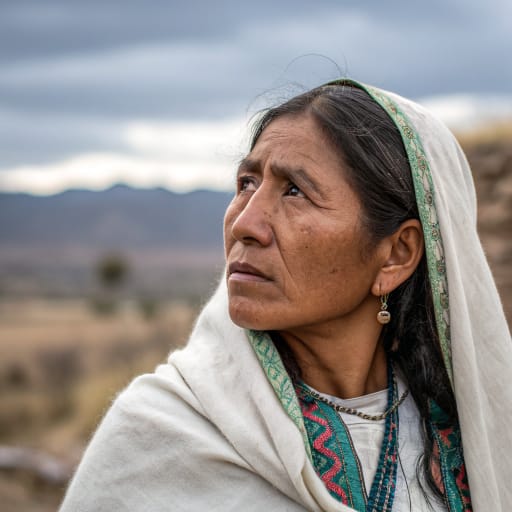
Typical Wenatchi Phenotypes
Reference for AI generation: hair, eyes, skin, facial structure, build
Wenatchi Body & Anatomy Reference
Indigenous Northern American / Algonquian-Iroquoian phenotype: anatomy reference for AI nude generation
Wenatchi Boobs & Breasts
The typical Wenatchi bust is medium cup, moderate projection, in line with the wider Indigenous Northern American / Algonquian-Iroquoian pattern. Areolas usually fall in the 30-44mm range, with medium-brown areolar pigmentation against the copper-to-medium-brown skin tone. Compared with the smaller East Asian bust, Wenatchi breasts sit forward and are generally full and moderate projection. A faithful AI render of Wenatchi tits keeps that shape and areola size.
Wenatchi Ass & Hips
Butt shape among Wenatchi women: medium, moderate-to-full projection, over medium iliac crests. This follows Indigenous Northern American / Algonquian-Iroquoian ancestry and looks quite unlike the slim East Asian narrow-hip profile. An accurate Wenatchi ass in adult AI imagery keeps both the silhouette and the overall build (mesomorph, broader frame in northern Indigenous populations) instead of a generic average.
Wenatchi Vagina & Pussy
Vulvar anatomy among Wenatchi women: medium-brown labial pigmentation. Pubic hair tends to be straight medium-coarse texture, in the usual inverted-triangle pattern. Both follow Indigenous Northern American / Algonquian-Iroquoian pigmentation, which is why Wenatchi pussy renders should not fall back on a pale, sparse Western template.
Wenatchi Dicks & Penis
The Wenatchi cock profile, from Indigenous Northern American / Algonquian-Iroquoian anthropometric data: regional mean ~13cm erect; moderate girth; medium-brown shaft pigmentation. Pubic hair has a straight medium-coarse texture and forms the usual inverted-V pattern. Whether Wenatchi men are circumcised follows religious and cultural practice rather than phenotype.
Wenatchi Body, Curves & Build
Build and curves among Wenatchi women follow the Indigenous Northern American / Algonquian-Iroquoian pattern: mesomorph, broader frame in northern Indigenous populations, mean adult female BMI 25-28. Proportions matter as much as skin tone, so Wenatchi figures should keep their regional height and limb ratios.
Wenatchi Skin Tone & Hair Texture
The Wenatchi skin range is copper to medium-brown (Fitzpatrick III-V), and hair tends to be straight 1A, dark-brown to black, often thick and dense. That combination marks the Indigenous Northern American / Algonquian-Iroquoian phenotype, and skin tone is the trait AI generators most often get wrong for Wenatchi women.
Explore phenotype categories
Structured taxonomy with peer-reviewed scales · 22 anatomical categories
Erotic Poses & Sex Positions
From the pose catalog: 219 named positions with reference skeletons
Frequently asked questions about Wenatchi people
Where is the Wenatchi homeland?
The Wenatchi homeland is Wenatchee River valley and the nearby Columbia River, north-central Washington, United States; today mostly the Colville Reservation, Washington in North America.
What language do Wenatchi people speak?
Wenatchi people primarily speak Nxaʔamxcín, Wenatchi dialect of Columbia-Wenatchi (Interior Salish, Salishan); English.
What religion do Wenatchi people practice?
The predominant religion among Wenatchi people is Traditional Plateau guardian-spirit and first-foods practice, alongside Catholicism and other Christian churches.






Make your own Wenatchi images
Five a day, free, no credits to buy. The studio starts from this group's phenotype data, so you can set body type, pose and style and keep the traits accurate.
Start with Wenatchi