Help us get this right
Does this portrait look right for Ugong?
Nobody has judged this one yet. You would be the first.
Ugong Erotic
Scattered villages in western Thailand, in Kanchanaburi, Suphan Buri and Uthai Thani provinces
Ugong (Sino-Tibetan, usually placed near Lolo-Burmese), severely endangered; Thai (Kra-Dai) is now the first language of most
Theravada Buddhism, alongside older spirit and ancestor practices
Small village communities in three western Thai provinces; linguistically grouped with or near the Lolo-Burmese branch of Sino-Tibetan
About Ugong People
The Ugong are among the smallest peoples in Thailand. They are a few hundred villagers in the hill and river country of the west, and what sets them apart rests mostly on a language almost no one else speaks. Their Thai neighbors have long called them Lawa, a name that also belongs to an unrelated Mon-Khmer people in the north. The name they use for themselves is Gong, or Ugong, and it points to a history that doesn't fit the map around them.
Most of that history is kept in the language. Ugong is a Sino-Tibetan language, and linguists usually place it closest to the Lolo-Burmese languages, which are spoken mainly in Myanmar and southwest China. The Ugong, however, live among Thai and Karen speakers, in small communities in Kanchanaburi, Suphan Buri and Uthai Thani provinces. No one is sure how or when their ancestors got there. What is clear is that the language has been losing ground for generations. Much of what outsiders know about it comes from the linguist David Bradley, whose work made the Ugong a standard example of how a small language disappears. Today most Ugong children grow up speaking Thai first, and the old language survives mainly among older people.
Daily life looks much like the rural Thailand around it. Ugong villages are Theravada Buddhist and follow the temple calendar of merit making and festivals. Older offerings to local spirits and ancestors carry on alongside Buddhism without any sense of conflict. Earlier generations lived by farming, gathering in the forest and fishing the rivers. Wage work, Thai schooling and marriage with neighbors have steadily drawn younger people into the national mainstream.
That absorption is the central fact of Ugong life today. Some groups mark themselves out with dress, a separate religion or a political cause. The Ugong have done it mainly through speech, so as fewer people speak the language, the line between them and their neighbors fades too. Some families still hold on to the name and to the knowledge that their grandparents spoke something no one else in the valley understood. Whether the Ugong stay a distinct people for another generation may depend less on outsiders than on whether those families decide the language is worth passing on.
Related ethnic groups
Groups that share Ugong's homeland, region, language, or religious tradition. These are likely candidates for comparative phenotype reference.
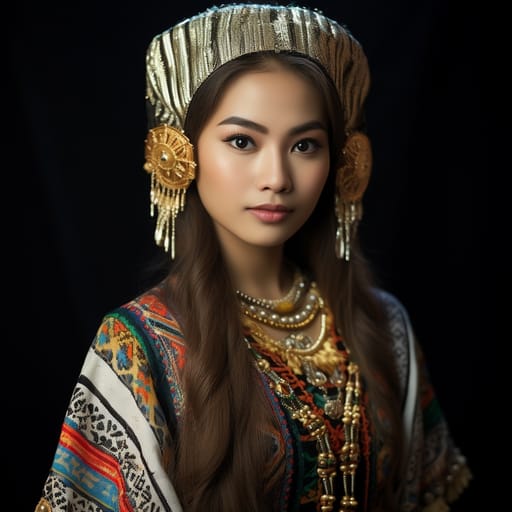
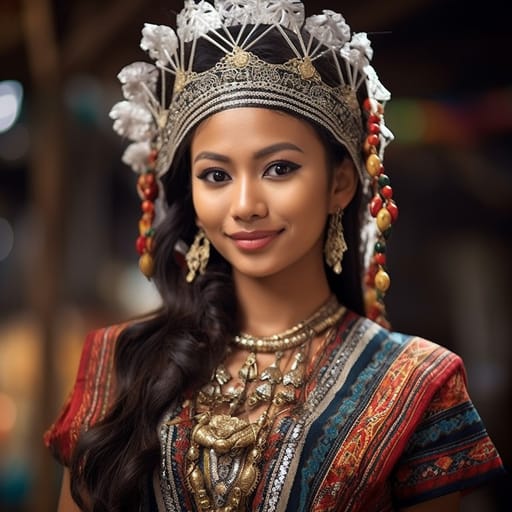
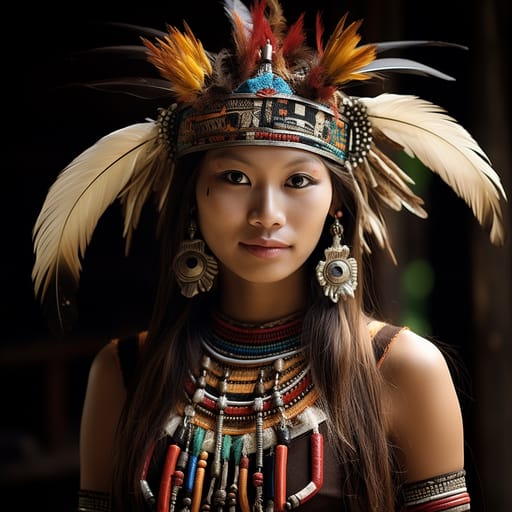
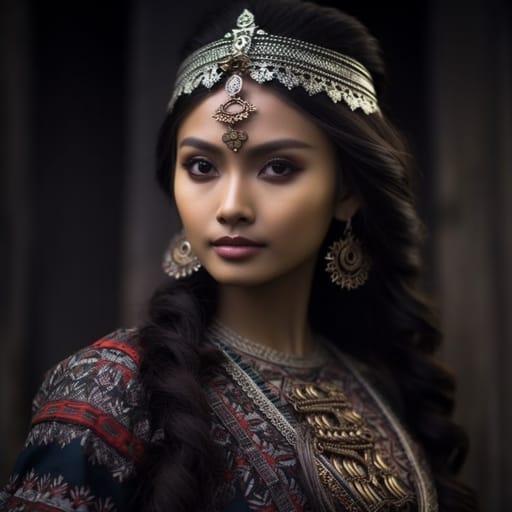
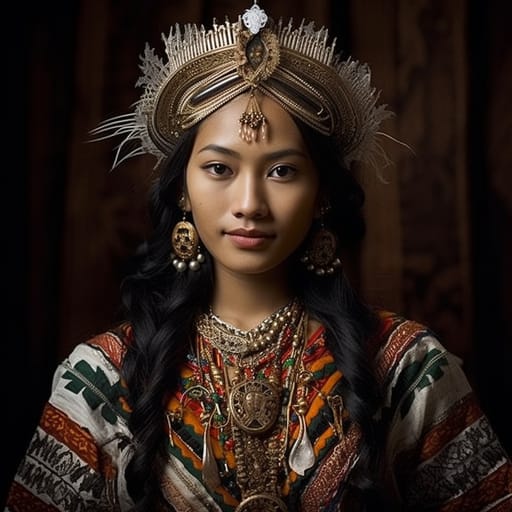
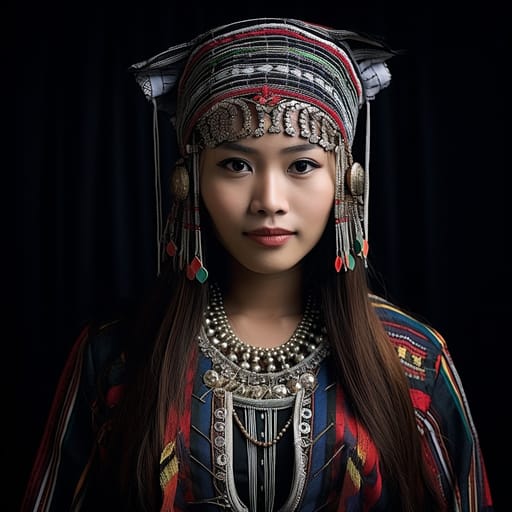
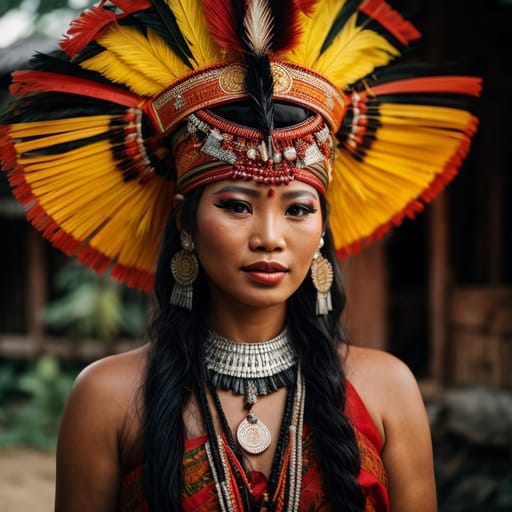
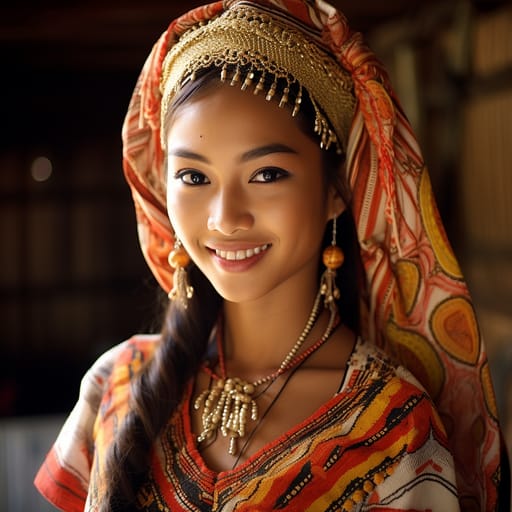
Typical Ugong Phenotypes
Reference for AI generation: hair, eyes, skin, facial structure, build
Ugong Body & Anatomy Reference
Anatomy by feature, Southeast Asian Austronesian / Austroasiatic phenotype
Ugong Boobs & Breasts
Ugong boobs follow the Southeast Asian Austronesian / Austroasiatic profile: small-to-medium cup, modest projection. Areolar diameter is usually 26-38mm, and the coloring is medium-brown to dark-brown areolar pigmentation against the tan-to-medium-brown skin tone. Breast shape tracks body composition (ectomorph, petite frame, mean adult female BMI 20-23), so Ugong breasts tend to be firm, modest projection. Expect a forward-set shape, not the fuller South Asian or Polynesian bust.
Ugong Ass & Hips
Ugong ass and hip morphology presents as small-to-medium, modest projection, narrower hip profile, distinctly different from the fuller glutes of the Pacific Islander phenotype. The Ugong pelvic profile shows narrow-to-medium iliac crests, anchored in the Southeast Asian Austronesian / Austroasiatic skeletal pattern. Ugong butt shots in adult AI imagery should render the small-to-medium, modest projection, narrower hip profile silhouette with the overall build (ectomorph, petite frame) and the fat distribution typical of the Southeast Asian Austronesian / Austroasiatic phenotype.
Ugong Vagina & Pussy
Ugong pussy anatomy typically shows medium-brown to dark-brown labial pigmentation. Pubic hair is usually straight-to-wavy fine-to-medium texture. In AI-generated Ugong nudes, labial color should blend into the tan to medium-brown skin with a gradual transition, and the hair should keep its straight-to-wavy fine-to-medium texture.
Ugong Dicks & Penis
Penis reference for Ugong men: regional mean ~11cm erect, moderate girth. Coloring: medium-brown shaft pigmentation. An accurate Ugong cock in AI imagery matches the surrounding tan to medium-brown skin rather than a generic porn default. Circumcision depends on religion and custom, not ancestry.
Ugong Body, Curves & Build
The Ugong figure is generally ectomorph, petite frame, with mean adult female BMI 20-23, characteristic of Southeast Asian Austronesian / Austroasiatic ancestry. AI image tools tend to flatten regional body types into a few stock shapes; here the Ugong build is kept as its own reference.
Ugong Skin Tone & Hair Texture
Skin: tan to medium-brown (Fitzpatrick III-V). Hair: straight-to-wavy 1A-2A, dark-brown to black. Both are typical of Southeast Asian Austronesian / Austroasiatic ancestry. The most common mistake in AI nudes of Ugong women is a body rendered lighter than the face.
Explore phenotype categories
Structured taxonomy with peer-reviewed scales · 22 anatomical categories
Erotic Poses & Sex Positions
From the pose catalog: 219 named positions with reference skeletons
Frequently asked questions about Ugong people
Where is the Ugong homeland?
The Ugong homeland is Scattered villages in western Thailand, in Kanchanaburi, Suphan Buri and Uthai Thani provinces in Southeast Asia.
What language do Ugong people speak?
Ugong people primarily speak Ugong (Sino-Tibetan, usually placed near Lolo-Burmese), severely endangered; Thai (Kra-Dai) is now the first language of most.
What religion do Ugong people practice?
The predominant religion among Ugong people is Theravada Buddhism, alongside older spirit and ancestor practices.






Make your own Ugong images
Five a day, free, no credits to buy. The studio starts from this group's phenotype data, so you can set body type, pose and style and keep the traits accurate.
Start with Ugong