No portrait yet
Tunxis Erotic
The Farmington River valley in central Connecticut, United States, around present-day Farmington and neighboring towns
A Southern New England Algonquian dialect, probably close to Quiripi (Algonquian); little recorded
Traditional Algonquian beliefs; many families were Congregationalist Christians by the mid-1700s
One of the Connecticut River valley River Indian communities, sometimes grouped with the Mattabesett or Wappinger; descendants were among the founders of the Brothertown Indians
About Tunxis People
The Tunxis were an Algonquian-speaking people who lived along the Farmington River in central Connecticut until English settlement broke up their homeland in the 1600s and 1700s. Many of their descendants went on to help found the Brothertown Indian community, which is now centered in Wisconsin. They lived where the river makes a sharp turn at present-day Farmington, and their name is usually traced to that bend. The English settlement that grew up beside their village was called Tunxis before it was renamed Farmington in 1645.
They were one of several small communities in the Connecticut River valley that English writers grouped together as River Indians. The Wangunk lived to the east and the Quinnipiac toward the coast, and the Tunxis were tied to both through marriage, trade and closely related speech. Their language belonged to the Southern New England branch of Algonquian and was probably close to the Quiripi of coastal Connecticut, but too little was written down to say much more. Their year followed the river: corn, beans and squash planted on the flats, fishing when the fish ran in spring, hunting in the upland woods through fall and winter, and villages of wigwams covered in bark and mats.
Settlers from Hartford moved into the valley around 1640. The Tunxis agreed to share the land but kept a reserved tract by the river, and over the next century that tract shrank one sale at a time. By the mid-1700s many Tunxis families had joined the Congregational church and sent their children to school, and reading and writing became a way to hold together as a community. The Mohegan preachers Samson Occom and Joseph Johnson then organized Christian Native families from Connecticut, Rhode Island and Long Island to leave New England together, and Farmington households joined them. In the 1780s they settled on land offered by the Oneida in upstate New York, and in the 1830s many moved again, to Wisconsin.
Others stayed in Connecticut or joined neighboring Native communities. In Farmington today the name lives on in a college campus, a hiking trail and local landmarks. The living connection, though, runs through Brothertown families who still count Tunxis ancestors among their founders.
Related ethnic groups
Groups that share Tunxis's homeland, region, language, or religious tradition. These are likely candidates for comparative phenotype reference.
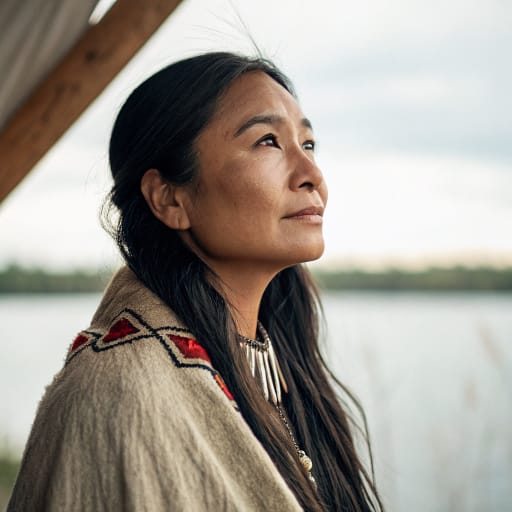
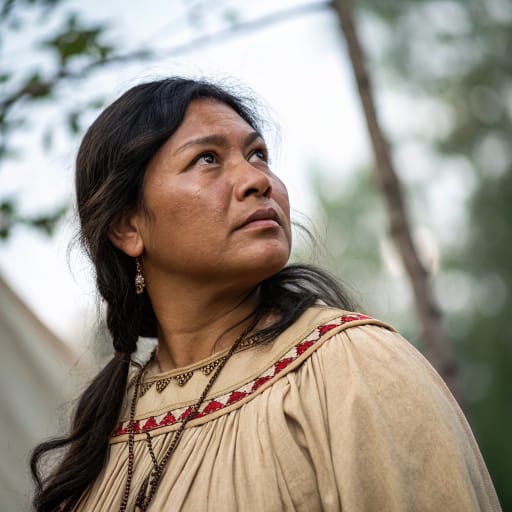
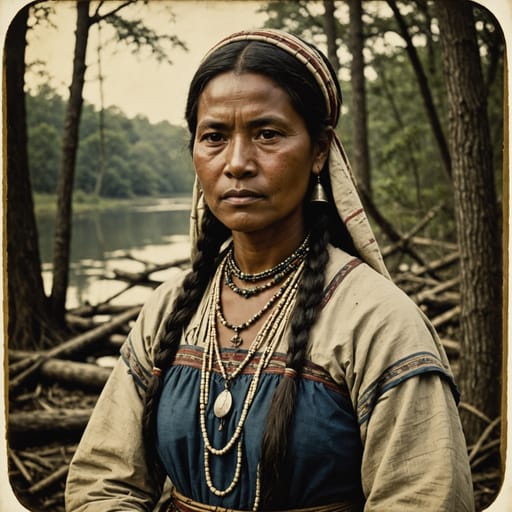
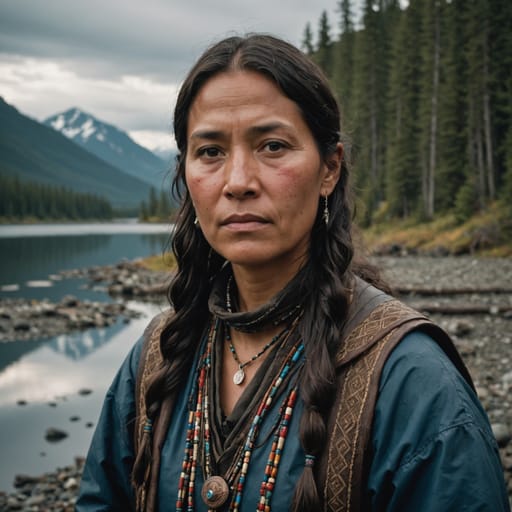
Typical Tunxis Phenotypes
Reference for AI generation: hair, eyes, skin, facial structure, build
Tunxis Body & Anatomy Reference
Indigenous Northern American / Algonquian-Iroquoian phenotype: anatomy reference for AI nude generation
Tunxis Boobs & Breasts
Bust reference for Tunxis women: medium cup, moderate projection, which is typical of Indigenous Northern American / Algonquian-Iroquoian ancestry. Areolas measure about 30-44mm across, with medium-brown pigmentation. Body type (mesomorph, broader frame in northern Indigenous populations) shapes the bust as well, so Tunxis tits are usually full and moderate projection. In AI imagery, keep the forward-set shape rather than drifting toward the smaller East Asian bust.
Tunxis Ass & Hips
The Tunxis ass is typically medium, moderate-to-full projection, which sets it apart from the slim East Asian narrow-hip profile. Underneath, the pelvis shows medium iliac crests, part of the Indigenous Northern American / Algonquian-Iroquoian skeletal pattern. For Tunxis butt pics and AI renders, match that silhouette and the overall build (mesomorph, broader frame in northern Indigenous populations).
Tunxis Vagina & Pussy
Tunxis pussy and vulvar anatomy presents medium-brown labial pigmentation, consistent with the Indigenous Northern American / Algonquian-Iroquoian phenotype's pigmentation pattern. Tunxis pubic hair is typically straight medium-coarse texture, in the inverted-triangle pattern. For anatomically accurate Tunxis pussy renders the labial coloration should match the surrounding copper to medium-brown skin tone with a continuous gradient, and the hair should keep its straight medium-coarse texture.
Tunxis Dicks & Penis
Tunxis dicks follow the Indigenous Northern American / Algonquian-Iroquoian reference data: regional mean ~13cm erect; moderate girth; medium-brown shaft pigmentation. Shaft color should track the copper to medium-brown skin tone with a smooth change toward the glans, and Tunxis pubic hair keeps its straight medium-coarse texture.
Tunxis Body, Curves & Build
Tunxis body type and overall build presents as mesomorph, broader frame in northern Indigenous populations, with mean adult female BMI 25-28: the characteristic Indigenous Northern American / Algonquian-Iroquoian habitus. Tunxis curves and proportions should keep the regional skeletal frame (height, shoulder-to-hip ratio, limb proportions) rather than a generic mesomorph default.
Tunxis Skin Tone & Hair Texture
Tunxis skin sits in the copper to medium-brown (Fitzpatrick III-V) band. Hair is typically straight 1A, dark-brown to black, often thick and dense, in keeping with the Indigenous Northern American / Algonquian-Iroquoian phenotype. In nude renders the skin should stay one even tone from face to body, and body, pubic and head hair should match.
Explore phenotype categories
Structured taxonomy with peer-reviewed scales · 22 anatomical categories
Erotic Poses & Sex Positions
From the pose catalog: 219 named positions with reference skeletons
Frequently asked questions about Tunxis people
Where is the Tunxis homeland?
The Tunxis homeland is The Farmington River valley in central Connecticut, United States, around present-day Farmington and neighboring towns in North America.
What language do Tunxis people speak?
Tunxis people primarily speak A Southern New England Algonquian dialect, probably close to Quiripi (Algonquian); little recorded.
What religion do Tunxis people practice?
The predominant religion among Tunxis people is Traditional Algonquian beliefs; many families were Congregationalist Christians by the mid-1700s.






Make your own Tunxis images
Five a day, free, no credits to buy. The studio starts from this group's phenotype data, so you can set body type, pose and style and keep the traits accurate.
Start with Tunxis