No portrait yet
Tunni Erotic
Lower Shabelle region of southern Somalia, especially Brava (Barawe) and the countryside between the lower Shabelle River and the Indian Ocean
Af Tunni, a southern Somali variety often grouped with the Digil languages, alongside Standard Somali for schooling and media (Cushitic, Afroasiatic)
Sunni Islam, Shafi'i school, with a strong Sufi tradition, especially the Qadiriyya associated with Brava
A clan of the Digil branch of the Rahanweyn (Digil and Mirifle) clan family, within the wider Somali people
About Tunni People
The Tunni are a Somali clan rooted in one particular stretch of coast: the dunes, fields and thornbush around Brava, the old port town in the Lower Shabelle region of southern Somalia. They are Somali in language, faith and ancestry, but they belong to the southern side of that world. They are part of the Digil branch of the Rahanweyn clan family, which is often called the Digil and Mirifle. That sets them apart from the northern camel herding clans behind most outside pictures of Somalia. Tunni country lies between the lower Shabelle River and the Indian Ocean, and people there have long made a living from both livestock and fields of sorghum and maize.
Their speech, Af Tunni, is a Cushitic variety that sits at an angle to Standard Somali. Some linguists call it a southern Somali dialect. Others put it in a small Digil group with Jiddu, Dabarre and Garre. Either way it is clearly different from the Standard Somali used in schools, print and national broadcasting.
Their faith is Sunni Islam of the Shafi'i school, as it is across Somalia, but Brava gives it particular weight. The town was a serious center of Sufi learning. In the nineteenth century it produced Sheikh Uways, a Qadiriyya teacher whose Uwaysiyya branch spread down the Swahili coast to Zanzibar and onto the East African mainland. He was killed in 1909 by followers of the Dervish leader Mohammed Abdullah Hassan, who was his rival in religion as much as in politics. Visits to saints' tombs and group recitals of religious poetry are still part of everyday religious life in the south. That made local practice a target for al Shabaab, whose fighters wrecked Sufi shrines across the region.
Brava itself has always been shared. The Bravanese, a Swahili coast community who speak Chimwiini, lived in its old stone quarters. Tunni families held much of the countryside around it, and the two lived side by side and traded with each other for generations. The collapse of the Somali state in 1991 fell hard on both. As smaller groups with few weapons, they were exposed to militias from larger clans, and many families fled to Mogadishu, to Kenya and farther away. Al Shabaab held Brava as a stronghold until African Union and Somali government forces took it in 2014. Under Somalia's federal system, set up since then, Brava is the official capital of South West State, where Digil and Mirifle clans carry the most political weight, but the state government works from Baidoa.
Related ethnic groups
Groups that share Tunni's homeland, region, language, or religious tradition. These are likely candidates for comparative phenotype reference.
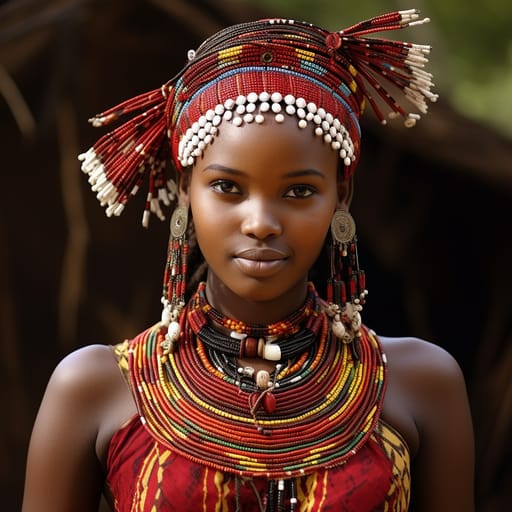
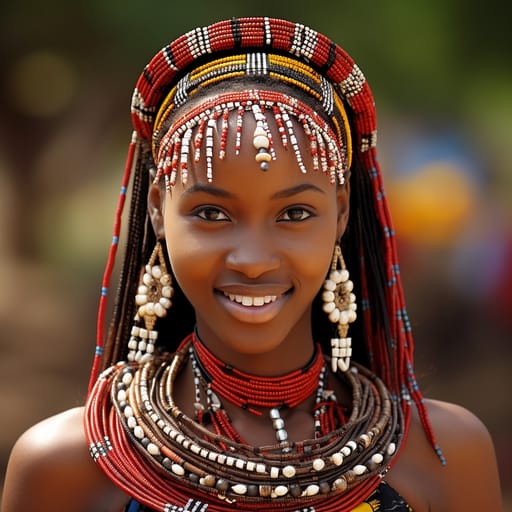
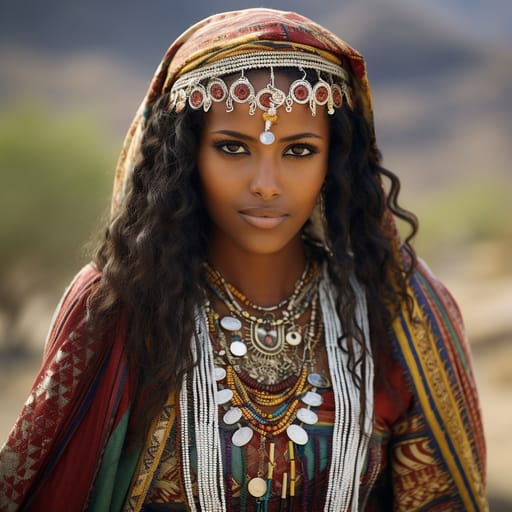
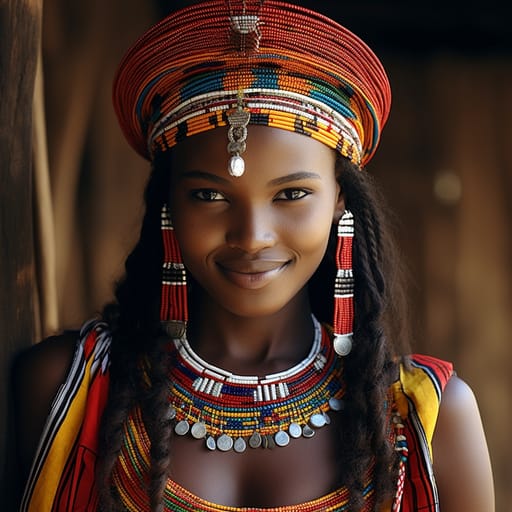
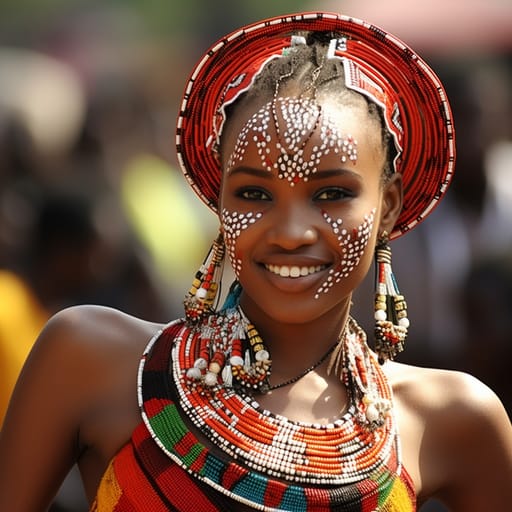
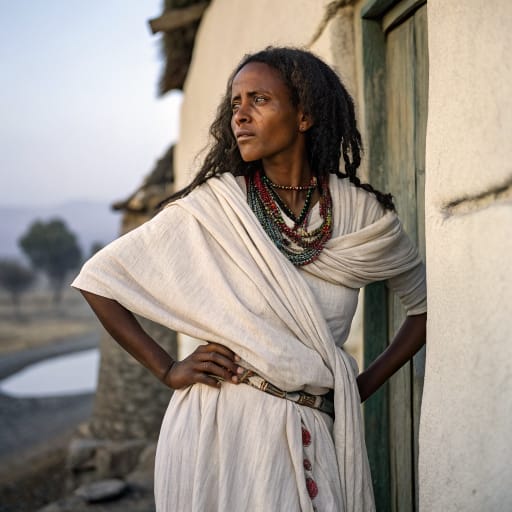
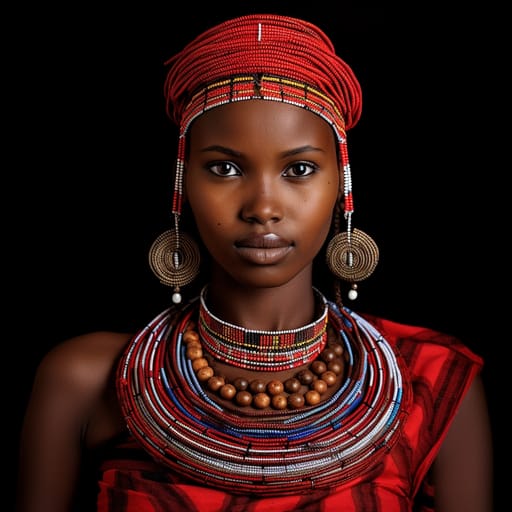
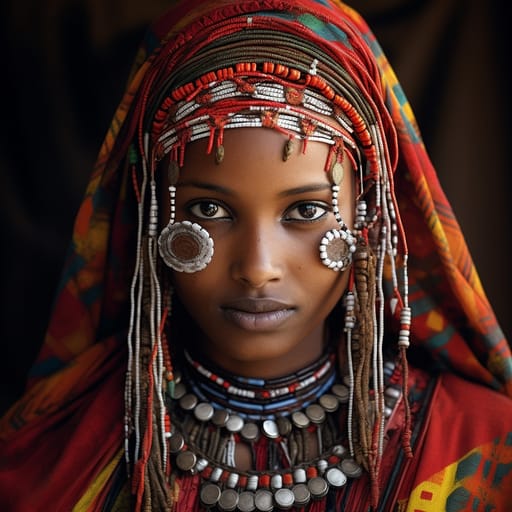
Typical Tunni Phenotypes
Reference for AI generation: hair, eyes, skin, facial structure, build
Tunni Body & Anatomy Reference
Anatomy by feature, Cushitic / Nilo-Cushitic East African phenotype
Tunni Boobs & Breasts
Tunni boobs follow the Cushitic / Nilo-Cushitic East African profile: small-to-medium-cup, high-set, conical. Areolar diameter is usually 28-38mm, and the coloring is moderate-to-high areolar pigmentation against the brown-to-deep-brown skin tone. Breast shape tracks body composition (lean ectomorph-to-mesomorph, mean adult female BMI 19-22), so Tunni breasts tend to be firmer and less projecting than the African-American or West African norm. Expect a forward-set shape, not the lateral spread of the West African phenotype.
Tunni Ass & Hips
Tunni ass and hip morphology presents as small-to-medium, high-set, rounded, distinctly different from the wide-set heavy-projection West African or African-American norm. The Tunni pelvic profile shows narrow-to-medium iliac crests, longer torso-to-leg ratio, anchored in the Cushitic / Nilo-Cushitic East African skeletal pattern. Tunni butt shots in adult AI imagery should render the small-to-medium, high-set, rounded silhouette with the overall build (lean ectomorph-to-mesomorph) and the fat distribution typical of the Cushitic / Nilo-Cushitic East African phenotype.
Tunni Vagina & Pussy
Tunni pussy anatomy typically shows brown-to-deep-brown labial pigmentation, narrow-to-medium labia minora projection. Pubic hair is usually tightly-coiled coarse texture, densely distributed. In AI-generated Tunni nudes, labial color should blend into the brown to deep brown skin with a gradual transition, and the hair should keep its tightly-coiled coarse texture.
Tunni Dicks & Penis
Penis reference for Tunni men: regional mean ~13.5cm erect, moderate girth, ~12cm circumference. Coloring: deeper-pigmented than the West African norm. An accurate Tunni cock in AI imagery matches the surrounding brown to deep brown skin rather than a generic porn default. Circumcision depends on religion and custom, not ancestry.
Tunni Body, Curves & Build
The Tunni figure is generally lean ectomorph-to-mesomorph, with mean adult female BMI 19-22, characteristic of Cushitic / Nilo-Cushitic East African ancestry. AI image tools tend to flatten regional body types into a few stock shapes; here the Tunni build is kept as its own reference.
Tunni Skin Tone & Hair Texture
Skin: brown to deep brown (Fitzpatrick V-VI). Hair: tight 4A-4C coil, often worn natural or in braided/twisted protective styles. Both are typical of Cushitic / Nilo-Cushitic East African ancestry. The most common mistake in AI nudes of Tunni women is a body rendered lighter than the face.
Explore phenotype categories
Structured taxonomy with peer-reviewed scales · 22 anatomical categories
Erotic Poses & Sex Positions
From the pose catalog: 219 named positions with reference skeletons
Frequently asked questions about Tunni people
Where is the Tunni homeland?
The Tunni homeland is Lower Shabelle region of southern Somalia, especially Brava (Barawe) and the countryside between the lower Shabelle River and the Indian Ocean in Eastern Africa.
What language do Tunni people speak?
Tunni people primarily speak Af Tunni, a southern Somali variety often grouped with the Digil languages, alongside Standard Somali for schooling and media (Cushitic, Afroasiatic).
What religion do Tunni people practice?
The predominant religion among Tunni people is Sunni Islam, Shafi'i school, with a strong Sufi tradition, especially the Qadiriyya associated with Brava.






Make your own Tunni images
Five a day, free, no credits to buy. The studio starts from this group's phenotype data, so you can set body type, pose and style and keep the traits accurate.
Start with Tunni