No portrait yet
Toshavim Erotic
The Maghreb, chiefly Morocco: Fez, Sijilmasa and the Jewish communities of the Atlas Mountains and southern oases.
Judeo-Arabic (Afro-Asiatic, Semitic), and Berber in some mountain communities (Afro-Asiatic, Berber); Hebrew and Aramaic for liturgy and study.
Rabbinic Judaism; older local North African customs were later largely replaced by the Castilian Sephardic rite of the Megorashim.
Native Maghrebi Jews, the pre-1492 counterpart to the Megorashim (Sephardic exiles); merged with them into the Moroccan Jewish community.
About Toshavim People
The Toshavim were the Jews already living in North Africa, above all in Morocco, when refugees from Spain and Portugal arrived after 1492, and over the following centuries they merged so thoroughly with those newcomers that today's Moroccan Jews, most of them now in Israel, France and Canada, descend from both. The name is Hebrew for residents, and it only makes sense as half of a pair; the other half was the Megorashim, the expelled. Before the exiles came, the Toshavim were simply the Jewish communities of Fez, Sijilmasa and many smaller settlements in the Atlas and the southern oases, with roots in the region going back at least to Roman times. They lived under Muslim rulers as a protected but subordinate minority and spoke what their neighbors spoke: Judeo-Arabic, written in Hebrew letters, in the towns and plains, and Berber in some mountain villages. Fez was a real seat of learning; the eleventh-century legal scholar Isaac Alfasi carried the city's name with him to Spain, a small irony given who would later come back the other way. The community also absorbed hard breaks, among them the Almohad forced conversions of the twelfth century and the relocation of Fez's Jews into a separate quarter, the mellah, in the fifteenth.
The arrival of the Megorashim turned a quiet fact into an open argument. The exiles brought their own rabbis, the Spanish language, the prestige of Castilian scholarship and a firm belief that their customs were the correct ones. In Fez the two groups kept separate congregations and quarreled over how slaughtered meat should be inspected and how marriage and inheritance should work. The exiles' ordinances, rooted in Castilian practice, eventually became binding on the whole community, and the Sephardic rite displaced older local usage. The merger was not one-sided, though. Over time the exiles' descendants in Fez gave up Spanish for the Judeo-Arabic of the Toshavim, while in northern towns like Tetouan and Tangier Spanish lived on as Haketia. Away from the exiles' urban strongholds, Jewish families in the High Atlas and the pre-Saharan valleys kept older ways longest, working as silversmiths, cobblers and traders among Amazigh villages. The mass emigration that followed 1948 and Moroccan independence emptied most of those places. The Toshavim survive now as a layer rather than a group: in the Judeo-Arabic and Berber heritage of Moroccan Jewish families, and in a community whose ancestry runs both to the medieval Maghreb and to Castile.
Related ethnic groups
Groups that share Toshavim's homeland, region, language, or religious tradition. These are likely candidates for comparative phenotype reference.
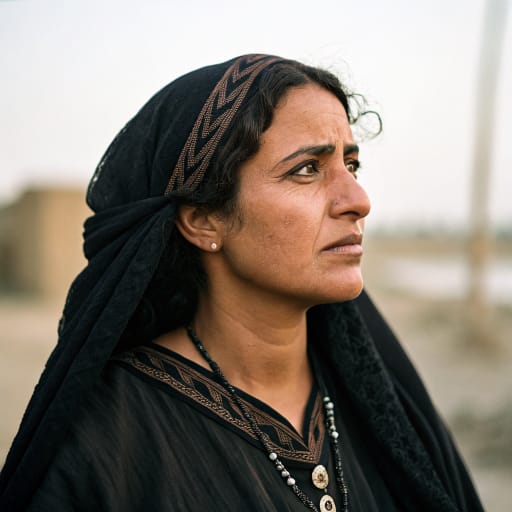
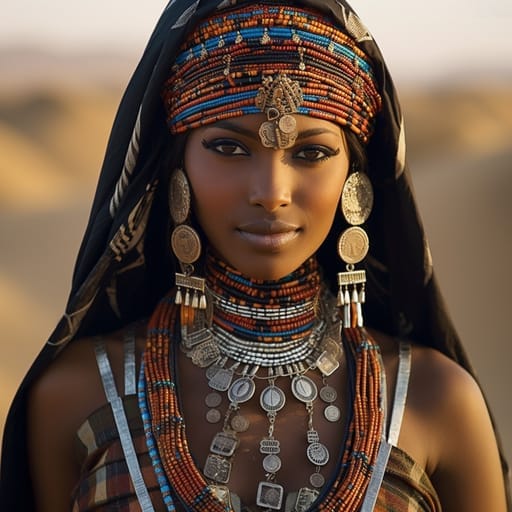
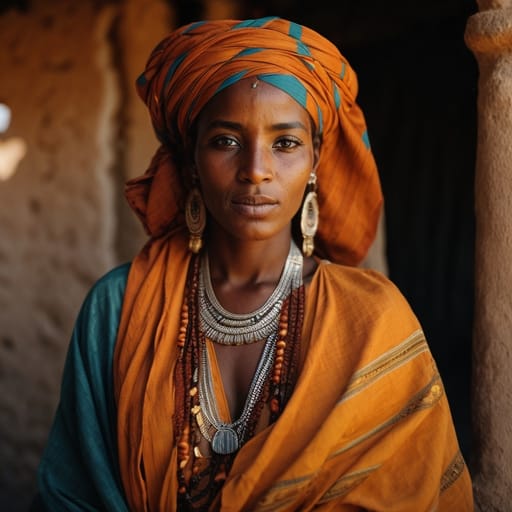
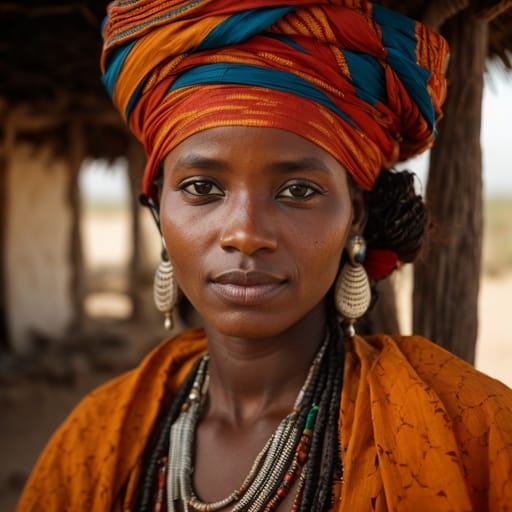
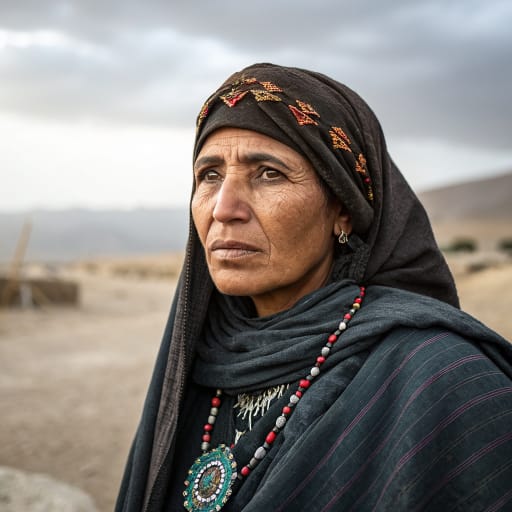
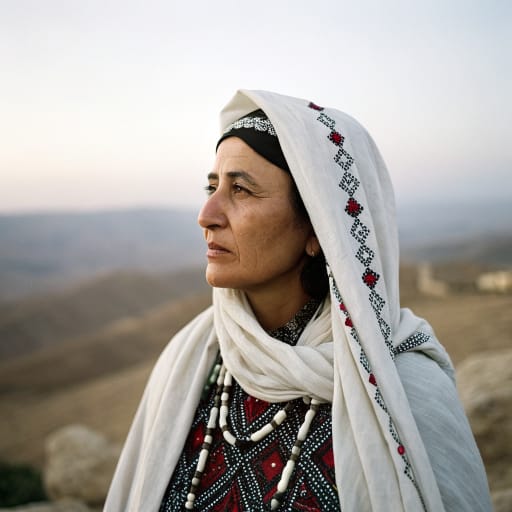
Typical Toshavim Phenotypes
Reference for AI generation: hair, eyes, skin, facial structure, build
Toshavim Body & Anatomy Reference
Berber / Mediterranean-Saharan phenotype: anatomy reference for AI nude generation
Toshavim Boobs & Breasts
The typical Toshavim bust is medium-to-large cup, full, moderate projection, in line with the wider Berber / Mediterranean-Saharan pattern. Areolas usually fall in the 30-44mm range, with medium-brown to dark-brown areolar pigmentation against the olive-to-light-brown skin tone. Compared with the smaller East Asian bust profile, Toshavim breasts sit forward and are generally fuller and softer than the Cushitic East African norm. A faithful AI render of Toshavim tits keeps that shape and areola size.
Toshavim Ass & Hips
Butt shape among Toshavim women: medium-to-full, moderate projection, broader hip profile, over medium-to-wide iliac crests, fuller gluteal-femoral fat distribution. This follows Berber / Mediterranean-Saharan ancestry and looks quite unlike the slim narrow-hip Cushitic East African profile. An accurate Toshavim ass in adult AI imagery keeps both the silhouette and the overall build (mesomorph with fuller hip-and-bust deposition) instead of a generic average.
Toshavim Vagina & Pussy
Vulvar anatomy among Toshavim women: medium-brown to dark-brown labial pigmentation, fuller labia minora. Pubic hair tends to be wavy-to-coiled medium-coarse texture, dense distribution, in the usual inverted-triangle pattern. Both follow Berber / Mediterranean-Saharan pigmentation, which is why Toshavim pussy renders should not fall back on a pale, sparse Western template.
Toshavim Dicks & Penis
The Toshavim cock profile, from Berber / Mediterranean-Saharan anthropometric data: regional mean ~13-14cm erect; moderate girth; medium-brown shaft pigmentation. Pubic hair has a wavy-to-coiled medium-coarse texture and forms the usual inverted-V pattern. Whether Toshavim men are circumcised follows religious and cultural practice rather than phenotype.
Toshavim Body, Curves & Build
Build and curves among Toshavim women follow the Berber / Mediterranean-Saharan pattern: mesomorph with fuller hip-and-bust deposition, mean adult female BMI 24-28. Proportions matter as much as skin tone, so Toshavim figures should keep their regional height and limb ratios.
Toshavim Skin Tone & Hair Texture
The Toshavim skin range is olive to medium-brown (Fitzpatrick III-V), and hair tends to be wavy-to-curly 2B-3C, often dark-brown to black. That combination marks the Berber / Mediterranean-Saharan phenotype, and skin tone is the trait AI generators most often get wrong for Toshavim women.
Explore phenotype categories
Structured taxonomy with peer-reviewed scales · 22 anatomical categories
Erotic Poses & Sex Positions
From the pose catalog: 219 named positions with reference skeletons
Frequently asked questions about Toshavim people
Where is the Toshavim homeland?
The Toshavim homeland is The Maghreb, chiefly Morocco: Fez, Sijilmasa and the Jewish communities of the Atlas Mountains and southern oases. in Northern Africa.
What language do Toshavim people speak?
Toshavim people primarily speak Judeo-Arabic (Afro-Asiatic, Semitic), and Berber in some mountain communities (Afro-Asiatic, Berber); Hebrew and Aramaic for liturgy and study..
What religion do Toshavim people practice?
The predominant religion among Toshavim people is Rabbinic Judaism; older local North African customs were later largely replaced by the Castilian Sephardic rite of the Megorashim..






Make your own Toshavim images
Five a day, free, no credits to buy. The studio starts from this group's phenotype data, so you can set body type, pose and style and keep the traits accurate.
Start with Toshavim