Help us get this right
Does this portrait look right for Aït Abbas?
Nobody has judged this one yet. You would be the first.
Aït Abbas Erotic
The Biban mountains and the southern slopes of the Soummam valley in Lesser Kabylia, around Ighil Ali and the Kalâa of Beni Abbès, Béjaïa Province, Algeria.
Kabyle (Berber, Afroasiatic); Algerian Arabic and French also widely spoken
Sunni Islam (Maliki school), with strong marabout and Sufi traditions, notably the Rahmaniyya order
A tribal group of Lesser Kabylia within the wider Kabyle (Berber) people; the Mokrani (Amokrane) family descends from its former ruling house.
About Aït Abbas People
The Aït Abbas are a Kabyle people of the Biban mountains, the hard country where Lesser Kabylia drops toward the high plains of eastern Algeria. Plenty of Kabyle tribes have their own name and their own villages. What sets the Aït Abbas apart is that they once had their own state. For about three centuries their mountain citadel, the Kalâa of Beni Abbès, was the seat of an independent kingdom that dealt with Algiers, Spain and its Kabyle rivals on its own terms. They should not be confused with Beni Abbès, the Saharan oasis town far to the southwest. Their villages sit on ridges above the Soummam valley, around Ighil Ali and the old Kalâa, in what is now Béjaïa Province. They speak Kabyle, a Berber language, and they live close to a language border: cross the Bibans south onto the Medjana plain and Arabic takes over. They are Sunni Muslims of the Maliki school. In the villages, marabout families and Sufi lodges have long shaped that faith more than distant scholars have. Ighil Ali also produced one of the stranger threads in Kabyle history: the Amrouche family, who were Catholic converts. Their son Jean became a well-known French-language poet and radio broadcaster.
A mountain kingdom
The kingdom grew up in the early sixteenth century, after the Spanish took Béjaïa and the old order on the coast fell apart. Its rulers held the pass known as the Iron Gates, the main land route between Algiers and Constantine, and Ottoman columns crossing it were expected to pay a toll. The Kalâa became a fortified town of craftsmen, known for its weapons and for fine wool burnous cloaks still linked to the Beni Abbès name. Its sultans sometimes fought the Ottoman government in Algiers and sometimes made uneasy alliances with it. They also kept up a long rivalry with the Kingdom of Kuku in Greater Kabylia. The ruling house lived on as the Mokrani family, who moved much of their power to the Medjana plain. In 1871 Cheikh Mohamed El Mokrani rose against French rule. The Rahmaniyya Sufi order joined him under Cheikh El Haddad, and much of Kabylia followed. The revolt was crushed within a year. Heavy fines, land seizures and deportations to New Caledonia followed. Today many Aït Abbas families live in Béjaïa, Algiers and France, but the name still stands for a time when these mountains answered to no outside ruler.
Related ethnic groups
Groups that share Aït Abbas's homeland, region, language, or religious tradition. These are likely candidates for comparative phenotype reference.
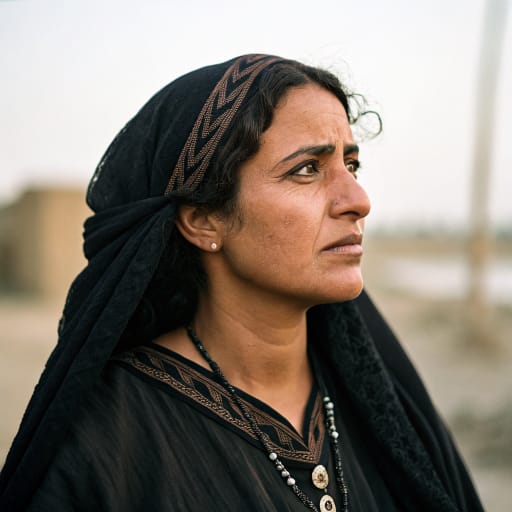
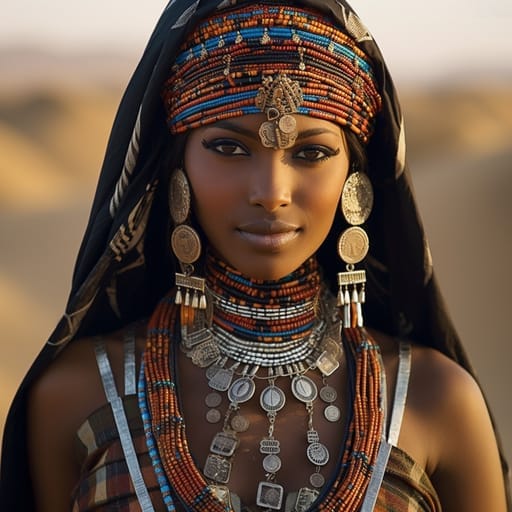
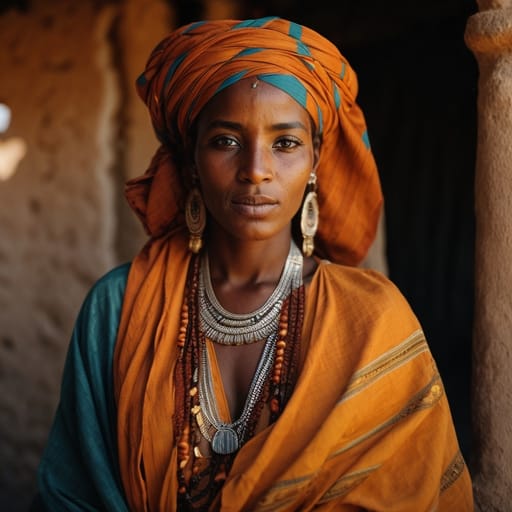
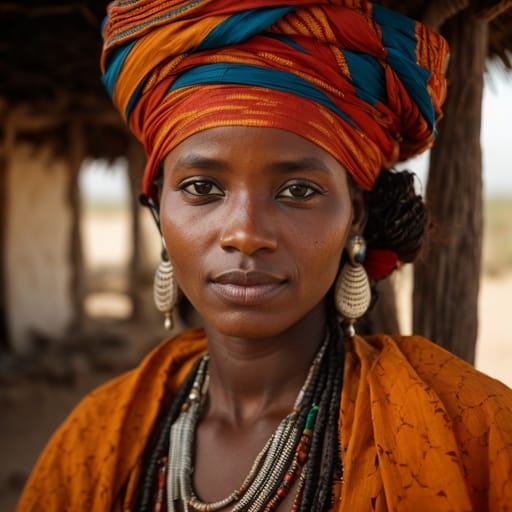
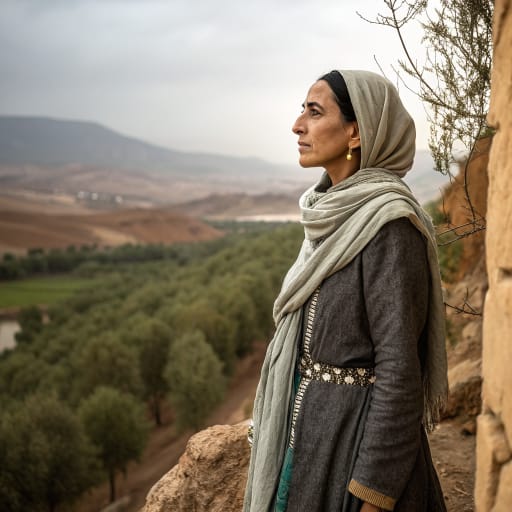
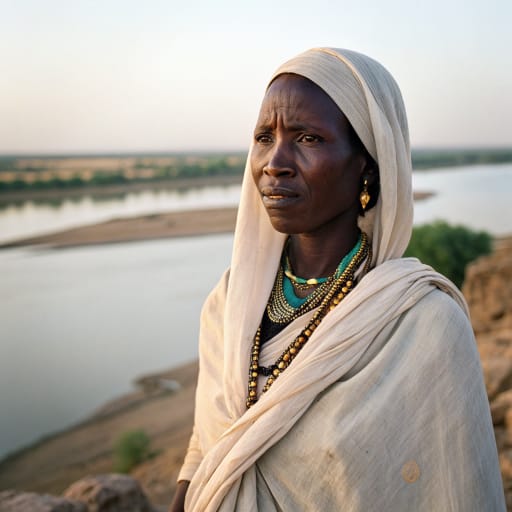
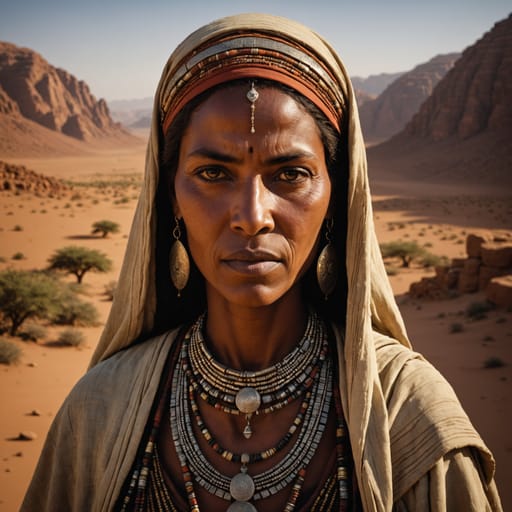
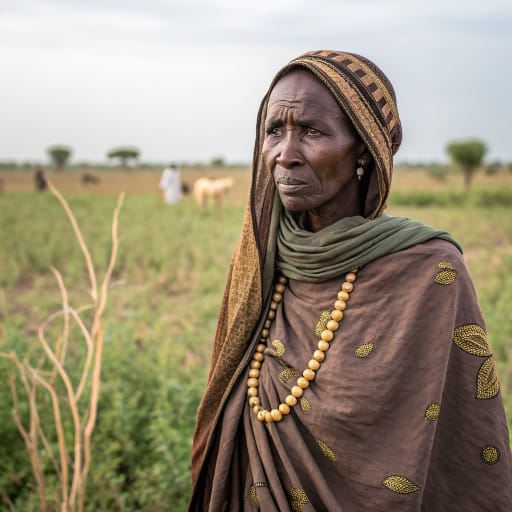
Typical Aït Abbas Phenotypes
Reference for AI generation: hair, eyes, skin, facial structure, build
Aït Abbas Body & Anatomy Reference
Anatomy by feature, Berber / Mediterranean-Saharan phenotype
Aït Abbas Boobs & Breasts
Bust reference for Aït Abbas women: medium-to-large cup, full, moderate projection, which is typical of Berber / Mediterranean-Saharan ancestry. Areolas measure about 30-44mm across, with medium-brown to dark-brown pigmentation. Body type (mesomorph with fuller hip-and-bust deposition) shapes the bust as well, so Aït Abbas tits are usually fuller and softer than the Cushitic East African norm. In AI imagery, keep the forward-set shape rather than drifting toward the smaller East Asian bust profile.
Aït Abbas Ass & Hips
The Aït Abbas ass is typically medium-to-full, moderate projection, broader hip profile, which sets it apart from the slim narrow-hip Cushitic East African profile. Underneath, the pelvis shows medium-to-wide iliac crests, fuller gluteal-femoral fat distribution, part of the Berber / Mediterranean-Saharan skeletal pattern. For Aït Abbas butt pics and AI renders, match that silhouette and the overall build (mesomorph with fuller hip-and-bust deposition).
Aït Abbas Vagina & Pussy
Aït Abbas pussy and vulvar anatomy presents medium-brown to dark-brown labial pigmentation, fuller labia minora, consistent with the Berber / Mediterranean-Saharan phenotype's pigmentation pattern. Aït Abbas pubic hair is typically wavy-to-coiled medium-coarse texture, dense distribution, in the inverted-triangle pattern. For anatomically accurate Aït Abbas pussy renders the labial coloration should match the surrounding olive to medium-brown skin tone with a continuous gradient, and the hair should keep its wavy-to-coiled medium-coarse texture.
Aït Abbas Dicks & Penis
Aït Abbas dicks follow the Berber / Mediterranean-Saharan reference data: regional mean ~13-14cm erect; moderate girth; medium-brown shaft pigmentation. Shaft color should track the olive to medium-brown skin tone with a smooth change toward the glans, and Aït Abbas pubic hair keeps its wavy-to-coiled medium-coarse texture.
Aït Abbas Body, Curves & Build
Aït Abbas body type and overall build presents as mesomorph with fuller hip-and-bust deposition, with mean adult female BMI 24-28: the characteristic Berber / Mediterranean-Saharan habitus. Aït Abbas curves and proportions should keep the regional skeletal frame (height, shoulder-to-hip ratio, limb proportions) rather than a generic mesomorph default.
Aït Abbas Skin Tone & Hair Texture
Aït Abbas skin sits in the olive to medium-brown (Fitzpatrick III-V) band. Hair is typically wavy-to-curly 2B-3C, often dark-brown to black, in keeping with the Berber / Mediterranean-Saharan phenotype. In nude renders the skin should stay one even tone from face to body, and body, pubic and head hair should match.
Explore phenotype categories
Structured taxonomy with peer-reviewed scales · 22 anatomical categories
Erotic Poses & Sex Positions
From the pose catalog: 219 named positions with reference skeletons
Frequently asked questions about Aït Abbas people
Where is the Aït Abbas homeland?
The Aït Abbas homeland is The Biban mountains and the southern slopes of the Soummam valley in Lesser Kabylia, around Ighil Ali and the Kalâa of Beni Abbès, Béjaïa Province, Algeria. in Northern Africa.
What language do Aït Abbas people speak?
Aït Abbas people primarily speak Kabyle (Berber, Afroasiatic); Algerian Arabic and French also widely spoken.
What religion do Aït Abbas people practice?
The predominant religion among Aït Abbas people is Sunni Islam (Maliki school), with strong marabout and Sufi traditions, notably the Rahmaniyya order.






Make your own Aït Abbas images
Five a day, free, no credits to buy. The studio starts from this group's phenotype data, so you can set body type, pose and style and keep the traits accurate.
Start with Aït Abbas