Help us get this right
Does this portrait look right for Baranis?
Nobody has judged this one yet. You would be the first.
Baranis Erotic
The Maghreb and western Sahara, from Tunisia and eastern Algeria to Atlantic Morocco and Mauritania
Medieval Berber varieties (Afroasiatic, Berber); later branches include Tashelhit, Kabyle and Zenaga, with wide shift to Maghrebi Arabic (Afroasiatic, Semitic)
Christianity and local beliefs before the Arab conquest; then Islam, including Kutama Ismaili Shiism, Almoravid Maliki Sunnism and Almohad doctrine
One of two medieval Berber divisions, set against the Butr. Tribes in Ibn Khaldun's scheme include Sanhaja, Masmuda, Kutama, Awraba, Azdaja, Ajisa, Awrigha, Lamta, Haskura and Gazula; the Hawwara were placed on either side
About Baranis People
The Baranis were one half of the Berber world as medieval North African genealogists drew it: a family of tribes spread from Tunisia to Atlantic Morocco and the western Sahara, prominent between the 7th and 13th centuries, whose descendants form much of the Amazigh and Arabic-speaking population of the Maghreb today. The other half were the Butr. The two were said to descend from brothers, Burnus and Madghis al-Abtar. Berber genealogists built the scheme, and Ibn Khaldun set it down most fully in the 14th century. Whether it preserved a native division or tidied a messy political map into a family tree is still debated.
The name invites guesses. One links Baranis to the burnous, the hooded wool cloak still worn across North Africa, and reads Butr through an Arabic word for something cut short, as if the split were between long cloaks and short tunics. Colonial-era French historians preferred a cleaner story: Baranis as settled farmers, Butr as nomads. The tribe lists do not cooperate. The Sanhaja, firmly Baranis, included the veiled camel herders of the Sahara. The sources did not agree on every tribe either, and the Hawwara turn up on both sides.
The branches mattered more than the label. The Awraba, led by Kusayla, killed the Arab commander Uqba ibn Nafi in 683 and briefly held Kairouan. A century later, settled around the Roman ruins of Volubilis, they took in the fugitive Idris ibn Abdallah and backed the dynasty that built Fez. The Kutama of the eastern Algerian highlands took up the Ismaili cause and supplied the army that brought the Fatimids to power in 909. Sanhaja lines produced the Zirid and Hammadid rulers, and the desert Sanhaja, the Lamtuna and Guddala, launched the Almoravid movement that founded Marrakesh and crossed into al-Andalus. The Masmuda of the High Atlas rallied to Ibn Tumart and carried the Almohads to empire.
Religion ran through this. Before the conquest these tribes lived alongside Roman and Byzantine Christianity and older local beliefs. Afterward they took up Islam and bent it to their own politics, from Kutama Shiism to Almoravid Maliki rigor to the Almohad doctrine of God's absolute unity. On the Atlantic plain the Barghawata, counted among the Masmuda, went further and kept a prophet and scripture of their own for centuries.
No one calls themselves Baranis now, but the tribal names persist: in the Tashelhit-speaking communities of the Souss and High Atlas, long linked to the Masmuda; in Kabylia, where the Kutama and their Zwawa kin once held the hills; and in Mauritania's Zenaga language, whose name comes from the same Berber word as Sanhaja.
Related ethnic groups
Groups that share Baranis's homeland, region, language, or religious tradition. These are likely candidates for comparative phenotype reference.
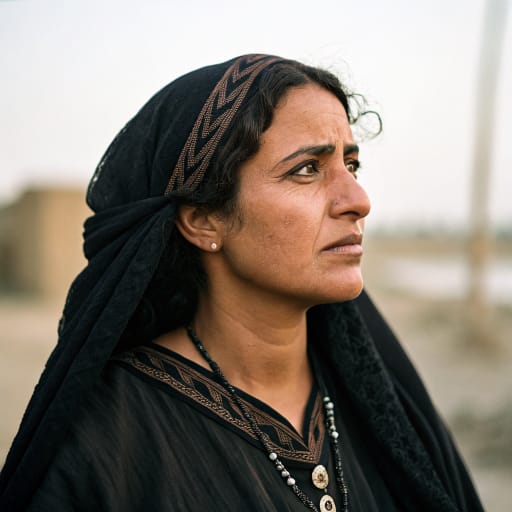
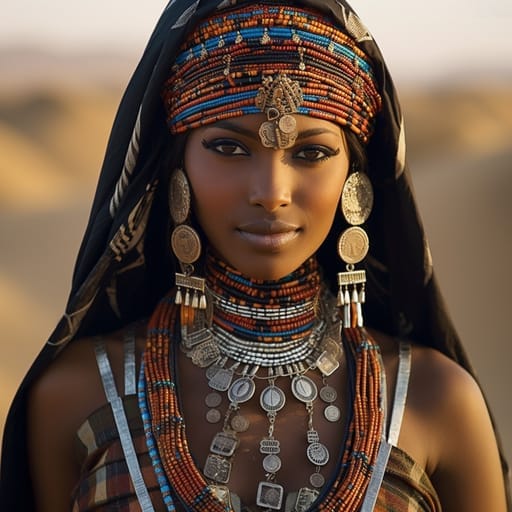
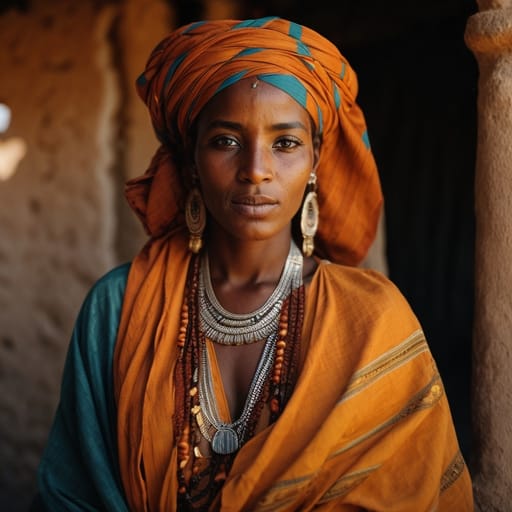
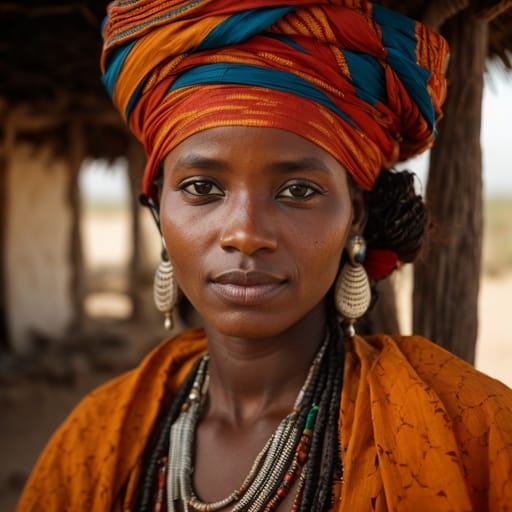
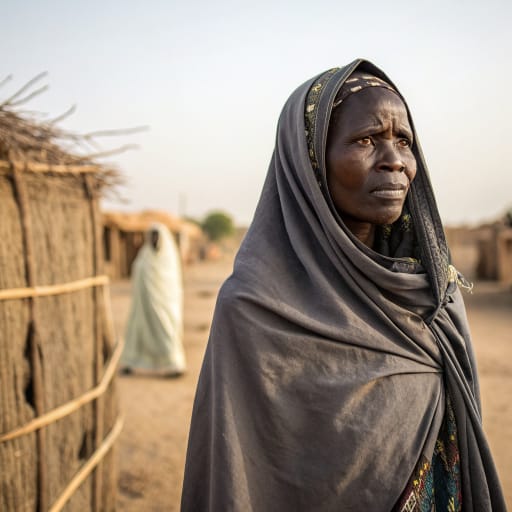
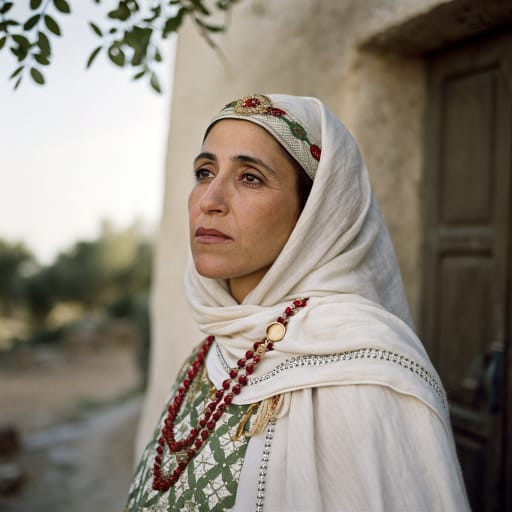
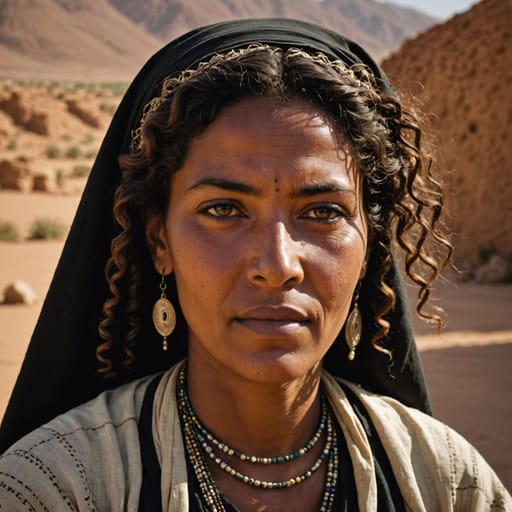
Typical Baranis Phenotypes
Reference for AI generation: hair, eyes, skin, facial structure, build
Baranis Body & Anatomy Reference
Berber / Mediterranean-Saharan phenotype: anatomy reference for AI nude generation
Baranis Boobs & Breasts
Baranis boobs follow the Berber / Mediterranean-Saharan profile: medium-to-large cup, full, moderate projection. Areolar diameter is usually 30-44mm, and the coloring is medium-brown to dark-brown areolar pigmentation against the olive-to-light-brown skin tone. Breast shape tracks body composition (mesomorph with fuller hip-and-bust deposition, mean adult female BMI 24-28), so Baranis breasts tend to be fuller and softer than the Cushitic East African norm. Expect a forward-set shape, not the smaller East Asian bust profile.
Baranis Ass & Hips
Baranis ass and hip morphology presents as medium-to-full, moderate projection, broader hip profile, distinctly different from the slim narrow-hip Cushitic East African profile. The Baranis pelvic profile shows medium-to-wide iliac crests, fuller gluteal-femoral fat distribution, anchored in the Berber / Mediterranean-Saharan skeletal pattern. Baranis butt shots in adult AI imagery should render the medium-to-full, moderate projection, broader hip profile silhouette with the overall build (mesomorph with fuller hip-and-bust deposition) and the fat distribution typical of the Berber / Mediterranean-Saharan phenotype.
Baranis Vagina & Pussy
Baranis pussy anatomy typically shows medium-brown to dark-brown labial pigmentation, fuller labia minora. Pubic hair is usually wavy-to-coiled medium-coarse texture, dense distribution. In AI-generated Baranis nudes, labial color should blend into the olive to medium-brown skin with a gradual transition, and the hair should keep its wavy-to-coiled medium-coarse texture.
Baranis Dicks & Penis
Penis reference for Baranis men: regional mean ~13-14cm erect, moderate girth. Coloring: medium-brown shaft pigmentation. An accurate Baranis cock in AI imagery matches the surrounding olive to medium-brown skin rather than a generic porn default. Circumcision depends on religion and custom, not ancestry.
Baranis Body, Curves & Build
The Baranis figure is generally mesomorph with fuller hip-and-bust deposition, with mean adult female BMI 24-28, characteristic of Berber / Mediterranean-Saharan ancestry. AI image tools tend to flatten regional body types into a few stock shapes; here the Baranis build is kept as its own reference.
Baranis Skin Tone & Hair Texture
Skin: olive to medium-brown (Fitzpatrick III-V). Hair: wavy-to-curly 2B-3C, often dark-brown to black. Both are typical of Berber / Mediterranean-Saharan ancestry. The most common mistake in AI nudes of Baranis women is a body rendered lighter than the face.
Explore phenotype categories
Structured taxonomy with peer-reviewed scales · 22 anatomical categories
Erotic Poses & Sex Positions
From the pose catalog: 219 named positions with reference skeletons
Frequently asked questions about Baranis people
Where is the Baranis homeland?
The Baranis homeland is The Maghreb and western Sahara, from Tunisia and eastern Algeria to Atlantic Morocco and Mauritania in Northern Africa.
What language do Baranis people speak?
Baranis people primarily speak Medieval Berber varieties (Afroasiatic, Berber); later branches include Tashelhit, Kabyle and Zenaga, with wide shift to Maghrebi Arabic (Afroasiatic, Semitic).
What religion do Baranis people practice?
The predominant religion among Baranis people is Christianity and local beliefs before the Arab conquest; then Islam, including Kutama Ismaili Shiism, Almoravid Maliki Sunnism and Almohad doctrine.






Make your own Baranis images
Five a day, free, no credits to buy. The studio starts from this group's phenotype data, so you can set body type, pose and style and keep the traits accurate.
Start with Baranis