No portrait yet
Abbala Erotic
Northern Darfur and North Kordofan in Sudan, and eastern Chad
Sudanese Arabic and Chadian Arabic (Afro-Asiatic, Semitic)
Sunni Islam, Maliki school
Northern Rizeigat sections such as the Mahamid, Mahariya and Nawaiba; other camel herding Arab tribes, including the Zayadiya and Kababish, are often counted among them; counterparts of the cattle herding Baggara
About Abbala People
The name says it plainly. Abbala comes from the Arabic word for camels, and it marks the Arab tribes of Sudan and eastern Chad whose lives run on the camel, as against their cousins the Baggara, who herd cattle. The split is ecological before it is social. Camels can work the dry northern belt of Darfur and Kordofan, where the Sahel thins into the Sahara; cattle need the wetter grasslands to the south. Most Abbala lineages trace themselves to Juhayna Arabs who moved south and west out of Egypt over centuries, and genealogy is not a hobby here: among other things, it decides who pays when blood money is owed.
They speak Arabic, in the Sudanese and Chadian varieties that also serve as the common tongue among Darfur's many peoples, and they are Sunni Muslims of the Maliki school. The best known Abbala are the Northern Rizeigat of Darfur, whose sections include the Mahamid, Mahariya and Nawaiba. The year follows the rains. As the wet season greens the north, herds move up toward the desert fringe. As the pasture fails, they come back south along old livestock corridors that cut through farmland held by settled communities. For generations, camels from these ranges have also been driven north to Egyptian markets, historically along the Forty Days Road.
Those corridors are where modern history turns. Under the Darfur sultanate and then British rule, the Northern Rizeigat never held a tribal homeland of their own, a dar, unlike the cattle herding Rizeigat to the south. Drought in the 1970s and 1980s pushed herds deeper into farming country and sharpened fights over land and water. When war broke out in Darfur in 2003, the government recruited heavily from Abbala sections for the militias known as the Janjaweed, and the Mahamid chief Musa Hilal became one of their best known figures. Mohamed Hamdan Dagalo, known as Hemedti, a Mahariya, rose out of the same world to lead the Rapid Support Forces, one of the two armies in the civil war that began in 2023. The tribe is not the militia, though, and Hilal and Hemedti themselves ended up as rivals.
Camp life still turns on camel milk and movement. Women praise singers known as hakkamat compose verses that honor a man's courage or mock his cowardice. Their songs carry enough weight that both militia recruiters and peace campaigners have sought them out.
Related ethnic groups
Groups that share Abbala's homeland, region, language, or religious tradition. These are likely candidates for comparative phenotype reference.
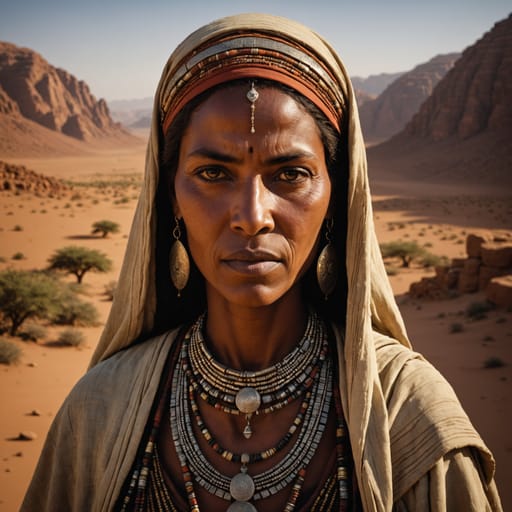
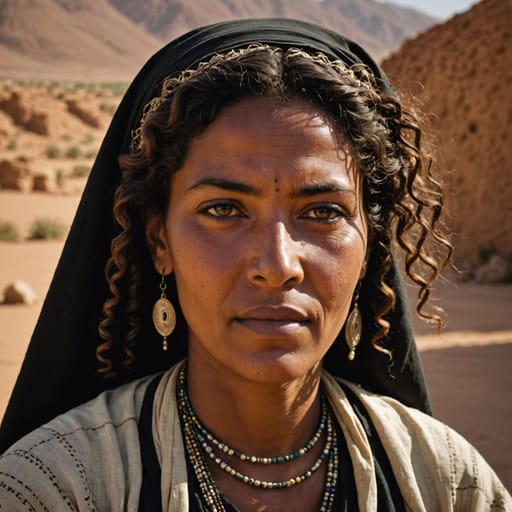
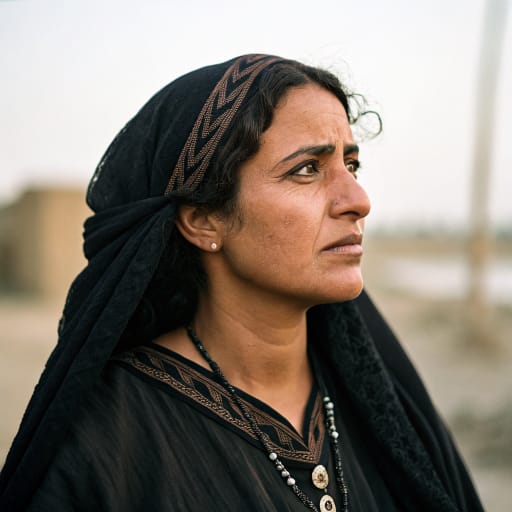
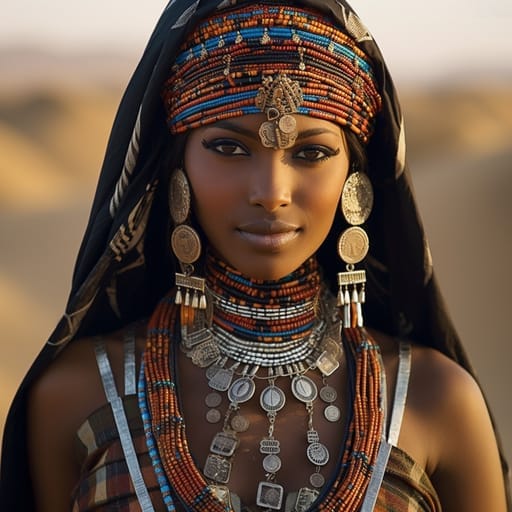
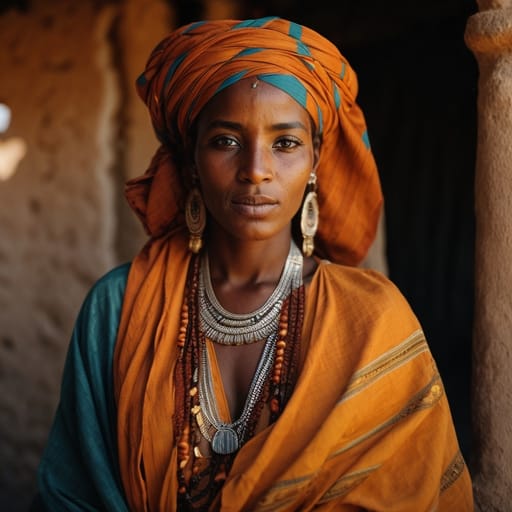
Typical Abbala Phenotypes
Reference for AI generation: hair, eyes, skin, facial structure, build
Explore phenotype categories
Structured taxonomy with peer-reviewed scales · 22 anatomical categories
Erotic Poses & Sex Positions
From the pose catalog: 219 named positions with reference skeletons
Frequently asked questions about Abbala people
Where is the Abbala homeland?
The Abbala homeland is Northern Darfur and North Kordofan in Sudan, and eastern Chad in Northern Africa.
What language do Abbala people speak?
Abbala people primarily speak Sudanese Arabic and Chadian Arabic (Afro-Asiatic, Semitic).
What religion do Abbala people practice?
The predominant religion among Abbala people is Sunni Islam, Maliki school.






Make your own Abbala images
Five a day, free, no credits to buy. The studio starts from this group's phenotype data, so you can set body type, pose and style and keep the traits accurate.
Start with Abbala