No portrait yet
Banu Hilal Erotic
Originally the Najd and Hejaz of Arabia, then Upper Egypt, and from the mid-eleventh century the Maghreb: Tunisia, Algeria, Libya and the Atlantic plains of Morocco.
Arabic, Hilalian Bedouin dialects of Maghrebi Arabic (Semitic, Afroasiatic)
Sunni Islam, Maliki school in the Maghreb
Qaysi Arabs of the Banu Amir ibn Sa'sa'a. Main sections: Athbaj, Riyah, Zughba, Jusham, Qurra and Rabi'a. Descendant tribes include the Hamyan, Douaouida, Sufyan and Khult.
About Banu Hilal People
The Banu Hilal were an Arab Bedouin confederation that swept out of Upper Egypt into the Maghreb in the middle of the eleventh century. No polity by that name survives, but millions of Tunisians, Algerians, Libyans and Moroccans trace their tribal lineage and their spoken Arabic to them. They started as camel herders of the Najd and Hejaz, a branch of the Banu Amir within the Qaysi grouping of northern Arabian tribes. Restless and hard to govern, they drifted into Egypt in the tenth century, joined Qarmatian raiding, and were parked by the Fatimid caliphs in the Nile valley south of Cairo. Around 1050 the Fatimids found a use for them. The Zirid rulers of Ifriqiya had broken with Cairo and declared for the Sunni Abbasids, so the vizier al-Yazuri reportedly handed each Hilali fighter a camel and a gold dinar and told them the west was theirs to take. They took it. The Zirid army broke at Haydaran in 1052, Kairouan was sacked in 1057, and the settled farmland of central Tunisia gave way to pasture and tribal patronage.
Ibn Khaldun, writing three centuries later, compared the Hilal and their Sulaym cousins to a swarm of locusts, and that image ruled European histories of North Africa for a long time. Modern historians are more cautious: the Zirid state was already fraying, and the newcomers were absorbed into local politics as often as they wrecked it. What nobody disputes is the linguistic result. Arabic had been a language of Maghrebi cities and courts. The Hilalians made it a language of the countryside. Dialectologists still sort Maghrebi Arabic into pre-Hilalian and Hilalian layers, and the Bedouin varieties spoken from the Libyan coast to the Atlantic plains descend from theirs. The Almohads beat the Riyah and Jusham sections near Setif in 1152 and resettled them on the Moroccan plains, which is how tribes such as the Sufyan and Khult came to be there. They were Sunni Muslims, and religion sat alongside a tribal code of honor, hospitality and raiding rather than replacing it. Their most durable monument, though, is a poem. The Sirat Bani Hilal, the epic of the migration west, with its hero Abu Zayd al-Hilali, the trickster Dhiyab ibn Ghanim, the shrewd Jaziya and their Zenata adversary al-Zanati Khalifa, is still sung to the rabab by hereditary poets in Upper Egypt, and UNESCO lists it as intangible heritage. In the Maghreb the reminders are quieter: tribal genealogies, place names, and the accent of a village market.
Related ethnic groups
Groups that share Banu Hilal's homeland, region, language, or religious tradition. These are likely candidates for comparative phenotype reference.
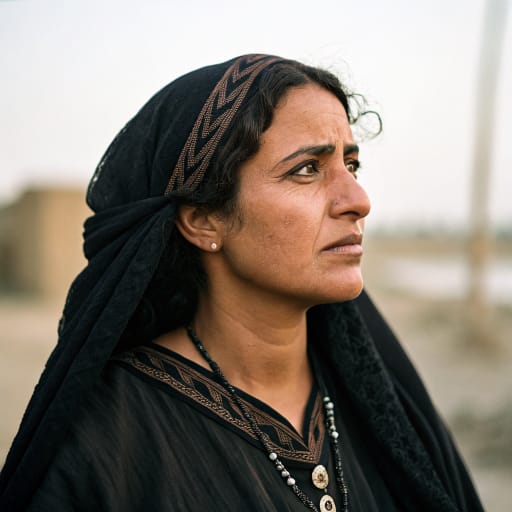
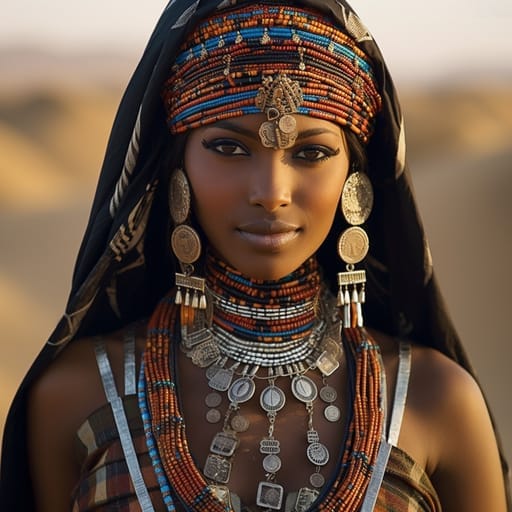
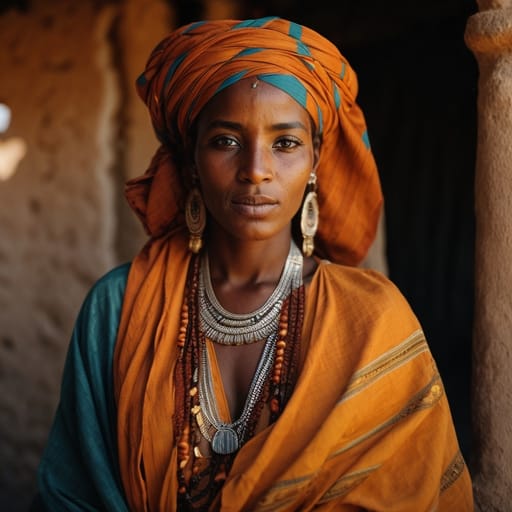
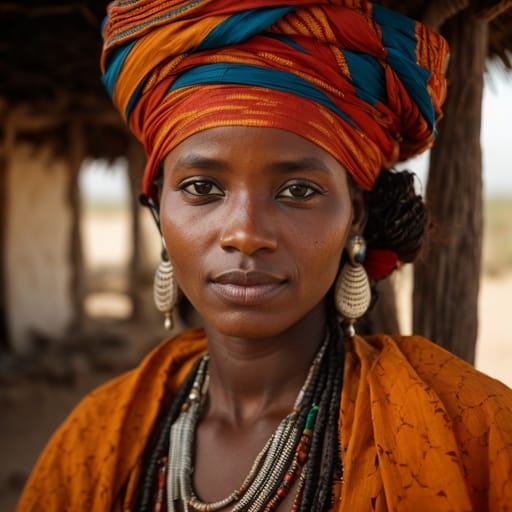
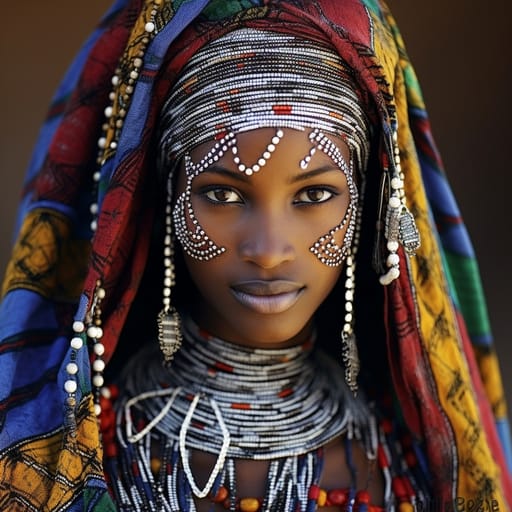
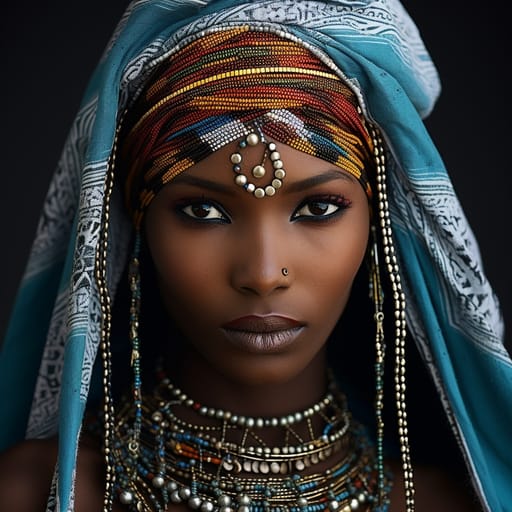
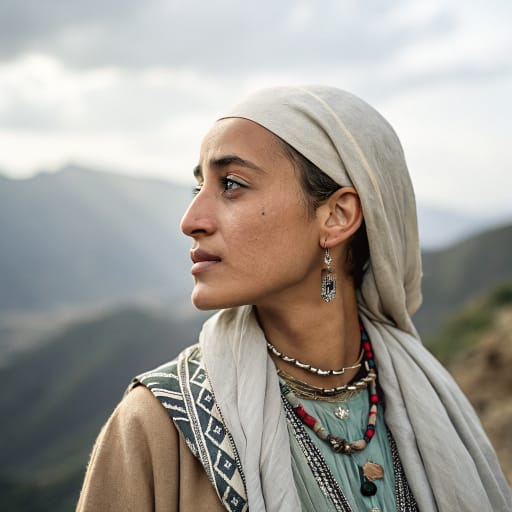
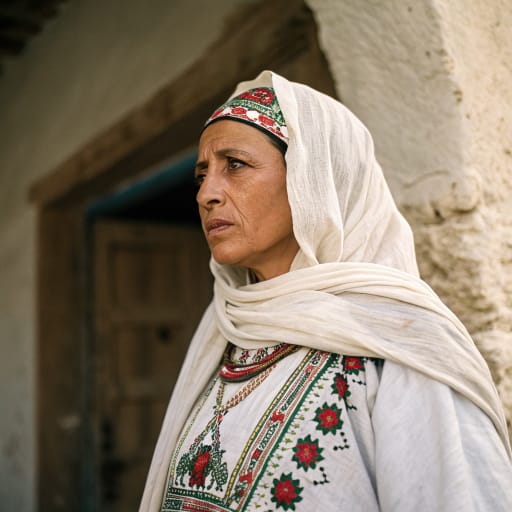
Typical Banu Hilal Phenotypes
Reference for AI generation: hair, eyes, skin, facial structure, build
Banu Hilal Body & Anatomy Reference
Anatomy by feature, Berber / Mediterranean-Saharan phenotype
Banu Hilal Boobs & Breasts
Banu Hilal boobs follow the Berber / Mediterranean-Saharan profile: medium-to-large cup, full, moderate projection. Areolar diameter is usually 30-44mm, and the coloring is medium-brown to dark-brown areolar pigmentation against the olive-to-light-brown skin tone. Breast shape tracks body composition (mesomorph with fuller hip-and-bust deposition, mean adult female BMI 24-28), so Banu Hilal breasts tend to be fuller and softer than the Cushitic East African norm. Expect a forward-set shape, not the smaller East Asian bust profile.
Banu Hilal Ass & Hips
Banu Hilal ass and hip morphology presents as medium-to-full, moderate projection, broader hip profile, distinctly different from the slim narrow-hip Cushitic East African profile. The Banu Hilal pelvic profile shows medium-to-wide iliac crests, fuller gluteal-femoral fat distribution, anchored in the Berber / Mediterranean-Saharan skeletal pattern. Banu Hilal butt shots in adult AI imagery should render the medium-to-full, moderate projection, broader hip profile silhouette with the overall build (mesomorph with fuller hip-and-bust deposition) and the fat distribution typical of the Berber / Mediterranean-Saharan phenotype.
Banu Hilal Vagina & Pussy
Banu Hilal pussy anatomy typically shows medium-brown to dark-brown labial pigmentation, fuller labia minora. Pubic hair is usually wavy-to-coiled medium-coarse texture, dense distribution. In AI-generated Banu Hilal nudes, labial color should blend into the olive to medium-brown skin with a gradual transition, and the hair should keep its wavy-to-coiled medium-coarse texture.
Banu Hilal Dicks & Penis
Penis reference for Banu Hilal men: regional mean ~13-14cm erect, moderate girth. Coloring: medium-brown shaft pigmentation. An accurate Banu Hilal cock in AI imagery matches the surrounding olive to medium-brown skin rather than a generic porn default. Circumcision depends on religion and custom, not ancestry.
Banu Hilal Body, Curves & Build
The Banu Hilal figure is generally mesomorph with fuller hip-and-bust deposition, with mean adult female BMI 24-28, characteristic of Berber / Mediterranean-Saharan ancestry. AI image tools tend to flatten regional body types into a few stock shapes; here the Banu Hilal build is kept as its own reference.
Banu Hilal Skin Tone & Hair Texture
Skin: olive to medium-brown (Fitzpatrick III-V). Hair: wavy-to-curly 2B-3C, often dark-brown to black. Both are typical of Berber / Mediterranean-Saharan ancestry. The most common mistake in AI nudes of Banu Hilal women is a body rendered lighter than the face.
Explore phenotype categories
Structured taxonomy with peer-reviewed scales · 22 anatomical categories
Erotic Poses & Sex Positions
From the pose catalog: 219 named positions with reference skeletons
Frequently asked questions about Banu Hilal people
Where is the Banu Hilal homeland?
The Banu Hilal homeland is Originally the Najd and Hejaz of Arabia, then Upper Egypt, and from the mid-eleventh century the Maghreb: Tunisia, Algeria, Libya and the Atlantic plains of Morocco. in Northern Africa.
What language do Banu Hilal people speak?
Banu Hilal people primarily speak Arabic, Hilalian Bedouin dialects of Maghrebi Arabic (Semitic, Afroasiatic).
What religion do Banu Hilal people practice?
The predominant religion among Banu Hilal people is Sunni Islam, Maliki school in the Maghreb.






Make your own Banu Hilal images
Five a day, free, no credits to buy. The studio starts from this group's phenotype data, so you can set body type, pose and style and keep the traits accurate.
Start with Banu Hilal