No portrait yet
Nobatae Erotic
Lower Nubia, the Nile valley from the First Cataract at Aswan south toward the Third Cataract, in present-day southern Egypt and northern Sudan; much of it now lies under Lake Nasser.
An early Nile Nubian language ancestral to Old Nubian and modern Nobiin (Northern East Sudanic, usually classed as Nilo-Saharan); Greek and Coptic used for inscriptions and letters.
Traditional Nubian and Egyptian cults, notably Isis of Philae, until about 543 CE; afterward Miaphysite Christianity tied to the Coptic church of Alexandria.
A Nubian people, related to the Noba of the Meroitic heartland and to the Makurians and Alodians upstream; regarded as forebears of the Nobiin-speaking Nubians (Mahas and Fadicca).
About Nobatae People
The Nobatae were a Nubian-speaking people who held Lower Nubia, the Nile valley south of Aswan in what is now southern Egypt and northern Sudan, from about the late third century CE until their kingdom, Nobatia, was absorbed by neighboring Makuria in the seventh; their descendants are among today's Nubians, above all the speakers of Nobiin. The Byzantine historian Procopius gives the Roman version of how they got there: around 298 the emperor Diocletian pulled his frontier back to Aswan and invited the Nobatae in from the western oases to fill the abandoned strip, paying them and their rivals, the Blemmyes, a yearly subsidy to leave Egypt alone. Historians doubt the tidy details and tend to see the Nobatae as part of a longer drift of Nubian speakers into the valley from the west as the old kingdom of Meroe came apart. Either way, by the fifth century they were the power on that stretch of river.
They spoke an early Nubian language, ancestral to the Old Nubian of medieval manuscripts and to modern Nobiin, but they wrote in the languages of their neighbors. Their best-known text is a Greek inscription cut into the temple wall at Kalabsha by King Silko, who styles himself king of the Noubades and all the Ethiopians, recounts his wars against the Blemmyes, and calls himself a lion in the lower country and a bear in the upper. Their rulers were buried at Ballana and Qustul under huge earth mounds, with jeweled silver crowns, weapons, imported bronze vessels, and slaughtered horses, camels and servants. Early archaeologists, not knowing whose graves they had found, filed the culture under the label X-Group, and the name stuck.
For generations they kept the old gods. A treaty of 453 guaranteed Nobatae and Blemmyes access to the temple of Isis at Philae, including the right to carry the goddess's statue south on loan, which helped keep that temple open long after Egypt itself had turned Christian. Then, around 543, a missionary named Julian arrived with the backing of the empress Theodora, and the court adopted the Miaphysite Christianity of the Coptic church. Faras became the capital and later a bishop's seat. Sometime in the seventh century Nobatia merged into Makuria, whether by conquest or dynastic union nobody can say, and survived as a province under its own eparch. Most of its land now lies under Lake Nasser. The wall paintings lifted from Faras cathedral before the flooding, and the Nobiin still spoken by Nubians resettled from that drowned valley, carry the line forward.
Related ethnic groups
Groups that share Nobatae's homeland, region, language, or religious tradition. These are likely candidates for comparative phenotype reference.
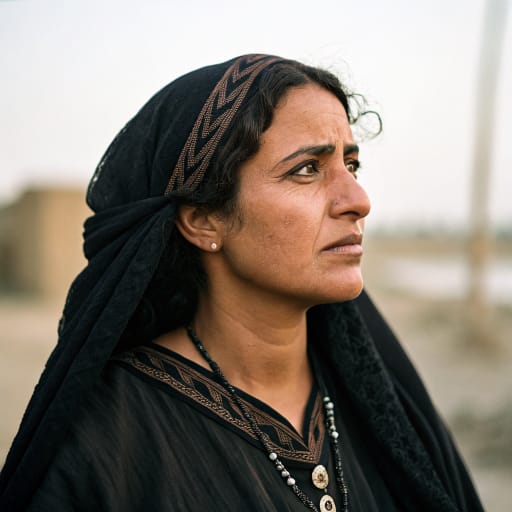
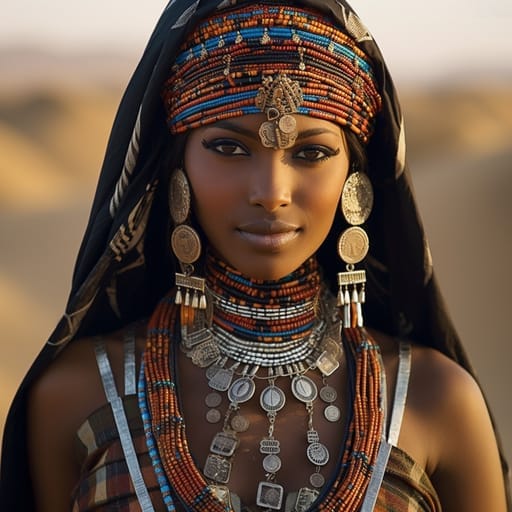
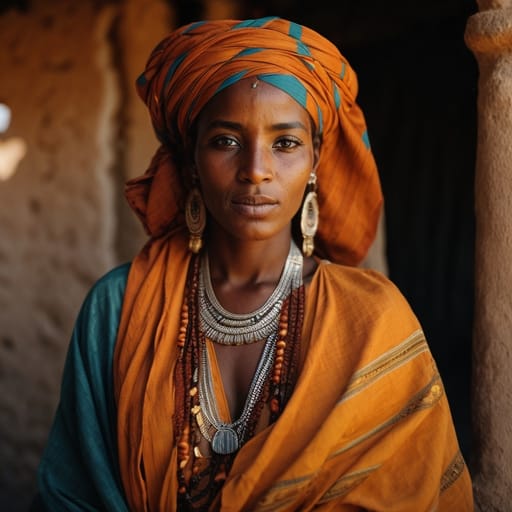
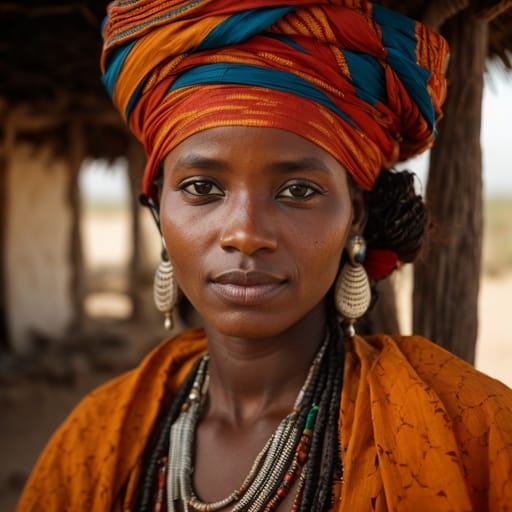
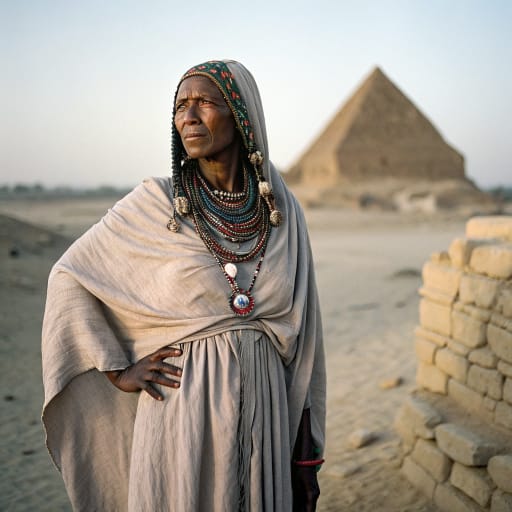
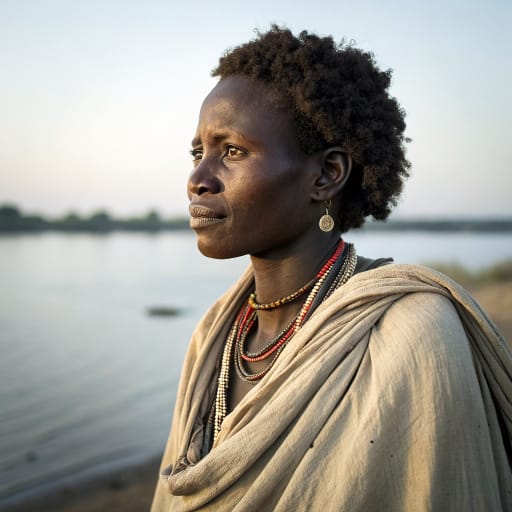
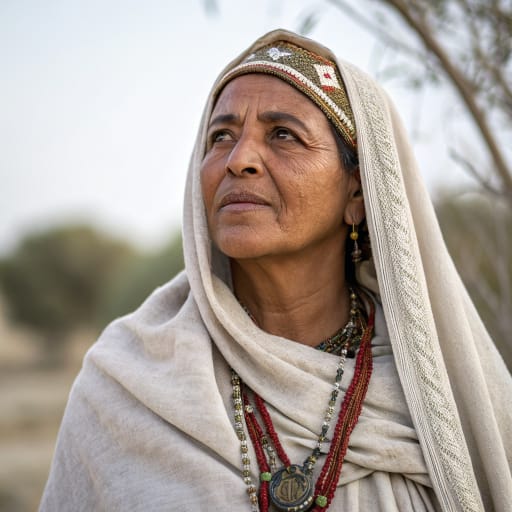
Typical Nobatae Phenotypes
Reference for AI generation: hair, eyes, skin, facial structure, build
Nobatae Body & Anatomy Reference
Anatomy by feature, Berber / Mediterranean-Saharan phenotype
Nobatae Boobs & Breasts
Nobatae tits and boobs run medium-to-large cup, full, moderate projection, the classic Berber / Mediterranean-Saharan bust profile. Nobatae nipples and areolas show medium-brown to dark-brown areolar pigmentation against the olive-to-light-brown skin tone, with areolar diameter typically in the 30-44mm range and forward-set positioning rather than the smaller East Asian bust profile. Nobatae breasts trend fuller and softer than the Cushitic East African norm, a function of the mesomorph with fuller hip-and-bust deposition body habitus and the mean adult female BMI 24-28. For anatomically accurate AI-generated Nobatae nudes the render preserves the medium-to-large cup, full, moderate projection shape, 30-44mm areolas with medium-brown to dark-brown pigmentation, and the torso proportions of the Berber / Mediterranean-Saharan phenotype.
Nobatae Ass & Hips
Nobatae hips and butt usually read as medium-to-full, moderate projection, broader hip profile. The skeletal base is medium-to-wide iliac crests, fuller gluteal-femoral fat distribution, the Berber / Mediterranean-Saharan pattern. Set against the slim narrow-hip Cushitic East African profile, the difference is easy to see, and the hip-to-waist ratio is often what identifies Nobatae women in photos.
Nobatae Vagina & Pussy
Expect medium-brown to dark-brown labial pigmentation, fuller labia minora on Nobatae women, in keeping with Berber / Mediterranean-Saharan ancestry. The pubic hair is wavy-to-coiled medium-coarse texture, dense distribution. Coloring should run evenly from the olive to medium-brown skin of the thighs to the labia, and Nobatae nude imagery should keep the hair's wavy-to-coiled medium-coarse texture.
Nobatae Dicks & Penis
Nobatae dick and penile anatomy in adult AI generation should anchor on the regional reference data: regional mean ~13-14cm erect, moderate girth, and medium-brown shaft pigmentation. The Nobatae cock profile reflects the Berber / Mediterranean-Saharan population's anthropometric measurements. The shaft pigmentation should track the surrounding olive to medium-brown skin tone, and the pubic hair should keep its wavy-to-coiled medium-coarse texture in the typical inverted-V escutcheon.
Nobatae Body, Curves & Build
Nobatae body type: mesomorph with fuller hip-and-bust deposition, with mean adult female BMI 24-28. This is the typical Berber / Mediterranean-Saharan build. Height range, shoulder-to-hip ratio and fat distribution all follow from it, which is what an accurate Nobatae nude body should show.
Nobatae Skin Tone & Hair Texture
Nobatae skin tone falls in the olive to medium-brown (Fitzpatrick III-V) band, the surface signal most often miscalibrated by generic AI nude generators. Nobatae hair texture is typically wavy-to-curly 2B-3C, often dark-brown to black, characteristic of the Berber / Mediterranean-Saharan phenotype. In Nobatae nude renders the skin should hold that band consistently across the body.
Explore phenotype categories
Structured taxonomy with peer-reviewed scales · 22 anatomical categories
Erotic Poses & Sex Positions
From the pose catalog: 219 named positions with reference skeletons
Frequently asked questions about Nobatae people
Where is the Nobatae homeland?
The Nobatae homeland is Lower Nubia, the Nile valley from the First Cataract at Aswan south toward the Third Cataract, in present-day southern Egypt and northern Sudan; much of it now lies under Lake Nasser. in Northern Africa.
What language do Nobatae people speak?
Nobatae people primarily speak An early Nile Nubian language ancestral to Old Nubian and modern Nobiin (Northern East Sudanic, usually classed as Nilo-Saharan); Greek and Coptic used for inscriptions and letters..
What religion do Nobatae people practice?
The predominant religion among Nobatae people is Traditional Nubian and Egyptian cults, notably Isis of Philae, until about 543 CE; afterward Miaphysite Christianity tied to the Coptic church of Alexandria..






Make your own Nobatae images
Five a day, free, no credits to buy. The studio starts from this group's phenotype data, so you can set body type, pose and style and keep the traits accurate.
Start with Nobatae