No portrait yet
Ababda Erotic
Eastern Desert of Egypt between the Nile and the Red Sea, from Qena south through Aswan to the Sudanese border, and northeastern Sudan around Berber and Atbara
Arabic, in a Bedouin-inflected Upper Egyptian and Sudanese variety (Semitic, Afroasiatic); Beja / Bedawiyet still spoken by some families near the Sudan border (Cushitic, Afroasiatic)
Sunni Islam, with strong Sufi influence, notably the Shadhili order
One of the Beja peoples, largely Arabized; main sections are the Ashabab, Fuqara, Milaykab and Abudein
About Ababda People
The Ababda are the Beja who speak Arabic, and that one fact organizes almost everything else about them. Their country is the Eastern Desert of Egypt, the stony ground between the Nile and the Red Sea from around Qena south past Aswan to the Sudanese border, and it continues into the Sudanese Nile valley around Berber and Atbara. Their neighbors to the south, the Bishariyyin, still speak Beja, a Cushitic language, and some Ababda families near the border keep it too, but the tribe as a whole shifted to Arabic generations ago. With the language came a genealogy: the Ababda trace themselves to an ancestor named Abbad and through him to Zubayr ibn al-Awwam, a companion of the Prophet. Outsiders have argued for two centuries over whether that makes them Arabs or Arabized Beja. The Ababda tend not to see a contradiction. They are Sunni Muslims with a strong Sufi streak, and the desert tomb of Abu al-Hasan al-Shadhili at Humaithara, founder of the Shadhili order, sits in their territory under their care and draws a large annual mawlid.
What set them apart was the desert itself. For most of recorded history the Ababda were the people who knew the wells. They guided and guarded caravans between the Nile and the Red Sea ports, Qena to Quseir, Daraw to the coast, and they controlled the punishing Korosko road that cut across the great bend of the Nile toward Abu Hamed, a route the Egyptian and British armies depended on during the Mahdist wars, when the Ababda chief Hussein Pasha Khalifa governed Berber for Cairo. Steamers and the railway killed that trade, and Lake Nasser later drowned some of their riverside ground. Camels, goats and sheep remain the core of the pastoral economy, alongside charcoal burning, senna and medicinal plants gathered for sale in Nile towns, fishing on the coast, and increasingly work in tourism around Marsa Alam and Wadi el Gemal, where the national park sits squarely in Ababda land. The four main sections are the Ashabab, Fuqara, Milaykab and Abudein, each with its own sheikhs, and the paramount chiefs long kept their seat at Daraw near Kom Ombo, whose camel market still fills with Ababda and Bishariyyin dealers. The custom guests meet first is the jabana: green coffee beans roasted over coals, pounded with ginger, brewed in a round clay pot and poured into tiny cups in rounds that it is rude to refuse. The mat tent, the straight double-edged sword, and a tracker's habit of reading the ground remain part of how they describe themselves, even in families now living in concrete houses in Shalateen or Aswan.
Related ethnic groups
Groups that share Ababda's homeland, region, language, or religious tradition. These are likely candidates for comparative phenotype reference.
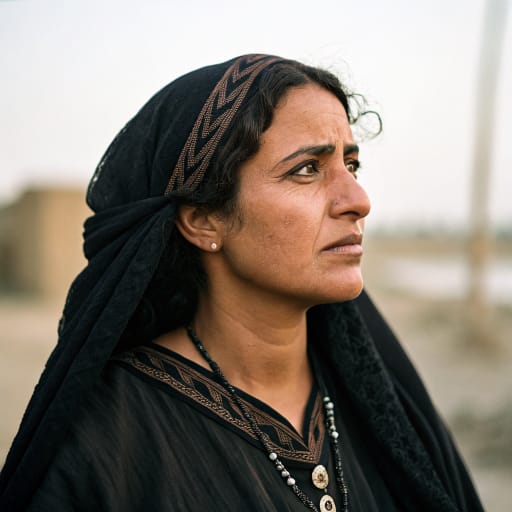
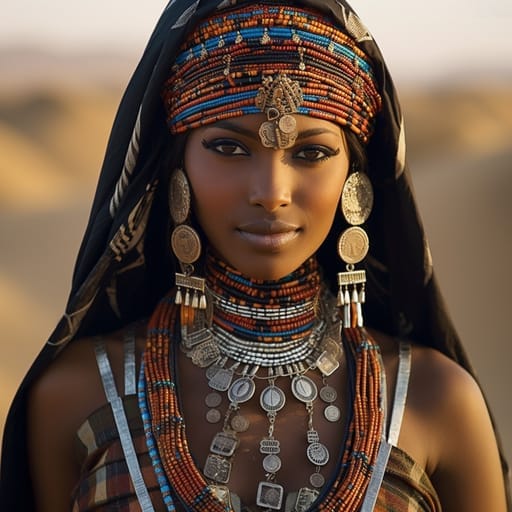
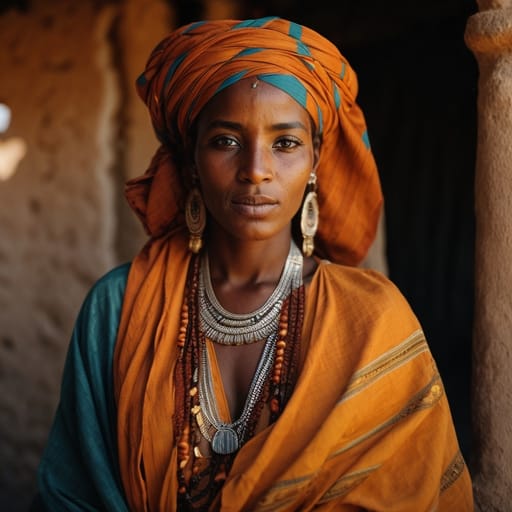
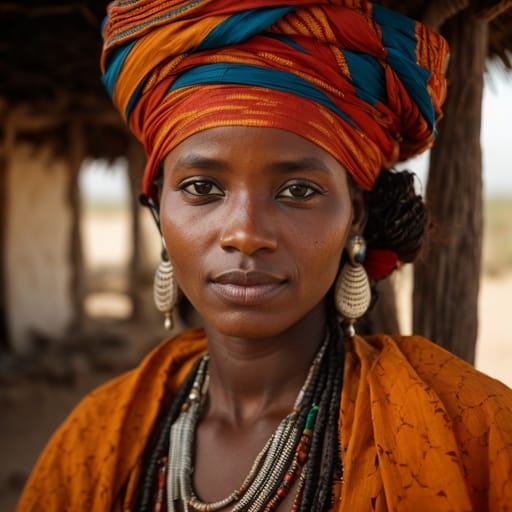
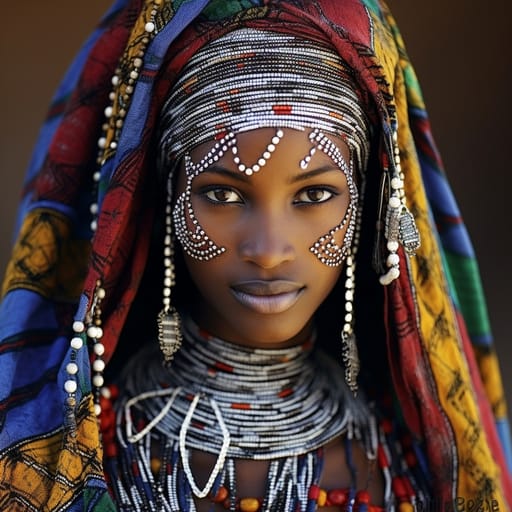
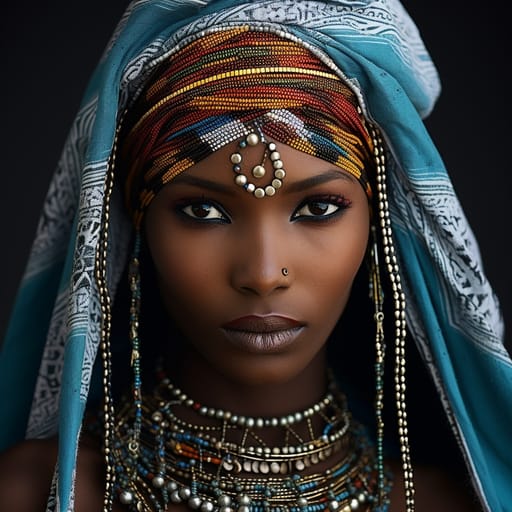
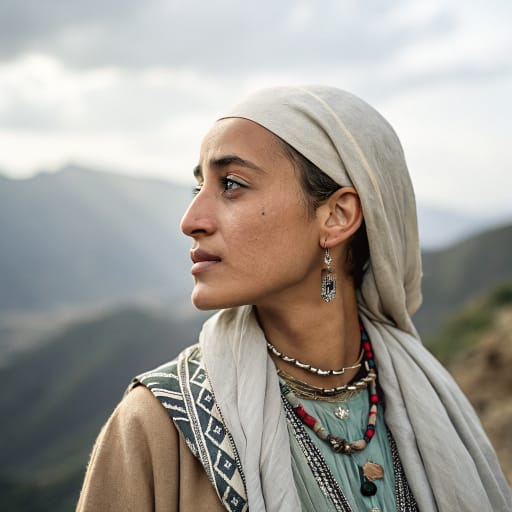
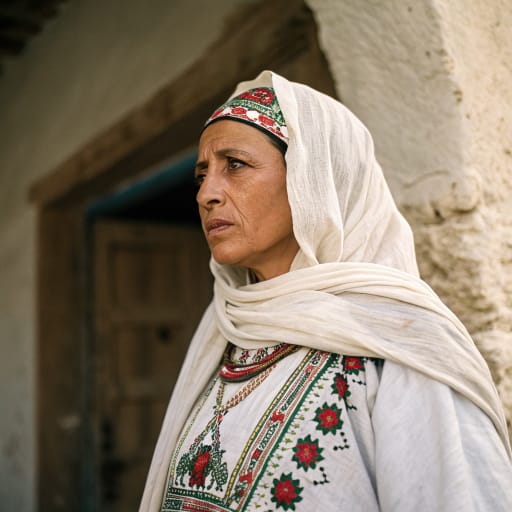
Typical Ababda Phenotypes
Reference for AI generation: hair, eyes, skin, facial structure, build
Ababda Body & Anatomy Reference
Berber / Mediterranean-Saharan phenotype: anatomy reference for AI nude generation
Ababda Boobs & Breasts
The typical Ababda bust is medium-to-large cup, full, moderate projection, in line with the wider Berber / Mediterranean-Saharan pattern. Areolas usually fall in the 30-44mm range, with medium-brown to dark-brown areolar pigmentation against the olive-to-light-brown skin tone. Compared with the smaller East Asian bust profile, Ababda breasts sit forward and are generally fuller and softer than the Cushitic East African norm. A faithful AI render of Ababda tits keeps that shape and areola size.
Ababda Ass & Hips
Butt shape among Ababda women: medium-to-full, moderate projection, broader hip profile, over medium-to-wide iliac crests, fuller gluteal-femoral fat distribution. This follows Berber / Mediterranean-Saharan ancestry and looks quite unlike the slim narrow-hip Cushitic East African profile. An accurate Ababda ass in adult AI imagery keeps both the silhouette and the overall build (mesomorph with fuller hip-and-bust deposition) instead of a generic average.
Ababda Vagina & Pussy
Vulvar anatomy among Ababda women: medium-brown to dark-brown labial pigmentation, fuller labia minora. Pubic hair tends to be wavy-to-coiled medium-coarse texture, dense distribution, in the usual inverted-triangle pattern. Both follow Berber / Mediterranean-Saharan pigmentation, which is why Ababda pussy renders should not fall back on a pale, sparse Western template.
Ababda Dicks & Penis
The Ababda cock profile, from Berber / Mediterranean-Saharan anthropometric data: regional mean ~13-14cm erect; moderate girth; medium-brown shaft pigmentation. Pubic hair has a wavy-to-coiled medium-coarse texture and forms the usual inverted-V pattern. Whether Ababda men are circumcised follows religious and cultural practice rather than phenotype.
Ababda Body, Curves & Build
Build and curves among Ababda women follow the Berber / Mediterranean-Saharan pattern: mesomorph with fuller hip-and-bust deposition, mean adult female BMI 24-28. Proportions matter as much as skin tone, so Ababda figures should keep their regional height and limb ratios.
Ababda Skin Tone & Hair Texture
The Ababda skin range is olive to medium-brown (Fitzpatrick III-V), and hair tends to be wavy-to-curly 2B-3C, often dark-brown to black. That combination marks the Berber / Mediterranean-Saharan phenotype, and skin tone is the trait AI generators most often get wrong for Ababda women.
Explore phenotype categories
Structured taxonomy with peer-reviewed scales · 22 anatomical categories
Erotic Poses & Sex Positions
From the pose catalog: 219 named positions with reference skeletons
Frequently asked questions about Ababda people
Where is the Ababda homeland?
The Ababda homeland is Eastern Desert of Egypt between the Nile and the Red Sea, from Qena south through Aswan to the Sudanese border, and northeastern Sudan around Berber and Atbara in Northern Africa.
What language do Ababda people speak?
Ababda people primarily speak Arabic, in a Bedouin-inflected Upper Egyptian and Sudanese variety (Semitic, Afroasiatic); Beja / Bedawiyet still spoken by some families near the Sudan border (Cushitic, Afroasiatic).
What religion do Ababda people practice?
The predominant religion among Ababda people is Sunni Islam, with strong Sufi influence, notably the Shadhili order.






Make your own Ababda images
Five a day, free, no credits to buy. The studio starts from this group's phenotype data, so you can set body type, pose and style and keep the traits accurate.
Start with Ababda