No portrait yet
Baggara Erotic
Savanna belt from Lake Chad to the White Nile: Darfur, Kordofan and White Nile states of Sudan and central and eastern Chad, with outliers in Nigeria, Cameroon, Niger and the Central African Republic
Sudanese and Chadian Arabic, the latter called Shuwa Arabic in Nigeria and Cameroon (Afro-Asiatic, Semitic)
Sunni Islam, Maliki school; Sufi orders, especially the Tijaniyya
Cattle-herding branch of the Juhayna Arab tribes; includes the Rizeigat, Misseriya (Humr and Zurug), Ta'aisha, Habbaniya, Beni Halba, Hawazma, Awlad Himayd, Salamat and the Shuwa Arabs
About Baggara People
The name says it: baggara is Arabic for cattle people, and cattle are the whole point. Across a belt of savanna that runs from Lake Chad to the White Nile, through southern Darfur and Kordofan in Sudan and central and eastern Chad, the Baggara move their zebu herds north into the rains and south again toward the Bahr al-Arab as the grass dies. They are Arabs by language, lineage and self-description, tracing descent from the Juhayna tribes that drifted out of Arabia and along the southern edge of the desert over several centuries. They are African by everything else, having married into the Fur, Nuba and other peoples they settled among. The result is a Sahelian-looking people speaking a rustic Arabic that a Cairo shopkeeper would find heavy going. Baggara is less a tribe than a way of life shared by many. The Rizeigat, Misseriya, Ta'aisha, Habbaniya, Beni Halba and Hawazma are the big Sudanese names. The Salamat straddle Chad and Sudan, and the Shuwa Arabs of Nigeria's Borno and northern Cameroon are the western tail of the same movement, isolated long enough to grow their own dialect. Several tribes have both a cattle section and a camel section: the camel men, the Abbala, range further north into drier country and are not, strictly, Baggara at all. Each tribe is a nest of lineages under a nazir, with omdas and sheikhs beneath him, and each holds a dar, a recognized territory that anchors the annual migration.
They are Sunni Muslims of the Maliki school, with the Tijaniyya and other Sufi orders deeply rooted, and faith is lived rather than debated. Faith put them on the world stage: the Baggara were the core of the Mahdi's army in the 1880s, and his successor, the Khalifa Abdullahi, was a Ta'aisha tribesman who ruled from Omdurman until the British broke the Mahdist state there in 1898. That reputation for readiness has cut both ways since. The murahaleen raiders who struck Dinka country in the 1980s and 1990s were drawn largely from Misseriya and Rizeigat sections, and Baggara country has stayed a recruiting ground in Sudan's later wars. Less known: the tent belongs to the wife. She owns the bent-pole, mat-covered bayt, loads it onto a pack ox when camp moves, and raises it again at the next site. And the women sing. The hakkamat, the poet-singers of the camps, compose verses that praise a brave man and mock a coward by name, and their songs have talked men into fights and, now and then, out of them. Bridewealth is paid in cattle, milk is the daily staple, and a boy learns to read a cow's brand before he reads anything else.
Related ethnic groups
Groups that share Baggara's homeland, region, language, or religious tradition. These are likely candidates for comparative phenotype reference.
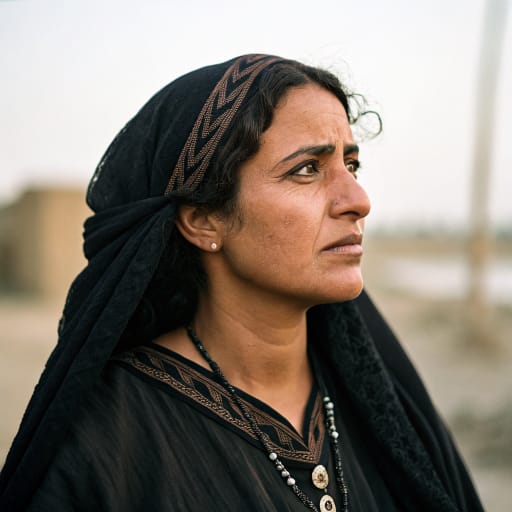
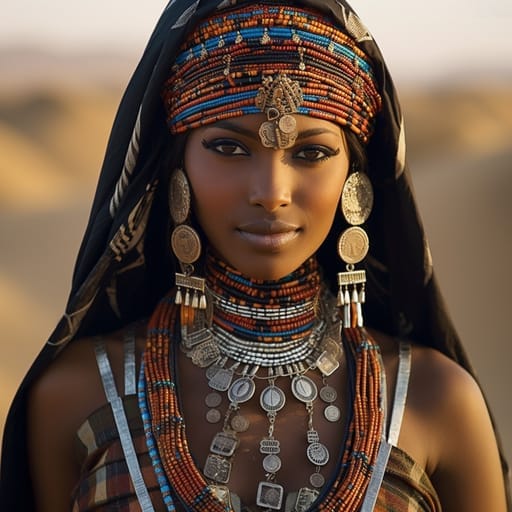
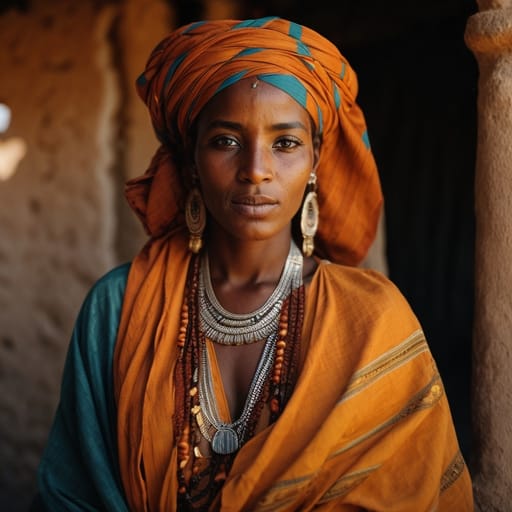
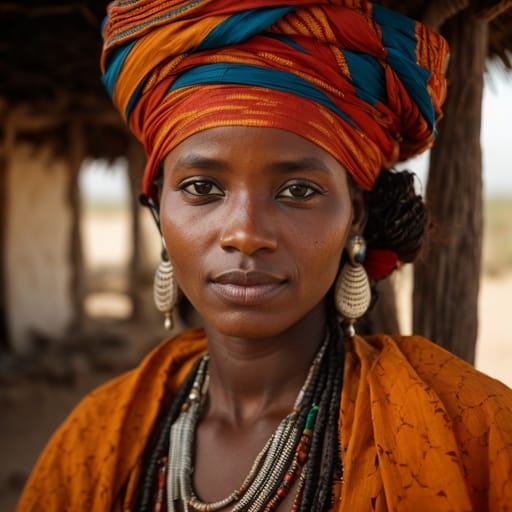
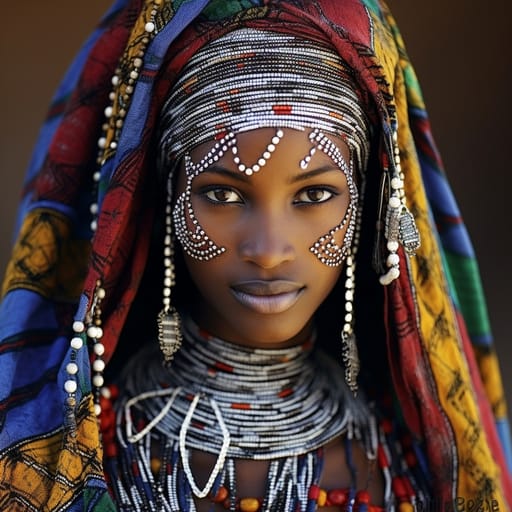
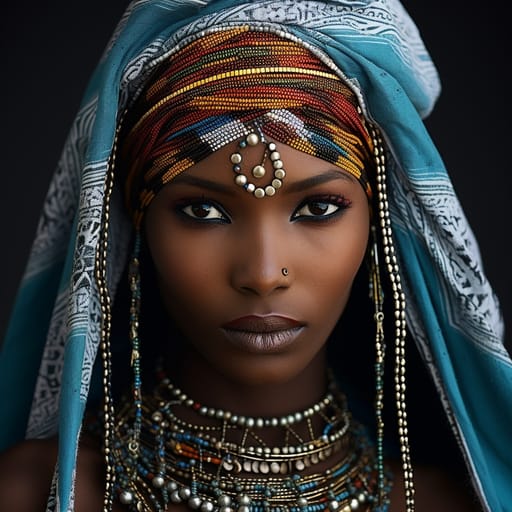
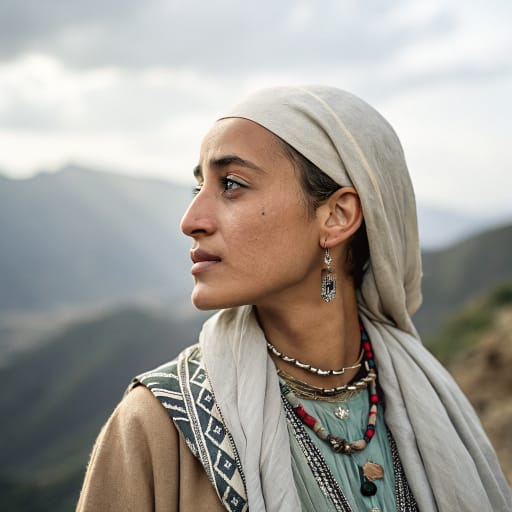
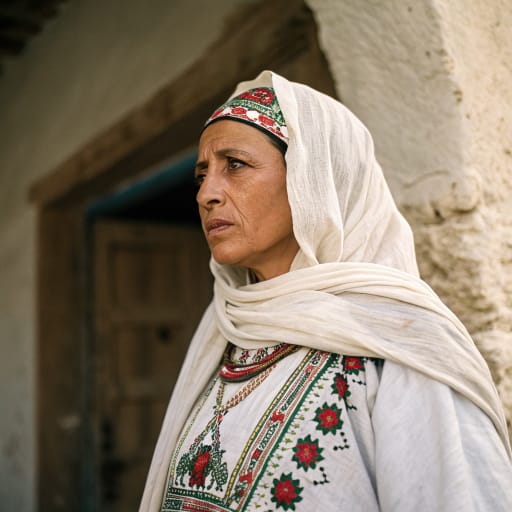
Typical Baggara Phenotypes
Reference for AI generation: hair, eyes, skin, facial structure, build
Baggara Body & Anatomy Reference
Per-feature anatomical profile for AI nude generation: Berber / Mediterranean-Saharan phenotype
Baggara Boobs & Breasts
Bust reference for Baggara women: medium-to-large cup, full, moderate projection, which is typical of Berber / Mediterranean-Saharan ancestry. Areolas measure about 30-44mm across, with medium-brown to dark-brown pigmentation. Body type (mesomorph with fuller hip-and-bust deposition) shapes the bust as well, so Baggara tits are usually fuller and softer than the Cushitic East African norm. In AI imagery, keep the forward-set shape rather than drifting toward the smaller East Asian bust profile.
Baggara Ass & Hips
The Baggara ass is typically medium-to-full, moderate projection, broader hip profile, which sets it apart from the slim narrow-hip Cushitic East African profile. Underneath, the pelvis shows medium-to-wide iliac crests, fuller gluteal-femoral fat distribution, part of the Berber / Mediterranean-Saharan skeletal pattern. For Baggara butt pics and AI renders, match that silhouette and the overall build (mesomorph with fuller hip-and-bust deposition).
Baggara Vagina & Pussy
Baggara pussy and vulvar anatomy presents medium-brown to dark-brown labial pigmentation, fuller labia minora, consistent with the Berber / Mediterranean-Saharan phenotype's pigmentation pattern. Baggara pubic hair is typically wavy-to-coiled medium-coarse texture, dense distribution, in the inverted-triangle pattern. For anatomically accurate Baggara pussy renders the labial coloration should match the surrounding olive to medium-brown skin tone with a continuous gradient, and the hair should keep its wavy-to-coiled medium-coarse texture.
Baggara Dicks & Penis
Baggara dicks follow the Berber / Mediterranean-Saharan reference data: regional mean ~13-14cm erect; moderate girth; medium-brown shaft pigmentation. Shaft color should track the olive to medium-brown skin tone with a smooth change toward the glans, and Baggara pubic hair keeps its wavy-to-coiled medium-coarse texture.
Baggara Body, Curves & Build
Baggara body type and overall build presents as mesomorph with fuller hip-and-bust deposition, with mean adult female BMI 24-28: the characteristic Berber / Mediterranean-Saharan habitus. Baggara curves and proportions should keep the regional skeletal frame (height, shoulder-to-hip ratio, limb proportions) rather than a generic mesomorph default.
Baggara Skin Tone & Hair Texture
Baggara skin sits in the olive to medium-brown (Fitzpatrick III-V) band. Hair is typically wavy-to-curly 2B-3C, often dark-brown to black, in keeping with the Berber / Mediterranean-Saharan phenotype. In nude renders the skin should stay one even tone from face to body, and body, pubic and head hair should match.
Explore phenotype categories
Structured taxonomy with peer-reviewed scales · 22 anatomical categories
Erotic Poses & Sex Positions
From the pose catalog: 219 named positions with reference skeletons
Frequently asked questions about Baggara people
Where is the Baggara homeland?
The Baggara homeland is Savanna belt from Lake Chad to the White Nile: Darfur, Kordofan and White Nile states of Sudan and central and eastern Chad, with outliers in Nigeria, Cameroon, Niger and the Central African Republic in Northern Africa.
What language do Baggara people speak?
Baggara people primarily speak Sudanese and Chadian Arabic, the latter called Shuwa Arabic in Nigeria and Cameroon (Afro-Asiatic, Semitic).
What religion do Baggara people practice?
The predominant religion among Baggara people is Sunni Islam, Maliki school; Sufi orders, especially the Tijaniyya.






Make your own Baggara images
Five a day, free, no credits to buy. The studio starts from this group's phenotype data, so you can set body type, pose and style and keep the traits accurate.
Start with Baggara