No portrait yet
Tunjur Erotic
Northern Darfur in Sudan and parts of Chad, including the Wadai region
Arabic, in Sudanese and Chadian varieties (Afro-Asiatic, Semitic); the original language of the Tunjur court is uncertain
Sunni Islam
Communities in Darfur, Sudan, and in Chad; historically the ruling house of Darfur and Wadai before the Keira and Wadai sultanates
About Tunjur People
The Tunjur are a people whose name carries the memory of a crown. Before the Fur sultans ruled Darfur, and before the sultanate of Wadai rose in what is now eastern Chad, a Tunjur royal house held power across both regions. Today they are a fairly small population, living mostly in rural communities in northern Darfur and in parts of Chad. Still, the history of the eastern Sahel's kingdoms cannot be told without them.
Where they came from is still argued. Tunjur genealogies claim Arab ancestry. Some historians have looked east instead, toward the Nile Valley and Christian Nubia. Part of their case rests on Ain Farah, a fortified stone ruin in northern Darfur tied to the Tunjur period, where researchers have seen traces of Nubian influence. Their fall is clearer than their rise. In the seventeenth century Abd al-Karim ended Tunjur rule in Wadai and built a sultanate that made Islam the open foundation of kingship. In Darfur, the Keira dynasty of the Fur pushed them aside in about the same era. Fur tradition softens that break with a marriage story: a wandering Arab named Ahmad al-Maqur is said to have married into the Tunjur royal family, and the Keira sultans traced their line to that union. The legend turns a conquest into an inheritance, which shows how much weight the Tunjur name still carried with the people who replaced them.
Today the Tunjur are Sunni Muslims. Their everyday language is Arabic, in the Sudanese and Chadian forms their neighbors also speak. No one knows for sure what the Tunjur court spoke before Arabic took hold, one more reason their origins remain an open question. After losing power, the Tunjur did not disappear. They scattered: some stayed in northern Darfur, while others settled westward in Chad, where they live among peoples whose own histories were shaped by the sultanates that followed Tunjur rule. For the Darfur communities, home has been in the path of the wars that have torn through the region since 2003. That makes the Tunjur an example of something common in the Sahel: a people once at the center of a state, now living at the edges of the ones that came after.
Related ethnic groups
Groups that share Tunjur's homeland, region, language, or religious tradition. These are likely candidates for comparative phenotype reference.
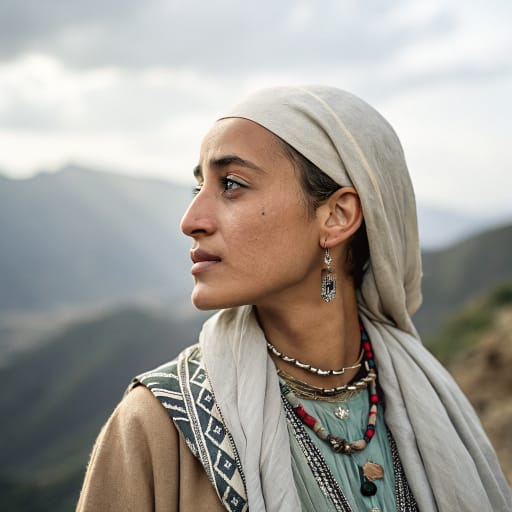
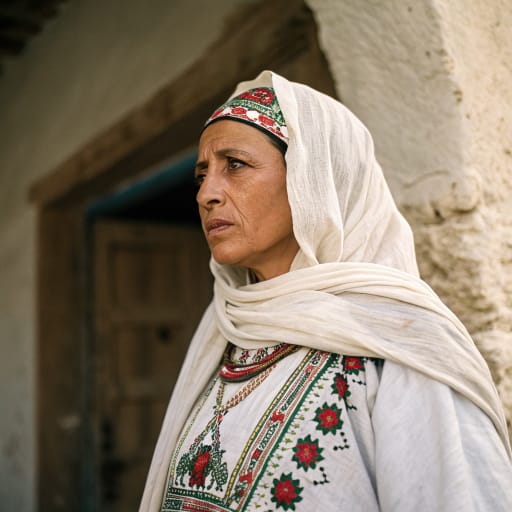
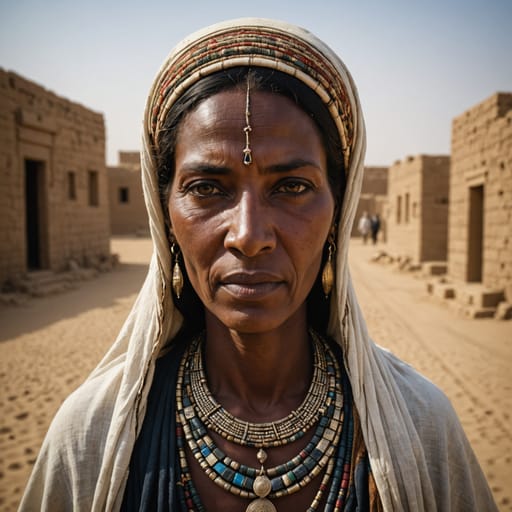
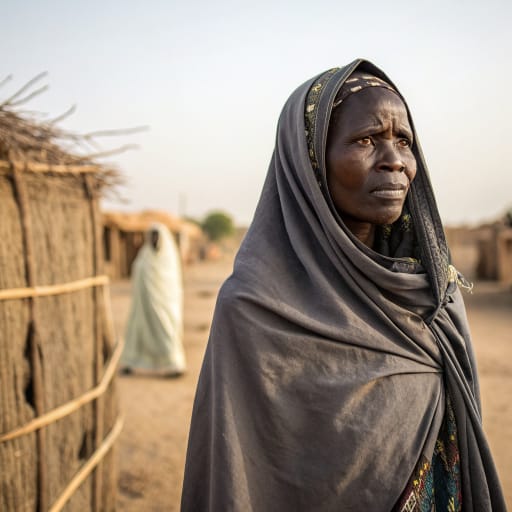
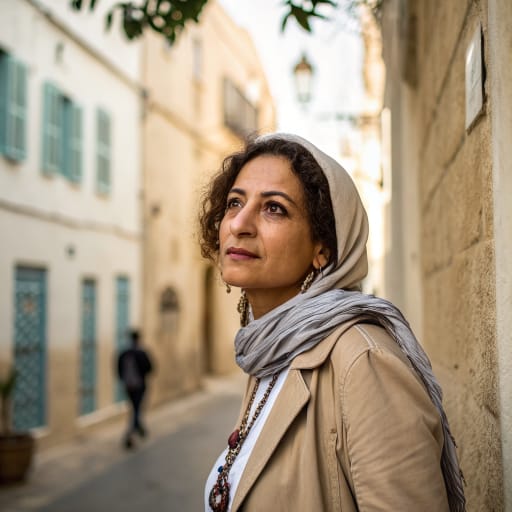
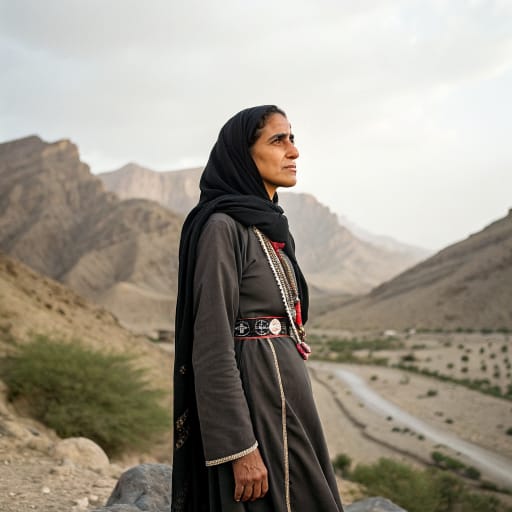
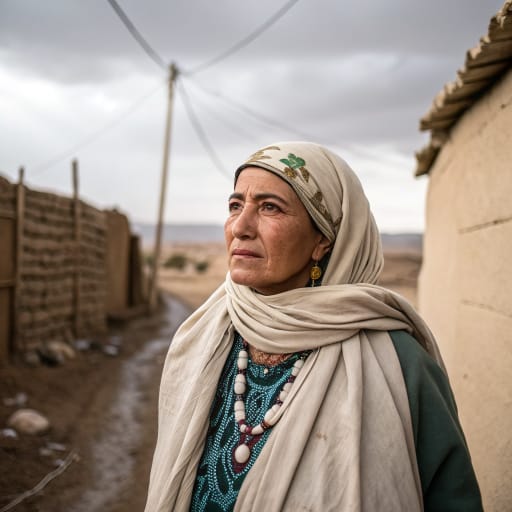
Typical Tunjur Phenotypes
Reference for AI generation: hair, eyes, skin, facial structure, build
Tunjur Body & Anatomy Reference
Per-feature anatomical profile for AI nude generation: Berber / Mediterranean-Saharan phenotype
Tunjur Boobs & Breasts
Tunjur boobs follow the Berber / Mediterranean-Saharan profile: medium-to-large cup, full, moderate projection. Areolar diameter is usually 30-44mm, and the coloring is medium-brown to dark-brown areolar pigmentation against the olive-to-light-brown skin tone. Breast shape tracks body composition (mesomorph with fuller hip-and-bust deposition, mean adult female BMI 24-28), so Tunjur breasts tend to be fuller and softer than the Cushitic East African norm. Expect a forward-set shape, not the smaller East Asian bust profile.
Tunjur Ass & Hips
Tunjur ass and hip morphology presents as medium-to-full, moderate projection, broader hip profile, distinctly different from the slim narrow-hip Cushitic East African profile. The Tunjur pelvic profile shows medium-to-wide iliac crests, fuller gluteal-femoral fat distribution, anchored in the Berber / Mediterranean-Saharan skeletal pattern. Tunjur butt shots in adult AI imagery should render the medium-to-full, moderate projection, broader hip profile silhouette with the overall build (mesomorph with fuller hip-and-bust deposition) and the fat distribution typical of the Berber / Mediterranean-Saharan phenotype.
Tunjur Vagina & Pussy
Tunjur pussy anatomy typically shows medium-brown to dark-brown labial pigmentation, fuller labia minora. Pubic hair is usually wavy-to-coiled medium-coarse texture, dense distribution. In AI-generated Tunjur nudes, labial color should blend into the olive to medium-brown skin with a gradual transition, and the hair should keep its wavy-to-coiled medium-coarse texture.
Tunjur Dicks & Penis
Penis reference for Tunjur men: regional mean ~13-14cm erect, moderate girth. Coloring: medium-brown shaft pigmentation. An accurate Tunjur cock in AI imagery matches the surrounding olive to medium-brown skin rather than a generic porn default. Circumcision depends on religion and custom, not ancestry.
Tunjur Body, Curves & Build
The Tunjur figure is generally mesomorph with fuller hip-and-bust deposition, with mean adult female BMI 24-28, characteristic of Berber / Mediterranean-Saharan ancestry. AI image tools tend to flatten regional body types into a few stock shapes; here the Tunjur build is kept as its own reference.
Tunjur Skin Tone & Hair Texture
Skin: olive to medium-brown (Fitzpatrick III-V). Hair: wavy-to-curly 2B-3C, often dark-brown to black. Both are typical of Berber / Mediterranean-Saharan ancestry. The most common mistake in AI nudes of Tunjur women is a body rendered lighter than the face.
Explore phenotype categories
Structured taxonomy with peer-reviewed scales · 22 anatomical categories
Erotic Poses & Sex Positions
From the pose catalog: 219 named positions with reference skeletons
Frequently asked questions about Tunjur people
Where is the Tunjur homeland?
The Tunjur homeland is Northern Darfur in Sudan and parts of Chad, including the Wadai region in Northern Africa.
What language do Tunjur people speak?
Tunjur people primarily speak Arabic, in Sudanese and Chadian varieties (Afro-Asiatic, Semitic); the original language of the Tunjur court is uncertain.
What religion do Tunjur people practice?
The predominant religion among Tunjur people is Sunni Islam.






Make your own Tunjur images
Five a day, free, no credits to buy. The studio starts from this group's phenotype data, so you can set body type, pose and style and keep the traits accurate.
Start with Tunjur