No portrait yet
Amazigh Christians Erotic
Roman Africa, in today's Tunisia, Algeria, coastal Libya and northern Morocco; today mainly Kabylia in Algeria, with smaller communities in Morocco and France
Historically Latin (Indo-European) for worship, with Punic and Berber (Afroasiatic) in daily speech; today Kabyle and other Berber languages (Afroasiatic), plus Arabic and French
Christianity: Catholic and Donatist in Roman Africa; today mostly evangelical Protestant, with a small Catholic minority, in majority Muslim Algeria and Morocco
Part of the Amazigh (Berber) peoples; historically the Donatist and Catholic churches of Roman Africa; today Kabyle Protestants and Catholics, Moroccan converts, and diaspora congregations in France
About Amazigh Christians People
Amazigh Christians are less a single community than a thread that surfaces twice in North African history: first in Roman Africa, one of the strongholds of early Latin Christianity, and again among modern converts in Kabylia and Morocco who see the faith as part of the Maghreb's own past rather than an import. The trial of the Scillitan Martyrs in 180 left one of the earliest surviving documents of Latin Christianity. Carthage gave the church Tertullian and Cyprian, and Augustine was born at Thagaste, in today's Algeria, to a mother widely believed to be Berber. Liturgy ran in Latin while the countryside spoke Punic and Berber. After Diocletian's persecution, Numidian bishops refused a new bishop of Carthage because one of the men who consecrated him was accused of handing scripture over to Roman officials. Their rival church took its name from Donatus, its most forceful leader, and for much of the fourth century it dominated Numidia, where many towns had two bishops and two basilicas. Donatists demanded a clergy untainted by collaboration and rebaptized anyone who crossed over from the other side. Rural bands called Circumcellions gave the movement a violent edge. Emperors ruled against it again and again, and a conference at Carthage in 411, with more than 250 bishops on each side and Augustine among the Catholic spokesmen, ended in proscription. Historians still argue over whether Donatism voiced rural African resistance to Rome or was, at heart, a quarrel about purity.
Vandal rule, Byzantine reconquest and the Arab conquest of the late seventh century followed, but Christianity thinned slowly rather than vanishing: popes were still writing about North African bishops in the eleventh century, and the last native communities are generally thought to have faded under the Almohads in the twelfth. The modern chapter began under French rule, when the Missionaries of Africa, founded in 1868, worked in Kabylia and built a small Catholic community that included the Amrouche family of writers. Since the late twentieth century evangelical Protestantism has grown faster, and most members of the Protestant Church of Algeria are Kabyle. A 2006 ordinance restricts worship outside Islam, and authorities have closed many of the church's congregations since 2018. Moroccan converts mostly gather in private homes. For many Kabyle believers, praying and singing in their own language is part of the point: a way of being Christian without ceasing to be Amazigh.
Related ethnic groups
Groups that share Amazigh Christians's homeland, region, language, or religious tradition. These are likely candidates for comparative phenotype reference.
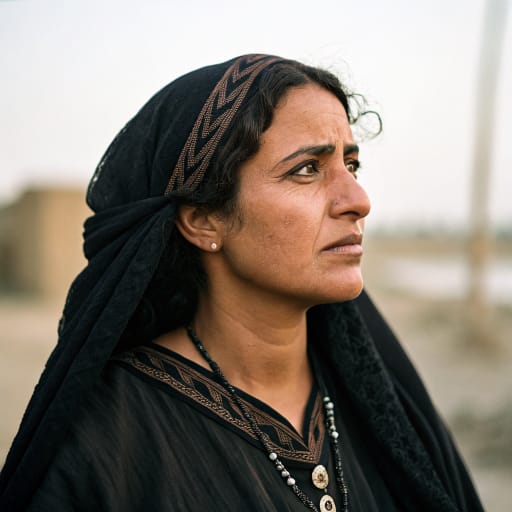
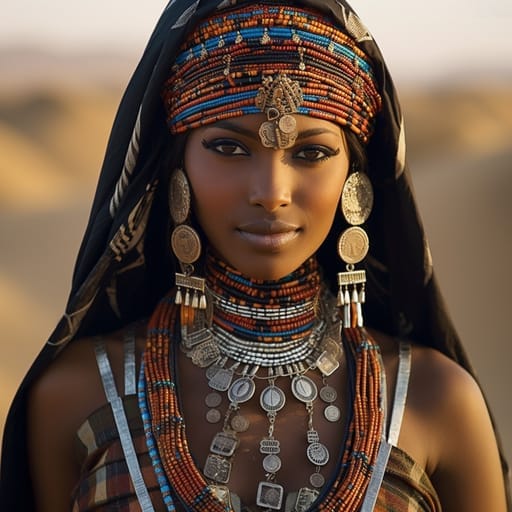
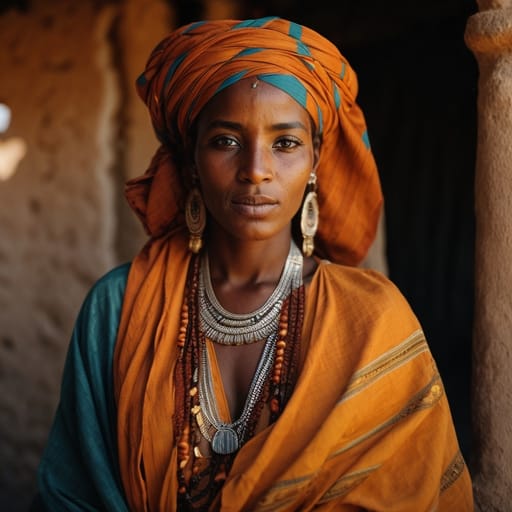
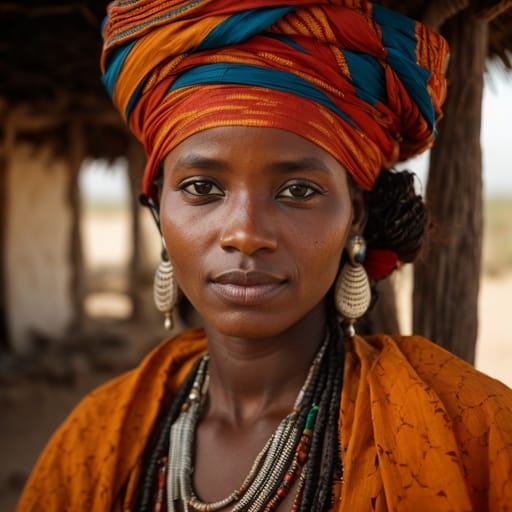
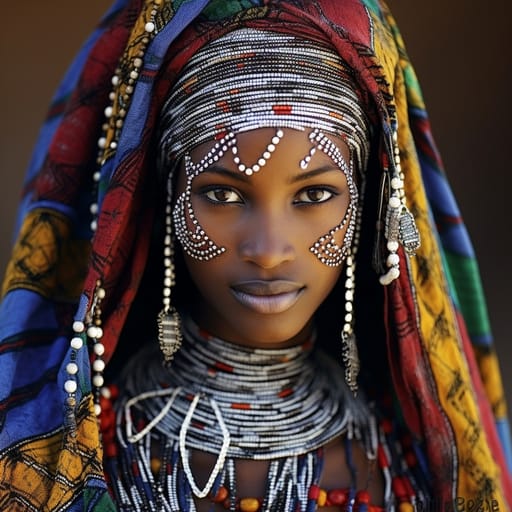
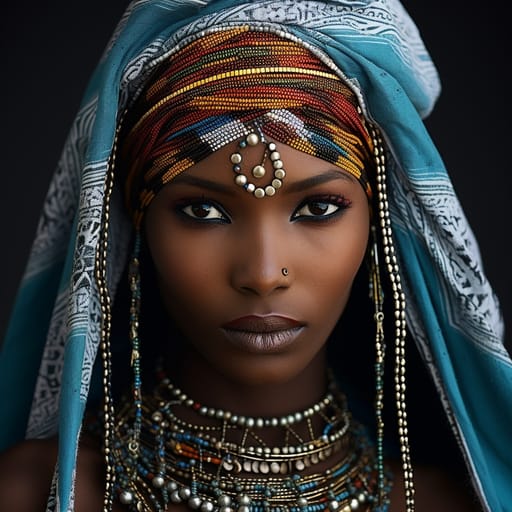
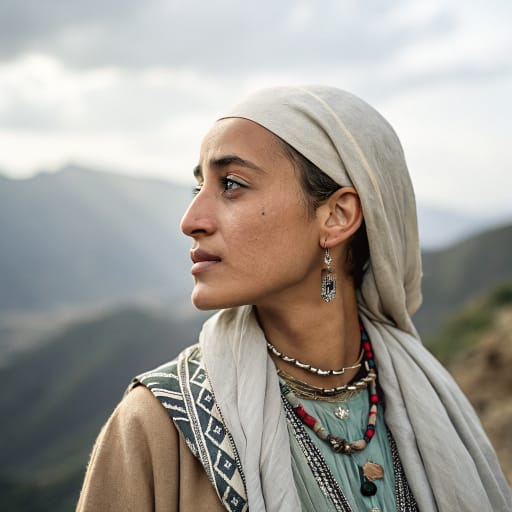
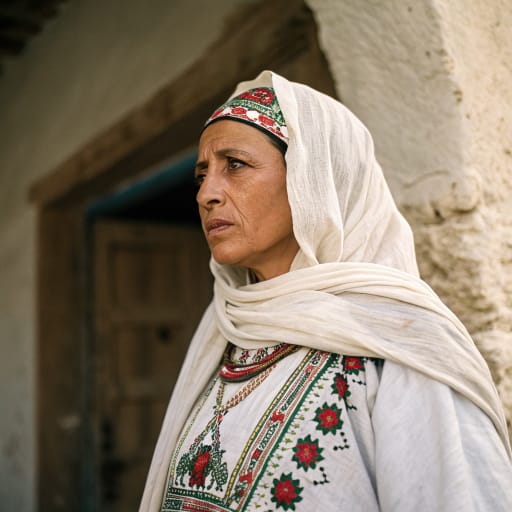
Typical Amazigh Christians Phenotypes
Reference for AI generation: hair, eyes, skin, facial structure, build
Amazigh Christians Body & Anatomy Reference
Berber / Mediterranean-Saharan phenotype: anatomy reference for AI nude generation
Amazigh Christians Boobs & Breasts
Bust reference for Amazigh Christians women: medium-to-large cup, full, moderate projection, which is typical of Berber / Mediterranean-Saharan ancestry. Areolas measure about 30-44mm across, with medium-brown to dark-brown pigmentation. Body type (mesomorph with fuller hip-and-bust deposition) shapes the bust as well, so Amazigh Christians tits are usually fuller and softer than the Cushitic East African norm. In AI imagery, keep the forward-set shape rather than drifting toward the smaller East Asian bust profile.
Amazigh Christians Ass & Hips
The Amazigh Christians ass is typically medium-to-full, moderate projection, broader hip profile, which sets it apart from the slim narrow-hip Cushitic East African profile. Underneath, the pelvis shows medium-to-wide iliac crests, fuller gluteal-femoral fat distribution, part of the Berber / Mediterranean-Saharan skeletal pattern. For Amazigh Christians butt pics and AI renders, match that silhouette and the overall build (mesomorph with fuller hip-and-bust deposition).
Amazigh Christians Vagina & Pussy
Amazigh Christians pussy and vulvar anatomy presents medium-brown to dark-brown labial pigmentation, fuller labia minora, consistent with the Berber / Mediterranean-Saharan phenotype's pigmentation pattern. Amazigh Christians pubic hair is typically wavy-to-coiled medium-coarse texture, dense distribution, in the inverted-triangle pattern. For anatomically accurate Amazigh Christians pussy renders the labial coloration should match the surrounding olive to medium-brown skin tone with a continuous gradient, and the hair should keep its wavy-to-coiled medium-coarse texture.
Amazigh Christians Dicks & Penis
Amazigh Christians dicks follow the Berber / Mediterranean-Saharan reference data: regional mean ~13-14cm erect; moderate girth; medium-brown shaft pigmentation. Shaft color should track the olive to medium-brown skin tone with a smooth change toward the glans, and Amazigh Christians pubic hair keeps its wavy-to-coiled medium-coarse texture.
Amazigh Christians Body, Curves & Build
Amazigh Christians body type and overall build presents as mesomorph with fuller hip-and-bust deposition, with mean adult female BMI 24-28: the characteristic Berber / Mediterranean-Saharan habitus. Amazigh Christians curves and proportions should keep the regional skeletal frame (height, shoulder-to-hip ratio, limb proportions) rather than a generic mesomorph default.
Amazigh Christians Skin Tone & Hair Texture
Amazigh Christians skin sits in the olive to medium-brown (Fitzpatrick III-V) band. Hair is typically wavy-to-curly 2B-3C, often dark-brown to black, in keeping with the Berber / Mediterranean-Saharan phenotype. In nude renders the skin should stay one even tone from face to body, and body, pubic and head hair should match.
Explore phenotype categories
Structured taxonomy with peer-reviewed scales · 22 anatomical categories
Erotic Poses & Sex Positions
From the pose catalog: 219 named positions with reference skeletons
Frequently asked questions about Amazigh Christians people
Where is the Amazigh Christians homeland?
The Amazigh Christians homeland is Roman Africa, in today's Tunisia, Algeria, coastal Libya and northern Morocco; today mainly Kabylia in Algeria, with smaller communities in Morocco and France in Northern Africa.
What language do Amazigh Christians people speak?
Amazigh Christians people primarily speak Historically Latin (Indo-European) for worship, with Punic and Berber (Afroasiatic) in daily speech; today Kabyle and other Berber languages (Afroasiatic), plus Arabic and French.
What religion do Amazigh Christians people practice?
The predominant religion among Amazigh Christians people is Christianity: Catholic and Donatist in Roman Africa; today mostly evangelical Protestant, with a small Catholic minority, in majority Muslim Algeria and Morocco.






Make your own Amazigh Christians images
Five a day, free, no credits to buy. The studio starts from this group's phenotype data, so you can set body type, pose and style and keep the traits accurate.
Start with Amazigh Christians