Help us get this right
Does this portrait look right for Megorashim?
Nobody has judged this one yet. You would be the first.
Megorashim Erotic
Morocco, chiefly Fez, Meknes, Tetouan and Tangier, and parts of Algeria; ancestral homeland in Spain and Portugal
Haketia, a Judeo-Spanish variety (Indo-European, Romance); Judeo-Moroccan Arabic (Afro-Asiatic, Semitic) in Fez and the interior; Hebrew for liturgy and scholarship
Rabbinic Judaism, Sephardic rite following Castilian custom
A branch of the Sephardic Jews; counterpart to the Toshavim, the older native Jews of the Maghreb, with whom they merged to form Moroccan Jewry
About Megorashim People
The Megorashim were the Jews expelled from Spain in 1492 and from Portugal soon after who rebuilt their lives in North Africa, chiefly Morocco, and kept a separate identity there for generations before merging with local Jewry; their descendants are the Moroccan Sephardim, most of whom now live in Israel, France, Spain, Canada and Venezuela. The name is Hebrew for the expelled, and it was set against the Toshavim, the residents, the Arabic- and Berber-speaking Jews whose roots in the Maghreb went back more than a thousand years. Both groups shared the same faith. What set the newcomers apart was memory: of Castile, of its rabbinic customs, of the Spanish they carried across the sea.
Refugees had crossed before, after the anti-Jewish riots that swept Spain in 1391, but 1492 turned a trickle into a flood. The exiles arrived destitute and crowded into the Jewish quarters of Fez, Meknes and the northern coastal towns. The friction with the Toshavim was practical, not abstract: whose standards governed kosher slaughter, which clauses went into a marriage contract, how a dowry should pass when a wife died. In Fez the two communities prayed in separate synagogues, and the exiles' rabbis issued communal ordinances, the takkanot, which their successors kept adding to for centuries. Castilian custom carried prestige, and over time many Toshavim communities adopted it as their own. Rabbinic dynasties descended from the exiles, among them the Serero of Fez and the Toledano of Meknes, shaped Moroccan Jewish scholarship long after the expulsion had passed out of living memory.
Language split their story in two. In Fez and the interior, the exiles' descendants shifted to Judeo-Arabic while holding to Castilian custom. In Tetouan, Tangier and the other northern towns, Spanish survived as Haketia, a Judeo-Spanish laced with Hebrew and Arabic and carried in wedding songs, proverbs and old Iberian ballads. When Spain seized Tetouan in 1860, Spanish writers traveling with the army noted with surprise that the city's Jews spoke a version of their own language. From those same northern ports, nineteenth-century emigrants went as far as the Brazilian Amazon. The Megorashim as a separate community are long gone, folded into a single Moroccan Jewry that itself largely left Morocco in the mid-twentieth century. Their legacy lives on in the Sephardic rite of Moroccan synagogues from Jerusalem to Montreal, in a Haketia repertoire kept alive by a dwindling number of elderly speakers and the scholars recording them, and in surnames that still point back to Toledo.
Related ethnic groups
Groups that share Megorashim's homeland, region, language, or religious tradition. These are likely candidates for comparative phenotype reference.
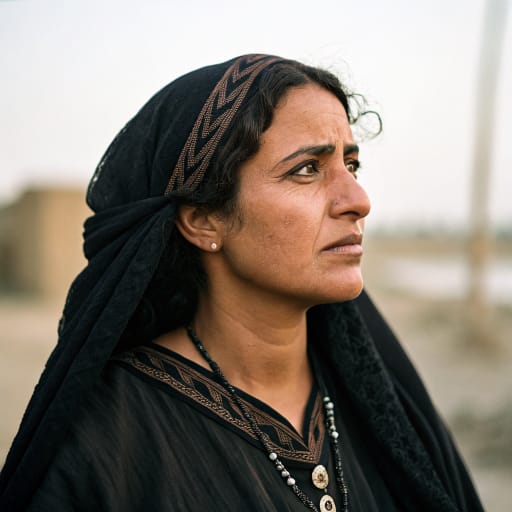
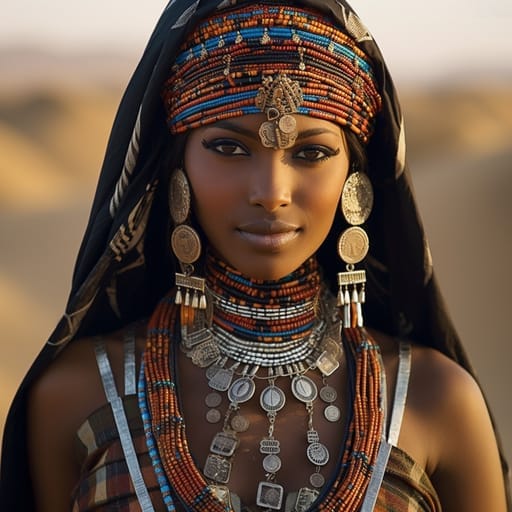
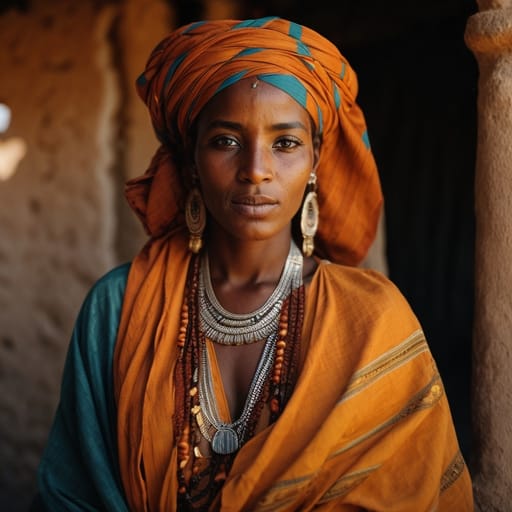
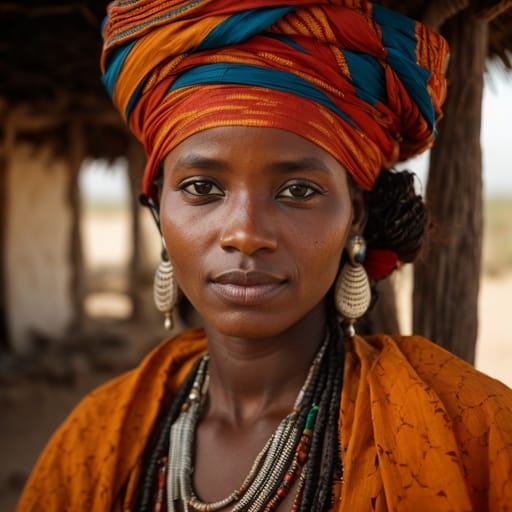
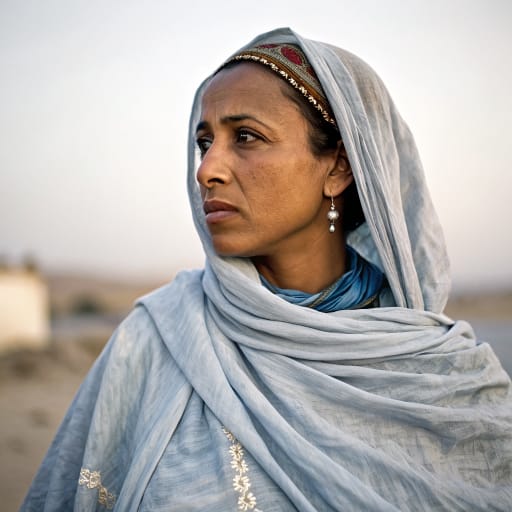
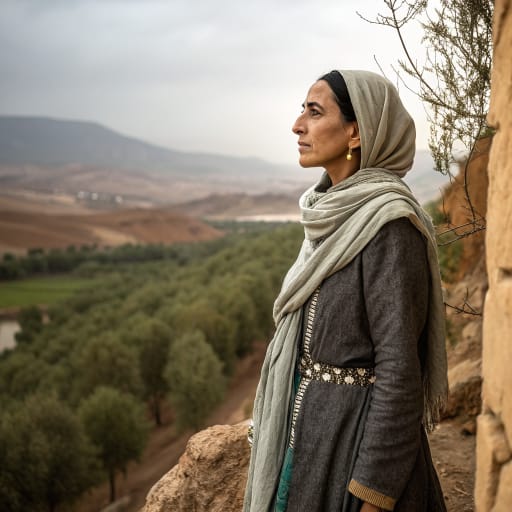
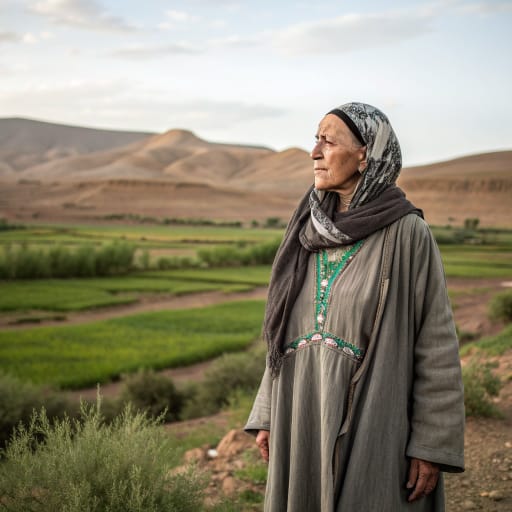
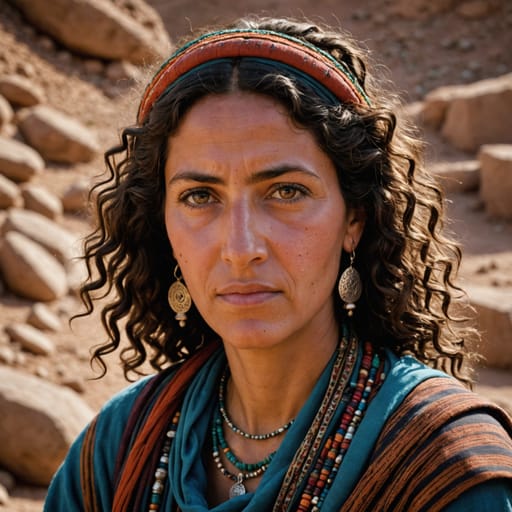
Typical Megorashim Phenotypes
Reference for AI generation: hair, eyes, skin, facial structure, build
Megorashim Body & Anatomy Reference
Berber / Mediterranean-Saharan phenotype: anatomy reference for AI nude generation
Megorashim Boobs & Breasts
Megorashim boobs follow the Berber / Mediterranean-Saharan profile: medium-to-large cup, full, moderate projection. Areolar diameter is usually 30-44mm, and the coloring is medium-brown to dark-brown areolar pigmentation against the olive-to-light-brown skin tone. Breast shape tracks body composition (mesomorph with fuller hip-and-bust deposition, mean adult female BMI 24-28), so Megorashim breasts tend to be fuller and softer than the Cushitic East African norm. Expect a forward-set shape, not the smaller East Asian bust profile.
Megorashim Ass & Hips
Megorashim ass and hip morphology presents as medium-to-full, moderate projection, broader hip profile, distinctly different from the slim narrow-hip Cushitic East African profile. The Megorashim pelvic profile shows medium-to-wide iliac crests, fuller gluteal-femoral fat distribution, anchored in the Berber / Mediterranean-Saharan skeletal pattern. Megorashim butt shots in adult AI imagery should render the medium-to-full, moderate projection, broader hip profile silhouette with the overall build (mesomorph with fuller hip-and-bust deposition) and the fat distribution typical of the Berber / Mediterranean-Saharan phenotype.
Megorashim Vagina & Pussy
Megorashim pussy anatomy typically shows medium-brown to dark-brown labial pigmentation, fuller labia minora. Pubic hair is usually wavy-to-coiled medium-coarse texture, dense distribution. In AI-generated Megorashim nudes, labial color should blend into the olive to medium-brown skin with a gradual transition, and the hair should keep its wavy-to-coiled medium-coarse texture.
Megorashim Dicks & Penis
Penis reference for Megorashim men: regional mean ~13-14cm erect, moderate girth. Coloring: medium-brown shaft pigmentation. An accurate Megorashim cock in AI imagery matches the surrounding olive to medium-brown skin rather than a generic porn default. Circumcision depends on religion and custom, not ancestry.
Megorashim Body, Curves & Build
The Megorashim figure is generally mesomorph with fuller hip-and-bust deposition, with mean adult female BMI 24-28, characteristic of Berber / Mediterranean-Saharan ancestry. AI image tools tend to flatten regional body types into a few stock shapes; here the Megorashim build is kept as its own reference.
Megorashim Skin Tone & Hair Texture
Skin: olive to medium-brown (Fitzpatrick III-V). Hair: wavy-to-curly 2B-3C, often dark-brown to black. Both are typical of Berber / Mediterranean-Saharan ancestry. The most common mistake in AI nudes of Megorashim women is a body rendered lighter than the face.
Explore phenotype categories
Structured taxonomy with peer-reviewed scales · 22 anatomical categories
Erotic Poses & Sex Positions
From the pose catalog: 219 named positions with reference skeletons
Frequently asked questions about Megorashim people
Where is the Megorashim homeland?
The Megorashim homeland is Morocco, chiefly Fez, Meknes, Tetouan and Tangier, and parts of Algeria; ancestral homeland in Spain and Portugal in Northern Africa.
What language do Megorashim people speak?
Megorashim people primarily speak Haketia, a Judeo-Spanish variety (Indo-European, Romance); Judeo-Moroccan Arabic (Afro-Asiatic, Semitic) in Fez and the interior; Hebrew for liturgy and scholarship.
What religion do Megorashim people practice?
The predominant religion among Megorashim people is Rabbinic Judaism, Sephardic rite following Castilian custom.






Make your own Megorashim images
Five a day, free, no credits to buy. The studio starts from this group's phenotype data, so you can set body type, pose and style and keep the traits accurate.
Start with Megorashim