Help us get this right
Does this portrait look right for Bishareen?
Nobody has judged this one yet. You would be the first.
Bishareen Erotic
The Atbai desert and Red Sea Hills, between the Nile and the Red Sea, in northeastern Sudan and southeastern Egypt
Beja, called Bidhaawyeet by its speakers (Cushitic, Afroasiatic); Sudanese and Egyptian Arabic widely spoken as a second language
Sunni Islam, with strong Sufi affiliation, particularly the Khatmiyya order
A northern division of the Beja, with the Umm Ali and Umm Nagi as principal branches; neighboring Beja divisions include the Ababda, Amarar, Hadendoa and Bani Amer
About Bishareen People
The Bishareen are the northern arm of the Beja, the camel-herding people who have held the Eastern Desert between the Nile and the Red Sea for longer than any written record of the place. Their country is the Atbai: gravel plains, dry watercourses that run once or twice a year, and the Red Sea Hills standing behind them, spread across northeastern Sudan and the southeastern corner of Egypt. It is ground that supports almost nothing, and the Bishareen have made a living from it by moving, following rain that falls in patches and reading pasture at distances outsiders find hard to credit. Their camels are the proof of the system. The Bishari riding camel is one of the named breeds of the region, bred for endurance rather than bulk, and traders have paid premium prices for it for centuries.
They speak Beja, which they call Bidhaawyeet, a Cushitic language of the Afroasiatic family and the odd one out among its relatives: it sits far enough from the rest of Cushitic that linguists have argued over whether it deserves a branch to itself. Nearly everyone adds Arabic, and in the towns Arabic is winning, but Beja remains the language of the herding camps and of a large body of oral poetry that has never been much written down. The Bishareen are Sunni Muslims, with the Sufi orders of eastern Sudan, above all the Khatmiyya, carrying much of the religious life. Running alongside that is salif, Beja customary law, which settles blood claims, marriages and grazing disputes without reference to any state court. The two principal divisions are the Umm Ali and the Umm Nagi, each branching into smaller sections tied to particular wells and wadis.
History mostly reached them as traffic. Their hills held gold and emerald workings that Egypt exploited from pharaonic times, and the Red Sea port of Aidhab on their coast funneled pilgrims toward Jeddah until it was destroyed in the fifteenth century. The Mahdist wars of the 1880s put Beja fighters into the British imagination under a nickname taken from their hair: the tiffa, a broad dressed halo kept in shape with butter and a wooden pin, and slept on with a carved wooden neck rest. Drought in the 1980s killed the herds the older economy assumed, and many Bishareen now work artisanal gold diggings or live in Port Sudan and Aswan. The Halayeb triangle, claimed by both Egypt and Sudan and under Egyptian control since the 1990s, cuts straight through pasture they once crossed without a thought.
Related ethnic groups
Groups that share Bishareen's homeland, region, language, or religious tradition. These are likely candidates for comparative phenotype reference.
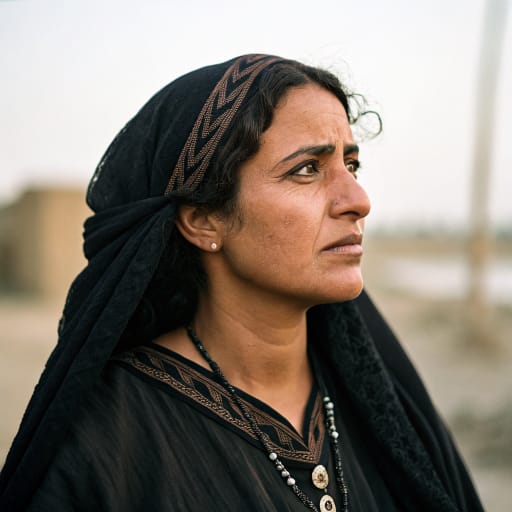
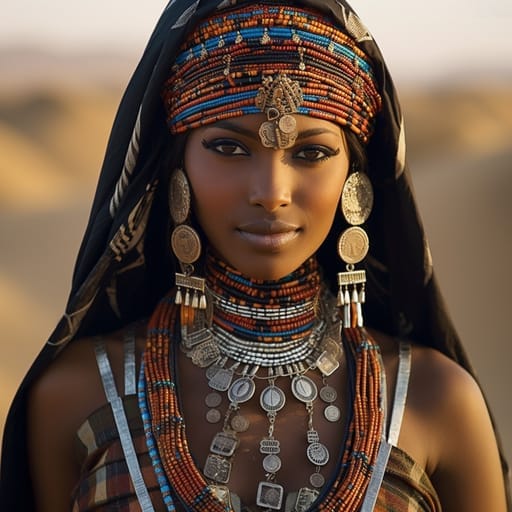
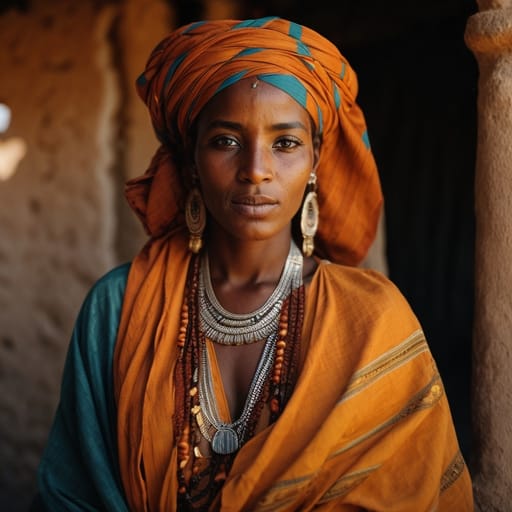
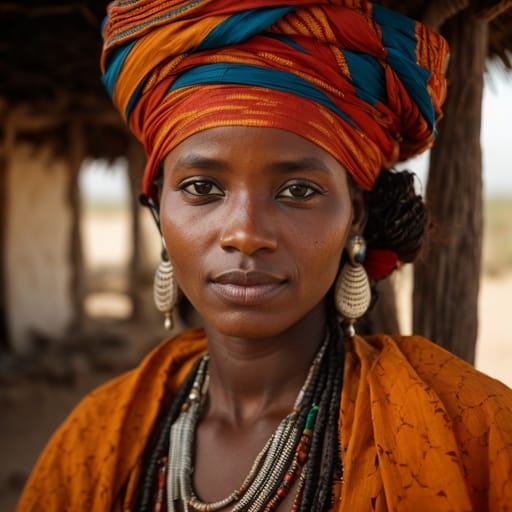
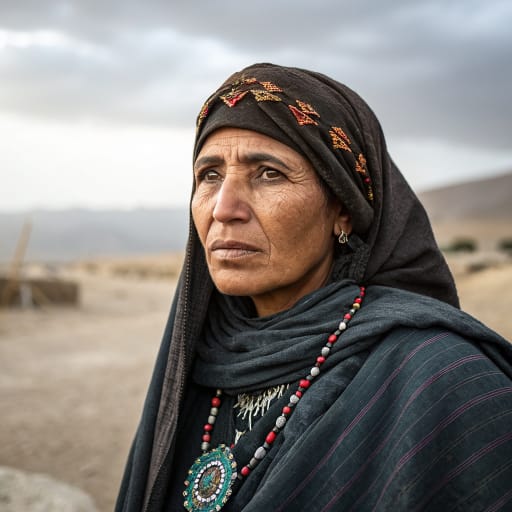
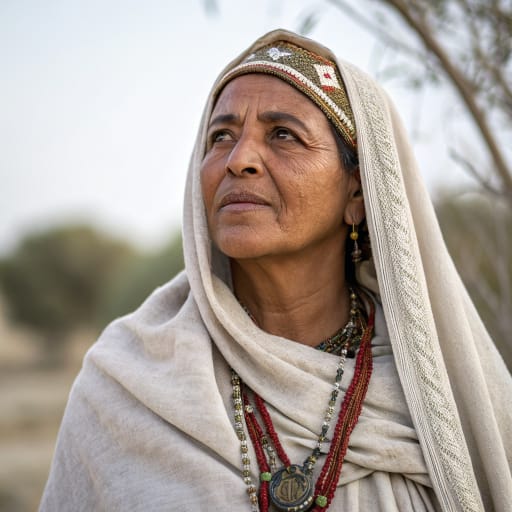
Typical Bishareen Phenotypes
Reference for AI generation: hair, eyes, skin, facial structure, build
Bishareen Body & Anatomy Reference
Per-feature anatomical profile for AI nude generation: Berber / Mediterranean-Saharan phenotype
Bishareen Boobs & Breasts
Bust reference for Bishareen women: medium-to-large cup, full, moderate projection, which is typical of Berber / Mediterranean-Saharan ancestry. Areolas measure about 30-44mm across, with medium-brown to dark-brown pigmentation. Body type (mesomorph with fuller hip-and-bust deposition) shapes the bust as well, so Bishareen tits are usually fuller and softer than the Cushitic East African norm. In AI imagery, keep the forward-set shape rather than drifting toward the smaller East Asian bust profile.
Bishareen Ass & Hips
The Bishareen ass is typically medium-to-full, moderate projection, broader hip profile, which sets it apart from the slim narrow-hip Cushitic East African profile. Underneath, the pelvis shows medium-to-wide iliac crests, fuller gluteal-femoral fat distribution, part of the Berber / Mediterranean-Saharan skeletal pattern. For Bishareen butt pics and AI renders, match that silhouette and the overall build (mesomorph with fuller hip-and-bust deposition).
Bishareen Vagina & Pussy
Bishareen pussy and vulvar anatomy presents medium-brown to dark-brown labial pigmentation, fuller labia minora, consistent with the Berber / Mediterranean-Saharan phenotype's pigmentation pattern. Bishareen pubic hair is typically wavy-to-coiled medium-coarse texture, dense distribution, in the inverted-triangle pattern. For anatomically accurate Bishareen pussy renders the labial coloration should match the surrounding olive to medium-brown skin tone with a continuous gradient, and the hair should keep its wavy-to-coiled medium-coarse texture.
Bishareen Dicks & Penis
Bishareen dicks follow the Berber / Mediterranean-Saharan reference data: regional mean ~13-14cm erect; moderate girth; medium-brown shaft pigmentation. Shaft color should track the olive to medium-brown skin tone with a smooth change toward the glans, and Bishareen pubic hair keeps its wavy-to-coiled medium-coarse texture.
Bishareen Body, Curves & Build
Bishareen body type and overall build presents as mesomorph with fuller hip-and-bust deposition, with mean adult female BMI 24-28: the characteristic Berber / Mediterranean-Saharan habitus. Bishareen curves and proportions should keep the regional skeletal frame (height, shoulder-to-hip ratio, limb proportions) rather than a generic mesomorph default.
Bishareen Skin Tone & Hair Texture
Bishareen skin sits in the olive to medium-brown (Fitzpatrick III-V) band. Hair is typically wavy-to-curly 2B-3C, often dark-brown to black, in keeping with the Berber / Mediterranean-Saharan phenotype. In nude renders the skin should stay one even tone from face to body, and body, pubic and head hair should match.
Explore phenotype categories
Structured taxonomy with peer-reviewed scales · 22 anatomical categories
Erotic Poses & Sex Positions
From the pose catalog: 219 named positions with reference skeletons
Frequently asked questions about Bishareen people
Where is the Bishareen homeland?
The Bishareen homeland is The Atbai desert and Red Sea Hills, between the Nile and the Red Sea, in northeastern Sudan and southeastern Egypt in Northern Africa.
What language do Bishareen people speak?
Bishareen people primarily speak Beja, called Bidhaawyeet by its speakers (Cushitic, Afroasiatic); Sudanese and Egyptian Arabic widely spoken as a second language.
What religion do Bishareen people practice?
The predominant religion among Bishareen people is Sunni Islam, with strong Sufi affiliation, particularly the Khatmiyya order.






Make your own Bishareen images
Five a day, free, no credits to buy. The studio starts from this group's phenotype data, so you can set body type, pose and style and keep the traits accurate.
Start with Bishareen