Help us get this right
Does this portrait look right for Maghrawa?
Nobody has judged this one yet. You would be the first.
Maghrawa Erotic
The Chelif valley and high plains of western Algeria, extending to Tlemcen and the Moulouya; later Fez and eastern Morocco, Sijilmasa, and Tripolitania in Libya.
Zenati Berber (Afroasiatic, Berber branch), with Arabic for religion, administration and letters.
Sunni Islam, Maliki, adopted unusually early by Berber standards; pre-Islamic Berber religion before the seventh century.
Zenata Berber; one of the two great Zenata confederations alongside the Banu Ifran. Leading lineage the Banu Khazar, with the Banu Khazrun of Sijilmasa and Tripoli branching from it.
About Maghrawa People
The Maghrawa were a Zenata Berber confederation of the western Maghreb, dominant from the middle of the tenth century until the Almoravids broke them in 1070, and remembered now in place names, a common surname, and the ancestry of a great many Moroccans and Algerians. Their home ground was the Chelif valley in western Algeria, the open country between Tenes and the Ouarsenis, with grazing that ran west toward Tlemcen and the Moulouya. Like the other Zenata they were mobile before they were anything else, herders and horsemen who could put light cavalry in the field quickly and take it out of reach just as quickly. That is most of the explanation for the century in which they mattered. They also converted early. The genealogists Ibn Khaldun worked from held that their chief Sulat ibn Wazmar went to Damascus in the 650s and took Islam from the caliph Uthman in person. True or not, the Maghrawa were solidly Sunni while much of Berber North Africa leaned Kharijite, which put them on a definite side when the Fatimids came out of Ifriqiya claiming the caliphate. They fought the Fatimids under Muhammad ibn Khazar, and took titles and money from Umayyad Cordoba for the trouble.
The high point came with Ziri ibn Atiyya, who took Fez for the Umayyads around 987 and founded Oujda in 994 as a base he could actually hold. His line kept Fez, off and on, for the better part of a century. A cousin lineage, the Banu Khazrun, seized Sijilmasa at the Saharan end of the gold road, and a branch of the same family held Tripoli through most of the eleventh century and beyond. What ended the Maghrawa was ordinary and internal: by the 1060s Fez was split between rival Maghrawa emirs spending more on each other than on the frontier. Yusuf ibn Tashfin's Almoravids took the city in 1070 and the killing was heavy. Nothing coherent survived it. The pieces are still visible if you know where to look: Maghraoua in Tiaret province, a Maghrawa in the Tunisian Tell, the surnames Maghraoui and Meghraoui on both sides of the border, Zenati dialects still spoken from the Rif to the Ouarsenis. The political method outlasted the tribe as well. The Marinids and the Zayyanids who ruled after them were Zenata too, running the same maneuver off the same steppe.
Related ethnic groups
Groups that share Maghrawa's homeland, region, language, or religious tradition. These are likely candidates for comparative phenotype reference.
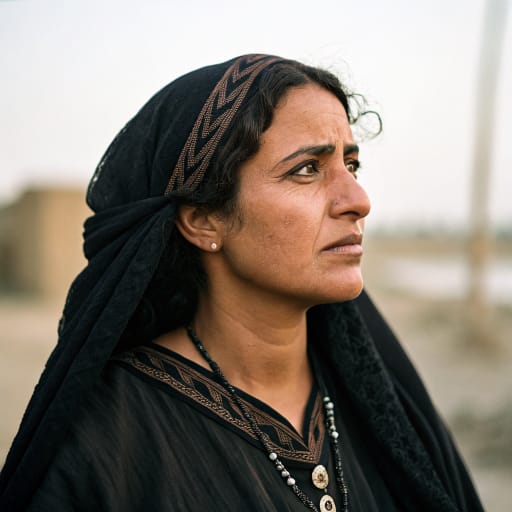
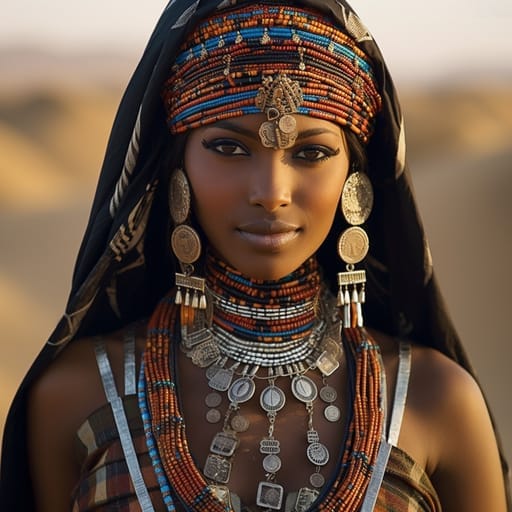
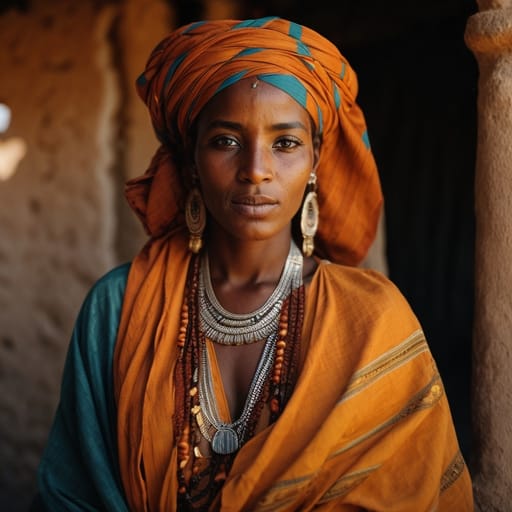
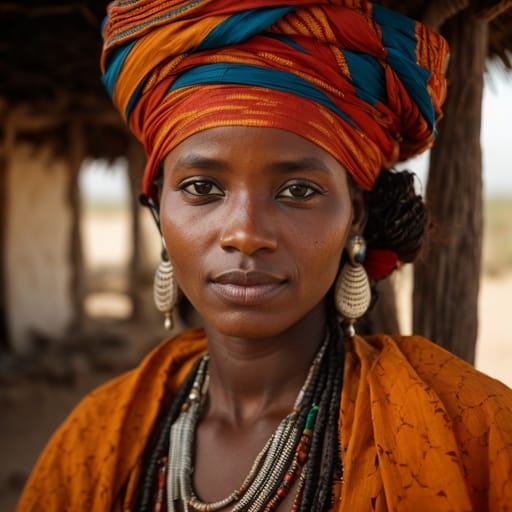
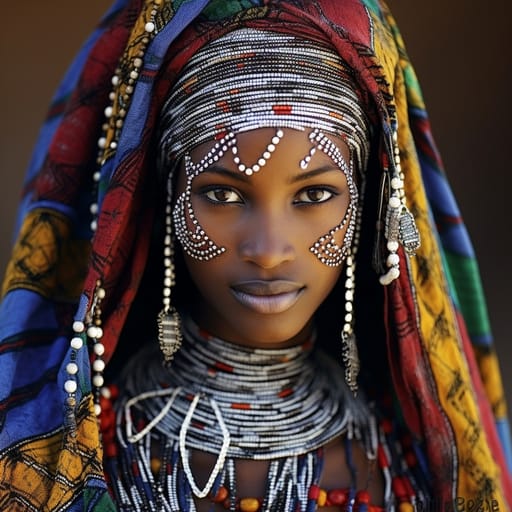
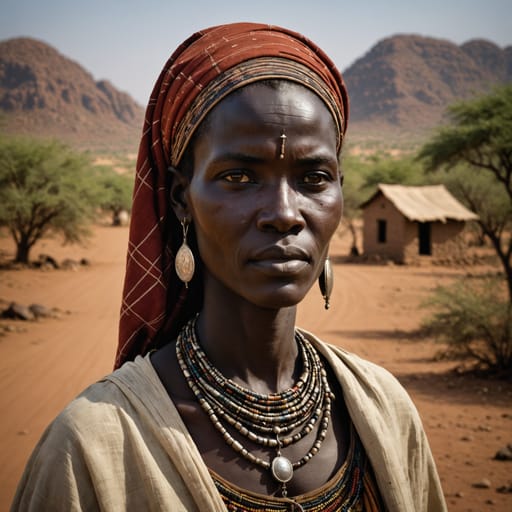
Typical Maghrawa Phenotypes
Reference for AI generation: hair, eyes, skin, facial structure, build
Maghrawa Body & Anatomy Reference
Per-feature anatomical profile for AI nude generation: Berber / Mediterranean-Saharan phenotype
Maghrawa Boobs & Breasts
Maghrawa boobs follow the Berber / Mediterranean-Saharan profile: medium-to-large cup, full, moderate projection. Areolar diameter is usually 30-44mm, and the coloring is medium-brown to dark-brown areolar pigmentation against the olive-to-light-brown skin tone. Breast shape tracks body composition (mesomorph with fuller hip-and-bust deposition, mean adult female BMI 24-28), so Maghrawa breasts tend to be fuller and softer than the Cushitic East African norm. Expect a forward-set shape, not the smaller East Asian bust profile.
Maghrawa Ass & Hips
Maghrawa ass and hip morphology presents as medium-to-full, moderate projection, broader hip profile, distinctly different from the slim narrow-hip Cushitic East African profile. The Maghrawa pelvic profile shows medium-to-wide iliac crests, fuller gluteal-femoral fat distribution, anchored in the Berber / Mediterranean-Saharan skeletal pattern. Maghrawa butt shots in adult AI imagery should render the medium-to-full, moderate projection, broader hip profile silhouette with the overall build (mesomorph with fuller hip-and-bust deposition) and the fat distribution typical of the Berber / Mediterranean-Saharan phenotype.
Maghrawa Vagina & Pussy
Maghrawa pussy anatomy typically shows medium-brown to dark-brown labial pigmentation, fuller labia minora. Pubic hair is usually wavy-to-coiled medium-coarse texture, dense distribution. In AI-generated Maghrawa nudes, labial color should blend into the olive to medium-brown skin with a gradual transition, and the hair should keep its wavy-to-coiled medium-coarse texture.
Maghrawa Dicks & Penis
Penis reference for Maghrawa men: regional mean ~13-14cm erect, moderate girth. Coloring: medium-brown shaft pigmentation. An accurate Maghrawa cock in AI imagery matches the surrounding olive to medium-brown skin rather than a generic porn default. Circumcision depends on religion and custom, not ancestry.
Maghrawa Body, Curves & Build
The Maghrawa figure is generally mesomorph with fuller hip-and-bust deposition, with mean adult female BMI 24-28, characteristic of Berber / Mediterranean-Saharan ancestry. AI image tools tend to flatten regional body types into a few stock shapes; here the Maghrawa build is kept as its own reference.
Maghrawa Skin Tone & Hair Texture
Skin: olive to medium-brown (Fitzpatrick III-V). Hair: wavy-to-curly 2B-3C, often dark-brown to black. Both are typical of Berber / Mediterranean-Saharan ancestry. The most common mistake in AI nudes of Maghrawa women is a body rendered lighter than the face.
Explore phenotype categories
Structured taxonomy with peer-reviewed scales · 22 anatomical categories
Erotic Poses & Sex Positions
From the pose catalog: 219 named positions with reference skeletons
Frequently asked questions about Maghrawa people
Where is the Maghrawa homeland?
The Maghrawa homeland is The Chelif valley and high plains of western Algeria, extending to Tlemcen and the Moulouya; later Fez and eastern Morocco, Sijilmasa, and Tripolitania in Libya. in Northern Africa.
What language do Maghrawa people speak?
Maghrawa people primarily speak Zenati Berber (Afroasiatic, Berber branch), with Arabic for religion, administration and letters..
What religion do Maghrawa people practice?
The predominant religion among Maghrawa people is Sunni Islam, Maliki, adopted unusually early by Berber standards; pre-Islamic Berber religion before the seventh century..






Make your own Maghrawa images
Five a day, free, no credits to buy. The studio starts from this group's phenotype data, so you can set body type, pose and style and keep the traits accurate.
Start with Maghrawa