No portrait yet
Shilha Erotic
Southwestern Morocco: the western High Atlas, the Anti-Atlas, and the Souss valley down to the Atlantic at Agadir, with large communities in Casablanca and in France and Belgium.
Tashelhit, also written Tachelhit or Shilha (Berber branch of Afroasiatic), with Moroccan Arabic and French widely used as second languages
Sunni Islam, Maliki school, with strong Sufi lodge and local saint traditions. A Tashelhit-speaking Jewish minority lived in the Souss and Anti-Atlas until the mid twentieth century.
Amazigh (Berber), descended in large part from the medieval Masmuda confederation. Distinct from Central Atlas Tamazight speakers to the northeast and from Rifians in the north.
About Shilha People
The Shilha are the people of Tashelhit, and the language does more identity work than any border. Tashelhit is the most widely spoken Berber variety in Morocco, and unusually for a Berber language it has a written past: religious scholars in the Souss were composing long didactic poems in it, in Arabic script, by the sixteenth century. The best known is Muhammad Awzal, whose eighteenth century verse treatise on Maliki law was copied, taught and recited for generations in village schools. That literature explains a certain self possession. Tashelhit speakers have never much treated Arabic as the language that thinks and their own as the one that gossips. The homeland is the western High Atlas, the whole of the Anti-Atlas, and the Souss plain between them, running down to the Atlantic at Agadir and inland to Taroudant and Tiznit. It is argan country: dry, terraced, worked hard.
Village government here was a local affair long before the Moroccan state reached up the valleys. An assembly, the jmaa, met under customary law and rotated the duties, and each community kept a collective granary called an agadir, a fortified building where every family stored grain, oil, silver and legal papers behind one guarded door. Hundreds of them still stand in the Anti-Atlas, most now empty. The same communities have exported labor for well over a century: the Soussi grocer is an institution in Casablanca and in France, young men leaving at sixteen, sending money back, marrying at home and returning to be buried there. The shop is in the city, but the claim stays in the village. Sunni Islam of the Maliki school sits over a dense map of local saints and Sufi lodges, and this region produced one of Morocco's great political ruptures, the Almohad movement that began in the High Atlas at Tinmel in the twelfth century and went on to rule from Marrakesh to Seville. For entertainment there are the rwais, professional poet-musicians who travel with a single-string bowed fiddle and set complaint, gossip and moral instruction to verse. One note on the name: Chleuh, or Schleuh, is what other people call them. Among themselves they are Ishelhiyn, or simply Amazigh.
Related ethnic groups
Groups that share Shilha's homeland, region, language, or religious tradition. These are likely candidates for comparative phenotype reference.
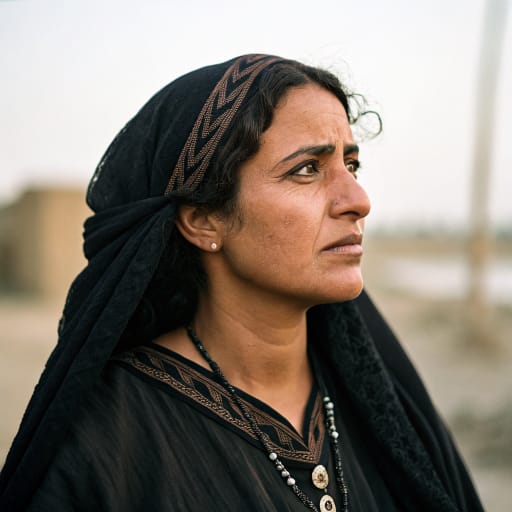
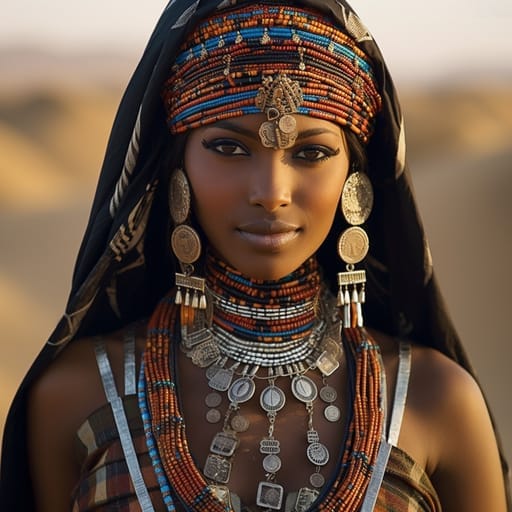
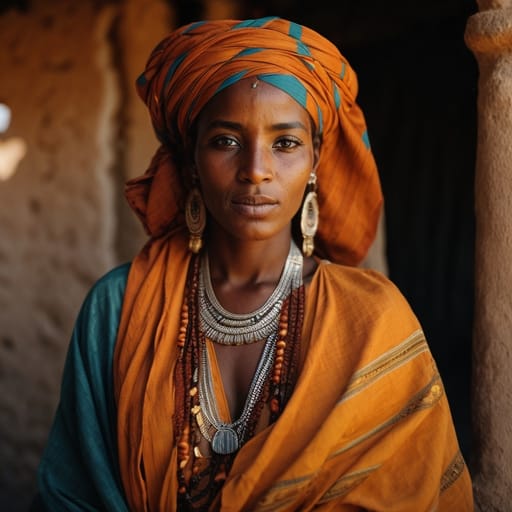
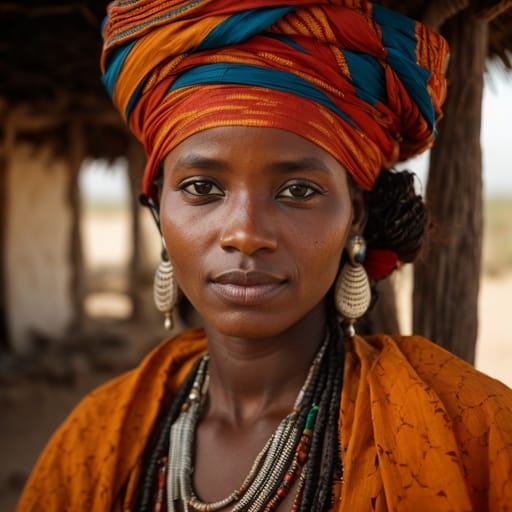
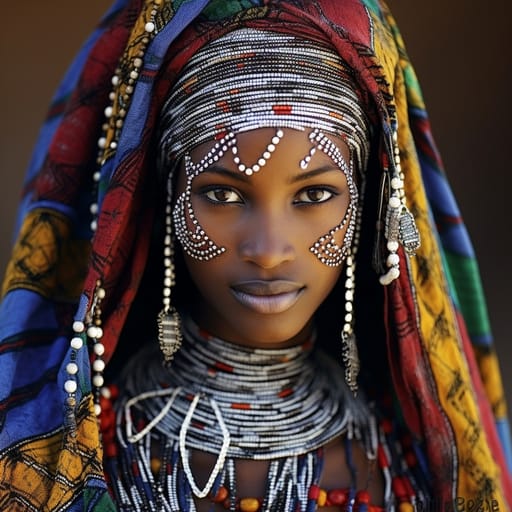
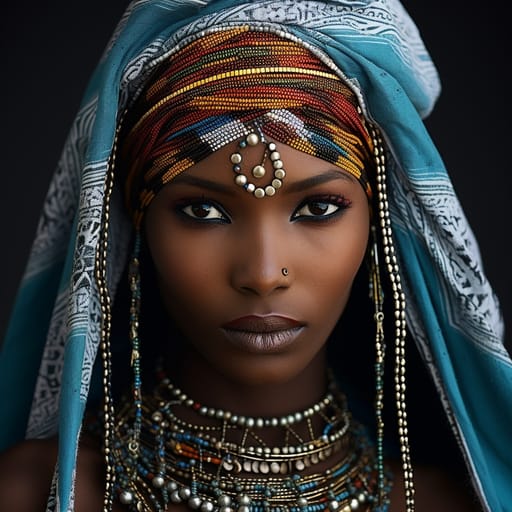
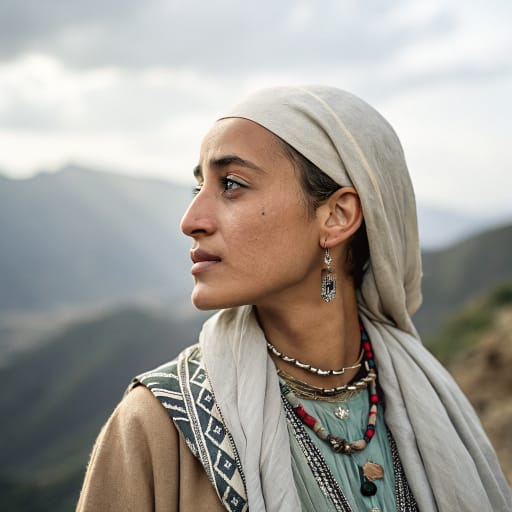
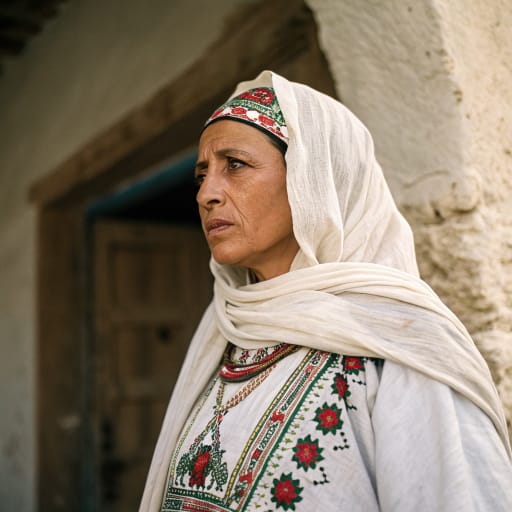
Typical Shilha Phenotypes
Reference for AI generation: hair, eyes, skin, facial structure, build
Shilha Body & Anatomy Reference
Per-feature anatomical profile for AI nude generation: Berber / Mediterranean-Saharan phenotype
Shilha Boobs & Breasts
Bust reference for Shilha women: medium-to-large cup, full, moderate projection, which is typical of Berber / Mediterranean-Saharan ancestry. Areolas measure about 30-44mm across, with medium-brown to dark-brown pigmentation. Body type (mesomorph with fuller hip-and-bust deposition) shapes the bust as well, so Shilha tits are usually fuller and softer than the Cushitic East African norm. In AI imagery, keep the forward-set shape rather than drifting toward the smaller East Asian bust profile.
Shilha Ass & Hips
The Shilha ass is typically medium-to-full, moderate projection, broader hip profile, which sets it apart from the slim narrow-hip Cushitic East African profile. Underneath, the pelvis shows medium-to-wide iliac crests, fuller gluteal-femoral fat distribution, part of the Berber / Mediterranean-Saharan skeletal pattern. For Shilha butt pics and AI renders, match that silhouette and the overall build (mesomorph with fuller hip-and-bust deposition).
Shilha Vagina & Pussy
Shilha pussy and vulvar anatomy presents medium-brown to dark-brown labial pigmentation, fuller labia minora, consistent with the Berber / Mediterranean-Saharan phenotype's pigmentation pattern. Shilha pubic hair is typically wavy-to-coiled medium-coarse texture, dense distribution, in the inverted-triangle pattern. For anatomically accurate Shilha pussy renders the labial coloration should match the surrounding olive to medium-brown skin tone with a continuous gradient, and the hair should keep its wavy-to-coiled medium-coarse texture.
Shilha Dicks & Penis
Shilha dicks follow the Berber / Mediterranean-Saharan reference data: regional mean ~13-14cm erect; moderate girth; medium-brown shaft pigmentation. Shaft color should track the olive to medium-brown skin tone with a smooth change toward the glans, and Shilha pubic hair keeps its wavy-to-coiled medium-coarse texture.
Shilha Body, Curves & Build
Shilha body type and overall build presents as mesomorph with fuller hip-and-bust deposition, with mean adult female BMI 24-28: the characteristic Berber / Mediterranean-Saharan habitus. Shilha curves and proportions should keep the regional skeletal frame (height, shoulder-to-hip ratio, limb proportions) rather than a generic mesomorph default.
Shilha Skin Tone & Hair Texture
Shilha skin sits in the olive to medium-brown (Fitzpatrick III-V) band. Hair is typically wavy-to-curly 2B-3C, often dark-brown to black, in keeping with the Berber / Mediterranean-Saharan phenotype. In nude renders the skin should stay one even tone from face to body, and body, pubic and head hair should match.
Explore phenotype categories
Structured taxonomy with peer-reviewed scales · 22 anatomical categories
Erotic Poses & Sex Positions
From the pose catalog: 219 named positions with reference skeletons
Frequently asked questions about Shilha people
Where is the Shilha homeland?
The Shilha homeland is Southwestern Morocco: the western High Atlas, the Anti-Atlas, and the Souss valley down to the Atlantic at Agadir, with large communities in Casablanca and in France and Belgium. in Northern Africa.
What language do Shilha people speak?
Shilha people primarily speak Tashelhit, also written Tachelhit or Shilha (Berber branch of Afroasiatic), with Moroccan Arabic and French widely used as second languages.
What religion do Shilha people practice?
The predominant religion among Shilha people is Sunni Islam, Maliki school, with strong Sufi lodge and local saint traditions. A Tashelhit-speaking Jewish minority lived in the Souss and Anti-Atlas until the mid twentieth century..






Make your own Shilha images
Five a day, free, no credits to buy. The studio starts from this group's phenotype data, so you can set body type, pose and style and keep the traits accurate.
Start with Shilha