No portrait yet
Zenata Erotic
Central and western Maghreb: modern Algeria, Morocco, Tunisia and western Libya, with medieval footholds in Al-Andalus
Zenati Berber languages (Afroasiatic, Amazigh, Northern Berber branch); most plains descendants later shifted to Maghrebi Arabic
Islam; Kharijite Sufri and Ibadi branches in the early centuries, Sunni Maliki under the later dynasties
One of the three great medieval Berber confederations with the Sanhaja and Masmuda; tribes included the Maghrawa, Banu Ifran, Miknasa, Jarawa, Matghara, Banu Marin, Banu Abd al-Wad and Banu Wattas
About Zenata People
The Zenata were a confederation of Berber tribes that dominated the central and western Maghreb from the Arab conquest to the sixteenth century, and whose descendants survive as Arabic speakers across Morocco and Algeria and as Berber-speaking communities from the Rif to the Sahara. Ibn Khaldun, who served their courts and whose brother wrote the chronicle of Zenata Tlemcen, counted them as one of the three great Berber families with the Sanhaja and the Masmuda. What set them apart was the horse. The Masmuda farmed the Atlas and the Sanhaja worked the deep desert with camels; the Zenata were tent-dwelling herders of the steppe and high plateau who fought from the saddle with short stirrups and light lances. The reputation crossed the sea. The Spanish word jinete, a horseman, comes from their name, and the riding style called a la jineta was theirs before Castile borrowed it.
They began in the east, between the Aurès mountains and Tripolitania, where the Jarawa, counted among the Zenata, produced Dihya, the Kahina, who led the last serious resistance to the Umayyad armies at the end of the seventh century. Once inside Islam, many Zenata chose its Kharijite forms, Sufri and Ibadi, which promised equality among believers and no privilege for Arab blood. They drove the Berber revolt of 740 and founded early trading states at Sijilmasa and Tlemcen. Over the tenth and eleventh centuries the confederation drifted west, squeezed between the Fatimids, their Sanhaja allies, and the Arab Bedouin migrations that followed, and it was in Morocco and western Algeria that Zenata power peaked. The Marinids took Fez in 1248 and built the madrasas that still define its old city; the Zayyanids made Tlemcen a capital of merchants and scholars for three centuries; the Wattasids held Morocco until the Saadi sharifs pushed them out in 1554; and Zenata cavalry, the Volunteers of the Faith, propped up Nasrid Granada, the last Muslim state in Spain.
No nation carries their name, but a great deal survives in pieces. Linguists call a whole branch of Northern Berber Zenati after them, spoken today by Riffians, the Chaouis of the Aurès, the Ibadi Mozabites of the Mzab valley, and the oasis communities of Figuig, Ouargla, Gourara, Djerba and Matmata. In Gourara the language is simply Taznatit, Zenata speech. The plains tribes that switched to Arabic kept their genealogies longer than their words, and Ibn Khaldun's judgment that the Zenata were the most numerous and formidable Berbers of his age still frames how the medieval Maghreb is read.
Related ethnic groups
Groups that share Zenata's homeland, region, language, or religious tradition. These are likely candidates for comparative phenotype reference.
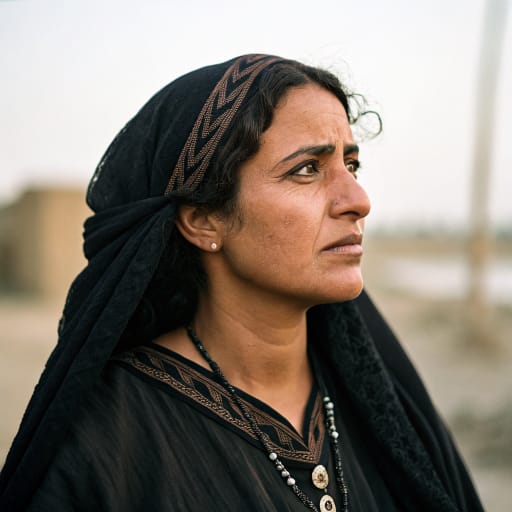
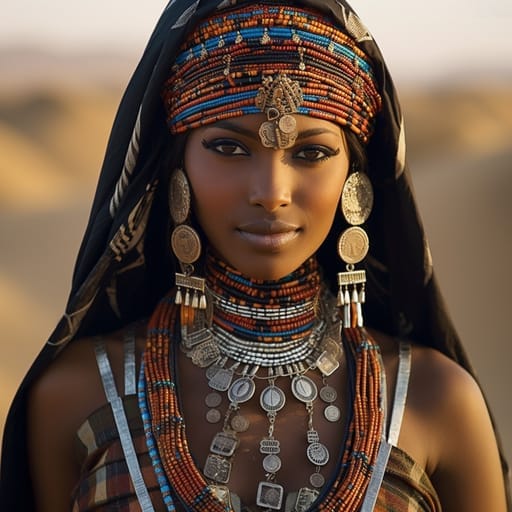
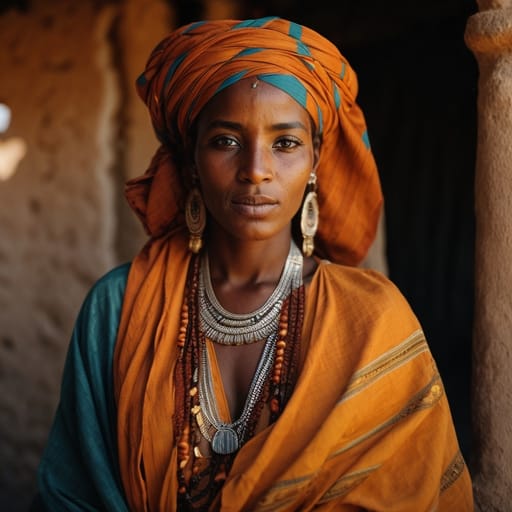
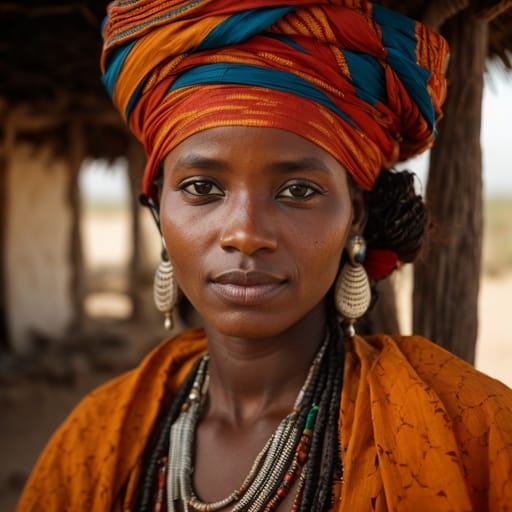
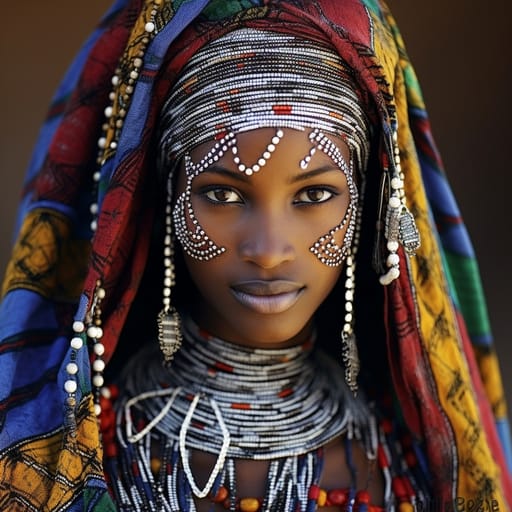
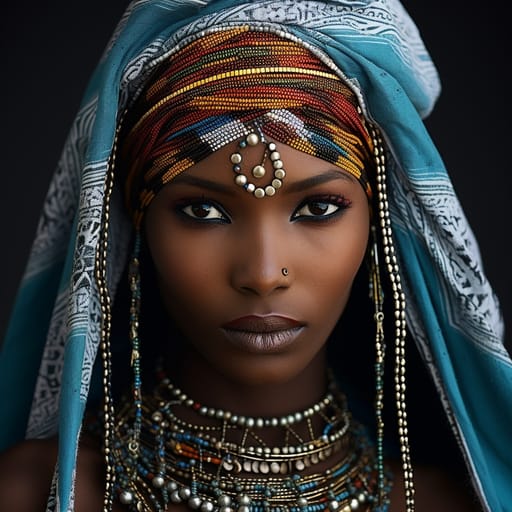
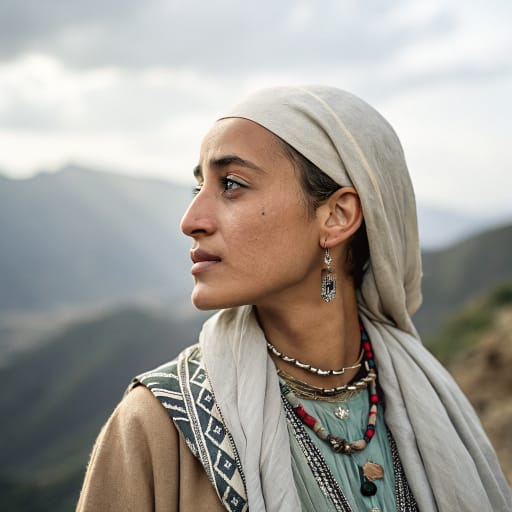
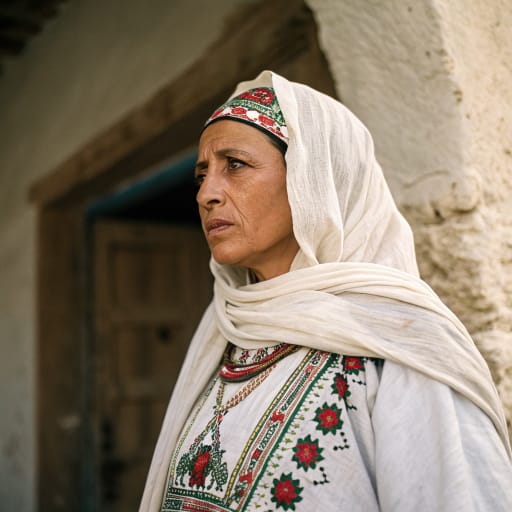
Typical Zenata Phenotypes
Reference for AI generation: hair, eyes, skin, facial structure, build
Zenata Body & Anatomy Reference
Per-feature anatomical profile for AI nude generation: Berber / Mediterranean-Saharan phenotype
Zenata Boobs & Breasts
The typical Zenata bust is medium-to-large cup, full, moderate projection, in line with the wider Berber / Mediterranean-Saharan pattern. Areolas usually fall in the 30-44mm range, with medium-brown to dark-brown areolar pigmentation against the olive-to-light-brown skin tone. Compared with the smaller East Asian bust profile, Zenata breasts sit forward and are generally fuller and softer than the Cushitic East African norm. A faithful AI render of Zenata tits keeps that shape and areola size.
Zenata Ass & Hips
Butt shape among Zenata women: medium-to-full, moderate projection, broader hip profile, over medium-to-wide iliac crests, fuller gluteal-femoral fat distribution. This follows Berber / Mediterranean-Saharan ancestry and looks quite unlike the slim narrow-hip Cushitic East African profile. An accurate Zenata ass in adult AI imagery keeps both the silhouette and the overall build (mesomorph with fuller hip-and-bust deposition) instead of a generic average.
Zenata Vagina & Pussy
Vulvar anatomy among Zenata women: medium-brown to dark-brown labial pigmentation, fuller labia minora. Pubic hair tends to be wavy-to-coiled medium-coarse texture, dense distribution, in the usual inverted-triangle pattern. Both follow Berber / Mediterranean-Saharan pigmentation, which is why Zenata pussy renders should not fall back on a pale, sparse Western template.
Zenata Dicks & Penis
The Zenata cock profile, from Berber / Mediterranean-Saharan anthropometric data: regional mean ~13-14cm erect; moderate girth; medium-brown shaft pigmentation. Pubic hair has a wavy-to-coiled medium-coarse texture and forms the usual inverted-V pattern. Whether Zenata men are circumcised follows religious and cultural practice rather than phenotype.
Zenata Body, Curves & Build
Build and curves among Zenata women follow the Berber / Mediterranean-Saharan pattern: mesomorph with fuller hip-and-bust deposition, mean adult female BMI 24-28. Proportions matter as much as skin tone, so Zenata figures should keep their regional height and limb ratios.
Zenata Skin Tone & Hair Texture
The Zenata skin range is olive to medium-brown (Fitzpatrick III-V), and hair tends to be wavy-to-curly 2B-3C, often dark-brown to black. That combination marks the Berber / Mediterranean-Saharan phenotype, and skin tone is the trait AI generators most often get wrong for Zenata women.
Explore phenotype categories
Structured taxonomy with peer-reviewed scales · 22 anatomical categories
Erotic Poses & Sex Positions
From the pose catalog: 219 named positions with reference skeletons
Frequently asked questions about Zenata people
Where is the Zenata homeland?
The Zenata homeland is Central and western Maghreb: modern Algeria, Morocco, Tunisia and western Libya, with medieval footholds in Al-Andalus in Northern Africa.
What language do Zenata people speak?
Zenata people primarily speak Zenati Berber languages (Afroasiatic, Amazigh, Northern Berber branch); most plains descendants later shifted to Maghrebi Arabic.
What religion do Zenata people practice?
The predominant religion among Zenata people is Islam; Kharijite Sufri and Ibadi branches in the early centuries, Sunni Maliki under the later dynasties.






Make your own Zenata images
Five a day, free, no credits to buy. The studio starts from this group's phenotype data, so you can set body type, pose and style and keep the traits accurate.
Start with Zenata