No portrait yet
Tedim Erotic
Tedim and Tonzang townships in northern Chin State, Myanmar, with large communities in Kalay (Sagaing Region), in Manipur and Mizoram in India, and a refugee diaspora in Malaysia, Australia and the United States.
Tedim, also written Tiddim Chin, standardized on the Kamhau dialect (Sino-Tibetan, Tibeto-Burman, Northern Kuki-Chin); Burmese as a second language.
Christian, predominantly Baptist, with Catholic, Assemblies of God and Seventh-day Adventist minorities; a small remnant follows Laipian, the reform religion of Pau Cin Hau.
Part of the Zomi (northern Chin) within the wider Zo or Kuki-Chin family; associated clans and dialect communities include Sukte, Kamhau, Sizang, Teizang, Saizang, Dim, Khuano and Zo.
About Tedim People
The Tedim are the people of the northern Chin Hills whose dialect became the shared language of their neighbors. Their town sits on a high ridge in the north of Myanmar's Chin State, above the Manipur River and close to the Indian border. Tedim belongs to the northern branch of Kuki-Chin within Tibeto-Burman: a near twin of Paite across the border in Manipur, a more distant cousin of Mizo, Falam and Hakha. The neighboring Sizang, Teizang, Saizang, Dim, Khuano and Zo communities each keep a village speech of their own, but Tedim is what they use for church, print and the market. Most speakers call themselves Zomi and treat Chin as a Burmese label applied from outside.
That reach has a history. In the nineteenth century the Sukte chiefs, Kam Hau above all, ran a tribute network from Tedim across the surrounding hills, and it was the Kamhau dialect that the American Baptist missionary J. H. Cope chose for his Roman alphabet, primers and New Testament. The British took the hills by force around 1890 against stubborn Sizang and Sukte resistance. In 1944 the war came through: the Tiddim Road down from Imphal was one of the hardest-fought approaches of that campaign, and the old spelling of the town survives mostly in military histories.
Religion here has a homegrown chapter. Pau Cin Hau, a Tedim man born in 1859, preached against the ruinous animal sacrifices owed to the dawi, the spirits blamed for illness, and taught devotion to one god, Pasian. His movement, Laipian, came with a script he said was revealed to him in a vision, now encoded in Unicode. A few followers remain. Nearly everyone else is Christian, Baptist above all, with Catholic, Assemblies of God and Adventist congregations alongside, and the church calendar organizes village life as firmly as the farming year once did. Khuado, the autumn harvest festival, once a rite for clearing the village of bad spirits, is kept now as thanksgiving and homecoming.
The slopes are steep and short on paddy land, so people grow maize, millet and hill rice, and for generations they have left to earn. Kalay, in the valley below, holds a large Tedim-speaking population, as do Yangon, Lamka in Manipur, and Mizoram. Refugee resettlement built communities in Malaysia, Australia and the United States, where Tulsa, Oklahoma, has the largest. Fighting in Chin State since the 2021 coup has pushed more families across the border, and much of what holds the Tedim together now runs through churches, remittances and phone screens rather than a single ridge.
Related ethnic groups
Groups that share Tedim's homeland, region, language, or religious tradition. These are likely candidates for comparative phenotype reference.

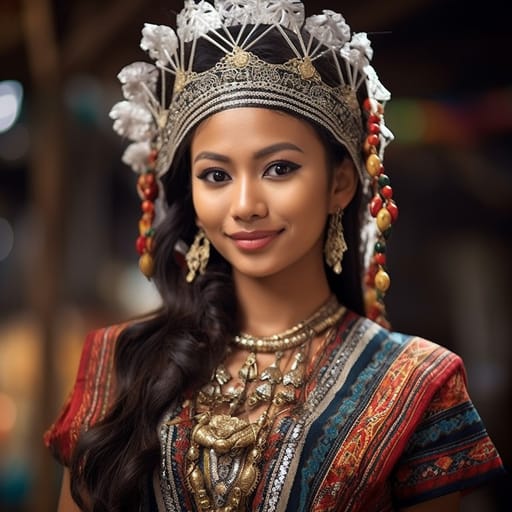
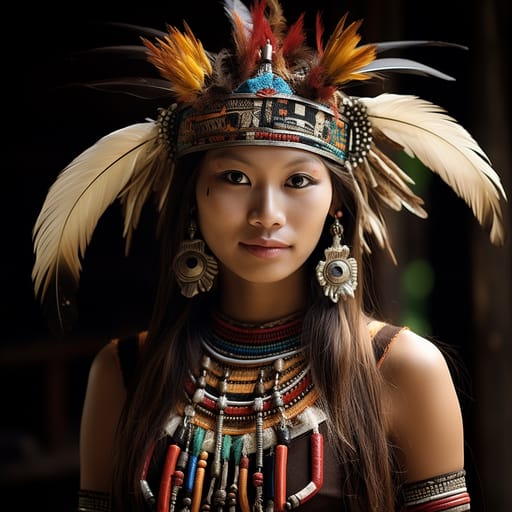

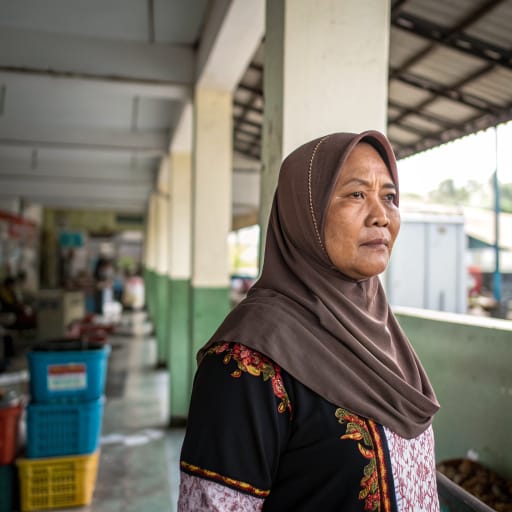
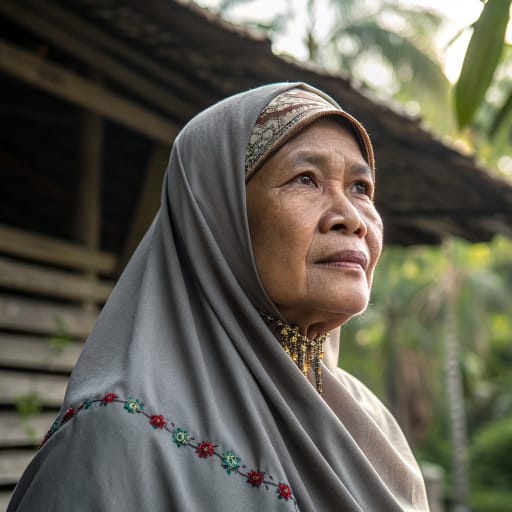
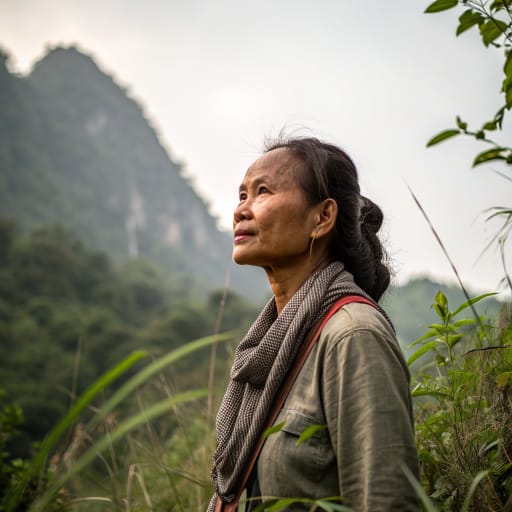
Typical Tedim Phenotypes
Reference for AI generation: hair, eyes, skin, facial structure, build
Tedim Body & Anatomy Reference
Anatomy by feature, Southeast Asian Austronesian / Austroasiatic phenotype
Tedim Boobs & Breasts
Bust reference for Tedim women: small-to-medium cup, modest projection, which is typical of Southeast Asian Austronesian / Austroasiatic ancestry. Areolas measure about 26-38mm across, with medium-brown to dark-brown pigmentation. Body type (ectomorph, petite frame) shapes the bust as well, so Tedim tits are usually firm, modest projection. In AI imagery, keep the forward-set shape rather than drifting toward the fuller South Asian or Polynesian bust.
Tedim Ass & Hips
The Tedim ass is typically small-to-medium, modest projection, narrower hip profile, which sets it apart from the fuller glutes of the Pacific Islander phenotype. Underneath, the pelvis shows narrow-to-medium iliac crests, part of the Southeast Asian Austronesian / Austroasiatic skeletal pattern. For Tedim butt pics and AI renders, match that silhouette and the overall build (ectomorph, petite frame).
Tedim Vagina & Pussy
Tedim pussy and vulvar anatomy presents medium-brown to dark-brown labial pigmentation, consistent with the Southeast Asian Austronesian / Austroasiatic phenotype's pigmentation pattern. Tedim pubic hair is typically straight-to-wavy fine-to-medium texture, in the inverted-triangle pattern. For anatomically accurate Tedim pussy renders the labial coloration should match the surrounding tan to medium-brown skin tone with a continuous gradient, and the hair should keep its straight-to-wavy fine-to-medium texture.
Tedim Dicks & Penis
Tedim dicks follow the Southeast Asian Austronesian / Austroasiatic reference data: regional mean ~11cm erect; moderate girth; medium-brown shaft pigmentation. Shaft color should track the tan to medium-brown skin tone with a smooth change toward the glans, and Tedim pubic hair keeps its straight-to-wavy fine-to-medium texture.
Tedim Body, Curves & Build
Tedim body type and overall build presents as ectomorph, petite frame, with mean adult female BMI 20-23: the characteristic Southeast Asian Austronesian / Austroasiatic habitus. Tedim curves and proportions should keep the regional skeletal frame (height, shoulder-to-hip ratio, limb proportions) rather than a generic mesomorph default.
Tedim Skin Tone & Hair Texture
Tedim skin sits in the tan to medium-brown (Fitzpatrick III-V) band. Hair is typically straight-to-wavy 1A-2A, dark-brown to black, in keeping with the Southeast Asian Austronesian / Austroasiatic phenotype. In nude renders the skin should stay one even tone from face to body, and body, pubic and head hair should match.
Explore phenotype categories
Structured taxonomy with peer-reviewed scales · 22 anatomical categories
Erotic Poses & Sex Positions
From the pose catalog: 219 named positions with reference skeletons
Frequently asked questions about Tedim people
Where is the Tedim homeland?
The Tedim homeland is Tedim and Tonzang townships in northern Chin State, Myanmar, with large communities in Kalay (Sagaing Region), in Manipur and Mizoram in India, and a refugee diaspora in Malaysia, Australia and the United States. in Southeast Asia.
What language do Tedim people speak?
Tedim people primarily speak Tedim, also written Tiddim Chin, standardized on the Kamhau dialect (Sino-Tibetan, Tibeto-Burman, Northern Kuki-Chin); Burmese as a second language..
What religion do Tedim people practice?
The predominant religion among Tedim people is Christian, predominantly Baptist, with Catholic, Assemblies of God and Seventh-day Adventist minorities; a small remnant follows Laipian, the reform religion of Pau Cin Hau..






Make your own Tedim images
Five a day, free, no credits to buy. The studio starts from this group's phenotype data, so you can set body type, pose and style and keep the traits accurate.
Start with Tedim