No portrait yet
Rumanau Erotic
Interior Sabah, Malaysia, in the Kinabatangan River basin on the island of Borneo
Rumanau (Austronesian, North Borneo branch); Malay widely used
One of the subgroups of the Kadazan-Dusun peoples of Sabah
About Rumanau People
The Rumanau are one of the small indigenous peoples of Sabah, the Malaysian state on the northern end of Borneo. Their home villages lie in the interior, in the river country of the Kinabatangan basin. They are counted among the many subgroups of the Kadazan-Dusun, the family of related peoples that makes up Sabah's largest indigenous population, and most outsiders stop there. The name matters more than that, though. It marks a particular community with its own speech and its own home ground, not just another interchangeable branch of the Dusun. The Kinabatangan, the longest river in Sabah, has shaped their history. For generations it was the main road into the interior, carrying forest produce downstream and traders and officials upstream. Communities along it lived through the rule of the British North Borneo Chartered Company, the Japanese occupation during the Second World War and Sabah's entry into Malaysia in 1963. For many interior families the sharper break came later, as commercial logging and then oil palm plantations remade land that had been farmed, hunted and foraged for generations.
Their language belongs to the North Borneo branch of the Austronesian family and is related to the speech of the other peoples along the river. Daily life runs in layers. The home language holds the household and the village, while Malay covers the market, the government office and the national schools. The standardized Kadazandusun taught in some classrooms is built on other dialects, so even the school version of the wider family's language is not quite their own. For a community this size, that arrangement puts steady pressure on the mother tongue, the same pressure that has worn down many small languages across Sabah. The same flattening shows up in official numbers: Malaysia's census groups Sabah's indigenous peoples under broad categories, so the Rumanau rarely appear as a figure of their own. Public recognition tends to come another way, through Kaamatan, the harvest festival held each May across the Kadazan-Dusun world. That is when small subgroups step forward in their own dress and under their own names, and a people most maps leave out is named out loud.
Related ethnic groups
Groups that share Rumanau's homeland, region, language, or religious tradition. These are likely candidates for comparative phenotype reference.

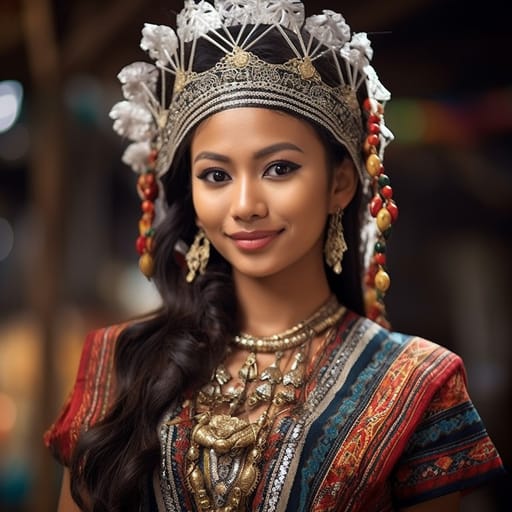


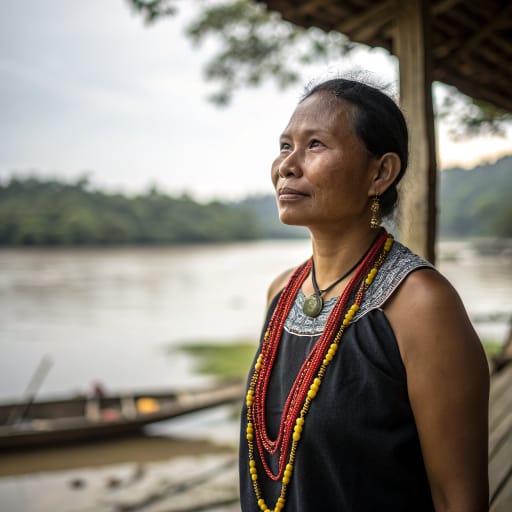
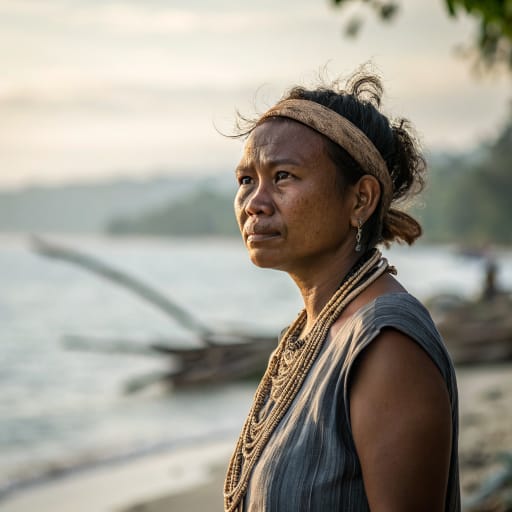

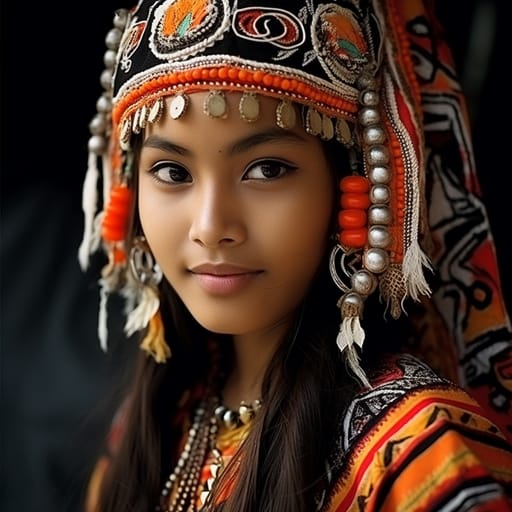
Typical Rumanau Phenotypes
Reference for AI generation: hair, eyes, skin, facial structure, build
Rumanau Body & Anatomy Reference
Anatomy by feature, Southeast Asian Austronesian / Austroasiatic phenotype
Rumanau Boobs & Breasts
The typical Rumanau bust is small-to-medium cup, modest projection, in line with the wider Southeast Asian Austronesian / Austroasiatic pattern. Areolas usually fall in the 26-38mm range, with medium-brown to dark-brown areolar pigmentation against the tan-to-medium-brown skin tone. Compared with the fuller South Asian or Polynesian bust, Rumanau breasts sit forward and are generally firm, modest projection. A faithful AI render of Rumanau tits keeps that shape and areola size.
Rumanau Ass & Hips
Butt shape among Rumanau women: small-to-medium, modest projection, narrower hip profile, over narrow-to-medium iliac crests. This follows Southeast Asian Austronesian / Austroasiatic ancestry and looks quite unlike the fuller glutes of the Pacific Islander phenotype. An accurate Rumanau ass in adult AI imagery keeps both the silhouette and the overall build (ectomorph, petite frame) instead of a generic average.
Rumanau Vagina & Pussy
Vulvar anatomy among Rumanau women: medium-brown to dark-brown labial pigmentation. Pubic hair tends to be straight-to-wavy fine-to-medium texture, in the usual inverted-triangle pattern. Both follow Southeast Asian Austronesian / Austroasiatic pigmentation, which is why Rumanau pussy renders should not fall back on a pale, sparse Western template.
Rumanau Dicks & Penis
The Rumanau cock profile, from Southeast Asian Austronesian / Austroasiatic anthropometric data: regional mean ~11cm erect; moderate girth; medium-brown shaft pigmentation. Pubic hair has a straight-to-wavy fine-to-medium texture and forms the usual inverted-V pattern. Whether Rumanau men are circumcised follows religious and cultural practice rather than phenotype.
Rumanau Body, Curves & Build
Build and curves among Rumanau women follow the Southeast Asian Austronesian / Austroasiatic pattern: ectomorph, petite frame, mean adult female BMI 20-23. Proportions matter as much as skin tone, so Rumanau figures should keep their regional height and limb ratios.
Rumanau Skin Tone & Hair Texture
The Rumanau skin range is tan to medium-brown (Fitzpatrick III-V), and hair tends to be straight-to-wavy 1A-2A, dark-brown to black. That combination marks the Southeast Asian Austronesian / Austroasiatic phenotype, and skin tone is the trait AI generators most often get wrong for Rumanau women.
Explore phenotype categories
Structured taxonomy with peer-reviewed scales · 22 anatomical categories
Erotic Poses & Sex Positions
From the pose catalog: 219 named positions with reference skeletons
Frequently asked questions about Rumanau people
Where is the Rumanau homeland?
The Rumanau homeland is Interior Sabah, Malaysia, in the Kinabatangan River basin on the island of Borneo in Southeast Asia.
What language do Rumanau people speak?
Rumanau people primarily speak Rumanau (Austronesian, North Borneo branch); Malay widely used.






Make your own Rumanau images
Five a day, free, no credits to buy. The studio starts from this group's phenotype data, so you can set body type, pose and style and keep the traits accurate.
Start with Rumanau