No portrait yet
Deli Malays Erotic
East coast of North Sumatra, Indonesia, centered on Medan, Deli Serdang, Serdang Bedagai, Langkat and Binjai
Deli Malay (Malayic, Austronesian); Indonesian widely used
Sunni Islam (Shafi'i school), treated as essential to Malay identity
East Sumatran coastal Malays, alongside the Serdang, Langkat, Asahan and Batu Bara Malays; part of the wider Malay people
About Deli Malays People
Being Deli Malay has long depended less on ancestry than on three commitments: Islam, the Malay language and adat, the body of Malay custom. On the east coast of North Sumatra, a Karo or Simalungun villager who converted to Islam and took up coastal ways was said to have masuk Melayu, to have entered Malayness. That openness is how the community around the Deli Sultanate grew. It still shapes how people in Medan, Deli Serdang, Serdang Bedagai and Langkat talk about who belongs.
The sultanate dates to the early seventeenth century, when a commander sent by Aceh set up a court on the Deli River. For generations the small coastal state was pulled between Aceh and Siak. The real turning point came in the 1860s, when Dutch planters found that Deli soil grew a wrapper-leaf tobacco European cigar makers would pay a premium for. The sultans leased out huge tracts of land, grew rich and moved their seat to Medan, where Maimun Palace and the Grand Mosque still stand as monuments to that money. The plantations also brought in hundreds of thousands of Chinese and Javanese laborers, and the Malays became a minority in their own homeland. In 1946, amid the upheaval of Indonesian independence, a social revolution swept through the courts of East Sumatra. Aristocrats were killed or lost their property, among them the Langkat poet Amir Hamzah, and the sultanates never regained political power.
Deli Malay is a Malayic variety, close kin to Indonesia's national language. It sounds familiar to outsiders, but in Medan it still sets its speakers apart from their Batak, Javanese and Hokkien-speaking neighbors. Sunni Islam of the Shafi'i school runs through daily life and the yearly calendar. During Ramadan, mosques and households cook bubur pedas, a rice porridge thick with herbs and spices, to break the fast. Weddings keep the fullest ceremony: a henna night, the tepung tawar blessing in which elders sprinkle the couple with rice-flour water from a bundle of leaves, and a groom's party that has to talk its way past symbolic barriers at the bride's door, often by trading pantun verses. The sultanate survives as a ceremonial institution, and its palace in Medan remains the community's symbolic center.
Related ethnic groups
Groups that share Deli Malays's homeland, region, language, or religious tradition. These are likely candidates for comparative phenotype reference.
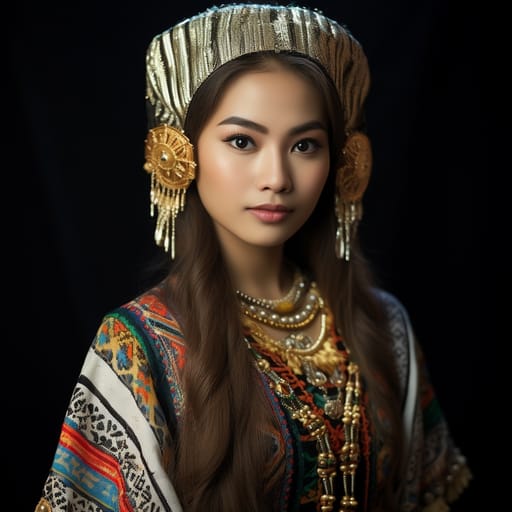
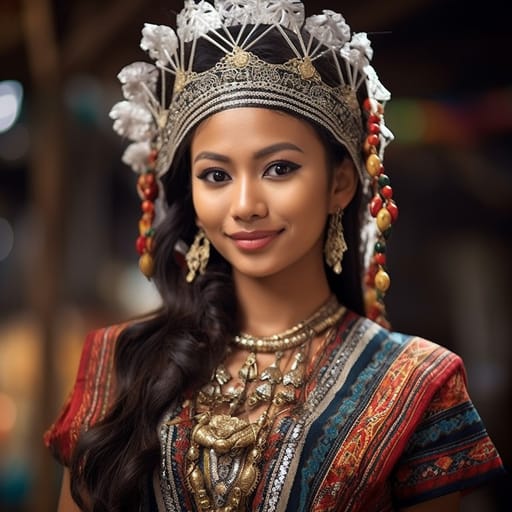
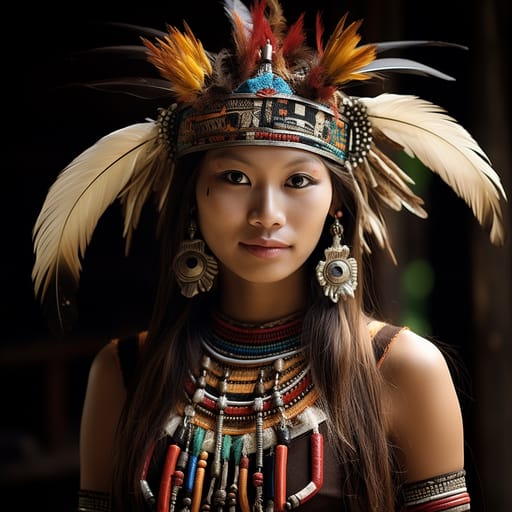
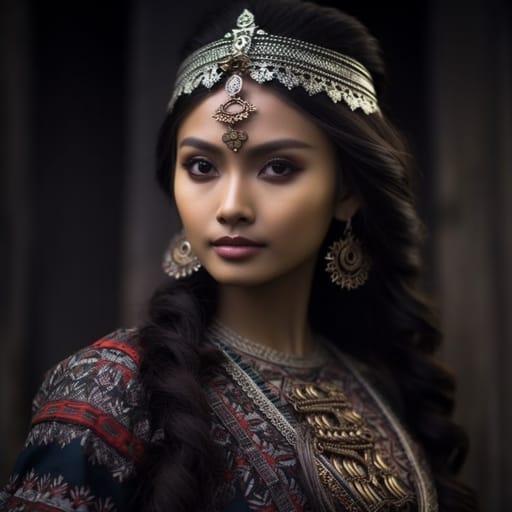
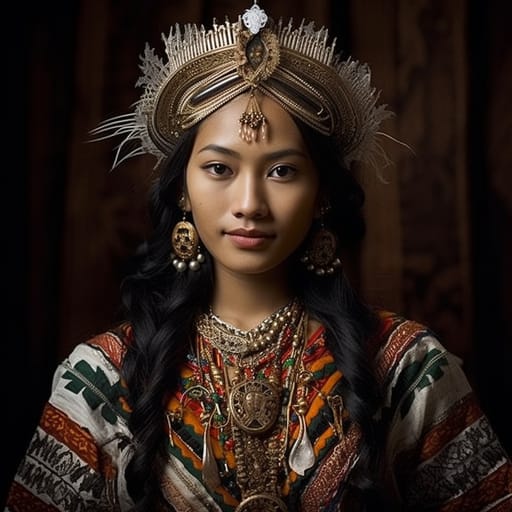
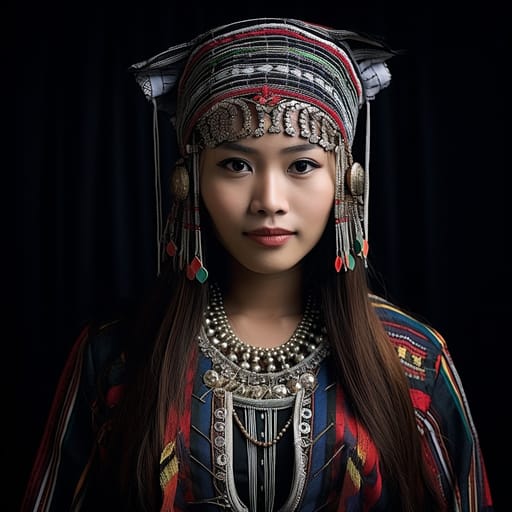
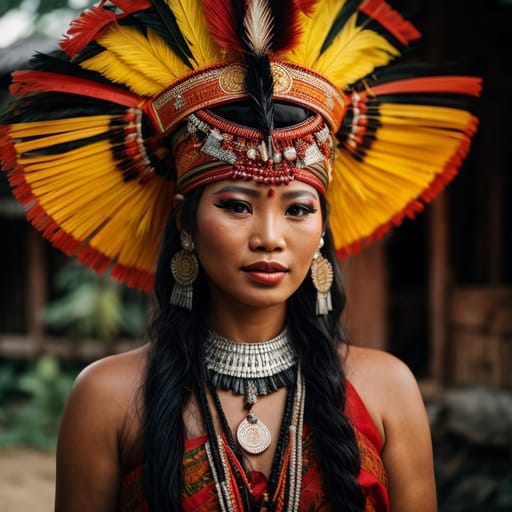
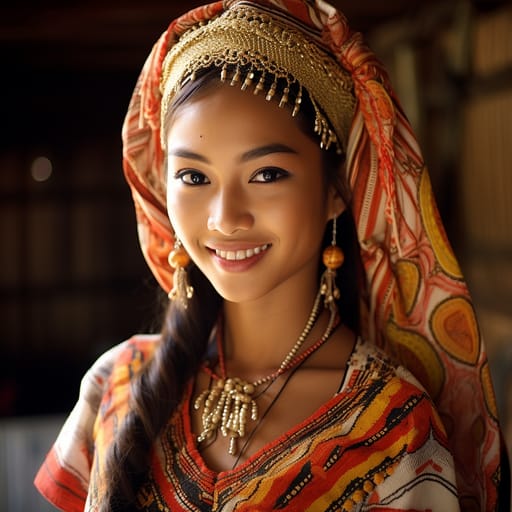
Typical Deli Malays Phenotypes
Reference for AI generation: hair, eyes, skin, facial structure, build
Deli Malays Body & Anatomy Reference
Per-feature anatomical profile for AI nude generation: Southeast Asian Austronesian / Austroasiatic phenotype
Deli Malays Boobs & Breasts
The typical Deli Malays bust is small-to-medium cup, modest projection, in line with the wider Southeast Asian Austronesian / Austroasiatic pattern. Areolas usually fall in the 26-38mm range, with medium-brown to dark-brown areolar pigmentation against the tan-to-medium-brown skin tone. Compared with the fuller South Asian or Polynesian bust, Deli Malays breasts sit forward and are generally firm, modest projection. A faithful AI render of Deli Malays tits keeps that shape and areola size.
Deli Malays Ass & Hips
Butt shape among Deli Malays women: small-to-medium, modest projection, narrower hip profile, over narrow-to-medium iliac crests. This follows Southeast Asian Austronesian / Austroasiatic ancestry and looks quite unlike the fuller glutes of the Pacific Islander phenotype. An accurate Deli Malays ass in adult AI imagery keeps both the silhouette and the overall build (ectomorph, petite frame) instead of a generic average.
Deli Malays Vagina & Pussy
Vulvar anatomy among Deli Malays women: medium-brown to dark-brown labial pigmentation. Pubic hair tends to be straight-to-wavy fine-to-medium texture, in the usual inverted-triangle pattern. Both follow Southeast Asian Austronesian / Austroasiatic pigmentation, which is why Deli Malays pussy renders should not fall back on a pale, sparse Western template.
Deli Malays Dicks & Penis
The Deli Malays cock profile, from Southeast Asian Austronesian / Austroasiatic anthropometric data: regional mean ~11cm erect; moderate girth; medium-brown shaft pigmentation. Pubic hair has a straight-to-wavy fine-to-medium texture and forms the usual inverted-V pattern. Whether Deli Malays men are circumcised follows religious and cultural practice rather than phenotype.
Deli Malays Body, Curves & Build
Build and curves among Deli Malays women follow the Southeast Asian Austronesian / Austroasiatic pattern: ectomorph, petite frame, mean adult female BMI 20-23. Proportions matter as much as skin tone, so Deli Malays figures should keep their regional height and limb ratios.
Deli Malays Skin Tone & Hair Texture
The Deli Malays skin range is tan to medium-brown (Fitzpatrick III-V), and hair tends to be straight-to-wavy 1A-2A, dark-brown to black. That combination marks the Southeast Asian Austronesian / Austroasiatic phenotype, and skin tone is the trait AI generators most often get wrong for Deli Malays women.
Explore phenotype categories
Structured taxonomy with peer-reviewed scales · 22 anatomical categories
Erotic Poses & Sex Positions
From the pose catalog: 219 named positions with reference skeletons
Frequently asked questions about Deli Malays people
Where is the Deli Malays homeland?
The Deli Malays homeland is East coast of North Sumatra, Indonesia, centered on Medan, Deli Serdang, Serdang Bedagai, Langkat and Binjai in Southeast Asia.
What language do Deli Malays people speak?
Deli Malays people primarily speak Deli Malay (Malayic, Austronesian); Indonesian widely used.
What religion do Deli Malays people practice?
The predominant religion among Deli Malays people is Sunni Islam (Shafi'i school), treated as essential to Malay identity.






Make your own Deli Malays images
Five a day, free, no credits to buy. The studio starts from this group's phenotype data, so you can set body type, pose and style and keep the traits accurate.
Start with Deli Malays