No portrait yet
Nage Erotic
Central Flores, mainly Boawae and the surrounding hill districts of Nagekeo Regency, East Nusa Tenggara, Indonesia
Nage (Austronesian, Central Flores group); Indonesian widely spoken
Mostly Roman Catholic, with rites for ancestors and land spirits, including buffalo sacrifice, still widely kept
One of the Central Flores peoples, alongside the Keo, Ngadha, Ende and Lio; closely linked with the Keo in Nagekeo Regency
About Nage People
The Nage are the people of Boawae and the farmland in the hills around it in central Flores. They live beneath Ebulobo, the volcano that towers over their villages and turns up in many of their stories. Belonging here comes in layers: a person answers first to a clan and a village, and only then to the Nage as a whole. Since 2007 the Nage homeland has been part of Nagekeo Regency, a district whose name joins the Nage with their Keo neighbors.
Nage is an Austronesian language. It is one of a string of closely related languages across central Flores, with Ngadha on one side and Keo, Ende and Lio on the other. Linguists do not always agree on where one language ends and the next begins. People use Indonesian at school, at church and with the government, but they speak Nage at home, in the fields and in traditional rituals.
Most Nage are Roman Catholic, the result of missionary work that spread across Flores in the twentieth century, and the parish church is a fixture of village life. Becoming Catholic did not end the older duties. People still take ancestors, spirits of the land and the threat of witchcraft seriously. In many communities the peo, a forked wooden post at the village's ritual center, is still where buffalo are sacrificed during major clan ceremonies. Around Boawae, traditional gatherings can also include etu, a ritual boxing match fought with fists wrapped in palm fiber, which draws crowds from nearby villages.
The Nage also have some of the most striking folklore in eastern Indonesia. They tell of the ebu gogo: small, hairy beings that lived in caves, whose name roughly means a grandmother who eats everything, and who the ancestors are said to have wiped out. Researchers wrote down these stories well before 2003, when the remains of a very small early human, Homo floresiensis, were found at Liang Bua in western Flores. Because the stories and the find seemed to match, scientists who study human origins started debating Nage folklore. It was an odd spotlight for stories villagers had been telling for generations.
Related ethnic groups
Groups that share Nage's homeland, region, language, or religious tradition. These are likely candidates for comparative phenotype reference.

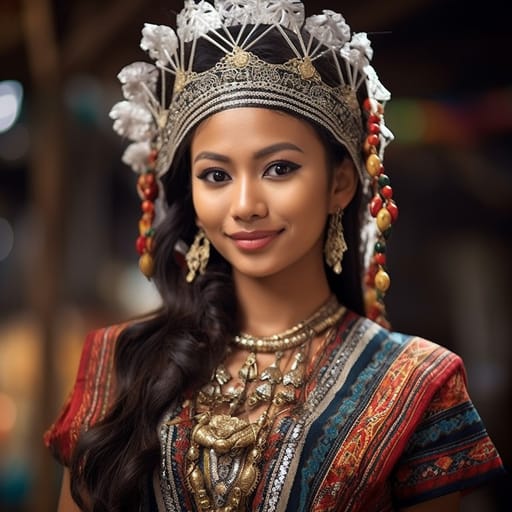
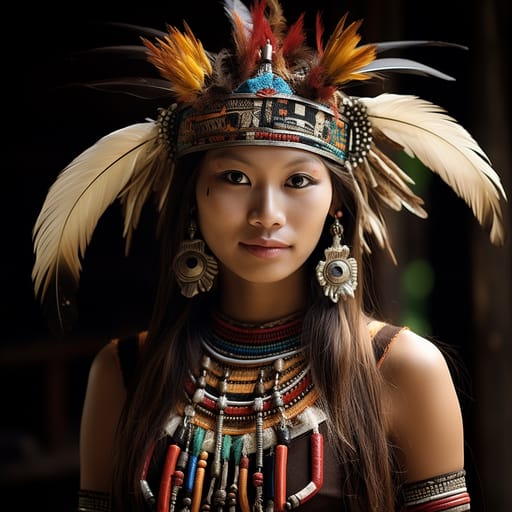

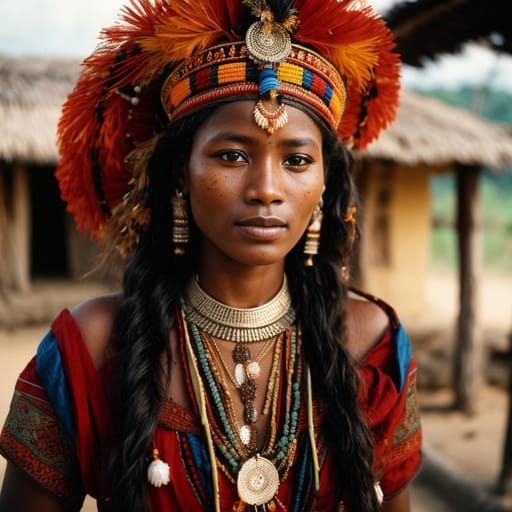
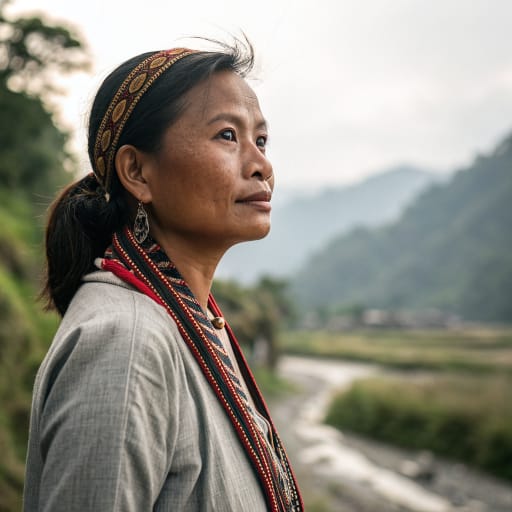
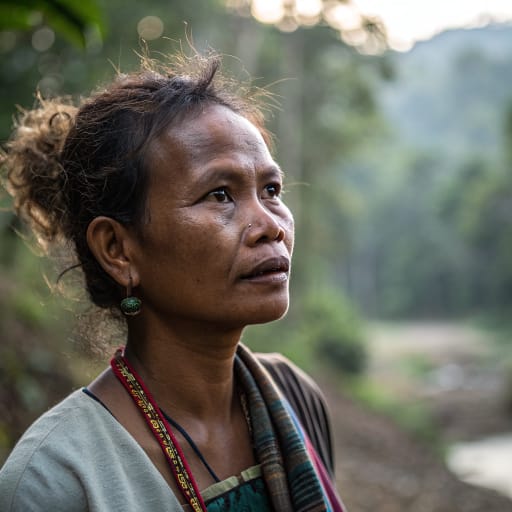
Typical Nage Phenotypes
Reference for AI generation: hair, eyes, skin, facial structure, build
Explore phenotype categories
Structured taxonomy with peer-reviewed scales · 22 anatomical categories
Erotic Poses & Sex Positions
From the pose catalog: 219 named positions with reference skeletons
Frequently asked questions about Nage people
Where is the Nage homeland?
The Nage homeland is Central Flores, mainly Boawae and the surrounding hill districts of Nagekeo Regency, East Nusa Tenggara, Indonesia in Southeast Asia.
What language do Nage people speak?
Nage people primarily speak Nage (Austronesian, Central Flores group); Indonesian widely spoken.
What religion do Nage people practice?
The predominant religion among Nage people is Mostly Roman Catholic, with rites for ancestors and land spirits, including buffalo sacrifice, still widely kept.






Make your own Nage images
Five a day, free, no credits to buy. The studio starts from this group's phenotype data, so you can set body type, pose and style and keep the traits accurate.
Start with Nage