Help us get this right
Does this portrait look right for Ifugao?
Nobody has judged this one yet. You would be the first.
Ifugao Erotic
Ifugao province and the surrounding Cordillera Central, northern Luzon, Philippines.
Ifugao languages: Tuwali, Ayangan, Amganad, Batad, Mayoyao (Northern Luzon / Cordilleran branch of Austronesian)
Mostly Roman Catholic and Protestant Christian, with the indigenous rice and ancestor religion still practiced alongside it by mumbaki priests.
Tuwali, Ayangan, Amganad, Batad, Mayoyao and Hanglulo groupings; usually counted among the Cordilleran (Igorot) peoples of northern Luzon.
About Ifugao People
The Ifugao named themselves after the hills: i- for the people of, pugo for the high ground. They live in the Cordillera Central of northern Luzon, in a province that carries their name and in the valleys around it, and what identifies them most immediately is a piece of engineering. Terraced pond fields climb the mountainsides behind walls of stacked stone and packed clay, irrigated by channels drawn from woodlots called muyong that individual families own and tend above their fields. The forest holds the water, the water feeds the rice, and a household that neglects its trees loses its crop, which makes land tenure and watershed management the same decision. The terraces were long advertised as two thousand years old. Recent excavation around Kiangan suggests something more interesting: most of the wet rice terracing is a few centuries old and expanded quickly in the seventeenth century, as people moved upland and the Ifugao converted a defensible highland into a rice economy while Spanish garrisons below failed, repeatedly, to hold the mountains.
There is no single Ifugao language. Tuwali, Ayangan, Amganad, Batad and Mayoyao are close relatives inside the Cordilleran branch of Austronesian, intelligible to each other at the edges and not in the middle, which is roughly how Ifugao society ran: kin group by kin group, village by village, with no chief above them and disputes worked out through a mediator called the monkalun. Wealth was public and expensive. A kadangyan family earned its standing by hosting feasts, and the proof was the hagabi, a massive carved lounging bench hauled home from the forest by the whole community. Most Ifugao are Christian now, Catholic or Protestant, but the older religion did not vanish underneath it. Ethnographers recorded well over a thousand named deities and ancestral spirits; mumbaki priests still recite for harvests, illness and funerals, and carved bulul figures stand in granaries as guardians of the rice, fed with blood and rice wine. The hudhud, a long chanted epic led by one voice and answered in chorus, belongs to harvest, to wakes, and to bogwa, the exhumation and rewrapping of a relative's bones years after burial. General Yamashita surrendered at Kiangan in September 1945. The pressure now is quieter: young people leave for Manila and for work overseas, terraces go untended, and the ones that remain are photographed by everyone who comes to Banaue.
Related ethnic groups
Groups that share Ifugao's homeland, region, language, or religious tradition. These are likely candidates for comparative phenotype reference.
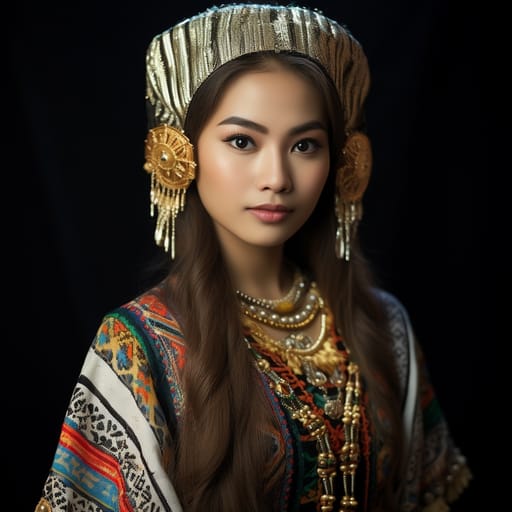
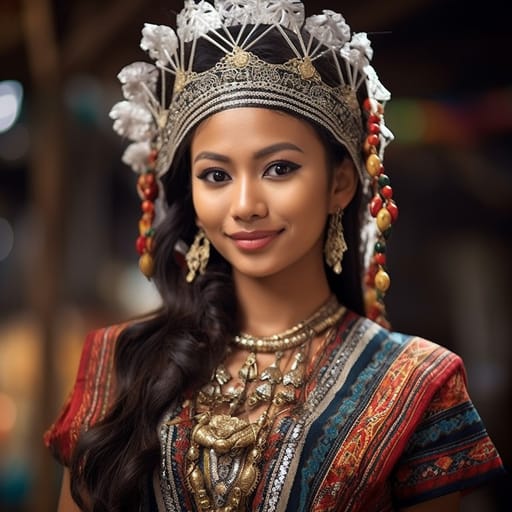
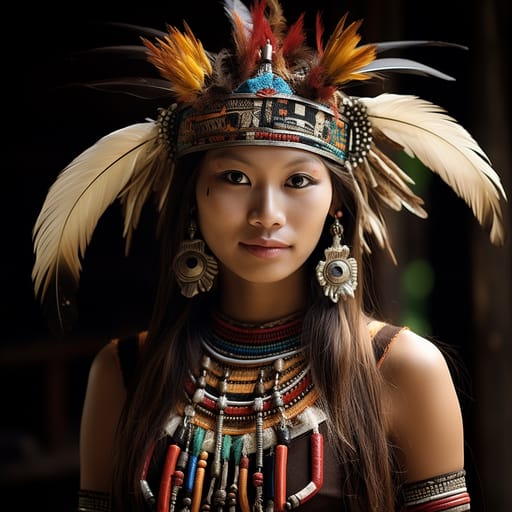
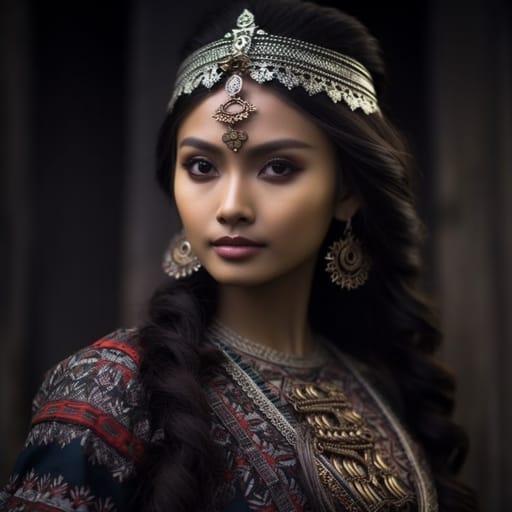
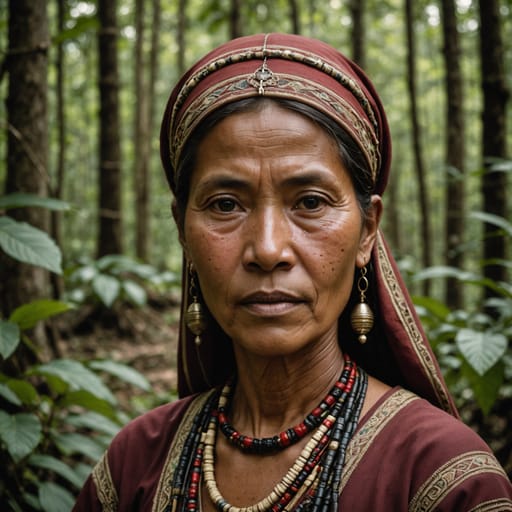
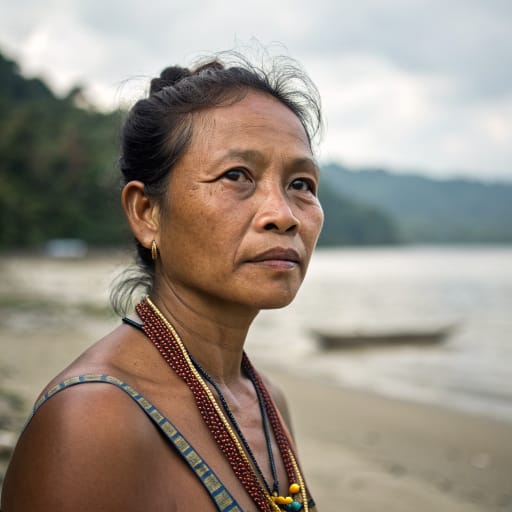
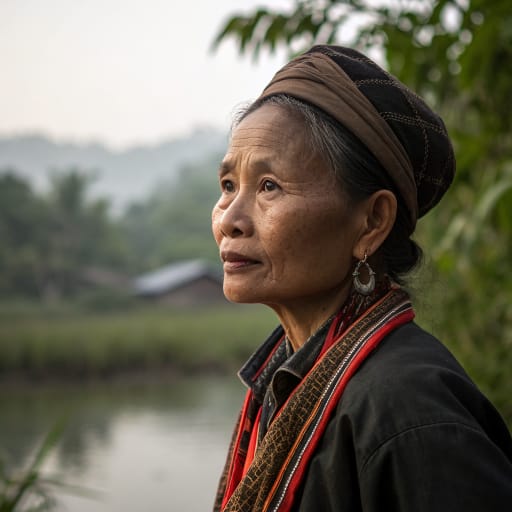
Typical Ifugao Phenotypes
Reference for AI generation: hair, eyes, skin, facial structure, build
Ifugao Body & Anatomy Reference
Anatomy by feature, Southeast Asian Austronesian / Austroasiatic phenotype
Ifugao Boobs & Breasts
The typical Ifugao bust is small-to-medium cup, modest projection, in line with the wider Southeast Asian Austronesian / Austroasiatic pattern. Areolas usually fall in the 26-38mm range, with medium-brown to dark-brown areolar pigmentation against the tan-to-medium-brown skin tone. Compared with the fuller South Asian or Polynesian bust, Ifugao breasts sit forward and are generally firm, modest projection. A faithful AI render of Ifugao tits keeps that shape and areola size.
Ifugao Ass & Hips
Butt shape among Ifugao women: small-to-medium, modest projection, narrower hip profile, over narrow-to-medium iliac crests. This follows Southeast Asian Austronesian / Austroasiatic ancestry and looks quite unlike the fuller glutes of the Pacific Islander phenotype. An accurate Ifugao ass in adult AI imagery keeps both the silhouette and the overall build (ectomorph, petite frame) instead of a generic average.
Ifugao Vagina & Pussy
Vulvar anatomy among Ifugao women: medium-brown to dark-brown labial pigmentation. Pubic hair tends to be straight-to-wavy fine-to-medium texture, in the usual inverted-triangle pattern. Both follow Southeast Asian Austronesian / Austroasiatic pigmentation, which is why Ifugao pussy renders should not fall back on a pale, sparse Western template.
Ifugao Dicks & Penis
The Ifugao cock profile, from Southeast Asian Austronesian / Austroasiatic anthropometric data: regional mean ~11cm erect; moderate girth; medium-brown shaft pigmentation. Pubic hair has a straight-to-wavy fine-to-medium texture and forms the usual inverted-V pattern. Whether Ifugao men are circumcised follows religious and cultural practice rather than phenotype.
Ifugao Body, Curves & Build
Build and curves among Ifugao women follow the Southeast Asian Austronesian / Austroasiatic pattern: ectomorph, petite frame, mean adult female BMI 20-23. Proportions matter as much as skin tone, so Ifugao figures should keep their regional height and limb ratios.
Ifugao Skin Tone & Hair Texture
The Ifugao skin range is tan to medium-brown (Fitzpatrick III-V), and hair tends to be straight-to-wavy 1A-2A, dark-brown to black. That combination marks the Southeast Asian Austronesian / Austroasiatic phenotype, and skin tone is the trait AI generators most often get wrong for Ifugao women.
Explore phenotype categories
Structured taxonomy with peer-reviewed scales · 22 anatomical categories
Erotic Poses & Sex Positions
From the pose catalog: 219 named positions with reference skeletons
Frequently asked questions about Ifugao people
Where is the Ifugao homeland?
The Ifugao homeland is Ifugao province and the surrounding Cordillera Central, northern Luzon, Philippines. in Southeast Asia.
What language do Ifugao people speak?
Ifugao people primarily speak Ifugao languages: Tuwali, Ayangan, Amganad, Batad, Mayoyao (Northern Luzon / Cordilleran branch of Austronesian).
What religion do Ifugao people practice?
The predominant religion among Ifugao people is Mostly Roman Catholic and Protestant Christian, with the indigenous rice and ancestor religion still practiced alongside it by mumbaki priests..






Make your own Ifugao images
Five a day, free, no credits to buy. The studio starts from this group's phenotype data, so you can set body type, pose and style and keep the traits accurate.
Start with Ifugao