Help us get this right
Does this portrait look right for Cho Ro?
Nobody has judged this one yet. You would be the first.
Cho Ro Erotic
Southeastern Vietnam, mainly Đồng Nai (around Xuân Lộc, Long Khánh and Định Quán) and the former Bà Rịa-Vũng Tàu area, now part of Ho Chi Minh City
Chrau (Austroasiatic, Mon-Khmer, South Bahnaric branch); Vietnamese widely spoken
Traditional spirit worship centered on yang and the rice spirit; Catholic and Protestant communities
South Bahnaric-speaking Mon-Khmer peoples; closely related to the Stieng, Mnong and Koho; one of Vietnam's 54 officially recognized ethnic groups
About Cho Ro People
The Chơ Ro, who call themselves Chrau, are an upland people whose homeland is not in Vietnam's Central Highlands but in the lower, rolling country east of Saigon. Their villages sit in the hills and old forest land around Xuân Lộc, Long Khánh and Định Quán in Đồng Nai, and farther south toward the coast near Châu Đức and Xuyên Mộc. The 2019 census counted about 29,500 of them. Few regions in the country have changed as fast as this one. Much of the modern Chơ Ro story is about keeping a distinct identity while the land around them became rubber plantations, orchards, highways and factory zones. Their language, Chrau, belongs to the South Bahnaric branch of the Mon-Khmer languages. Its close relatives are Stieng, Mnong and Koho, spoken by neighboring peoples to the north. Vietnamese is a far more distant cousin within the same Austroasiatic family. A full grammar of Chrau was published in 1971, so it is better documented than many small languages in the region. Even so, Vietnamese is the language of school, markets and work, and it pulls hard on every household.
For generations the Chơ Ro farmed by clearing forest plots, planting upland rice and moving on when the soil wore out. Hunting, fishing and gathering filled out what the harvest could not. Houses were raised on stilts. Settled fields, cash crops and houses built on the ground have mostly replaced that way of life, but the religious world behind it has not disappeared. Traditional belief holds that spirits, or yang, live in the forest, the water, the house and the rice itself. The ceremony most closely tied to the Chơ Ro is Sayangva, held to honor the rice spirit after the harvest. The village raises a decorated bamboo pole, lays out offerings, plays gongs and drinks rice wine from shared jars through long bamboo straws. It is a thanksgiving and also a statement that the community still exists as a community. Christianity, both Catholic and Protestant, has taken hold in a number of Chơ Ro villages too, and churches now stand in country where the rice spirit was once the only authority that mattered.
Related ethnic groups
Groups that share Cho Ro's homeland, region, language, or religious tradition. These are likely candidates for comparative phenotype reference.
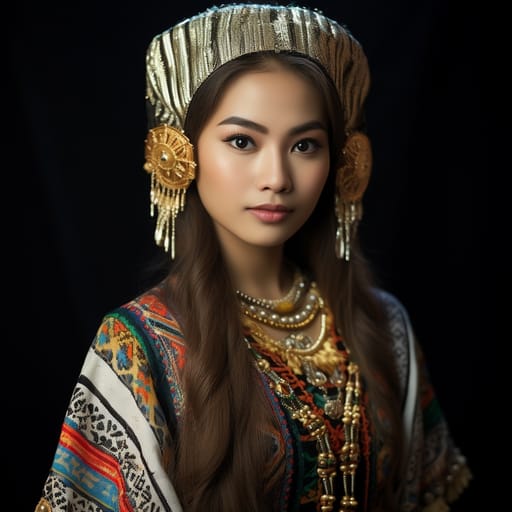
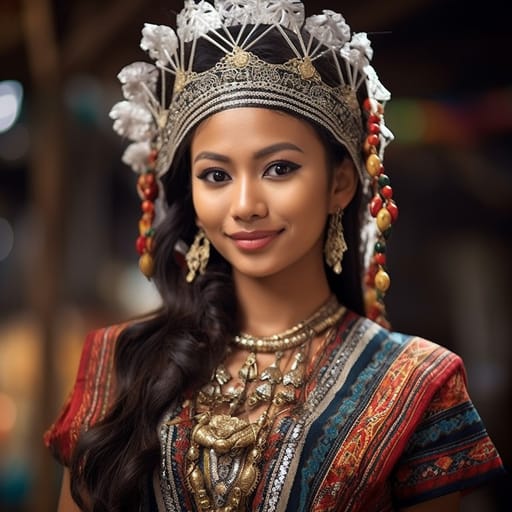
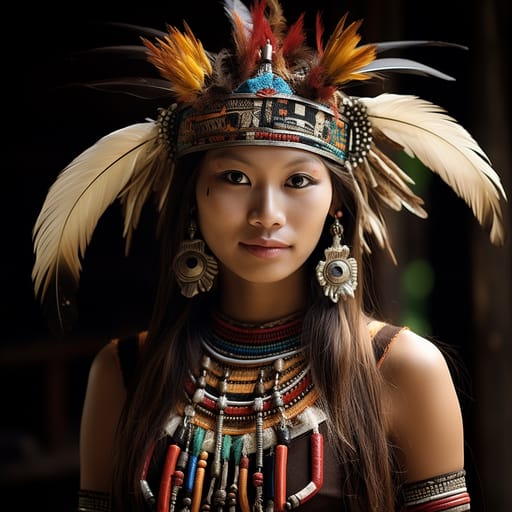
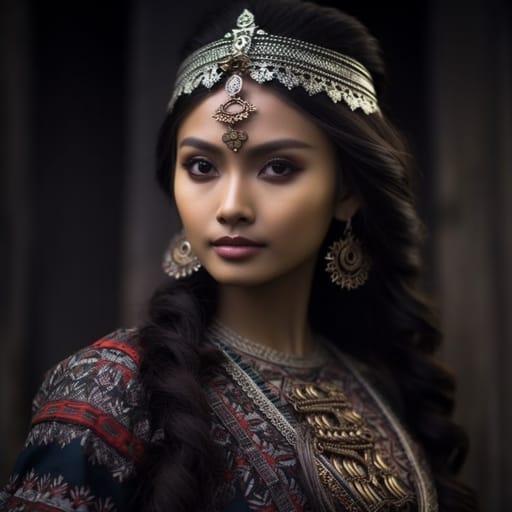
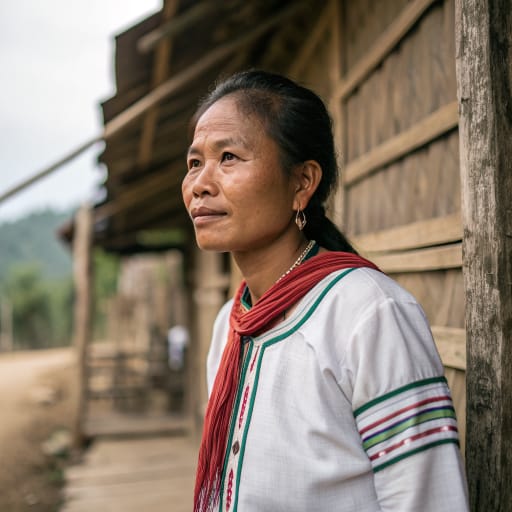
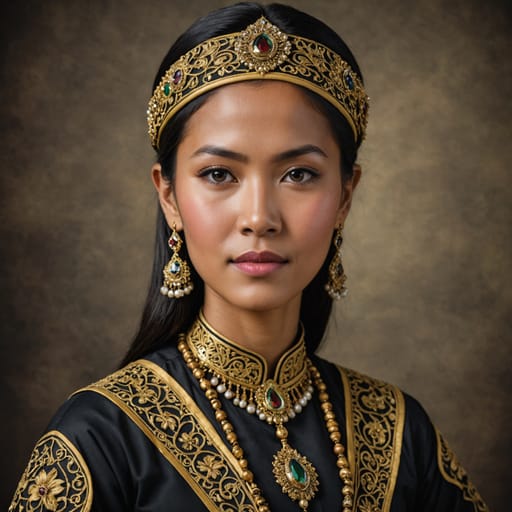
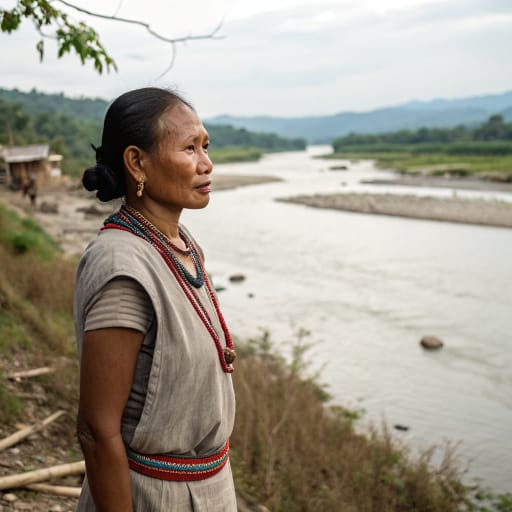
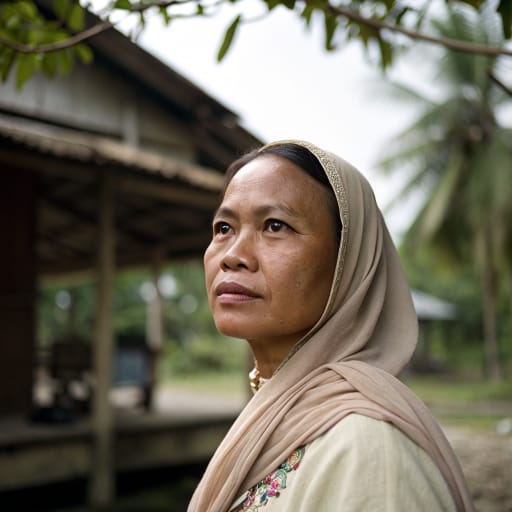
Typical Cho Ro Phenotypes
Reference for AI generation: hair, eyes, skin, facial structure, build
Cho Ro Body & Anatomy Reference
Anatomy by feature, Southeast Asian Austronesian / Austroasiatic phenotype
Cho Ro Boobs & Breasts
The typical Cho Ro bust is small-to-medium cup, modest projection, in line with the wider Southeast Asian Austronesian / Austroasiatic pattern. Areolas usually fall in the 26-38mm range, with medium-brown to dark-brown areolar pigmentation against the tan-to-medium-brown skin tone. Compared with the fuller South Asian or Polynesian bust, Cho Ro breasts sit forward and are generally firm, modest projection. A faithful AI render of Cho Ro tits keeps that shape and areola size.
Cho Ro Ass & Hips
Butt shape among Cho Ro women: small-to-medium, modest projection, narrower hip profile, over narrow-to-medium iliac crests. This follows Southeast Asian Austronesian / Austroasiatic ancestry and looks quite unlike the fuller glutes of the Pacific Islander phenotype. An accurate Cho Ro ass in adult AI imagery keeps both the silhouette and the overall build (ectomorph, petite frame) instead of a generic average.
Cho Ro Vagina & Pussy
Vulvar anatomy among Cho Ro women: medium-brown to dark-brown labial pigmentation. Pubic hair tends to be straight-to-wavy fine-to-medium texture, in the usual inverted-triangle pattern. Both follow Southeast Asian Austronesian / Austroasiatic pigmentation, which is why Cho Ro pussy renders should not fall back on a pale, sparse Western template.
Cho Ro Dicks & Penis
The Cho Ro cock profile, from Southeast Asian Austronesian / Austroasiatic anthropometric data: regional mean ~11cm erect; moderate girth; medium-brown shaft pigmentation. Pubic hair has a straight-to-wavy fine-to-medium texture and forms the usual inverted-V pattern. Whether Cho Ro men are circumcised follows religious and cultural practice rather than phenotype.
Cho Ro Body, Curves & Build
Build and curves among Cho Ro women follow the Southeast Asian Austronesian / Austroasiatic pattern: ectomorph, petite frame, mean adult female BMI 20-23. Proportions matter as much as skin tone, so Cho Ro figures should keep their regional height and limb ratios.
Cho Ro Skin Tone & Hair Texture
The Cho Ro skin range is tan to medium-brown (Fitzpatrick III-V), and hair tends to be straight-to-wavy 1A-2A, dark-brown to black. That combination marks the Southeast Asian Austronesian / Austroasiatic phenotype, and skin tone is the trait AI generators most often get wrong for Cho Ro women.
Explore phenotype categories
Structured taxonomy with peer-reviewed scales · 22 anatomical categories
Erotic Poses & Sex Positions
From the pose catalog: 219 named positions with reference skeletons
Frequently asked questions about Cho Ro people
Where is the Cho Ro homeland?
The Cho Ro homeland is Southeastern Vietnam, mainly Đồng Nai (around Xuân Lộc, Long Khánh and Định Quán) and the former Bà Rịa-Vũng Tàu area, now part of Ho Chi Minh City in Southeast Asia.
What language do Cho Ro people speak?
Cho Ro people primarily speak Chrau (Austroasiatic, Mon-Khmer, South Bahnaric branch); Vietnamese widely spoken.
What religion do Cho Ro people practice?
The predominant religion among Cho Ro people is Traditional spirit worship centered on yang and the rice spirit; Catholic and Protestant communities.






Make your own Cho Ro images
Five a day, free, no credits to buy. The studio starts from this group's phenotype data, so you can set body type, pose and style and keep the traits accurate.
Start with Cho Ro