No portrait yet
Sylhetis Erotic
Sylhet Division in northeastern Bangladesh and the Barak Valley of Assam, India, with a large diaspora in the United Kingdom and smaller communities in the United States and the Gulf states
Sylheti (Indo-European, Eastern Indo-Aryan, Bengali-Assamese branch); standard Bengali for writing and schooling; English widely spoken in the UK diaspora
Mostly Sunni Islam with a strong Sufi tradition centered on the shrines of Shah Jalal and Shah Paran; a significant Hindu minority with a strong Vaishnava tradition
Muslim and Hindu Sylhetis; communities of Sylhet, Sunamganj, Habiganj and Moulvibazar districts and of the Barak Valley in Assam; the British Sylheti diaspora. Often counted within the wider Bengali people
About Sylhetis People
Ask a Sylheti where home is and the answer often comes in two places at once: a village in the Surma or Kushiyara floodplain, and a street in East London or Birmingham. Sylhetis are the people of the Sylhet region in northeastern Bangladesh and the neighboring Barak Valley of Assam, India. It is a low, green country of tea gardens, rivers and haor wetlands that flood into inland seas every monsoon. Three things hold Sylhetis together: a language of their own, a religious life built around saints and song, and more than a century of working abroad and sending money home. Sylheti is an Eastern Indo-Aryan language, closely related to Bengali and Assamese. Bangladesh treats it as a dialect of Bengali, but a listener from Dhaka will struggle with it. Many consonants shift, so the word for water, pani in Bengali, becomes fani. The grammar and vocabulary differ enough that many linguists count Sylheti as a separate language. It once had its own script, Sylheti Nagri, used mainly for Muslim religious and story poems. The script faded in the twentieth century and is now seeing a small revival. Most Sylhetis read and write standard Bengali, and many born in Britain speak English first.
Most Sylhetis are Sunni Muslims, and Islam here has a strong Sufi stamp. Local memory credits the coming of Islam to Shah Jalal, a saint who arrived with his companions in the early fourteenth century. His shrine in Sylhet city draws pilgrims every day. There is also a sizable Hindu minority, which makes up a larger share of the population in the Barak Valley. Hindus have a saint of their own to claim: the family of Chaitanya, the Bengali Vaishnava reformer, came from Sylhet. The mystic songs of Hason Raja and Shah Abdul Karim belong to everyone. At Hindu weddings, women still clap and move in a circle for the dhamail, a dance set to songs about Radha and Krishna. Sylheti history runs on borders and departures. In 1947 a referendum moved most of Sylhet, until then part of Assam, into Pakistan's eastern wing. The Karimganj area stayed with India, and the new border cut through families and markets. Long before that, Sylheti men had worked as stokers and cooks on British steamships out of Calcutta, and some settled in London. Their ties to home villages and relatives grew into mass migration to Britain in the 1950s and 1960s, and Sylhetis came to run most of the country's curry houses. In Whitechapel in 1978, the murder of garment worker Altab Ali brought thousands of people into the streets. It became a turning point in the fight against racist violence. Back in Sylhet, Londoni is still the word for a family with British money, and their tall houses stand out among the rice fields.
Related ethnic groups
Groups that share Sylhetis's homeland, region, language, or religious tradition. These are likely candidates for comparative phenotype reference.
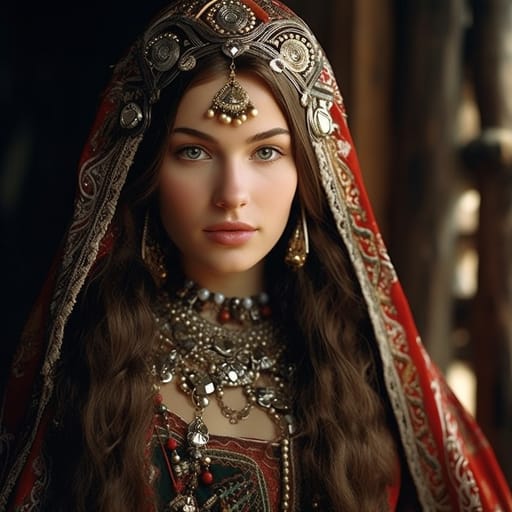
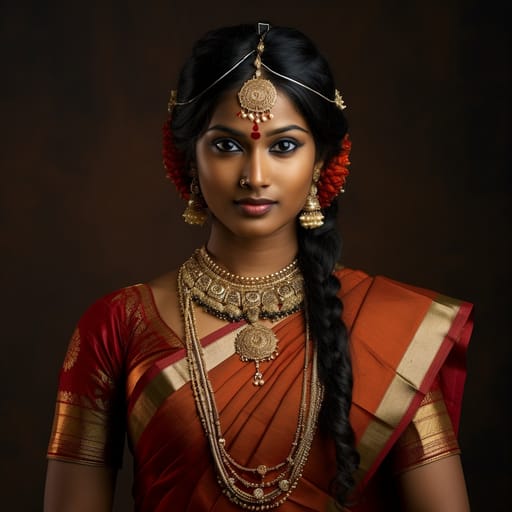
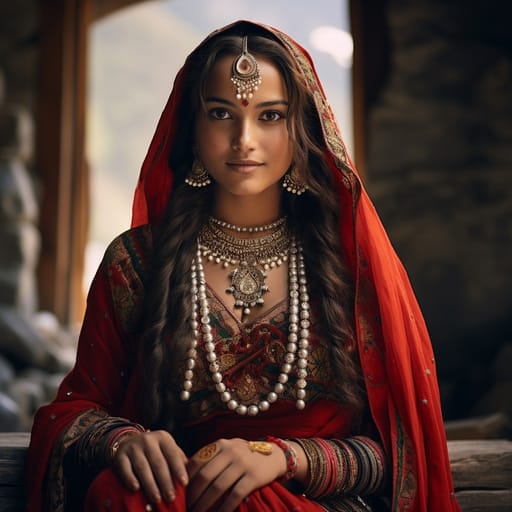
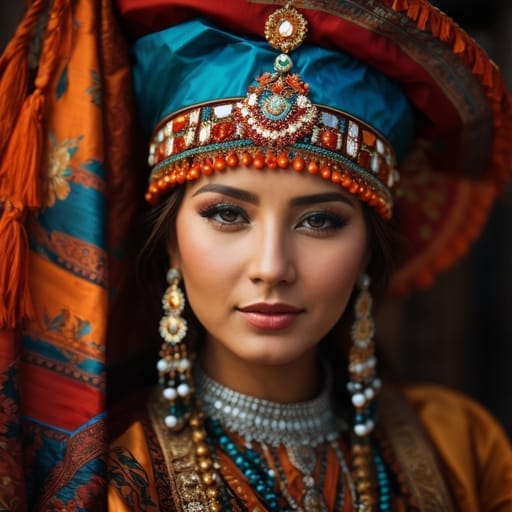
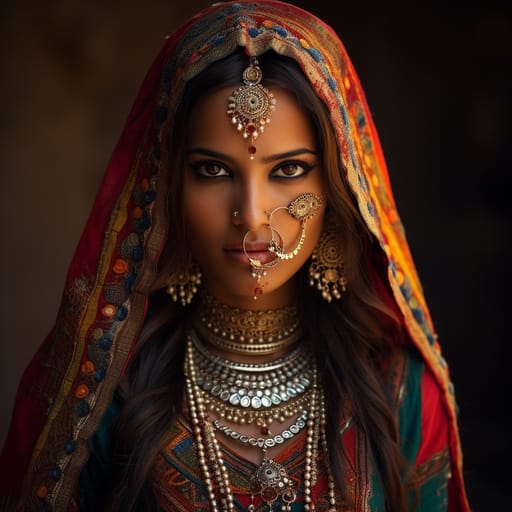
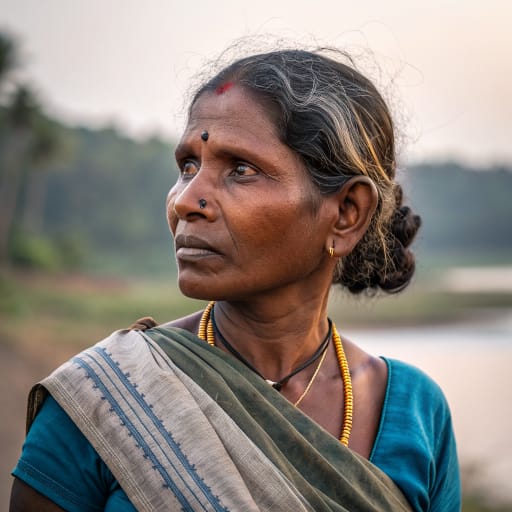
Typical Sylhetis Phenotypes
Reference for AI generation: hair, eyes, skin, facial structure, build
Sylhetis Body & Anatomy Reference
Anatomy by feature, Indo-Aryan / Dravidian South Asian phenotype
Sylhetis Boobs & Breasts
Bust reference for Sylhetis women: medium-to-large cup, moderate-to-full projection, which is typical of Indo-Aryan / Dravidian South Asian ancestry. Areolas measure about 32-46mm across, with medium-brown to dark-brown pigmentation. Body type (endomorph-to-mesomorph with fuller hip deposition) shapes the bust as well, so Sylhetis tits are usually full and soft, generally fuller than the East Asian norm. In AI imagery, keep the forward-set shape rather than drifting toward the smaller East Asian bust profile.
Sylhetis Ass & Hips
The Sylhetis ass is typically medium-to-full, moderate-to-high projection, classic curvy hip profile, which sets it apart from the slim hip profile of East Asian women. Underneath, the pelvis shows medium-to-wide iliac crests, full gluteal-femoral fat distribution, part of the Indo-Aryan / Dravidian South Asian skeletal pattern. For Sylhetis butt pics and AI renders, match that silhouette and the overall build (endomorph-to-mesomorph with fuller hip deposition).
Sylhetis Vagina & Pussy
Sylhetis pussy and vulvar anatomy presents medium-brown to dark-brown labial pigmentation, fuller labia minora projection, consistent with the Indo-Aryan / Dravidian South Asian phenotype's pigmentation pattern. Sylhetis pubic hair is typically straight-to-wavy coarse texture, dense distribution, in the inverted-triangle pattern. For anatomically accurate Sylhetis pussy renders the labial coloration should match the surrounding wheatish to brown skin tone with a continuous gradient, and the hair should keep its straight-to-wavy coarse texture.
Sylhetis Dicks & Penis
Sylhetis dicks follow the Indo-Aryan / Dravidian South Asian reference data: regional mean ~13cm erect; moderate girth; medium-brown shaft pigmentation. Shaft color should track the wheatish to brown skin tone with a smooth change toward the glans, and Sylhetis pubic hair keeps its straight-to-wavy coarse texture.
Sylhetis Body, Curves & Build
Sylhetis body type and overall build presents as endomorph-to-mesomorph with fuller hip deposition, with mean adult female BMI 22-25: the characteristic Indo-Aryan / Dravidian South Asian habitus. Sylhetis curves and proportions should keep the regional skeletal frame (height, shoulder-to-hip ratio, limb proportions) rather than a generic mesomorph default.
Sylhetis Skin Tone & Hair Texture
Sylhetis skin sits in the wheatish to brown (Fitzpatrick III-V) band. Hair is typically straight-to-wavy 1A-2B, dense, dark-brown to black, in keeping with the Indo-Aryan / Dravidian South Asian phenotype. In nude renders the skin should stay one even tone from face to body, and body, pubic and head hair should match.
Explore phenotype categories
Structured taxonomy with peer-reviewed scales · 22 anatomical categories
Erotic Poses & Sex Positions
From the pose catalog: 219 named positions with reference skeletons
Frequently asked questions about Sylhetis people
Where is the Sylhetis homeland?
The Sylhetis homeland is Sylhet Division in northeastern Bangladesh and the Barak Valley of Assam, India, with a large diaspora in the United Kingdom and smaller communities in the United States and the Gulf states in Southern Asia.
What language do Sylhetis people speak?
Sylhetis people primarily speak Sylheti (Indo-European, Eastern Indo-Aryan, Bengali-Assamese branch); standard Bengali for writing and schooling; English widely spoken in the UK diaspora.
What religion do Sylhetis people practice?
The predominant religion among Sylhetis people is Mostly Sunni Islam with a strong Sufi tradition centered on the shrines of Shah Jalal and Shah Paran; a significant Hindu minority with a strong Vaishnava tradition.






Make your own Sylhetis images
Five a day, free, no credits to buy. The studio starts from this group's phenotype data, so you can set body type, pose and style and keep the traits accurate.
Start with Sylhetis