Help us get this right
Does this portrait look right for Billava?
Nobody has judged this one yet. You would be the first.
Billava Erotic
Tulu Nadu on the southwest coast of India: Dakshina Kannada and Udupi districts of Karnataka and Kasaragod district of Kerala, with large migrant communities in Mumbai and the Gulf states.
Tulu (Dravidian); Kannada (Dravidian) as a second language, and as the home language in the Kundapura area.
Hinduism centered on daiva or bhuta spirit worship and the garadi cult of Koti and Chennayya; strong following of Narayana Guru; a Protestant minority descended from Basel Mission converts.
Also called Biruver, Poojary or Baidya; organized in matrilineal bari clans. Often grouped with similar toddy-tapping communities: Ezhava and Thiyya of Kerala, Idiga and Halepaika of Karnataka.
About Billava People
The name most likely comes from billu, the Tulu word for bow, and the Billavas of coastal Karnataka have been several things at once: archers and soldiers for local chieftains, toddy tappers working the coconut and palmyra palms, folk healers known as Baidyas, and officiants at the spirit shrines that anchor Tulu religious life. They are generally counted as the largest single community in Tulu Nadu, the strip of coast between the Western Ghats and the Arabian Sea that takes in Dakshina Kannada and Udupi districts and spills into Kasaragod in Kerala. Their language is Tulu, a Dravidian tongue with a deep oral literature and little official standing, surrounded by Kannada to the north and east and Malayalam to the south. Most Billavas handle Kannada as well, since it is the language of school and state.
Billavas are Hindu, but the texture of that Hinduism is local. The center of gravity is the worship of daivas or bhutas, territorial spirits honored in night-long possession rituals, and the common surname Poojary records the community's long service as priests in those shrines. Their own heroes are the twin brothers Koti and Chennayya, sons of a Billava healer named Deyi Baidethi. Tradition places them in the sixteenth century. They died in battle and are now venerated in garadis across the region. A garadi is part shrine and part gymnasium, a reminder of the martial training once taught there, and the twins' story survives as a long sung epic in Tulu. Descent traditionally ran through the mother under the aliyasantana system, with property passing from a man to his sister's children and clan membership, the bari, inherited from the mother. Law reforms have dismantled the inheritance rules, but marriage within one's own bari is still avoided.
For all that, the caste order placed Billavas low. They were kept out of Brahmin-run temples, and toddy tapping carried a stigma. Some answered by converting to Protestantism through the Basel Mission in the nineteenth century. Many more rallied to the Kerala reformer Narayana Guru, who in 1912 consecrated the Gokarnanatheshwara temple at Kudroli in Mangalore, a temple Billavas built for themselves and which now stages the city's Dasara celebrations. Migration did the rest. Generations of Billavas went to Bombay, many starting as hotel and restaurant workers, and built community institutions there, including a cooperative bank. Others went to the Gulf. Today the community spans farmers, shopkeepers, professionals and politicians, and tapping is a shrinking occupation. They are often compared with the Ezhavas and Thiyyas of Kerala and the Idigas of inland Karnataka, groups with a similar history.
Related ethnic groups
Groups that share Billava's homeland, region, language, or religious tradition. These are likely candidates for comparative phenotype reference.
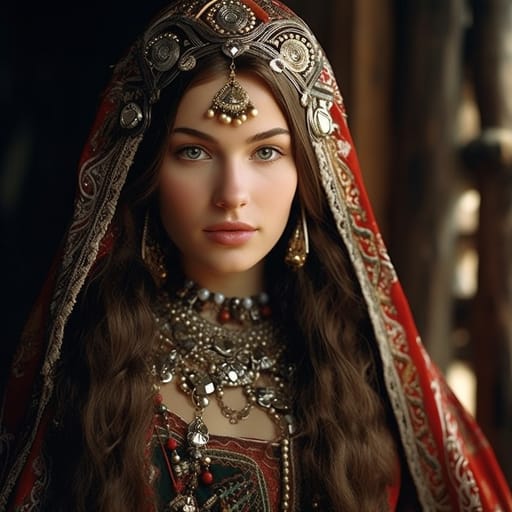
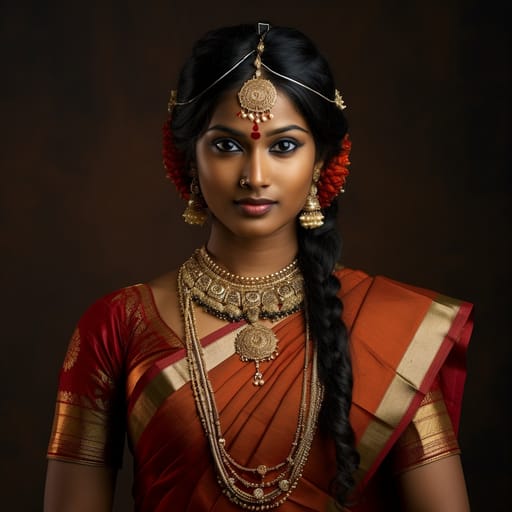
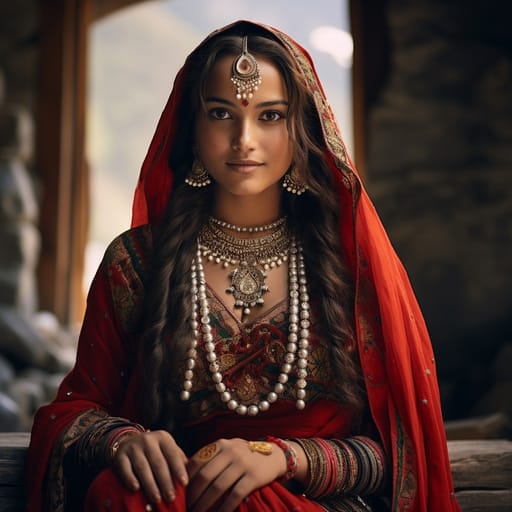
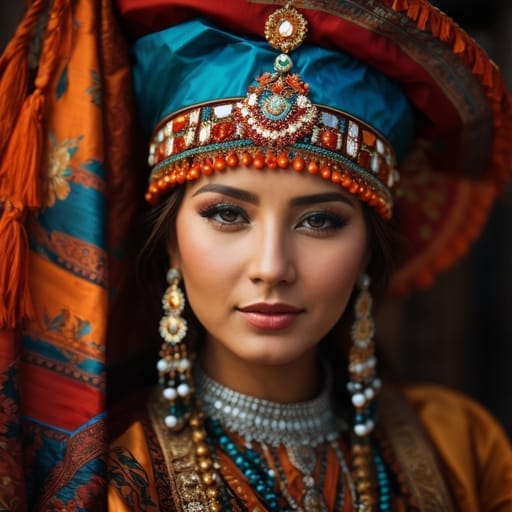
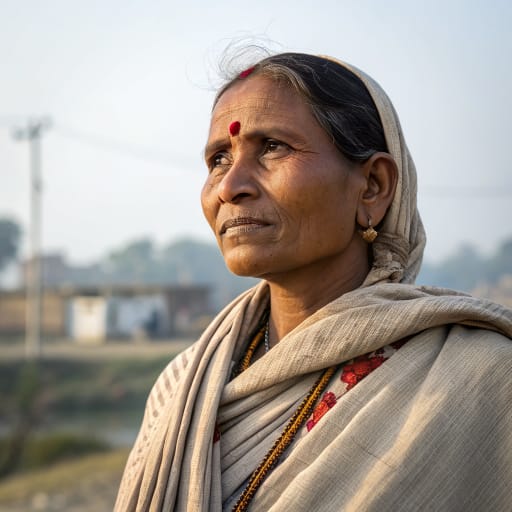
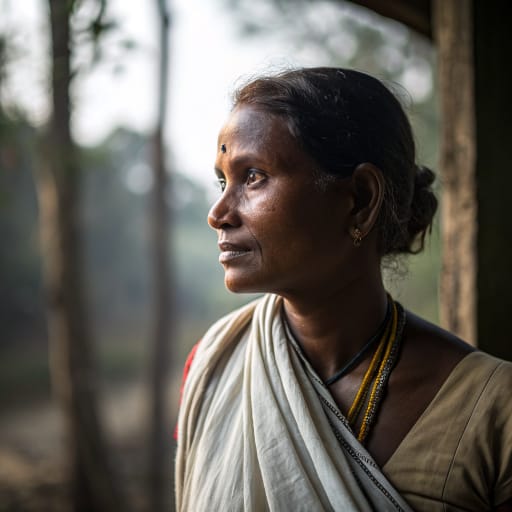
Typical Billava Phenotypes
Reference for AI generation: hair, eyes, skin, facial structure, build
Billava Body & Anatomy Reference
Anatomy by feature, Indo-Aryan / Dravidian South Asian phenotype
Billava Boobs & Breasts
The typical Billava bust is medium-to-large cup, moderate-to-full projection, in line with the wider Indo-Aryan / Dravidian South Asian pattern. Areolas usually fall in the 32-46mm range, with medium-brown to dark-brown areolar pigmentation against the wheatish-to-brown skin tone. Compared with the smaller East Asian bust profile, Billava breasts sit forward and are generally full and soft, generally fuller than the East Asian norm. A faithful AI render of Billava tits keeps that shape and areola size.
Billava Ass & Hips
Butt shape among Billava women: medium-to-full, moderate-to-high projection, classic curvy hip profile, over medium-to-wide iliac crests, full gluteal-femoral fat distribution. This follows Indo-Aryan / Dravidian South Asian ancestry and looks quite unlike the slim hip profile of East Asian women. An accurate Billava ass in adult AI imagery keeps both the silhouette and the overall build (endomorph-to-mesomorph with fuller hip deposition) instead of a generic average.
Billava Vagina & Pussy
Vulvar anatomy among Billava women: medium-brown to dark-brown labial pigmentation, fuller labia minora projection. Pubic hair tends to be straight-to-wavy coarse texture, dense distribution, in the usual inverted-triangle pattern. Both follow Indo-Aryan / Dravidian South Asian pigmentation, which is why Billava pussy renders should not fall back on a pale, sparse Western template.
Billava Dicks & Penis
The Billava cock profile, from Indo-Aryan / Dravidian South Asian anthropometric data: regional mean ~13cm erect; moderate girth; medium-brown shaft pigmentation. Pubic hair has a straight-to-wavy coarse texture and forms the usual inverted-V pattern. Whether Billava men are circumcised follows religious and cultural practice rather than phenotype.
Billava Body, Curves & Build
Build and curves among Billava women follow the Indo-Aryan / Dravidian South Asian pattern: endomorph-to-mesomorph with fuller hip deposition, mean adult female BMI 22-25. Proportions matter as much as skin tone, so Billava figures should keep their regional height and limb ratios.
Billava Skin Tone & Hair Texture
The Billava skin range is wheatish to brown (Fitzpatrick III-V), and hair tends to be straight-to-wavy 1A-2B, dense, dark-brown to black. That combination marks the Indo-Aryan / Dravidian South Asian phenotype, and skin tone is the trait AI generators most often get wrong for Billava women.
Explore phenotype categories
Structured taxonomy with peer-reviewed scales · 22 anatomical categories
Erotic Poses & Sex Positions
From the pose catalog: 219 named positions with reference skeletons
Frequently asked questions about Billava people
Where is the Billava homeland?
The Billava homeland is Tulu Nadu on the southwest coast of India: Dakshina Kannada and Udupi districts of Karnataka and Kasaragod district of Kerala, with large migrant communities in Mumbai and the Gulf states. in Southern Asia.
What language do Billava people speak?
Billava people primarily speak Tulu (Dravidian); Kannada (Dravidian) as a second language, and as the home language in the Kundapura area..
What religion do Billava people practice?
The predominant religion among Billava people is Hinduism centered on daiva or bhuta spirit worship and the garadi cult of Koti and Chennayya; strong following of Narayana Guru; a Protestant minority descended from Basel Mission converts..






Make your own Billava images
Five a day, free, no credits to buy. The studio starts from this group's phenotype data, so you can set body type, pose and style and keep the traits accurate.
Start with Billava