Help us get this right
Does this portrait look right for Rajasthanis?
One tap. It takes a second and it is recorded.
7 say it looks right, 3 say it looks off.
Rajasthanis Erotic
Rajasthan (India)
Indo-European / Indo-Aryan / Hindustani / Rajasthani
Hinduism
Banjara, Gurjars, Rajputs (including Mahyavanshi, Chandels, and Molesalam), Marwari, Charan, Kachhi, Meena
About Rajasthanis People
Rajasthanis are the people of India's largest state by area, a place defined by the Thar Desert in the west, the Aravalli range running diagonally through its middle, and the semi-arid plains and ravines that fall away toward the Gangetic basin. The geography matters because it shaped almost everything else: scarce water, fortified hill towns, caravan trade routes, and a martial culture that grew out of holding ground against successive invasions. The state's identity is bound up with the Rajputs, clan-based warrior aristocracies whose kingdoms (Mewar, Marwar, Amber, Bikaner, Jaisalmer) negotiated, fought, and intermarried with the Mughals and later the British, leaving behind the fortress cities and the codes of honor and lineage that still inflect how Rajasthanis talk about themselves.
But "Rajasthani" is a regional identity stretched across very different communities. The Marwaris of the Shekhawati and Jodhpur regions became one of India's most consequential merchant networks, financing trade from Calcutta to Bombay long before independence. The Banjara were itinerant carriers and salt traders, moving goods on bullock caravans across the subcontinent; many are now settled but retain distinctive embroidery and dialect. The Meena are an indigenous community concentrated in the eastern districts, with their own pre-Rajput claims to the land. The Gurjars, pastoralists historically tied to cattle and camel herding, are spread well beyond Rajasthan's borders. The Charan occupy a peculiar role as hereditary bards and genealogists to the Rajput houses, keepers of clan memory whose verses could elevate or shame a king. Rajputs themselves are not monolithic: groups like the Mahyavanshi or the Molesalam complicate the standard caste reading, sitting at the edges of the Rajput identity in ways that local hierarchies acknowledge even when published taxonomies don't.
Rajasthani belongs to the Indo-Aryan branch and is closely related to Hindi and Gujarati, though linguists treat its main varieties (Marwari, Mewari, Dhundhari, Hadoti, Mewati) as distinct languages with their own literatures, especially the medieval bardic tradition of Dingal poetry. Hinduism is the dominant religious frame, with strong local cults: the warrior-saint Pabuji, the folk deity Tejaji, the goddess Karni Mata at Deshnoke. Pilgrimage at Pushkar, the annual camel fair, the Gangaur and Teej festivals, the durable forms of mirror-work embroidery and miniature painting: these aren't preserved for outsiders. They are how a desert society keeps continuous with itself.
Related ethnic groups
Groups that share Rajasthanis's homeland, region, language, or religious tradition. These are likely candidates for comparative phenotype reference.
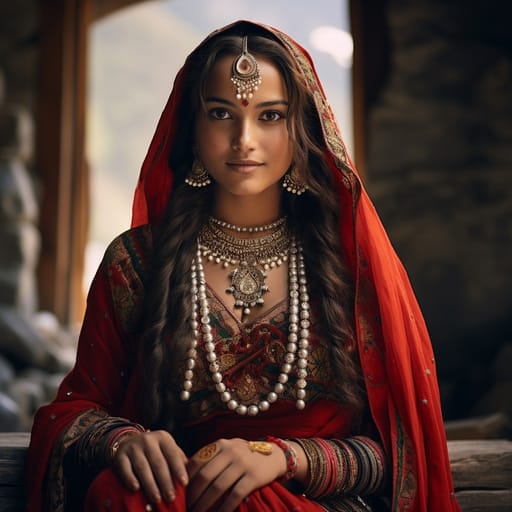
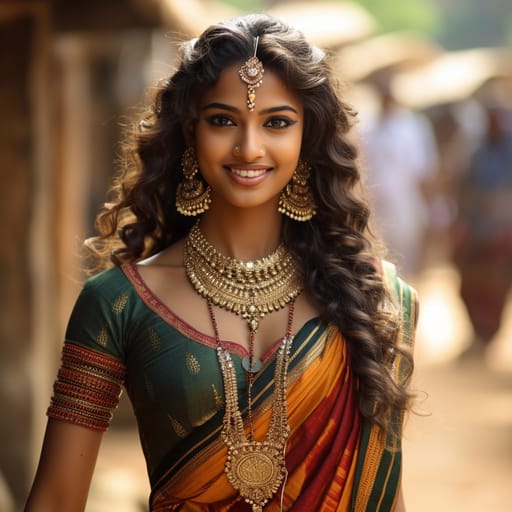
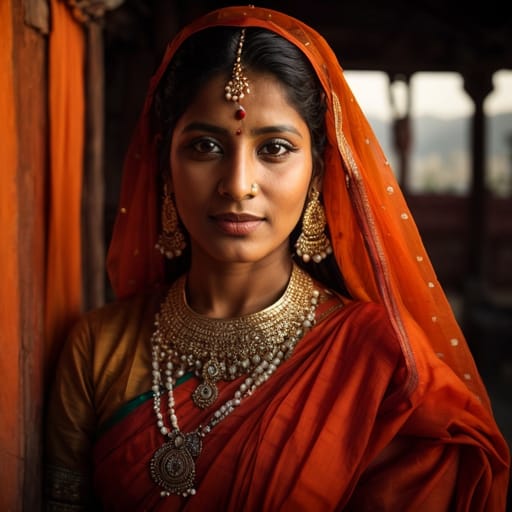
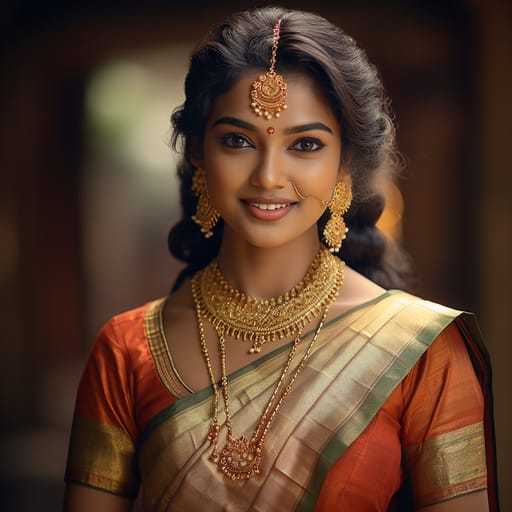
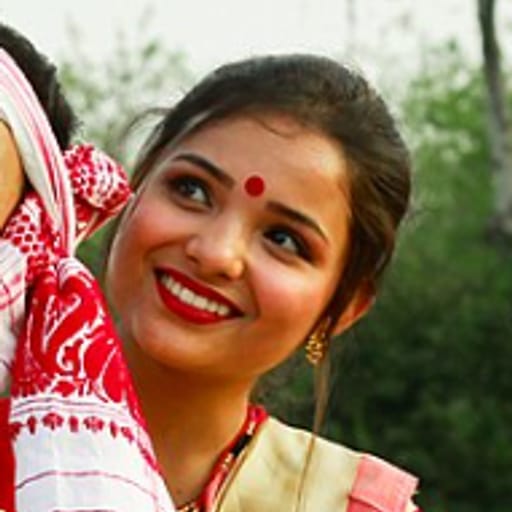
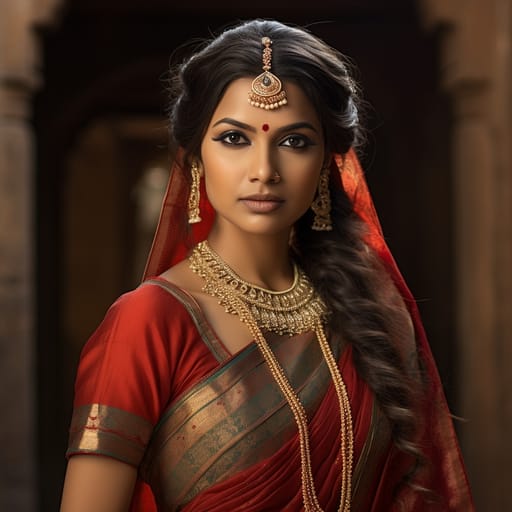
Typical Rajasthanis Phenotypes
Reference for AI generation: hair, eyes, skin, facial structure, build
Rajasthanis sit at a phenotypic crossroads: the desert belt of northwestern India where Indo-Aryan, Central Asian, and older Dravidian-substrate inputs all leave visible traces. The dominant signature is sun-weathered: skin tones cluster in Fitzpatrick IV-V, ranging from wheatish (a local descriptor used unironically here) through deep olive-brown to genuinely dark brown among rural Meena, Banjara, and agricultural Kachhi communities. Warm undertones predominate: golden, copper, and red-brown rather than ashy. Decades of high-UV exposure produce pronounced contrast between covered and uncovered skin, especially on faces of farmers and herders.
Hair is near-universally black or very dark brown, dense, and structurally straight to gently wavy, Type 1 to 2B. True coils are rare. Premature greying is common and often striking against dark skin. Eyes run from medium brown to near-black, with occasional honey or hazel showing up in Rajput and Gurjar lineages that carry historical Central Asian admixture. Epicanthic folds are essentially absent; eye shape is typically wide and almond, often deep-set with thick lashes and naturally dark lash lines.
Facial architecture leans angular. Noses are characteristically prominent: high, narrow bridges with refined alar width, a feature Rajputs are particularly known for and one that distinguishes Rajasthanis from many other South Asian populations. Cheekbones are high and well-defined, jawlines often sharp, and lips moderate in fullness rather than thick. Brows are heavy and dark.
Build trends lean and wiry rather than stocky, shaped partly by desert subsistence. Average male stature sits around 5'6"-5'8", female around 5'1"-5'3". Rajputs historically run taller and broader-shouldered, reflecting a martial caste population. Banjara women are visually distinctive: typically darker-skinned with sharper, more angular features and a more sinewy build, the result of a semi-nomadic history that kept them genetically distinct from settled Rajput and Marwari populations. Marwaris, by contrast, often present lighter: fairer wheatish skin, softer features, and the rounder build associated with mercantile sedentism.
Rajasthanis Body & Anatomy Reference
Per-feature anatomical profile for AI nude generation: Indo-Aryan / Dravidian South Asian phenotype
Rajasthanis Boobs & Breasts
Rajasthanis boobs follow the Indo-Aryan / Dravidian South Asian profile: medium-to-large cup, moderate-to-full projection. Areolar diameter is usually 32-46mm, and the coloring is medium-brown to dark-brown areolar pigmentation against the wheatish-to-brown skin tone. Breast shape tracks body composition (endomorph-to-mesomorph with fuller hip deposition, mean adult female BMI 22-25), so Rajasthanis breasts tend to be full and soft, generally fuller than the East Asian norm. Expect a forward-set shape, not the smaller East Asian bust profile.
Rajasthanis Ass & Hips
Rajasthanis ass and hip morphology presents as medium-to-full, moderate-to-high projection, classic curvy hip profile, distinctly different from the slim hip profile of East Asian women. The Rajasthanis pelvic profile shows medium-to-wide iliac crests, full gluteal-femoral fat distribution, anchored in the Indo-Aryan / Dravidian South Asian skeletal pattern. Rajasthanis butt shots in adult AI imagery should render the medium-to-full, moderate-to-high projection, classic curvy hip profile silhouette with the overall build (endomorph-to-mesomorph with fuller hip deposition) and the fat distribution typical of the Indo-Aryan / Dravidian South Asian phenotype.
Rajasthanis Vagina & Pussy
Rajasthanis pussy anatomy typically shows medium-brown to dark-brown labial pigmentation, fuller labia minora projection. Pubic hair is usually straight-to-wavy coarse texture, dense distribution. In AI-generated Rajasthanis nudes, labial color should blend into the wheatish to brown skin with a gradual transition, and the hair should keep its straight-to-wavy coarse texture.
Rajasthanis Dicks & Penis
Penis reference for Rajasthanis men: regional mean ~13cm erect, moderate girth. Coloring: medium-brown shaft pigmentation. An accurate Rajasthanis cock in AI imagery matches the surrounding wheatish to brown skin rather than a generic porn default. Circumcision depends on religion and custom, not ancestry.
Rajasthanis Body, Curves & Build
The Rajasthanis figure is generally endomorph-to-mesomorph with fuller hip deposition, with mean adult female BMI 22-25, characteristic of Indo-Aryan / Dravidian South Asian ancestry. AI image tools tend to flatten regional body types into a few stock shapes; here the Rajasthanis build is kept as its own reference.
Rajasthanis Skin Tone & Hair Texture
Skin: wheatish to brown (Fitzpatrick III-V). Hair: straight-to-wavy 1A-2B, dense, dark-brown to black. Both are typical of Indo-Aryan / Dravidian South Asian ancestry. The most common mistake in AI nudes of Rajasthanis women is a body rendered lighter than the face.
Data depth
0/100Coverage of image-grounded phenotype observations · drives AI generation diversity
- Sample size
- 0/40· 0 images
- Image quality
- 0/30· 0% high
- Confidence
- 0/20
- Source diversity
- 0/10
- ·No image observations yet
Explore phenotype categories
Structured taxonomy with peer-reviewed scales · 22 anatomical categories
Erotic Poses & Sex Positions
From the pose catalog: 219 named positions with reference skeletons
Frequently asked questions about Rajasthanis people
Where is the Rajasthanis homeland?
The Rajasthanis homeland is Rajasthan (India) in Southern Asia.
What language do Rajasthanis people speak?
Rajasthanis people primarily speak Indo-European / Indo-Aryan / Hindustani / Rajasthani.
What religion do Rajasthanis people practice?
The predominant religion among Rajasthanis people is Hinduism.
What does a typical Rajasthanis woman look like?
Rajasthani women typically have skin in the Fitzpatrick IV to V range, from wheatish to deep olive-brown with warm golden or copper undertones, and dense black or very dark brown hair that is straight to gently wavy. Eyes are medium brown to near-black, wide and almond-shaped with thick lashes, and faces tend to be angular, with a prominent high, narrow nose, high cheekbones and heavy dark brows. Women average around 5'1" to 5'3" with a lean build.






Make your own Rajasthanis images
Five a day, free, no credits to buy. The studio starts from this group's phenotype data, so you can set body type, pose and style and keep the traits accurate.
Start with Rajasthanis