Help us get this right
Does this portrait look right for Malayali?
One tap. It takes a second and it is recorded.
2 say it looks right, 2 say it looks off.
Malayali Erotic
Kerala (India)
Hinduism
Ambalavasi, Dheevara, Nair, Paravar, Saint Thomas Christians (including Knanayas), Mappilas, Ezhava, along with significant populations in the United Arab Emirates, Saudi Arabia, Oman, Qatar, Kuwait and Bahrain
About Malayali People
Malayalis are the people of Kerala, the narrow strip of coast pressed between the Western Ghats and the Arabian Sea in southwestern India. Geography has shaped almost everything about them: the mountains kept Kerala partly insulated from the political churn of the north Indian plains, while the sea opened it directly to Arabia, East Africa, China and the Mediterranean. Roman coin hoards, Chinese fishing nets in Kochi harbour, a Jewish community in Mattancherry that lasted two thousand years, and one of the oldest continuous Christian populations on earth — all of this arrived by water, and Kerala absorbed it without losing its own grammar.
The language, Malayalam, is Dravidian, a younger sibling of Tamil that broke away around the ninth century and built its own literary tradition heavily salted with Sanskrit. It is one of the few Indian languages where literacy crosses ninety percent and where the morning newspaper is genuinely a mass habit. Hinduism remains the largest affiliation, but Kerala's religious arithmetic is unusual: roughly half the state is Hindu, with very large Muslim (Mappila) and Christian (Saint Thomas, Syriac, Latin and Knanaya) populations who are not minorities in any practical social sense. The Saint Thomas Christians trace their church to the apostle's reputed arrival in 52 CE and kept liturgies in Syriac long before Portuguese contact; the Mappilas grew out of Arab trade settlements along the Malabar coast and speak Malayalam, not Urdu.
Caste in Kerala has its own historical idiom — Nairs were a martial, matrilineal landholding community whose marumakkathayam inheritance system passed property through the mother's line until reformist legislation in the twentieth century dismantled it; Ezhavas were toddy-tappers and cultivators whose social mobilisation under Sree Narayana Guru reshaped the state's politics; Ambalavasis served temple ritual; Dheevaras and Paravars worked the fishing coast. The 1957 election of a communist state government — one of the first anywhere through the ballot box — sits inside this story rather than alongside it, as does the steady out-migration to the Gulf states from the 1970s onward, which now sees Malayali nurses, engineers and labourers anchoring family economies from Bahrain to Qatar.
What persists is a distinct sensibility: matrilineal echoes still audible in family arrangements, an obsessive food culture built on coconut, rice and fish, an attachment to print and political argument, and a calendar punctuated by Onam, the harvest festival that crosses every religious line and belongs to all Malayalis equally.
Related ethnic groups
Groups that share Malayali's homeland, region, language, or religious tradition. These are likely candidates for comparative phenotype reference.
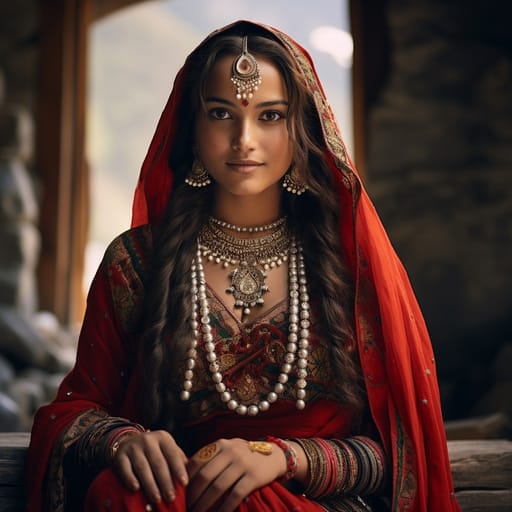
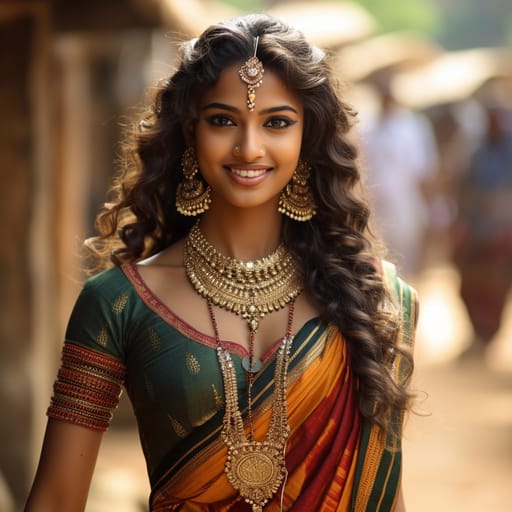
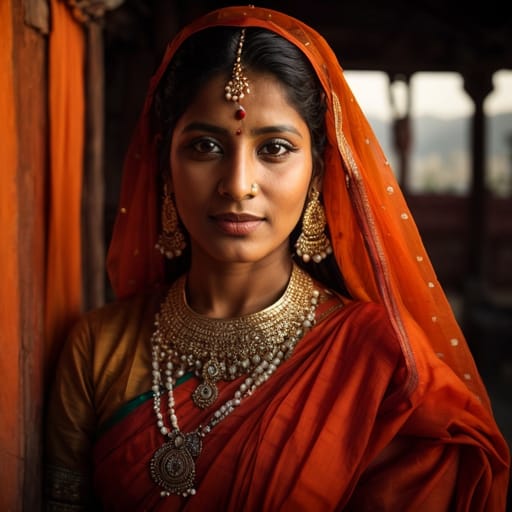
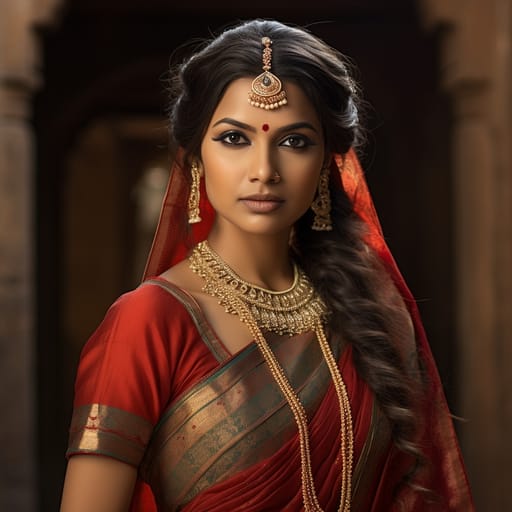
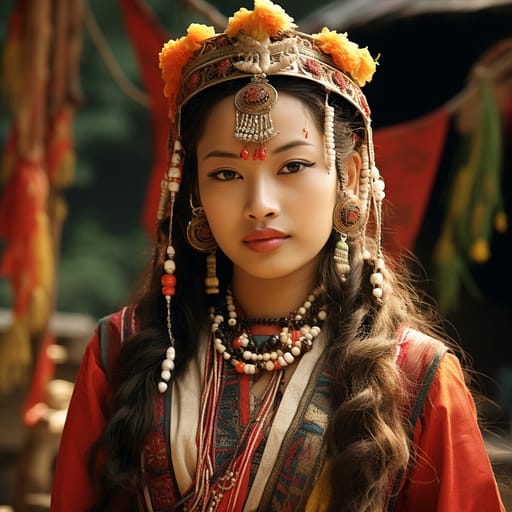
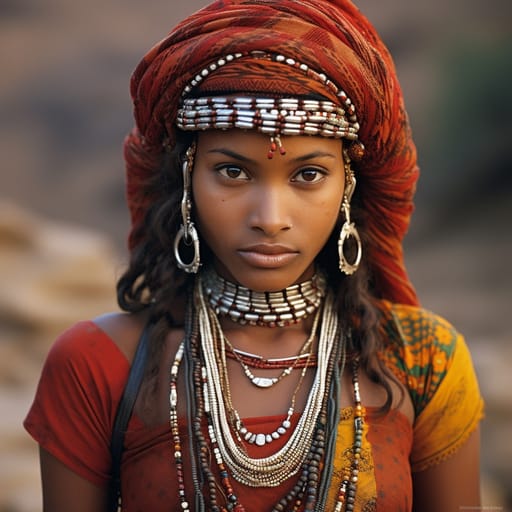
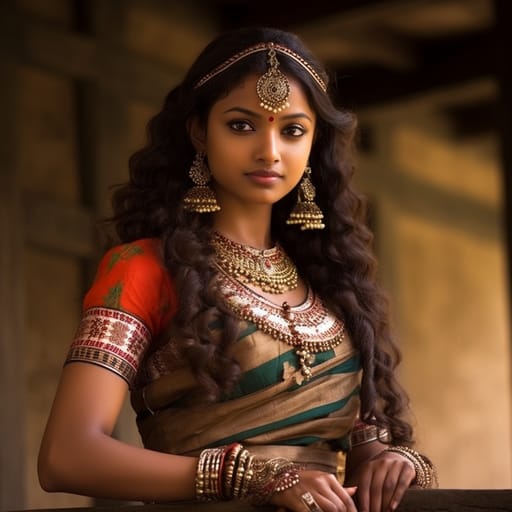
Geographic Distribution: Malayali populations across 1 country
Each row is ranked by the group's share of that country's population, with the source citation drawn from published census and demographic surveys. Click through for the full per-country phenotype profile.
| Country | Share | Source |
|---|---|---|
| India | 2.9% | India 2011 Census, Malayalam Mother Tongue speakers (~35M); concentrated in Kerala plus the substantial global Malayali diaspora (the Gulf Cooperation Council states, the United States, Australia) |
Typical Malayali Phenotypes
Reference for AI generation: hair, eyes, skin, facial structure, build
Malayalis sit at the southwestern tip of the Dravidian-speaking world, and the phenotype reflects long isolation behind the Western Ghats combined with two thousand years of coastal contact with Arab, Persian, Roman, Jewish, and later Portuguese and Dutch traders. The dominant impression is dark hair against medium-to-deep brown skin, with finer features than is typical for the broader South Indian baseline.
Hair is uniformly black to very dark brown — natural lighter shades are essentially absent. Texture skews wavy to loosely curly; tight coils are uncommon and pin-straight hair is the minority. Volume and density are high, and graying often arrives early. Eyes are brown across nearly the whole population, ranging from a warm caramel through to near-black; lighter hazel or green appears occasionally in Saint Thomas Christian and Knanaya families with documented Levantine ancestry. The eye shape is almond and wide-set, lids without an epicanthic fold, and lashes tend to be long and dense.
Skin tone runs Fitzpatrick IV through VI, with most Malayalis sitting in the deeper end of IV and through V — a warm brown with golden-olive to reddish undertones rather than the cooler ashy register seen further north. Coastal fishing communities (Dheevara, Paravar) and inland agricultural Ezhavas trend darker through sun exposure; Nair and Saint Thomas Christian lineages, historically less outdoor-laboring, often present a noticeably lighter brown. Mappila Muslims along the Malabar coast carry a visible thread of Arab admixture — slightly straighter noses, occasional lighter eyes.
Facial structure is the giveaway. Noses are typically narrow with a straight or slightly convex bridge and moderate alar width — finer than the broader Tamil or Telugu average. Lips are medium-full, well-defined, rarely thin. Cheekbones are high but not flared; jawlines taper to a softer point, giving an oval face shape rather than square. Builds are slight to medium — average male stature around 165–168 cm, women 152–155 cm — with a tendency toward lean, narrow-shouldered frames in youth and central adiposity in middle age. The combination of deep brown skin with refined, almost Mediterranean facial geometry is the Malayali signature, and it is what distinguishes the look from neighbouring Tamil and Kannadiga populations.
Malayali Body & Anatomy Reference
Indo-Aryan / Dravidian South Asian phenotype: anatomy reference for AI nude generation
Malayali Boobs & Breasts
Malayali boobs follow the Indo-Aryan / Dravidian South Asian profile: medium-to-large cup, moderate-to-full projection. Areolar diameter is usually 32-46mm, and the coloring is medium-brown to dark-brown areolar pigmentation against the wheatish-to-brown skin tone. Breast shape tracks body composition (endomorph-to-mesomorph with fuller hip deposition, mean adult female BMI 22-25), so Malayali breasts tend to be full and soft, generally fuller than the East Asian norm. Expect a forward-set shape, not the smaller East Asian bust profile.
Malayali Ass & Hips
Malayali ass and hip morphology presents as medium-to-full, moderate-to-high projection, classic curvy hip profile, distinctly different from the slim hip profile of East Asian women. The Malayali pelvic profile shows medium-to-wide iliac crests, full gluteal-femoral fat distribution, anchored in the Indo-Aryan / Dravidian South Asian skeletal pattern. Malayali butt shots in adult AI imagery should render the medium-to-full, moderate-to-high projection, classic curvy hip profile silhouette with the overall build (endomorph-to-mesomorph with fuller hip deposition) and the fat distribution typical of the Indo-Aryan / Dravidian South Asian phenotype.
Malayali Vagina & Pussy
Malayali pussy anatomy typically shows medium-brown to dark-brown labial pigmentation, fuller labia minora projection. Pubic hair is usually straight-to-wavy coarse texture, dense distribution. In AI-generated Malayali nudes, labial color should blend into the wheatish to brown skin with a gradual transition, and the hair should keep its straight-to-wavy coarse texture.
Malayali Dicks & Penis
Penis reference for Malayali men: regional mean ~13cm erect, moderate girth. Coloring: medium-brown shaft pigmentation. An accurate Malayali cock in AI imagery matches the surrounding wheatish to brown skin rather than a generic porn default. Circumcision depends on religion and custom, not ancestry.
Malayali Body, Curves & Build
The Malayali figure is generally endomorph-to-mesomorph with fuller hip deposition, with mean adult female BMI 22-25, characteristic of Indo-Aryan / Dravidian South Asian ancestry. AI image tools tend to flatten regional body types into a few stock shapes; here the Malayali build is kept as its own reference.
Malayali Skin Tone & Hair Texture
Skin: wheatish to brown (Fitzpatrick III-V). Hair: straight-to-wavy 1A-2B, dense, dark-brown to black. Both are typical of Indo-Aryan / Dravidian South Asian ancestry. The most common mistake in AI nudes of Malayali women is a body rendered lighter than the face.
Data depth
59/100Coverage of image-grounded phenotype observations · drives AI generation diversity
- Sample size
- 15/40· 7 images
- Image quality
- 29/30· 57% high
- Confidence
- 15/20· mean 0.84
- Source diversity
- 0/10· wikipedia
- ·Small sample (n<10)
- ·Wikipedia-only source, not population-representative
Observed Distribution: Image Sample
Empirical observations from analyzed photographs · supplementary signal, not population truth
Sample: 7 images analyzed (7 wikipedia). Quality: 4 high, 3 medium, 0 low, 0 very_low. Avg analyzer confidence: 0.84.
Skin tone (Fitzpatrick): IV (14%), V (86%)
Hair color: gray/white (86%), black (14%)
Hair texture: straight (86%), wavy (14%)
Eye color: dark brown (100%)
Epicanthic fold: 0% present, 100% absent, 0% unclear
Caveats: Sample size 7 is small, so the observed distribution should be treated as suggestive, not definitive. Sample is 100% Wikipedia notable people, which skews toward male, public-life, and modern figures, not population-representative.
Last aggregated: May 7, 2026
Explore phenotype categories
Structured taxonomy with peer-reviewed scales · 22 anatomical categories
Notable Malayali People
100 reference figures, sourced from Wikipedia
- Uthiyan Cheralathan, earliest known ruler of the Chera family who was also known as "Vanavaramban"…
- Nedum Cheralathan, Imayavaramban Nedum Cheral Athan, son of Uthiyan Cheral Athan, is the hero of…
- Chenguttuvan, identified with "Kadal Pirakottiya" Vel Kezhu Kuttuvan, son of Nedum Cheral A…
- Perum Cheral Irumporai, "Tagadur Erinta" defeated the combined armies of the Pandyas, Cholas and that…
- Yanaikatchai Mantaran Cheral Irumporai, ruled from Kollimalai (near Karur Vanchi) in the east to Thondi and Mantai on…
- Rama Varma Kulashekhara, mentioned in Rameswarathukoil Inscription as the founder of Venad as an indep…
- Vira Ravi Ravi Varma, established his capital at Padmanabhapuram
- Kerala Varma Pazhassi Raja, known as the Lion of Kerala; a prince from the royal dynasty of Pazhassi Kott…
- Marthanda Varma, Kulasekhara Perumal (1729-1758)
- Swathi Thirunal Rama Varma, Kulasekhara Perumal (1829-1847)
- Ayilyam Thirunal, Rama Varma Maharaja (1860-1880)
- Raja Kesavadas, Dewan of Travancore during the reign of Dharma Raja
- E.K Krishnan, Dewan of Malabar district, and Deputy Collector of state and district.
- Rama Varma XV
- K.R. Narayanan, 10th President of India (1997-2002), 9th Vice-President of India (1992-1997)
- Devan Nair, 3rd President of Singapore (1981-1985)
- Mahathir Mohamad, 4th Prime Minister of Malaysia (1981-2003), (2018-2020)
- P. J. Kurien, 18th deputy chairman of the Rajya Sabha (2012-2018)
- T. K. Viswanathan, Secretary General of the Lok Sabha (15th)
- Pattom A. Thanu Pillai, fourth governor of Punjab, 1962-1964 fourth governor of Andhra Pradesh, 1964-…
- P.C. Alexander, ninth governor of Tamil Nadu, 1988-1990 seventeenth governor of Maharashtra, …
- P V Cherian, eighth governor of Maharashtra, 1964-1969
- M. M. Jacob, ninth governor of Meghalaya, 1995-2007
- A. J. John, Anaparambil, fourth governor of Madras, 1956-1957
- M K Narayanan, 24th governor of West Bengal, 2010-2014 Madathilparampil Mammen Thomas Govern…
- Vakkom Purushothaman, eleventh governor of Mizoram, 2011-2014
- K. Sankaranarayanan, 21st governor of Maharashtra, 2010-2014
- K.K. Viswanathan, sixth governor of Gujarat, 1973-1978
- Kummanam Rajasekharan, BJP to 18th governor of Mizoram, 2018-2019
- P. S. Sreedharan Pillai, BJP to 19th governor of Mizoram, 2019-present
- John Mathai, Minister for Finance (1948-1950)
- V. K. Krishna Menon, Minister for Defence (1957-1962)
- Panampilly Govinda Menon, Minister for Law and Railways (1969-1970)
- Ravindra Varma, Minister for Labour (1977-79)
- K. P. Unnikrishnan, Minister for Telecommunications in the V P Singh Cabinet (1989-90)
- K. Karunakaran, Minister for Industries (1995)
- A.K. Antony, Minister of Defence (2006-2014), Minister for Consumer Affairs, Food and Publ…
- Vayalar Ravi, Minister for Overseas Indian Affairs (2006-2014), Minister for Civil Aviation…
- M. P. Veerendra Kumar, Ministry of Labour with additional charge of Urban Affairs (1997-1998)
- K. V. Thomas, Ministry of Consumer Affairs, Food and Public Distribution (2009-2014)
- Alphons Kannanthanam, BJP - Union Minister of State for Electronics and Information Technology, Cul…
- Lakshmi N. Menon, Ministry of External Affairs of India (1957-1966)
- Mullappally Ramachandran, Ministry of Home Affairs (2009-2014), Agriculture and Cooperation (1991-1996)
- O. Rajagopal, BJP, Ministry of Parliamentary Affairs, Railways, Urban Development, Defence …
- Shashi Tharoor, Ministry of External Affairs of India (2009-2010), Minister of State for Huma…
- E. Ahamed, Ministry of External Affairs (2011- ); Minister of State for Human Resource D…
- K. C. Venugopal, Ministry of Power (2011-2014)
- Kodikkunnil Suresh, Ministry of Labour and Employment (2012-2014)
- V Muraleedharan, BJP, Minister of state for External Affairs and Parliamentary Affairs
- K. J. George, Minister of Home, Karnataka (2013-2016)
- A. P. Udhayabhanu, Member Travancore State Assembly (1944-1952)
- C.P.Mathen, Member of Parliament (1952); Indian Ambassador to Sudan (1957-1960)
- A.K. Gopalan, Lok Sabha (1952-1977); Communist Party of India (Marxist)
- Mathai Manjooran, member of Rajya Sabha (1952-1954)
- K. M. George, member, Kerala Legislative Assembly (1960-1964) founder Kerala Congress (1964)
- K.Damodaran, Member Rajya Sabha (1964-1970); the first 'Malayalee Communist' (1937)
- Thennala Balakrishna Pillai, Member Rajya Sabha, three terms (1991-1998; 2003-2009)
- P. Krishna Pillai, founder of communist movement in Kerala (1937)
- Azhikodan Raghavan, Communist Party Leader in Kerala
- Pannyan Raveendran, Member Loka Sabha (2006-2012); Kerala State Secretary, Communist Party of Ind…
- Pinarai Vijayan, Chief Minister, Kerala; Kerala State Secretary, CPI(M) (1998-2015), and membe…
- Prakash Karat, General Secretary, CPI(M) of India (2005-2015)
- Panakkad Shihab Thangal, President of the Kerala state committee of the IUML (1975-2009)
- Ramesh Chennithala, President, Kerala Pradesh Congress Committee (2005-incumbent); four times Lok…
- Anathalavattom Anandan, President, CITU State Committee; Vice Chairman, Apex Body for Coir; State Sec…
- P. Chacko MLA, Member, Kerala Legislative Assembly (1960-1964)
- Vakkom Bharathan, CPI(M) leader, trade union leader
- P.J. Kurien, Member and Deputy Speaker of Rajya Sabha from Kerala (2012-incumbent)
- V.S. Achuthanandan, former chief minister Kerala (2006-11)
- P. K. Jayalakshmi, youngest minister in the Oommen Chandy Government (elected to office at age 3…
- K.Karunakaran, former chief minister Kerala (3235 days)
- Oommen Chandy, former chief minister Kerala (2446 days)
- Suresh Gopi, BJP Rajyasabha MP from Kerala; National Award-winning superstar actor
- Richard Hay, BJP Loksabha MP from Kerala, second Malayalee nominated as Anglo Indian MP
- Alphonse Kannanthanam, former Central Tourism, IT, Electronics Minister; BJP Rajyasabha MP from Kerala
- V.K. Krishna Menon, Public Affairs (1954)
- John Matthai, Literature & Education (1959)
- V. R. Krishna Iyer, Public Affairs (1999)
- Adoor Gopalakrishnan, Arts (2006)
- George Sudarshan, Science & Engineering (2007)
- ONV Kurup, Literature & Education (2011)
- K. J. Yesudas, singing (2017)
- M.T. Vasudevan Nair, Literature (2025)
- Vallathol Narayana Menon, Literature & Education (1954); poet (Mahakavi)
- K.P. Kesava Menon, Public Affairs (1966)
- Kandathil Mammen Cherian, Literature & Education (1971)
- Pothan Joseph, Literature & Education (1973)
- Prem Nazir, Arts (1983); actor
- Thakazhi Sivasankara Pillai, Literature & Education; (1985) novelist and short story writer
- Thomas Kailath, Science and Engineering (2009)
- Jacob Cherian, Social Work (1999)
- Mohanlal Viswanathan, Arts (2019); Art, film Acting
- K. S. Chithra, 2021); Arts
- K. Shankar Pillai, Arts (1954)
- Perakath Verghese Benjamin, Medicine (1955)
- M. G. K. Menon, Science (1961)
- Guru Kunchu Kurup, Arts (1965)
- C.K. Nair Alias V. Kunchu Nair, Arts (1971)
- Thikkurissy Sukumaran Nair, Arts, poet and actor (1973)
- Mani Madhava Chakyar, Arts, Koodiyattam and Chakyar Koothu (1974)
Erotic Poses & Sex Positions
From the pose catalog: 219 named positions with reference skeletons
Frequently asked questions about Malayali people
Where is the Malayali homeland?
The Malayali homeland is Kerala (India) in Southern Asia.
What countries do Malayali people live in?
Malayali populations are documented across 1 country: India.
What language do Malayali people speak?
Malayali people primarily speak Dravidian / Malayalam.
What religion do Malayali people practice?
The predominant religion among Malayali people is Hinduism.






Make your own Malayali images
Five a day, free, no credits to buy. The studio starts from this group's phenotype data, so you can set body type, pose and style and keep the traits accurate.
Start with Malayali