Help us get this right
Does this portrait look right for Mahali?
Nobody has judged this one yet. You would be the first.
Mahali Erotic
Chota Nagpur Plateau of eastern India (Jharkhand, West Bengal, Odisha), with communities in the tea districts of Assam and northern Bengal and in northwestern Bangladesh
Mahali (Austroasiatic, Munda branch), closely related to Santali; many speak Sadri, Bengali or Odia (Indo-Aryan) as their main language
Hinduism layered with Sarna folk practice and ancestor veneration; significant Christian following, especially in Bangladesh
Historically recorded divisions include Bansphor, Patar, Sulunkhi, Tanti and Munda Mahali; closely related to the Santals among the Chota Nagpur Adivasi peoples
About Mahali People
The Mahali are an Adivasi people of eastern India's Chota Nagpur Plateau, and for as long as outsiders have written about them they have been tied to one material: bamboo. Split, shaved and woven, it becomes the baskets, winnowing fans, mats and fish traps sold at weekly markets across Jharkhand, West Bengal and Odisha, and it is still the first thing neighbors mention. That reputation is fair but narrow. Most Mahali households now farm small plots, work as farm laborers or take wage jobs in town. Basketry is one source of income among several.
Most Mahali live in Jharkhand, western West Bengal and northern Odisha, where the community is listed as a Scheduled Tribe. In the nineteenth century, labor recruiters took many families to the tea estates of Assam and northern Bengal, and their descendants are now part of the tea garden communities there. Another branch lives across the border in northwestern Bangladesh, which counts the Mahali among its officially recognized small ethnic groups.
Language ties the Mahali closely to the Santals. Mahali is a Munda language of the Austroasiatic family, close enough to Santali that some linguists treat it as a dialect. It is also losing ground: many Mahali grow up speaking Sadri, Bengali or Odia instead, depending on where they were born. Colonial ethnographers recorded divisions within the community, among them the Bansphor, literally the bamboo splitters, along with the Patar, Sulunkhi, Tanti and Munda Mahali. Each was linked to its own mix of craft, farming or labor. Underneath those divisions is a system of exogamous clans, so a Mahali marries outside their own clan, which is the norm across the plateau.
Religion comes in layers. In India many Mahali call themselves Hindu while keeping older plateau customs alive: offerings to village and ancestral spirits, and seasonal festivals such as Karam. At Karam, a branch of the karam tree is set up in the village dancing ground, and people sing and dance around it through the night. Christianity also has a strong following, especially among the Mahali of Bangladesh. What holds the group together across three Indian states, two countries and several faiths is not one shared creed. It is a common name, a common craft and roots on the same plateau.
Related ethnic groups
Groups that share Mahali's homeland, region, language, or religious tradition. These are likely candidates for comparative phenotype reference.
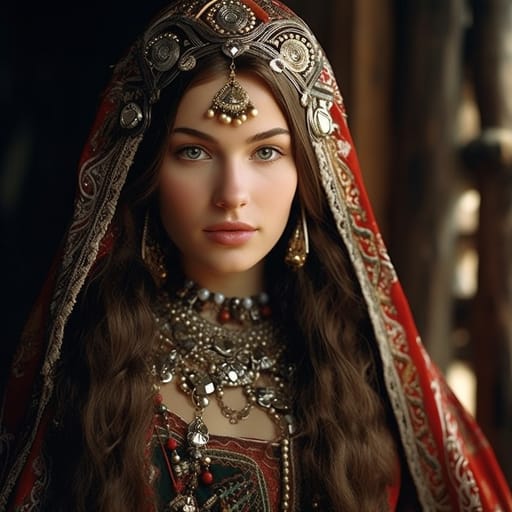
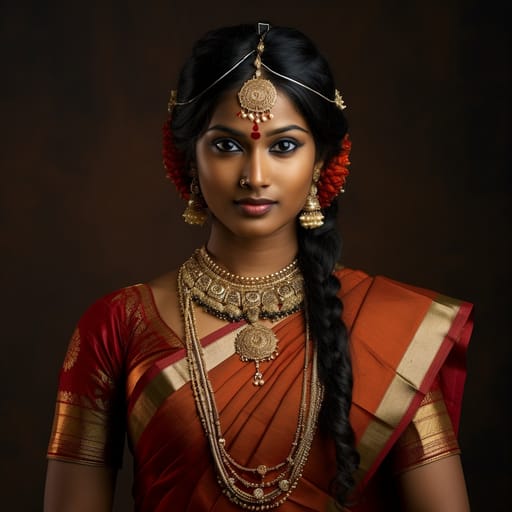
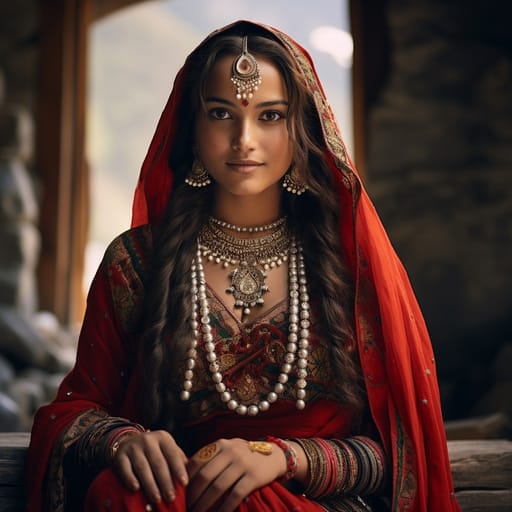
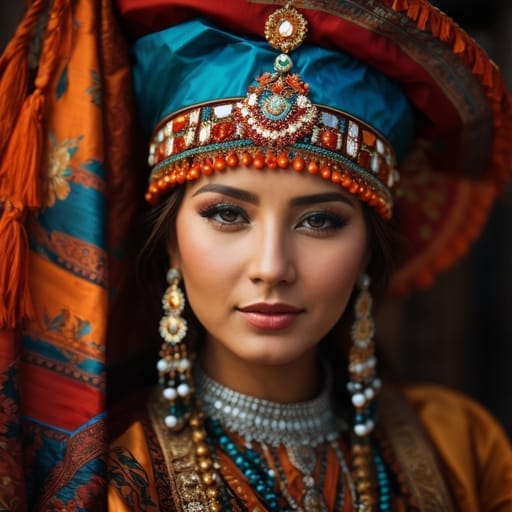
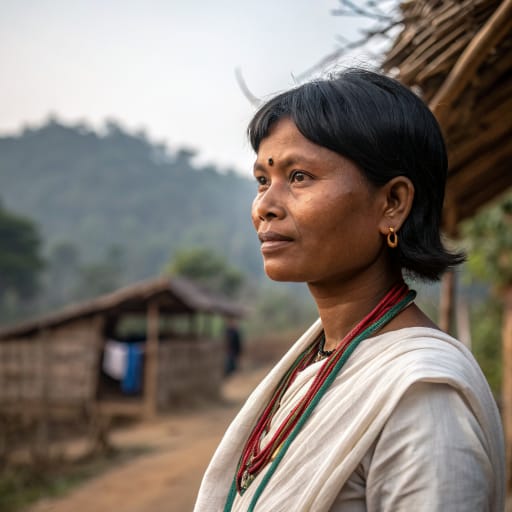
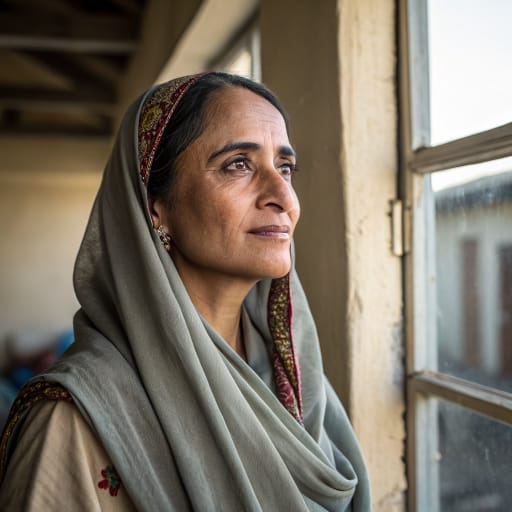
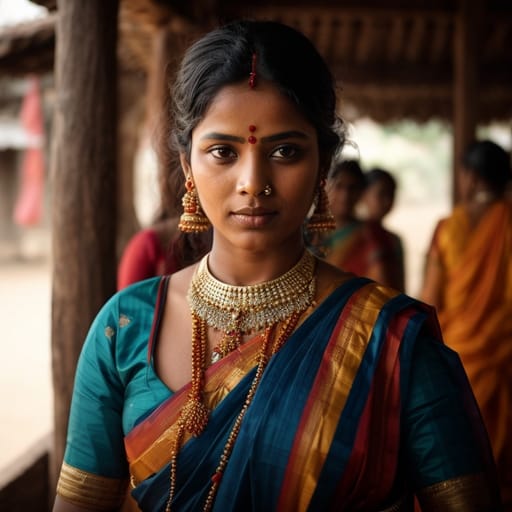
Typical Mahali Phenotypes
Reference for AI generation: hair, eyes, skin, facial structure, build
Mahali Body & Anatomy Reference
Anatomy by feature, Indo-Aryan / Dravidian South Asian phenotype
Mahali Boobs & Breasts
Mahali tits and boobs run medium-to-large cup, moderate-to-full projection, the classic Indo-Aryan / Dravidian South Asian bust profile. Mahali nipples and areolas show medium-brown to dark-brown areolar pigmentation against the wheatish-to-brown skin tone, with areolar diameter typically in the 32-46mm range and forward-set positioning rather than the smaller East Asian bust profile. Mahali breasts trend full and soft, generally fuller than the East Asian norm, a function of the endomorph-to-mesomorph with fuller hip deposition body habitus and the mean adult female BMI 22-25. For anatomically accurate AI-generated Mahali nudes the render preserves the medium-to-large cup, moderate-to-full projection shape, 32-46mm areolas with medium-brown to dark-brown pigmentation, and the torso proportions of the Indo-Aryan / Dravidian South Asian phenotype.
Mahali Ass & Hips
Mahali hips and butt usually read as medium-to-full, moderate-to-high projection, classic curvy hip profile. The skeletal base is medium-to-wide iliac crests, full gluteal-femoral fat distribution, the Indo-Aryan / Dravidian South Asian pattern. Set against the slim hip profile of East Asian women, the difference is easy to see, and the hip-to-waist ratio is often what identifies Mahali women in photos.
Mahali Vagina & Pussy
Expect medium-brown to dark-brown labial pigmentation, fuller labia minora projection on Mahali women, in keeping with Indo-Aryan / Dravidian South Asian ancestry. The pubic hair is straight-to-wavy coarse texture, dense distribution. Coloring should run evenly from the wheatish to brown skin of the thighs to the labia, and Mahali nude imagery should keep the hair's straight-to-wavy coarse texture.
Mahali Dicks & Penis
Mahali dick and penile anatomy in adult AI generation should anchor on the regional reference data: regional mean ~13cm erect, moderate girth, and medium-brown shaft pigmentation. The Mahali cock profile reflects the Indo-Aryan / Dravidian South Asian population's anthropometric measurements. The shaft pigmentation should track the surrounding wheatish to brown skin tone, and the pubic hair should keep its straight-to-wavy coarse texture in the typical inverted-V escutcheon.
Mahali Body, Curves & Build
Mahali body type: endomorph-to-mesomorph with fuller hip deposition, with mean adult female BMI 22-25. This is the typical Indo-Aryan / Dravidian South Asian build. Height range, shoulder-to-hip ratio and fat distribution all follow from it, which is what an accurate Mahali nude body should show.
Mahali Skin Tone & Hair Texture
Mahali skin tone falls in the wheatish to brown (Fitzpatrick III-V) band, the surface signal most often miscalibrated by generic AI nude generators. Mahali hair texture is typically straight-to-wavy 1A-2B, dense, dark-brown to black, characteristic of the Indo-Aryan / Dravidian South Asian phenotype. In Mahali nude renders the skin should hold that band consistently across the body.
Explore phenotype categories
Structured taxonomy with peer-reviewed scales · 22 anatomical categories
Erotic Poses & Sex Positions
From the pose catalog: 219 named positions with reference skeletons
Frequently asked questions about Mahali people
Where is the Mahali homeland?
The Mahali homeland is Chota Nagpur Plateau of eastern India (Jharkhand, West Bengal, Odisha), with communities in the tea districts of Assam and northern Bengal and in northwestern Bangladesh in Southern Asia.
What language do Mahali people speak?
Mahali people primarily speak Mahali (Austroasiatic, Munda branch), closely related to Santali; many speak Sadri, Bengali or Odia (Indo-Aryan) as their main language.
What religion do Mahali people practice?
The predominant religion among Mahali people is Hinduism layered with Sarna folk practice and ancestor veneration; significant Christian following, especially in Bangladesh.






Make your own Mahali images
Five a day, free, no credits to buy. The studio starts from this group's phenotype data, so you can set body type, pose and style and keep the traits accurate.
Start with Mahali