Help us get this right
Does this portrait look right for Juang?
Nobody has judged this one yet. You would be the first.
Juang Erotic
The Keonjhar, Dhenkanal and Angul districts of northern Odisha, India, centered on the Gonasika hills.
Juang (Austroasiatic, Munda branch, closest relative Kharia), with widespread everyday use of Odia (Indo-Aryan)
Indigenous worship of Dharam the sun and Basuki the earth alongside village deities, with a substantial Hindu overlay
Two territorial divisions, the Thaniya of the Keonjhar hills and the Bhagudia of Dhenkanal and Angul; part of the wider Munda-speaking peoples of eastern India
About Juang People
Ask a Juang where the group begins and the answer is a place, not a date. Gonasika, in the hills of Keonjhar district in northern Odisha, is where the Baitarani river pushes out of the rock, and where the Juang say they came out of the earth. Those who stayed near it are the Thaniya, the hill Juang. Those whose ancestors moved south and east into Dhenkanal and Angul are the Bhagudia, and the split still carries a faint sense of who left. Their language, also called Juang, belongs to the Munda branch of Austroasiatic and is closest to Kharia, which puts it in a family that reached eastern India long before the Indo-Aryan speech now surrounding it on every side. Most Juang also speak Odia. Fewer speak Juang at home each decade, and it is counted among India's endangered languages.
The village, not the clan, is the unit that matters. Juang villages are exogamous: you marry out of your own settlement, and villages stand in recognized brother relationships that decide who is available to whom. At the center of the village is the majang, the youth dormitory, also called the mandaghar. Unmarried men sleep there, guests are put up there, elders argue village business there, and the dancing happens there. Juang dance is built on the changu, a shallow frame drum. Men play, women dance in a line facing them, and the sequences are named for what they imitate, mostly birds and animals. Religion stays close to the ground: Dharam, the sun, and Basuki, the earth, with village deities served at sowing and harvest, and a layer of Hindu practice over the top that thickens the closer a village sits to a road. Colonial writers fixed on one thing about the Juang and would not let it go: the women's dress of leaves, tied at front and back, which earned them the outside name Patua. In 1871 a British officer assembled Juang at Keonjhar, had the leaf dress burned, handed out cloth, and wrote the scene up as progress. Cloth was arriving anyway. The harder loss was the hillside: shifting cultivation has been squeezed into small settled plots, and the Juang, listed by India as a Particularly Vulnerable Tribal Group, make up the difference with basketry, siali leaf plates and wage labor.
Related ethnic groups
Groups that share Juang's homeland, region, language, or religious tradition. These are likely candidates for comparative phenotype reference.
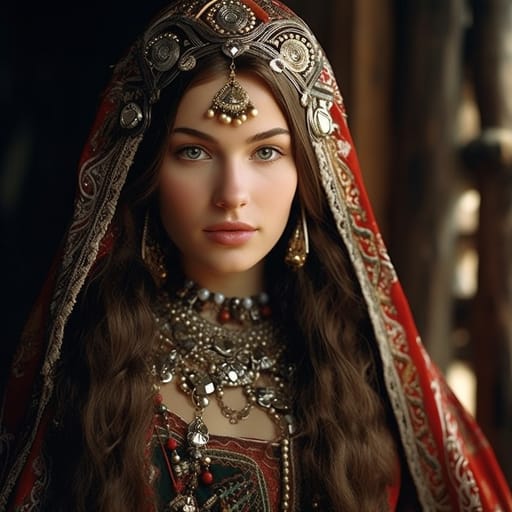
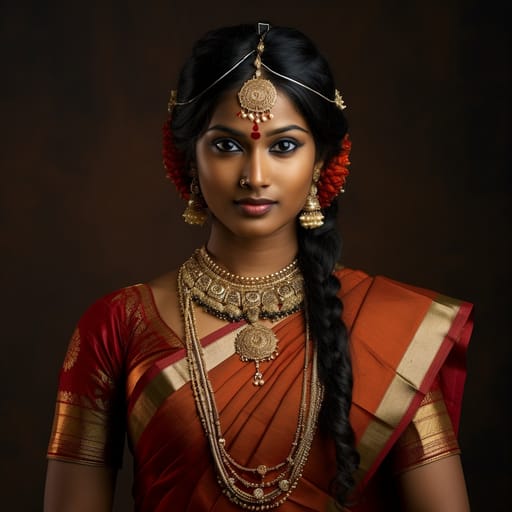
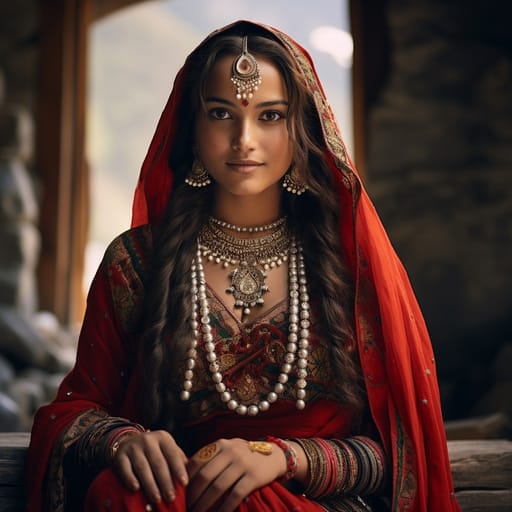
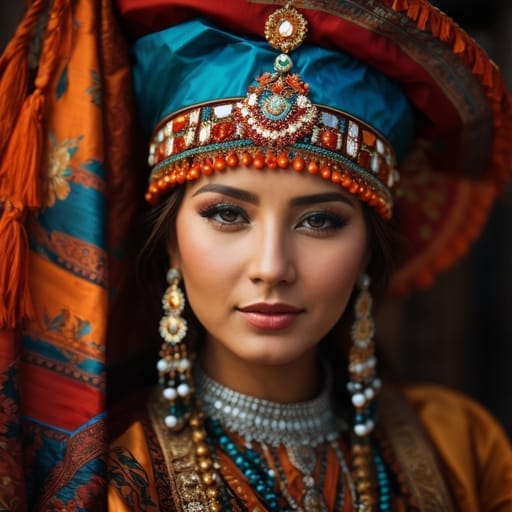
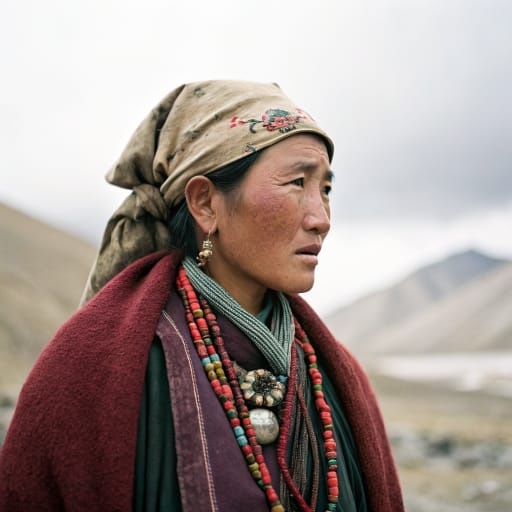
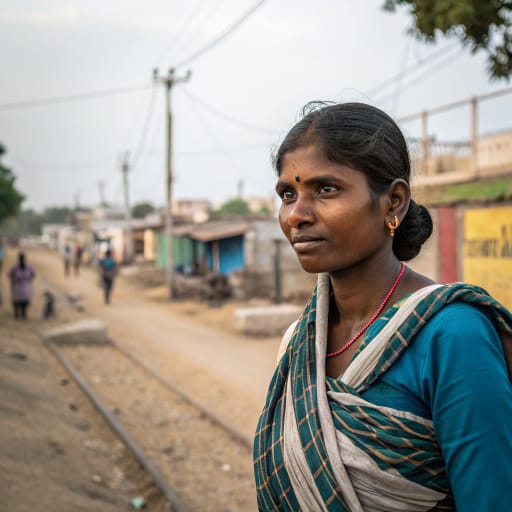
Typical Juang Phenotypes
Reference for AI generation: hair, eyes, skin, facial structure, build
Juang Body & Anatomy Reference
Indo-Aryan / Dravidian South Asian phenotype: anatomy reference for AI nude generation
Juang Boobs & Breasts
Bust reference for Juang women: medium-to-large cup, moderate-to-full projection, which is typical of Indo-Aryan / Dravidian South Asian ancestry. Areolas measure about 32-46mm across, with medium-brown to dark-brown pigmentation. Body type (endomorph-to-mesomorph with fuller hip deposition) shapes the bust as well, so Juang tits are usually full and soft, generally fuller than the East Asian norm. In AI imagery, keep the forward-set shape rather than drifting toward the smaller East Asian bust profile.
Juang Ass & Hips
The Juang ass is typically medium-to-full, moderate-to-high projection, classic curvy hip profile, which sets it apart from the slim hip profile of East Asian women. Underneath, the pelvis shows medium-to-wide iliac crests, full gluteal-femoral fat distribution, part of the Indo-Aryan / Dravidian South Asian skeletal pattern. For Juang butt pics and AI renders, match that silhouette and the overall build (endomorph-to-mesomorph with fuller hip deposition).
Juang Vagina & Pussy
Juang pussy and vulvar anatomy presents medium-brown to dark-brown labial pigmentation, fuller labia minora projection, consistent with the Indo-Aryan / Dravidian South Asian phenotype's pigmentation pattern. Juang pubic hair is typically straight-to-wavy coarse texture, dense distribution, in the inverted-triangle pattern. For anatomically accurate Juang pussy renders the labial coloration should match the surrounding wheatish to brown skin tone with a continuous gradient, and the hair should keep its straight-to-wavy coarse texture.
Juang Dicks & Penis
Juang dicks follow the Indo-Aryan / Dravidian South Asian reference data: regional mean ~13cm erect; moderate girth; medium-brown shaft pigmentation. Shaft color should track the wheatish to brown skin tone with a smooth change toward the glans, and Juang pubic hair keeps its straight-to-wavy coarse texture.
Juang Body, Curves & Build
Juang body type and overall build presents as endomorph-to-mesomorph with fuller hip deposition, with mean adult female BMI 22-25: the characteristic Indo-Aryan / Dravidian South Asian habitus. Juang curves and proportions should keep the regional skeletal frame (height, shoulder-to-hip ratio, limb proportions) rather than a generic mesomorph default.
Juang Skin Tone & Hair Texture
Juang skin sits in the wheatish to brown (Fitzpatrick III-V) band. Hair is typically straight-to-wavy 1A-2B, dense, dark-brown to black, in keeping with the Indo-Aryan / Dravidian South Asian phenotype. In nude renders the skin should stay one even tone from face to body, and body, pubic and head hair should match.
Explore phenotype categories
Structured taxonomy with peer-reviewed scales · 22 anatomical categories
Erotic Poses & Sex Positions
From the pose catalog: 219 named positions with reference skeletons
Frequently asked questions about Juang people
Where is the Juang homeland?
The Juang homeland is The Keonjhar, Dhenkanal and Angul districts of northern Odisha, India, centered on the Gonasika hills. in Southern Asia.
What language do Juang people speak?
Juang people primarily speak Juang (Austroasiatic, Munda branch, closest relative Kharia), with widespread everyday use of Odia (Indo-Aryan).
What religion do Juang people practice?
The predominant religion among Juang people is Indigenous worship of Dharam the sun and Basuki the earth alongside village deities, with a substantial Hindu overlay.






Make your own Juang images
Five a day, free, no credits to buy. The studio starts from this group's phenotype data, so you can set body type, pose and style and keep the traits accurate.
Start with Juang