No portrait yet
Paliyan Erotic
Southern Western Ghats of South India, mainly the forests and foothills of Tamil Nadu (Palani Hills, Dindigul, Theni, Madurai and Virudhunagar districts), with smaller communities in Kerala
Paliyan (Dravidian, closely related to Tamil); Tamil and Malayalam widely spoken
Folk Hinduism combined with worship of local forest deities and ancestral spirits, with a tradition of spirit possession
Dispersed local bands in Tamil Nadu and Kerala; one of the Dravidian-speaking forager peoples of the Western Ghats, listed as a Scheduled Tribe
About Paliyan People
The Paliyans are forest people of the southern Western Ghats, the steep, rain-soaked mountain chain that divides Tamil Nadu from Kerala. Roughly 9,500 of them live in scattered settlements along its slopes and foothills, from the Palani Hills to the forests above Srivilliputhur, with smaller communities across the border in Kerala. What marks them as a people is less a costume or a flag than a way of living. For generations they moved through the forest in small, loose bands. They dug wild yams, which were their main food, gathered and trapped small game, and climbed cliffs and tall trees to take honey from the combs of giant rock bees. Into the early twentieth century many still sheltered in rock overhangs and caves.
Their language, also called Paliyan, is Dravidian and very close to Tamil. Most Paliyans move easily between it and the Tamil or Malayalam of the villages below. Religion follows the same pattern. Hindu deities and festivals from the plains sit alongside older devotion to local forest gods and ancestral spirits, and spirit possession has long been one way the gods speak directly to a community.
Paliyans are best known to anthropologists for how they treat one another. Peter Gardner, who lived among them in the 1960s, described a society that values personal autonomy and equality to an unusual degree. Children get wide latitude early, adults avoid giving each other orders, and open quarrels are rare. When tension builds, the usual answer is distance rather than confrontation: someone quietly moves to another camp until tempers cool. Gardner also noticed that Paliyans dealing with Tamil traders and landowners could slip into the manners of village society and then drop them again back in the forest. He saw this double competence as a product of living on the frontier between forest and farm.
That frontier has moved hard over the last century. Forest regulations, plantations and government settlement programs have pushed most Paliyans out of full-time foraging. Today many trade in forest produce, keep bees, grow food on small plots or take intermittent wage work on plantations. They are a recognized Scheduled Tribe, and their detailed knowledge of medicinal plants has drawn a steady stream of ethnobotanists. The forest still defines who they are, even in households whose income now comes from outside it.
Related ethnic groups
Groups that share Paliyan's homeland, region, language, or religious tradition. These are likely candidates for comparative phenotype reference.

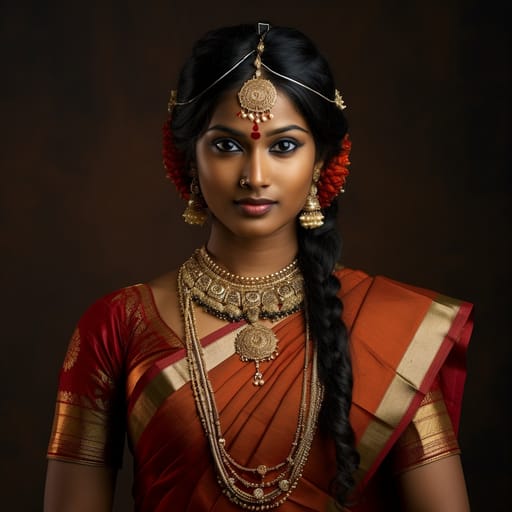
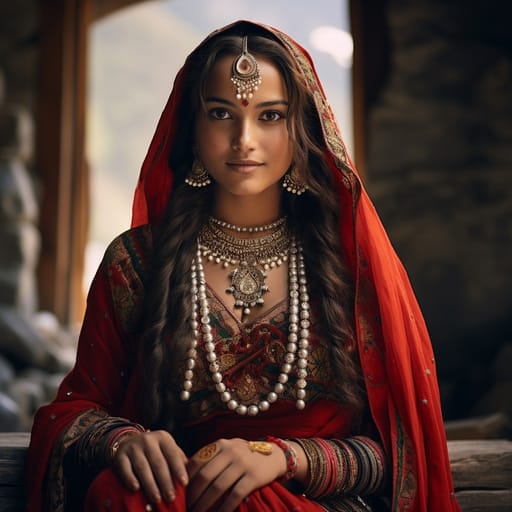

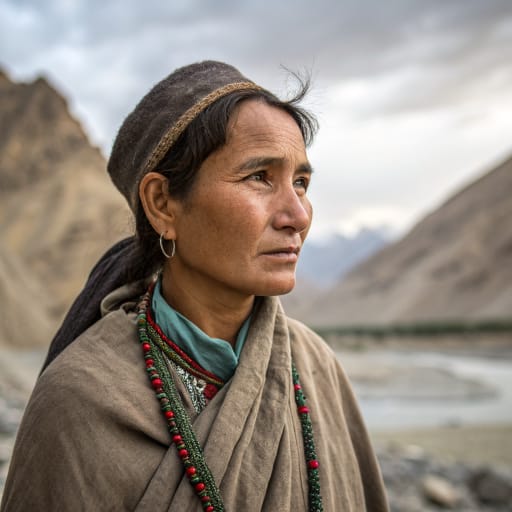
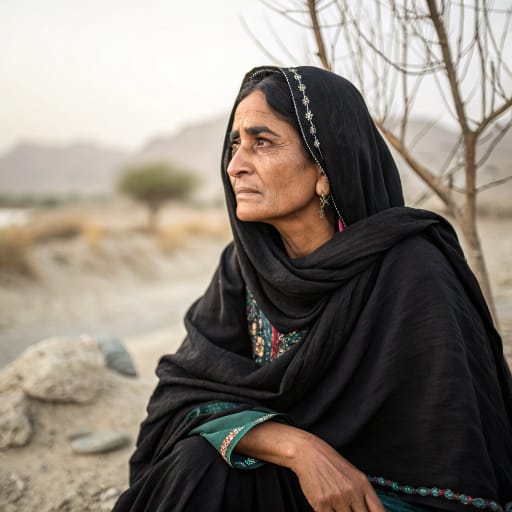
Typical Paliyan Phenotypes
Reference for AI generation: hair, eyes, skin, facial structure, build
Paliyan Body & Anatomy Reference
Indo-Aryan / Dravidian South Asian phenotype: anatomy reference for AI nude generation
Paliyan Boobs & Breasts
Paliyan tits and boobs run medium-to-large cup, moderate-to-full projection, the classic Indo-Aryan / Dravidian South Asian bust profile. Paliyan nipples and areolas show medium-brown to dark-brown areolar pigmentation against the wheatish-to-brown skin tone, with areolar diameter typically in the 32-46mm range and forward-set positioning rather than the smaller East Asian bust profile. Paliyan breasts trend full and soft, generally fuller than the East Asian norm, a function of the endomorph-to-mesomorph with fuller hip deposition body habitus and the mean adult female BMI 22-25. For anatomically accurate AI-generated Paliyan nudes the render preserves the medium-to-large cup, moderate-to-full projection shape, 32-46mm areolas with medium-brown to dark-brown pigmentation, and the torso proportions of the Indo-Aryan / Dravidian South Asian phenotype.
Paliyan Ass & Hips
Paliyan hips and butt usually read as medium-to-full, moderate-to-high projection, classic curvy hip profile. The skeletal base is medium-to-wide iliac crests, full gluteal-femoral fat distribution, the Indo-Aryan / Dravidian South Asian pattern. Set against the slim hip profile of East Asian women, the difference is easy to see, and the hip-to-waist ratio is often what identifies Paliyan women in photos.
Paliyan Vagina & Pussy
Expect medium-brown to dark-brown labial pigmentation, fuller labia minora projection on Paliyan women, in keeping with Indo-Aryan / Dravidian South Asian ancestry. The pubic hair is straight-to-wavy coarse texture, dense distribution. Coloring should run evenly from the wheatish to brown skin of the thighs to the labia, and Paliyan nude imagery should keep the hair's straight-to-wavy coarse texture.
Paliyan Dicks & Penis
Paliyan dick and penile anatomy in adult AI generation should anchor on the regional reference data: regional mean ~13cm erect, moderate girth, and medium-brown shaft pigmentation. The Paliyan cock profile reflects the Indo-Aryan / Dravidian South Asian population's anthropometric measurements. The shaft pigmentation should track the surrounding wheatish to brown skin tone, and the pubic hair should keep its straight-to-wavy coarse texture in the typical inverted-V escutcheon.
Paliyan Body, Curves & Build
Paliyan body type: endomorph-to-mesomorph with fuller hip deposition, with mean adult female BMI 22-25. This is the typical Indo-Aryan / Dravidian South Asian build. Height range, shoulder-to-hip ratio and fat distribution all follow from it, which is what an accurate Paliyan nude body should show.
Paliyan Skin Tone & Hair Texture
Paliyan skin tone falls in the wheatish to brown (Fitzpatrick III-V) band, the surface signal most often miscalibrated by generic AI nude generators. Paliyan hair texture is typically straight-to-wavy 1A-2B, dense, dark-brown to black, characteristic of the Indo-Aryan / Dravidian South Asian phenotype. In Paliyan nude renders the skin should hold that band consistently across the body.
Explore phenotype categories
Structured taxonomy with peer-reviewed scales · 22 anatomical categories
Erotic Poses & Sex Positions
From the pose catalog: 219 named positions with reference skeletons
Frequently asked questions about Paliyan people
Where is the Paliyan homeland?
The Paliyan homeland is Southern Western Ghats of South India, mainly the forests and foothills of Tamil Nadu (Palani Hills, Dindigul, Theni, Madurai and Virudhunagar districts), with smaller communities in Kerala in Southern Asia.
What language do Paliyan people speak?
Paliyan people primarily speak Paliyan (Dravidian, closely related to Tamil); Tamil and Malayalam widely spoken.
What religion do Paliyan people practice?
The predominant religion among Paliyan people is Folk Hinduism combined with worship of local forest deities and ancestral spirits, with a tradition of spirit possession.






Make your own Paliyan images
Five a day, free, no credits to buy. The studio starts from this group's phenotype data, so you can set body type, pose and style and keep the traits accurate.
Start with Paliyan