Help us get this right
Does this portrait look right for Sukuma?
One tap. It takes a second and it is recorded.
2 say it looks right, 1 says it looks off.
Sukuma Erotic
Christianity / Catholicism
About Sukuma People
The Sukuma are Tanzania's largest single ethnic group — somewhere north of eight million people clustered south and east of Lake Victoria, across the dry savanna of Mwanza, Shinyanga, and Simiyu. The name itself is a directional one: sukuma means "north" in the Nyamwezi tongue, and the Sukuma and Nyamwezi are close enough linguistically and culturally that older ethnographies often treated them as branches of a single people. Their language, Kisukuma, sits in the Bantu family alongside Nyamwezi, Sumbwa, and Kimbu, and remains the everyday speech at home and in the markets even as Swahili dominates schooling, trade, and administration.
Sukuma life has long been organized around cattle and cultivation in roughly equal measure — cotton became the cash crop under colonial rule and stuck, while sorghum, maize, and rice feed the household. Cattle are not just livestock; they pay bridewealth, settle disputes, and mark a man's standing. This agrarian backbone shaped one of the more distinctive features of Sukuma social life: the dance societies. The Bagika and Bagalu are rival associations whose competitive dance performances — staged at funerals, harvests, and public festivals — are part artistry, part theatre, part open contest, with each side guarding its own choreography, drumming, and reputed medicines. The snake dancers of the Bayeye, who handle live pythons during performance, are the Sukuma tradition outsiders most often hear about, though they're a specialized branch within a much wider performance culture.
Catholicism arrived with White Fathers missions in the late nineteenth century and took deep root, particularly around Bukumbi and Mwanza, and most Sukuma today identify as Christian, with a Catholic majority and a substantial Protestant and Pentecostal presence. The older cosmology hasn't vanished, though — ancestral observances, divination, and the authority of the nfumu (traditional healer) coexist quietly with parish life, and witchcraft beliefs remain a serious social force, occasionally surfacing in tragic ways during periods of drought or epidemic. Politically, the Sukuma never coalesced into a single kingdom; they were governed by dozens of small chiefdoms, the ntemi system, which the colonial administration tried to consolidate and the post-independence state eventually abolished. That decentralized history left a people who identify strongly as Sukuma without much tradition of central authority — a quality visible in how readily Sukuma communities organize at the village level around cooperatives, dance societies, and church.
Related ethnic groups
Groups that share Sukuma's homeland, region, language, or religious tradition. These are likely candidates for comparative phenotype reference.
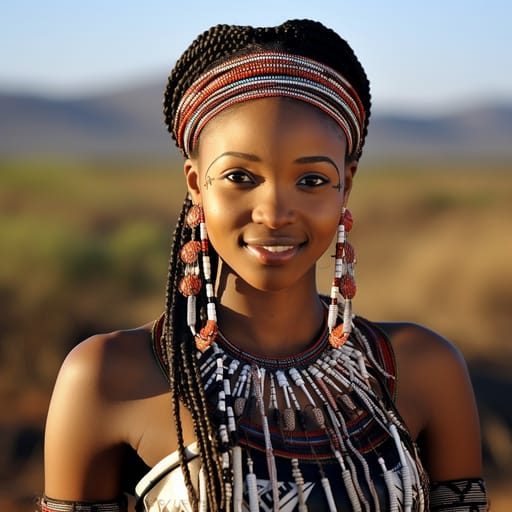

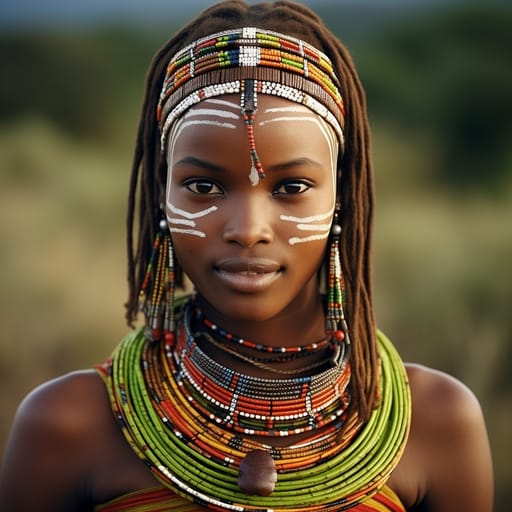
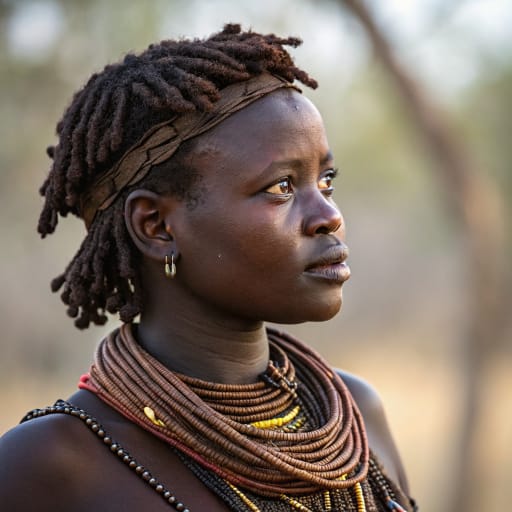
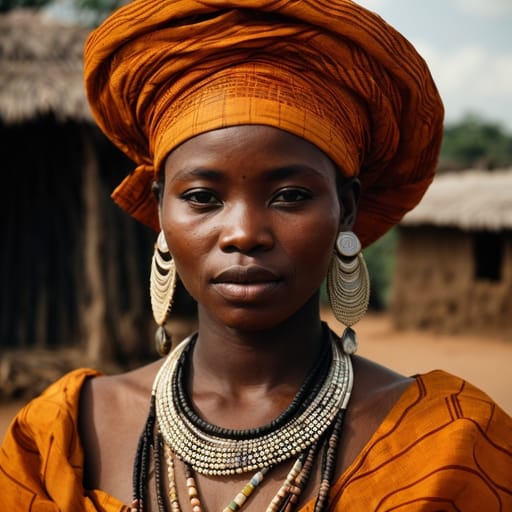
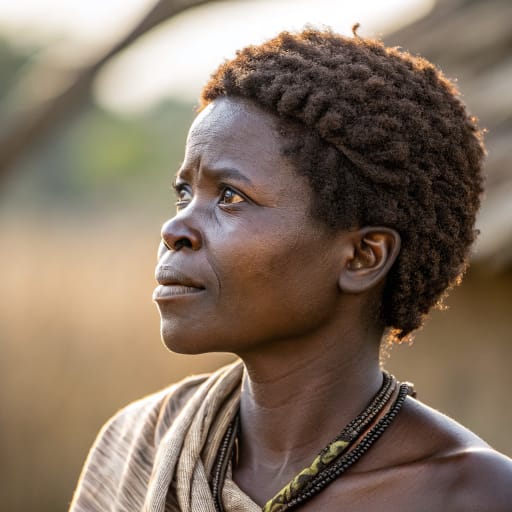
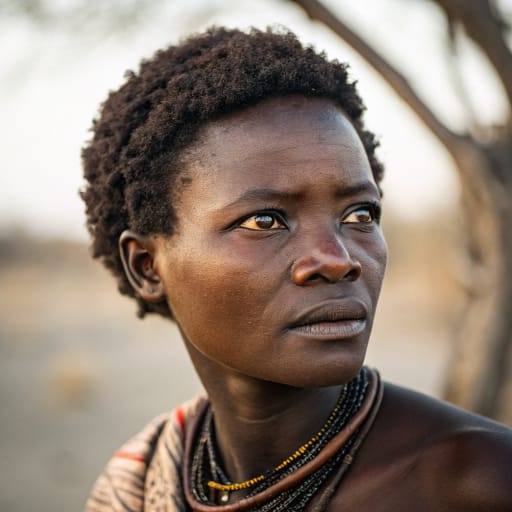
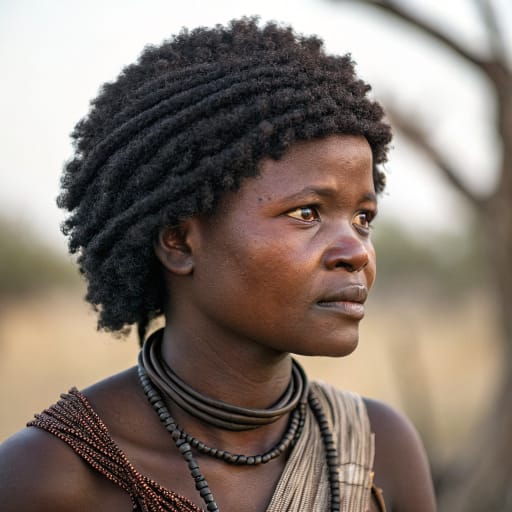
Geographic Distribution: Sukuma populations across 1 country
Each row is ranked by the group's share of that country's population, with the source citation drawn from published census and demographic surveys. Click through for the full per-country phenotype profile.
| Country | Share | Source |
|---|---|---|
| Tanzania | 16.0% | Tanzania 2022 Census plus subsequent estimates; Sukuma (~16%, ~10M+ of ~62M+ total). Bantu source population, the largest single ethnic group. Concentrated in northwestern Tanzania around Lake Victoria |
Typical Sukuma Phenotypes
Reference for AI generation: hair, eyes, skin, facial structure, build
The Sukuma are Tanzania's largest ethnic group, concentrated south of Lake Victoria across Mwanza, Shinyanga, and Simiyu regions. Their phenotype sits firmly within the Bantu cluster of East African populations, with deeply pigmented skin, tightly coiled hair, and the broad-featured facial structure characteristic of the equatorial Great Lakes belt — but with a build that tends taller and leaner than neighboring lakeside groups.
Hair is almost universally Type 4 — tightly coiled, dense, and worn close-cropped on men and either short, braided, or covered on traditional women. Natural color is uniformly black, with the soft brown cast common across Bantu populations rather than the blue-black seen further north in the Nilotic belt. Premature graying is unremarkable. Eyes are dark brown to near-black, set under flat or mildly heavy upper lids; the epicanthic fold is absent. Eye shape tends almond to slightly rounded, with prominent sclera and well-defined lash lines.
Skin tone runs from medium-dark to very dark brown — Fitzpatrick V to VI — with warm reddish or umber undertones and the faintly coppery sheen typical of populations under high-UV equatorial sun. The late John Magufuli sat at the darker end of this range; younger media figures like Cool James fall in the middle. Sun damage patterns are minimal; pigmentation is even.
Facial structure shows a moderate-to-broad nasal bridge, wide alar base, and full everted lips with a defined vermilion border. Cheekbones are pronounced but not as sharply angular as in Nilotic neighbors; the jaw is square and substantial in men, softer and more oval in women. Foreheads tend high and rounded.
Build is notably tall by regional standards — adult men commonly 175–185 cm — with long limbs, narrow hips, and a lean, ropy musculature shaped by historic cattle-herding and agricultural work. Women carry a fuller pelvic and gluteal distribution typical of Bantu populations, with relatively narrow waists and strong shoulders. Subcutaneous fat patterning trends low in working-age adults across both sexes.
Sukuma Body & Anatomy Reference
Per-feature anatomical profile for AI nude generation: Bantu / Khoisan Southern African phenotype
Sukuma Boobs & Breasts
Sukuma tits and boobs run medium cup, full but moderate projection, the classic Bantu / Khoisan Southern African bust profile. Sukuma nipples and areolas show medium-brown to deep-brown areolar pigmentation, with areolar diameter typically in the 30-44mm range and forward-set positioning rather than the heavier West African bust. Sukuma breasts trend moderately full; less projecting than West African norm, a function of the mesomorph; Khoisan-descended sub-populations show distinctive steatopygic fat deposition body habitus and the mean adult female BMI 24-28. For anatomically accurate AI-generated Sukuma nudes the render preserves the medium cup, full but moderate projection shape, 30-44mm areolas with medium-brown to deep-brown pigmentation, and the torso proportions of the Bantu / Khoisan Southern African phenotype.
Sukuma Ass & Hips
Sukuma hips and butt usually read as the distinctive Khoisan-influenced steatopygic profile in some sub-populations (San, Khoekhoe); broader gluteal projection in Bantu-speaking groups. The skeletal base is wide iliac crests with notable lordosis in Khoisan-descended sub-populations, the Bantu / Khoisan Southern African pattern. Set against the slim Cushitic East African profile, the difference is easy to see, and the hip-to-waist ratio is often what identifies Sukuma women in photos.
Sukuma Vagina & Pussy
Expect deep-brown labial pigmentation; the elongated labia minora documented in some Khoisan-descended populations on Sukuma women, in keeping with Bantu / Khoisan Southern African ancestry. The pubic hair is tightly-coiled coarse texture. Coloring should run evenly from the medium-brown to deep-brown skin of the thighs to the labia, and Sukuma nude imagery should keep the hair's tightly-coiled coarse texture.
Sukuma Dicks & Penis
Sukuma dick and penile anatomy in adult AI generation should anchor on the regional reference data: regional mean ~14cm erect, moderate-to-above-average girth, and deep-brown shaft pigmentation. The Sukuma cock profile reflects the Bantu / Khoisan Southern African population's anthropometric measurements. The shaft pigmentation should track the surrounding medium-brown to deep-brown skin tone, and the pubic hair should keep its tightly-coiled coarse texture in the typical inverted-V escutcheon.
Sukuma Body, Curves & Build
Sukuma body type: mesomorph; Khoisan-descended sub-populations show distinctive steatopygic fat deposition, with mean adult female BMI 24-28. This is the typical Bantu / Khoisan Southern African build. Height range, shoulder-to-hip ratio and fat distribution all follow from it, which is what an accurate Sukuma nude body should show.
Sukuma Skin Tone & Hair Texture
Sukuma skin tone falls in the medium-brown to deep-brown (Fitzpatrick V-VI); lighter in Khoisan-descended populations band, the surface signal most often miscalibrated by generic AI nude generators. Sukuma hair texture is typically tightly-coiled 4A-4C; the distinctive 'peppercorn' tight-spiral texture in Khoisan-descended populations, characteristic of the Bantu / Khoisan Southern African phenotype. In Sukuma nude renders the skin should hold that band consistently across the body.
Data depth
53/100Coverage of image-grounded phenotype observations · drives AI generation diversity
- Sample size
- 3/40· 1 image
- Image quality
- 30/30· 100% high
- Confidence
- 20/20· mean 0.85
- Source diversity
- 0/10· wikipedia
- ·No image observations yet
- ·Wikipedia-only source, not population-representative
Explore phenotype categories
Structured taxonomy with peer-reviewed scales · 22 anatomical categories
Notable Sukuma People
5 reference figures, sourced from Wikipedia
- John Magufuli, Former President of Tanzania
- Salome Makamba, CHADEMA
- Mark Bomani, Tanzanian Judge
- Cool James, Tanzanian musician
- Steven Kanumba, Late Tanzanian actor
Erotic Poses & Sex Positions
From the pose catalog: 219 named positions with reference skeletons
Frequently asked questions about Sukuma people
Where is the Sukuma homeland?
The Sukuma homeland is Tanzania in Southern Africa.
What countries do Sukuma people live in?
Sukuma populations are documented across 1 country: Tanzania.
What language do Sukuma people speak?
Sukuma people primarily speak Niger-Congo / Bantu / Sukuma.
What religion do Sukuma people practice?
The predominant religion among Sukuma people is Christianity / Catholicism.
What does a typical Sukuma woman look like?
Sukuma women typically have medium-dark to very dark brown skin, Fitzpatrick V to VI, with warm reddish or umber undertones, and tightly coiled black hair worn short, braided or covered. Faces show a moderate-to-broad nose, full lips with a defined border, pronounced cheekbones and a softer, oval jaw. Women tend to have fuller hips and glutes, relatively narrow waists and strong shoulders.






Make your own Sukuma images
Five a day, free, no credits to buy. The studio starts from this group's phenotype data, so you can set body type, pose and style and keep the traits accurate.
Start with Sukuma