Stó:lō Erotic
The lower Fraser River valley and lower Fraser Canyon in southwestern British Columbia, Canada, from around Yale down past Hope, Chilliwack, Abbotsford and Mission.
Halq'eméylem, the upriver dialect of Halkomelem (Salishan, Central Coast Salish); English is now the everyday language.
Christianity (Catholic and Protestant), alongside Coast Salish winter spirit dancing, burning ceremonies for the dead and ancestral naming.
Coast Salish. Stó:lō tribes and communities include Ts'elxwéyeqw (Chilliwack), Semá:th (Sumas), Pilalt, Tait, Matsqui, Leq'á:mel and Scowlitz; many belong to Stó:lō Nation or Stó:lō Tribal Council.
About Stó:lō People
The Stó:lō take their name from the thing that has always organized their lives: stó:lō is the Halq'eméylem word for river, and the river is the lower Fraser in southwestern British Columbia. Their territory, S'ólh Téméxw, runs from the mouth of the Fraser Canyon near Yale down past Hope, Chilliwack and Mission toward the coast. Stó:lō identity is less a single tribe than a network of river communities, among them the Ts'elxwéyeqw, Semá:th, Pilalt and Tait. Kinship, a shared language and the salmon runs that fed all of them hold these communities together.
Halq'eméylem is the upriver dialect of Halkomelem, a Coast Salish language. Its other dialects are spoken downriver at Musqueam and across the Strait of Georgia on Vancouver Island. Just upstream of Yale, the Nlaka'pamux speak an Interior Salish language, so the Fraser Canyon is where coast gives way to interior in speech as well as climate. Few fluent first-language speakers of Halq'eméylem remain, and elders, place names and community teaching programs are carrying the language forward.
Salmon still set the calendar. In the canyon, families dip-net from rock outcrops and hang sockeye on racks where hot summer winds dry it, a method only the canyon's climate makes possible. The historical shocks came early. Smallpox tore through around 1782, arriving ahead of the Europeans themselves. Simon Fraser passed through in 1808, and the 1858 gold rush filled the canyon with miners and led to the creation of the Colony of British Columbia. Reserves were later cut back. Sumas Lake, where the Semá:th took fish and waterfowl, was drained for farmland in the 1920s. Generations of children went through residential schools such as Coqualeetza in Chilliwack, whose grounds now house Stó:lō cultural institutions.
Christianity, brought by Catholic and Methodist missionaries, is widespread, but church life sits beside older practice rather than in place of it. In winter, smokehouses fill for spirit dancing, a private tradition kept away from cameras. Families hold burning ceremonies to feed and clothe the dead. They pass ancestral names at gatherings where invited witnesses are paid to remember what they saw, and certain lineages hold the hereditary right to bring out the sxwó:yxwey masks. The land itself carries the work of Xexá:ls, the Transformers who turned people into stone. One such ancestor, T'xwelátse, was hauled south to Washington State and did not come home until 2006.
Related ethnic groups
Groups that share Stó:lō's homeland, region, language, or religious tradition. These are likely candidates for comparative phenotype reference.
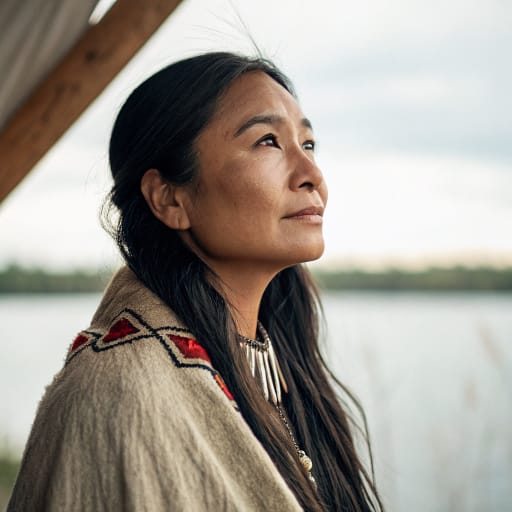
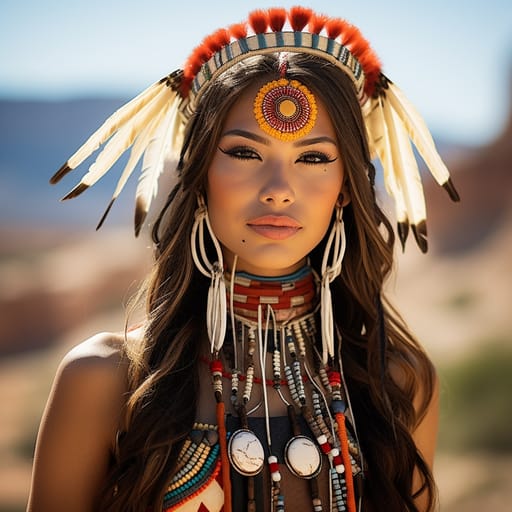
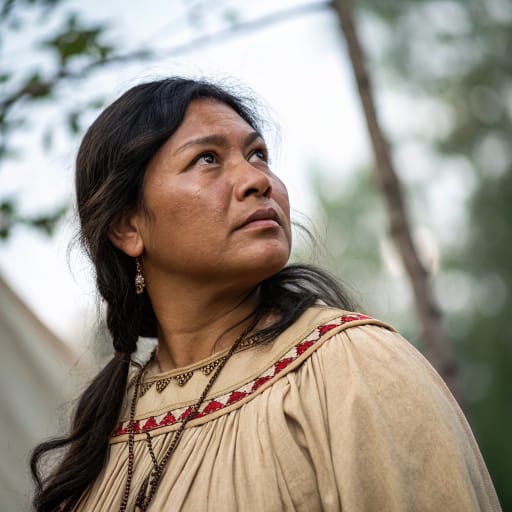
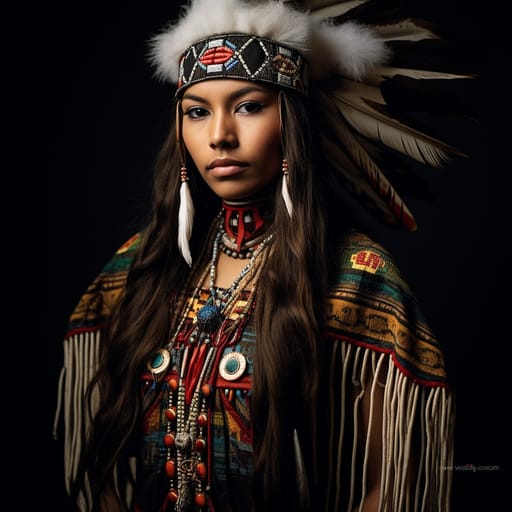
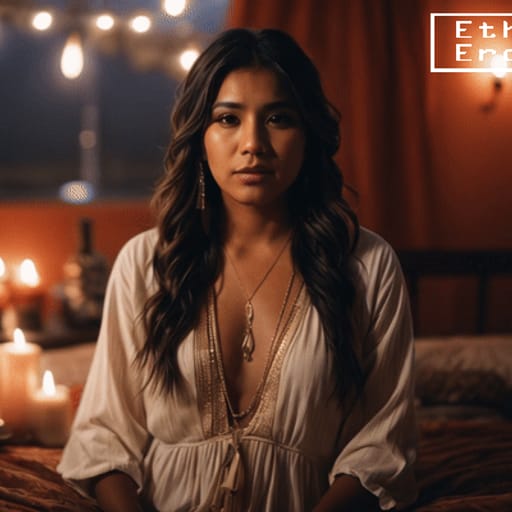
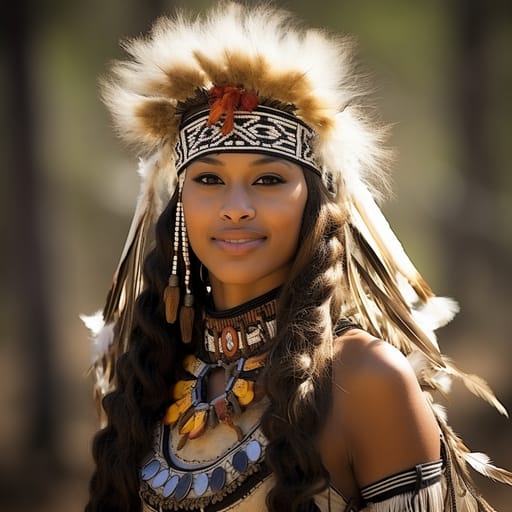
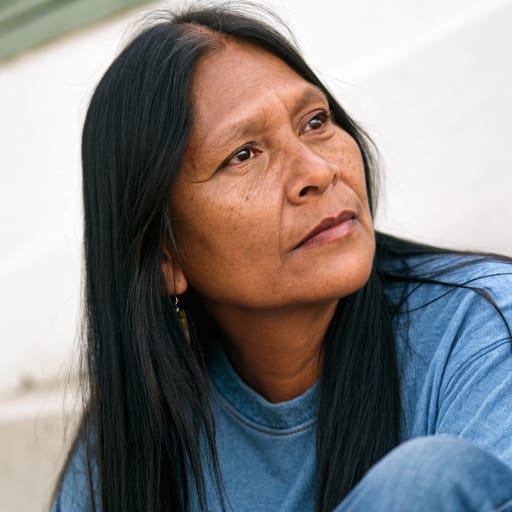
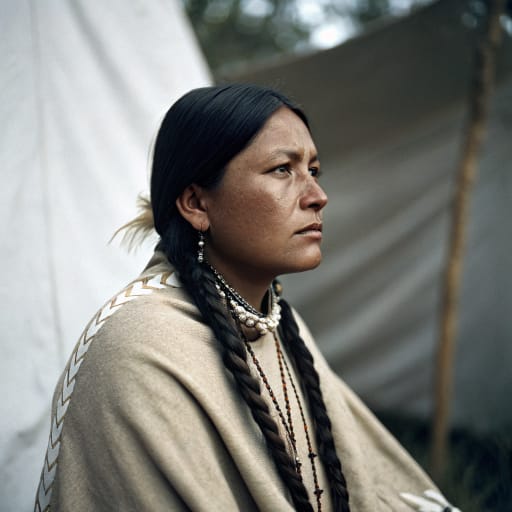
Typical Stó:lō Phenotypes
Reference for AI generation: hair, eyes, skin, facial structure, build
Stó:lō Body & Anatomy Reference
Per-feature anatomical profile for AI nude generation: Indigenous Northern American / Algonquian-Iroquoian phenotype
Stó:lō Boobs & Breasts
Bust reference for Stó:lō women: medium cup, moderate projection, which is typical of Indigenous Northern American / Algonquian-Iroquoian ancestry. Areolas measure about 30-44mm across, with medium-brown pigmentation. Body type (mesomorph, broader frame in northern Indigenous populations) shapes the bust as well, so Stó:lō tits are usually full and moderate projection. In AI imagery, keep the forward-set shape rather than drifting toward the smaller East Asian bust.
Stó:lō Ass & Hips
The Stó:lō ass is typically medium, moderate-to-full projection, which sets it apart from the slim East Asian narrow-hip profile. Underneath, the pelvis shows medium iliac crests, part of the Indigenous Northern American / Algonquian-Iroquoian skeletal pattern. For Stó:lō butt pics and AI renders, match that silhouette and the overall build (mesomorph, broader frame in northern Indigenous populations).
Stó:lō Vagina & Pussy
Stó:lō pussy and vulvar anatomy presents medium-brown labial pigmentation, consistent with the Indigenous Northern American / Algonquian-Iroquoian phenotype's pigmentation pattern. Stó:lō pubic hair is typically straight medium-coarse texture, in the inverted-triangle pattern. For anatomically accurate Stó:lō pussy renders the labial coloration should match the surrounding copper to medium-brown skin tone with a continuous gradient, and the hair should keep its straight medium-coarse texture.
Stó:lō Dicks & Penis
Stó:lō dicks follow the Indigenous Northern American / Algonquian-Iroquoian reference data: regional mean ~13cm erect; moderate girth; medium-brown shaft pigmentation. Shaft color should track the copper to medium-brown skin tone with a smooth change toward the glans, and Stó:lō pubic hair keeps its straight medium-coarse texture.
Stó:lō Body, Curves & Build
Stó:lō body type and overall build presents as mesomorph, broader frame in northern Indigenous populations, with mean adult female BMI 25-28: the characteristic Indigenous Northern American / Algonquian-Iroquoian habitus. Stó:lō curves and proportions should keep the regional skeletal frame (height, shoulder-to-hip ratio, limb proportions) rather than a generic mesomorph default.
Stó:lō Skin Tone & Hair Texture
Stó:lō skin sits in the copper to medium-brown (Fitzpatrick III-V) band. Hair is typically straight 1A, dark-brown to black, often thick and dense, in keeping with the Indigenous Northern American / Algonquian-Iroquoian phenotype. In nude renders the skin should stay one even tone from face to body, and body, pubic and head hair should match.
Explore phenotype categories
Structured taxonomy with peer-reviewed scales · 22 anatomical categories
Erotic Poses & Sex Positions
From the pose catalog: 219 named positions with reference skeletons
Frequently asked questions about Stó:lō people
Where is the Stó:lō homeland?
The Stó:lō homeland is The lower Fraser River valley and lower Fraser Canyon in southwestern British Columbia, Canada, from around Yale down past Hope, Chilliwack, Abbotsford and Mission. in North America.
What language do Stó:lō people speak?
Stó:lō people primarily speak Halq'eméylem, the upriver dialect of Halkomelem (Salishan, Central Coast Salish); English is now the everyday language..
What religion do Stó:lō people practice?
The predominant religion among Stó:lō people is Christianity (Catholic and Protestant), alongside Coast Salish winter spirit dancing, burning ceremonies for the dead and ancestral naming..






Make your own Stó:lō images
Five a day, free, no credits to buy. The studio starts from this group's phenotype data, so you can set body type, pose and style and keep the traits accurate.
Start with Stó:lō