Help us get this right
Does this portrait look right for Songye?
Nobody has judged this one yet. You would be the first.
Songye Erotic
South-central DR Congo (Sankuru and Lubilash river area, Kasai-Oriental and Lomami)
Traditional religion and Christianity
Also Basonge; closely related to the Luba
About Songye People
Songye (also Basonge) are a Bantu-speaking people of the south-central Democratic Republic of the Congo, living east of the Kasai region around the Sankuru and Lubilash rivers. They speak Songe, a Bantu language of the Niger-Congo phylum, and are historically and culturally linked to the neighboring Luba. The Songye were organized into a number of chiefdoms and secret societies, with authority shared between hereditary rulers and powerful ritual associations.
Society and subsistence
The Songye are farmers who also have a strong reputation as blacksmiths and metalworkers, and iron long carried both practical and symbolic value. Villages were governed by chiefs advised by councils, while the Bwadi bwa Kifwebe association exercised social control through masking, policing behavior and marking important events. Trade and craft supported a settled, densely organized society, and authority among the Songye was balanced between hereditary chiefs and the masking associations that oversaw community life.
Art and belief
The Songye are internationally known for two art forms. Their power figures (mankishi, singular nkishi) are carved wooden statues charged by ritual specialists with protective and healing substances and studded with metal, horn, and other materials to serve individuals and whole communities. Their kifwebe masks, carved with fine parallel striations and painted white, red, and black, appear with tall crests in male forms and lower profiles in female forms, embodying spirit power in performance.
Appearance and adornment
Ceremonial masqueraders wear the striated kifwebe mask over full costumes of fiber and cloth, moving in a controlled or aggressive manner according to the mask's character. Everyday dress is wrapped cloth, now often modern. Raised geometric scarification once marked the face, abdomen, and back, and copper and iron ornaments, beaded strands, and carved combs adorned the body. Hair was frequently shaped into ridges or shaved. Together these forms express a Songye concern with power, protection, and spiritual force.
Related ethnic groups
Groups that share Songye's homeland, region, language, or religious tradition. These are likely candidates for comparative phenotype reference.
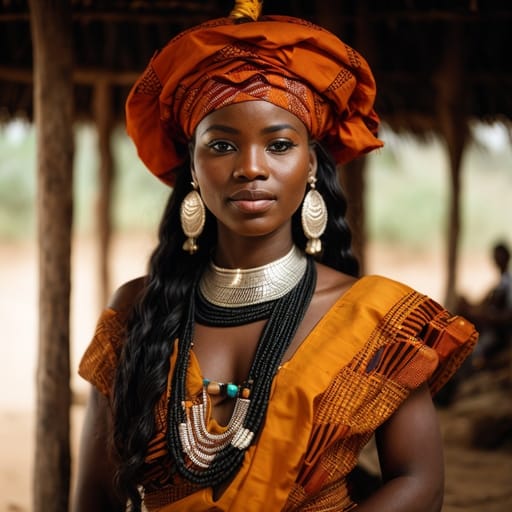
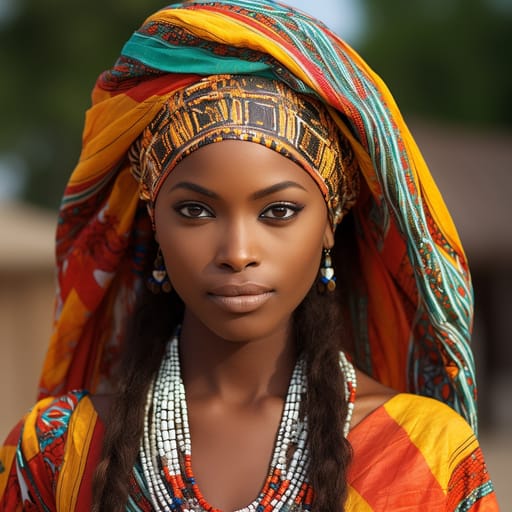
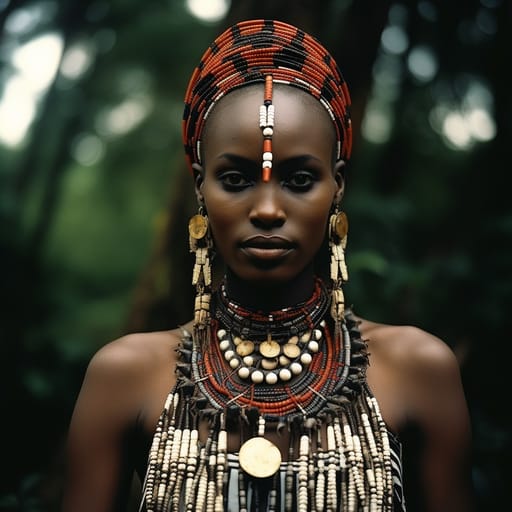
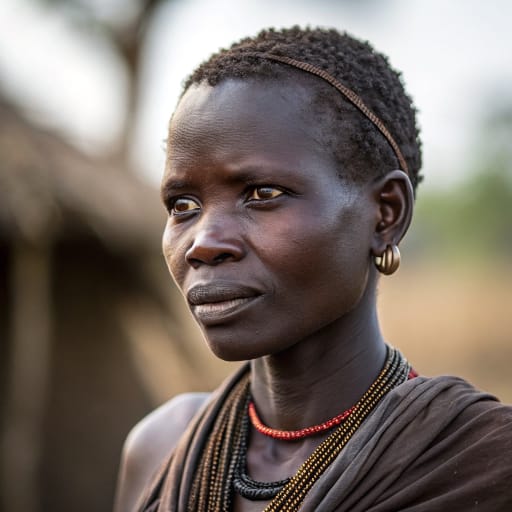
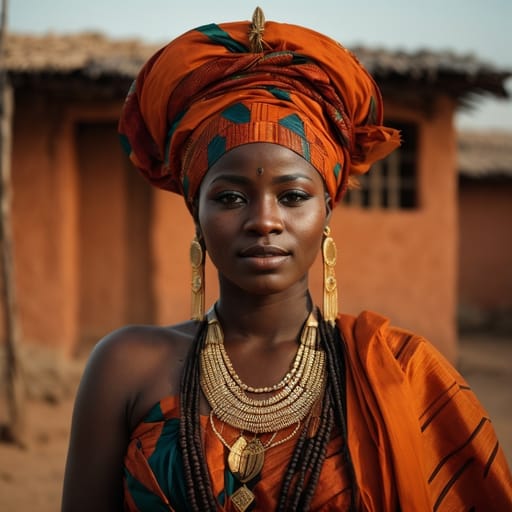
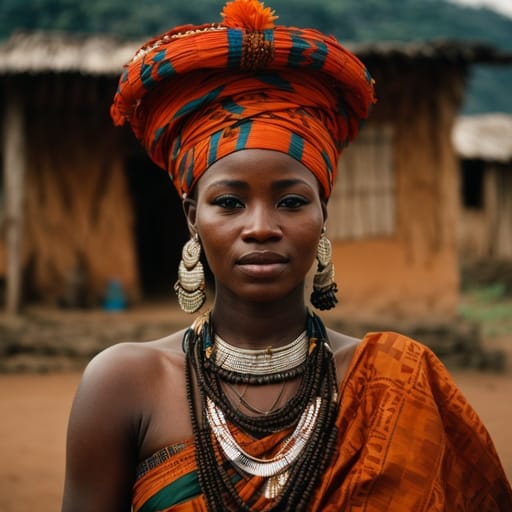
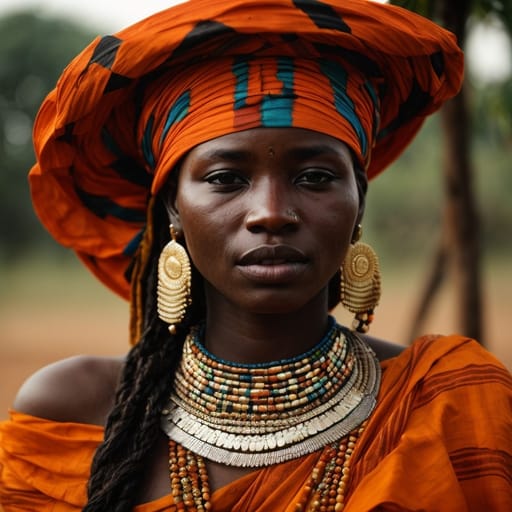
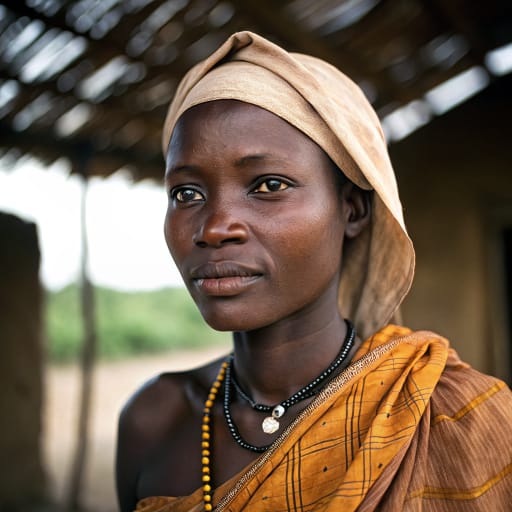
Typical Songye Phenotypes
Reference for AI generation: hair, eyes, skin, facial structure, build
Songye Body & Anatomy Reference
Per-feature anatomical profile for AI nude generation: Bantu / Central African Niger-Congo phenotype
Songye Boobs & Breasts
The typical Songye bust is medium-to-large cup, full, projecting, in line with the wider Bantu / Central African Niger-Congo pattern. Areolas usually fall in the 32-48mm range, with deep-brown areolar pigmentation against the deep-brown skin tone. Compared with the smaller East African conical profile, Songye breasts sit forward and are generally fuller projection than East African; comparable to West African norm. A faithful AI render of Songye tits keeps that shape and areola size.
Songye Ass & Hips
Butt shape among Songye women: full, projected, wide-set glutes, over broad iliac crests, gynoid pelvic pattern. This follows Bantu / Central African Niger-Congo ancestry and looks quite unlike the slim narrow-hip Cushitic East African profile. An accurate Songye ass in adult AI imagery keeps both the silhouette and the overall build (mesomorph with strong gluteal-femoral fat deposition) instead of a generic average.
Songye Vagina & Pussy
Vulvar anatomy among Songye women: deep-brown labial pigmentation, fuller labia minora. Pubic hair tends to be tightly-coiled coarse texture, dense distribution, in the usual inverted-triangle pattern. Both follow Bantu / Central African Niger-Congo pigmentation, which is why Songye pussy renders should not fall back on a pale, sparse Western template.
Songye Dicks & Penis
The Songye cock profile, from Bantu / Central African Niger-Congo anthropometric data: regional mean ~14cm erect; above-average girth; deep-brown shaft pigmentation. Pubic hair has a tightly-coiled coarse texture and forms the usual inverted-V pattern. Whether Songye men are circumcised follows religious and cultural practice rather than phenotype.
Songye Body, Curves & Build
Build and curves among Songye women follow the Bantu / Central African Niger-Congo pattern: mesomorph with strong gluteal-femoral fat deposition, mean adult female BMI 23-26. Proportions matter as much as skin tone, so Songye figures should keep their regional height and limb ratios.
Songye Skin Tone & Hair Texture
The Songye skin range is deep-brown (Fitzpatrick VI), and hair tends to be tight 4A-4C coil. That combination marks the Bantu / Central African Niger-Congo phenotype, and skin tone is the trait AI generators most often get wrong for Songye women.
Explore phenotype categories
Structured taxonomy with peer-reviewed scales · 22 anatomical categories
Erotic Poses & Sex Positions
From the pose catalog: 219 named positions with reference skeletons
Frequently asked questions about Songye people
Where is the Songye homeland?
The Songye homeland is South-central DR Congo (Sankuru and Lubilash river area, Kasai-Oriental and Lomami) in Central Africa.
What language do Songye people speak?
Songye people primarily speak Songe (Niger-Congo, Bantu).
What religion do Songye people practice?
The predominant religion among Songye people is Traditional religion and Christianity.






Make your own Songye images
Five a day, free, no credits to buy. The studio starts from this group's phenotype data, so you can set body type, pose and style and keep the traits accurate.
Start with Songye