No portrait yet
Luchazi Erotic
Eastern Angola, mainly Moxico around Cangamba and the Luchazes municipality, with long-established communities in the North-Western and Western provinces of Zambia
Luchazi, also called Chiluchazi (Bantu, Niger-Congo), closely related to Luvale, Mbunda and Chokwe; Portuguese is also used in Angola, and Luvale or Lozi in Zambia
Mostly Christian (Catholic and Protestant), alongside belief in ancestral spirits, divination and initiation rites
One of the eastern Angolan peoples the Portuguese grouped as Ganguela (Nganguela); closely related to the Luvale, Chokwe and Mbunda of the Angola and Zambia borderlands
About Luchazi People
The Luchazi are a Bantu-speaking people of the sandy miombo woodland of eastern Angola, and a long-settled branch of them lives across the border in northwestern and western Zambia. An Angolan municipality in Moxico, Luchazes, is named for them, and its town of Cangamba sits in the middle of their country. What holds them together is less a territory than a shared way of life. Descent runs through the mother's line, they speak one language, and boys go through mukanda, the lodge in the bush where they are circumcised and taught before they go home to their families as men. The masked makishi figures who come out during initiation are the part of it outsiders see. The Luchazi share this institution with their closest neighbors, the Luvale, Chokwe and Mbunda.
Chiluchazi belongs to the same close cluster of Bantu languages as those neighbors. Portuguese administrators lumped the Luchazi together with several nearby peoples under the label Ganguela. That was an outsider's term taken from Ovimbundu usage, not a name these communities chose. In Zambia, schools and radio in the region use Luvale and Lozi, so many Luchazi speakers switch between languages as a matter of course.
One Luchazi tradition deserves far more attention than it gets. Storytellers draw tusona, figures traced with the fingers in smoothed sand, often looping around a grid of dots. Each figure is tied to a proverb, a story or a riddle. The Austrian ethnomusicologist Gerhard Kubik recorded these ideographs in detail, along with the songs and music of the initiation lodge.
The twentieth century was hard on this country. Portuguese taxes and forced labor pushed families east into what was then Northern Rhodesia. The wars that ran from 1961 to 2002 made eastern Angola a battleground, and Cangamba was the site of a major siege in 1983. Many families spent years in Zambian refugee settlements, and not all of them went back. Most Luchazi today are Christian, a legacy of Catholic and Protestant missions. Even so, ancestral spirits, diviners and initiation still shape how households deal with illness, bad luck and growing up. Daily life runs on cassava fields, fishing, hunting, and honey taken from bark hives hung in the trees.
Related ethnic groups
Groups that share Luchazi's homeland, region, language, or religious tradition. These are likely candidates for comparative phenotype reference.
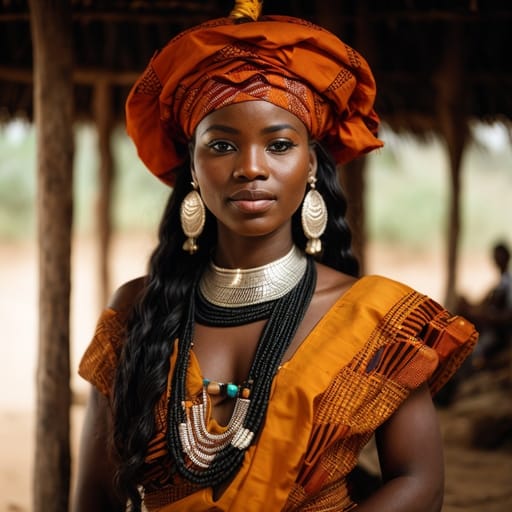
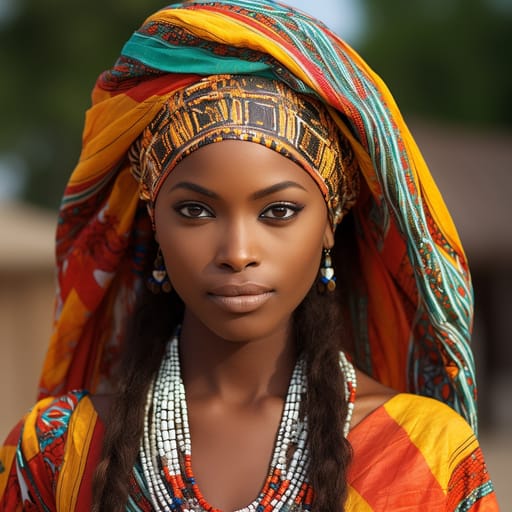
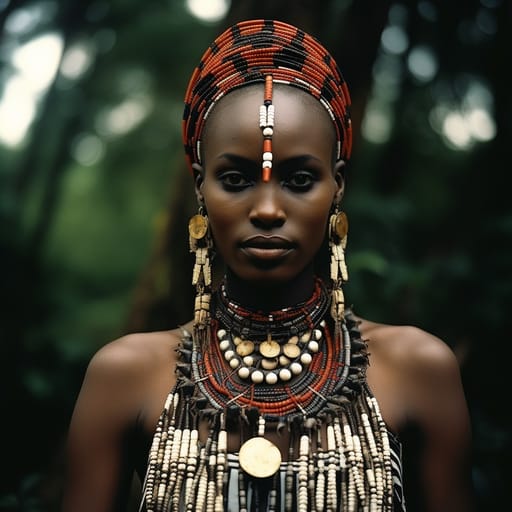
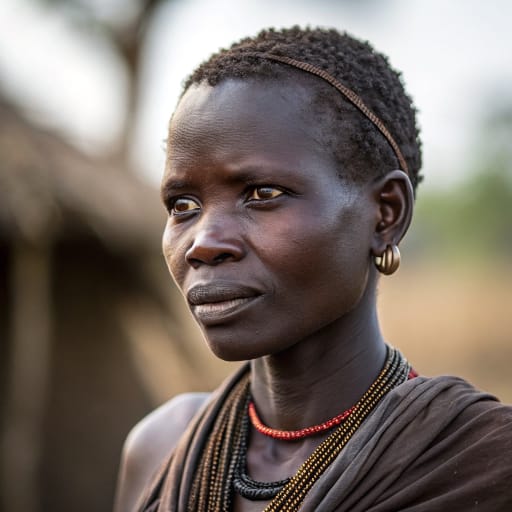
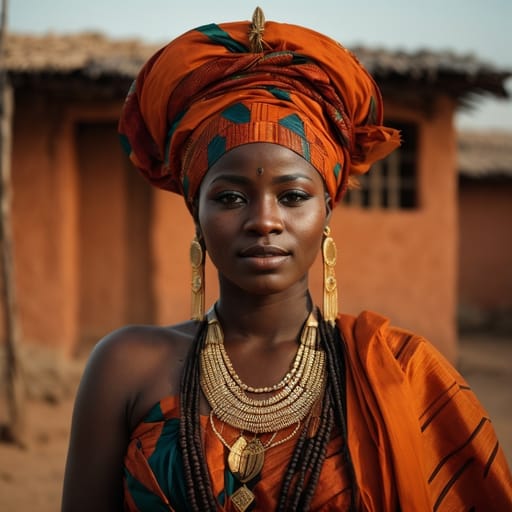
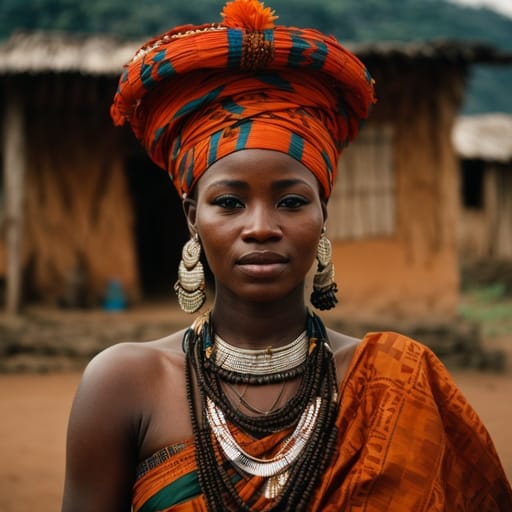
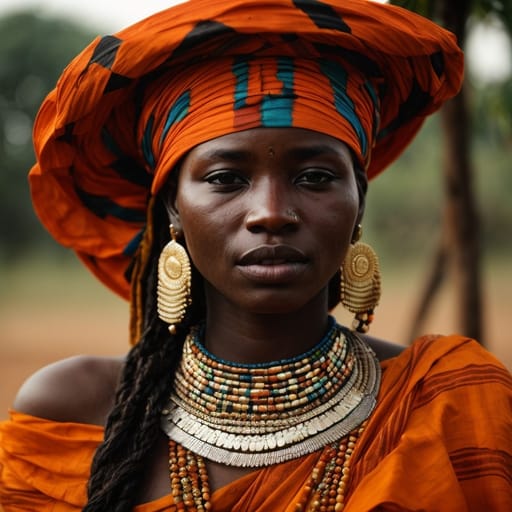
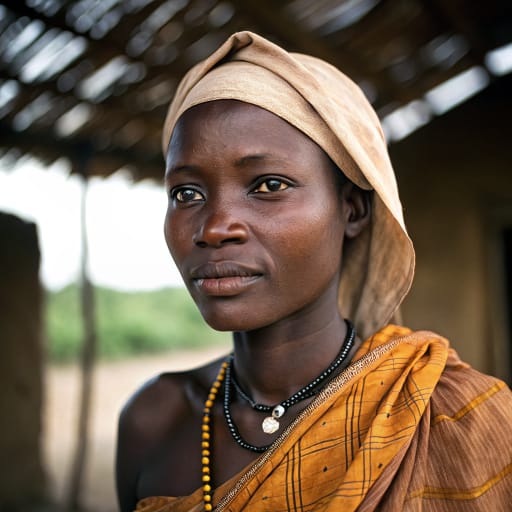
Typical Luchazi Phenotypes
Reference for AI generation: hair, eyes, skin, facial structure, build
Luchazi Body & Anatomy Reference
Bantu / Central African Niger-Congo phenotype: anatomy reference for AI nude generation
Luchazi Boobs & Breasts
Luchazi boobs follow the Bantu / Central African Niger-Congo profile: medium-to-large cup, full, projecting. Areolar diameter is usually 32-48mm, and the coloring is deep-brown areolar pigmentation against the deep-brown skin tone. Breast shape tracks body composition (mesomorph with strong gluteal-femoral fat deposition, mean adult female BMI 23-26), so Luchazi breasts tend to be fuller projection than East African; comparable to West African norm. Expect a forward-set shape, not the smaller East African conical profile.
Luchazi Ass & Hips
Luchazi ass and hip morphology presents as full, projected, wide-set glutes, distinctly different from the slim narrow-hip Cushitic East African profile. The Luchazi pelvic profile shows broad iliac crests, gynoid pelvic pattern, anchored in the Bantu / Central African Niger-Congo skeletal pattern. Luchazi butt shots in adult AI imagery should render the full, projected, wide-set glutes silhouette with the overall build (mesomorph with strong gluteal-femoral fat deposition) and the fat distribution typical of the Bantu / Central African Niger-Congo phenotype.
Luchazi Vagina & Pussy
Luchazi pussy anatomy typically shows deep-brown labial pigmentation, fuller labia minora. Pubic hair is usually tightly-coiled coarse texture, dense distribution. In AI-generated Luchazi nudes, labial color should blend into the deep-brown skin with a gradual transition, and the hair should keep its tightly-coiled coarse texture.
Luchazi Dicks & Penis
Penis reference for Luchazi men: regional mean ~14cm erect, above-average girth. Coloring: deep-brown shaft pigmentation. An accurate Luchazi cock in AI imagery matches the surrounding deep-brown skin rather than a generic porn default. Circumcision depends on religion and custom, not ancestry.
Luchazi Body, Curves & Build
The Luchazi figure is generally mesomorph with strong gluteal-femoral fat deposition, with mean adult female BMI 23-26, characteristic of Bantu / Central African Niger-Congo ancestry. AI image tools tend to flatten regional body types into a few stock shapes; here the Luchazi build is kept as its own reference.
Luchazi Skin Tone & Hair Texture
Skin: deep-brown (Fitzpatrick VI). Hair: tight 4A-4C coil. Both are typical of Bantu / Central African Niger-Congo ancestry. The most common mistake in AI nudes of Luchazi women is a body rendered lighter than the face.
Explore phenotype categories
Structured taxonomy with peer-reviewed scales · 22 anatomical categories
Erotic Poses & Sex Positions
From the pose catalog: 219 named positions with reference skeletons
Frequently asked questions about Luchazi people
Where is the Luchazi homeland?
The Luchazi homeland is Eastern Angola, mainly Moxico around Cangamba and the Luchazes municipality, with long-established communities in the North-Western and Western provinces of Zambia in Central Africa.
What language do Luchazi people speak?
Luchazi people primarily speak Luchazi, also called Chiluchazi (Bantu, Niger-Congo), closely related to Luvale, Mbunda and Chokwe; Portuguese is also used in Angola, and Luvale or Lozi in Zambia.
What religion do Luchazi people practice?
The predominant religion among Luchazi people is Mostly Christian (Catholic and Protestant), alongside belief in ancestral spirits, divination and initiation rites.






Make your own Luchazi images
Five a day, free, no credits to buy. The studio starts from this group's phenotype data, so you can set body type, pose and style and keep the traits accurate.
Start with Luchazi