Help us get this right
Does this portrait look right for Hutu?
Nobody has judged this one yet. You would be the first.
Hutu Erotic
Niger-Congo / Bantu / Rwanda-Rundi (Kinyarwanda, Kirundi)
Christianity
About Hutu People
The Hutu are the demographic majority across Rwanda and Burundi and form a substantial population in the eastern Kivu provinces of the Democratic Republic of the Congo — three countries that share the high, cool, terraced plateaus where the Great Lakes region tips toward the Congo basin. Hutu identity is bound up with that landscape: smallholder cultivation on volcanic soils, banana groves and bean fields stitched into hillsides, cattle kept where pasture allows. The distinction between Hutu and the Tutsi minority has been argued over for more than a century — sometimes framed as ethnicity, sometimes as caste, sometimes as a colonial fabrication hardened into fact — and any honest introduction has to acknowledge that the category itself has been shaped as much by politics as by descent.
Linguistically, Hutu speak the same languages as their Tutsi and Twa neighbors: Kinyarwanda in Rwanda, Kirundi in Burundi, both closely related Bantu languages of the Rwanda-Rundi cluster, mutually intelligible to a large degree. There is no separate "Hutu language" — a fact that itself complicates the older European insistence that these were distinct peoples. In Kivu, Hutu communities also speak Swahili and local Congolese languages alongside Kinyarwanda. Religious life is overwhelmingly Christian, predominantly Roman Catholic with a strong Protestant and increasingly Pentecostal presence; older practices around ancestor veneration and the high god Imana persist quietly inside that Christian frame, especially around mourning, harvest, and naming.
The twentieth century cut deep. Belgian colonial administration formalized Hutu and Tutsi as separate categories on identity cards, redirecting precolonial fluidity into a rigid hierarchy that fed cycles of violence on both sides — the 1959 revolution in Rwanda, the 1972 mass killings in Burundi, and the 1994 Rwandan genocide, in which extremist Hutu militias murdered some 800,000 Tutsi and moderate Hutu in roughly a hundred days. The aftermath reshaped the region: refugee movements into Kivu helped trigger the Congo wars, and post-genocide Rwanda has officially abolished the Hutu/Tutsi distinction in public life, though the categories remain socially legible. Daily Hutu life today — weddings with their long gift-exchange protocols, the umuganda community work mornings in Rwanda, the cooperative coffee and tea estates that anchor rural economies — is lived under the long shadow of that history without being defined entirely by it.
Related ethnic groups
Groups that share Hutu's homeland, region, language, or religious tradition. These are likely candidates for comparative phenotype reference.
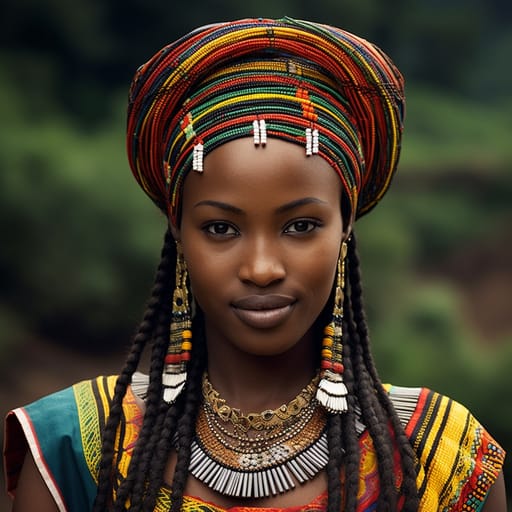
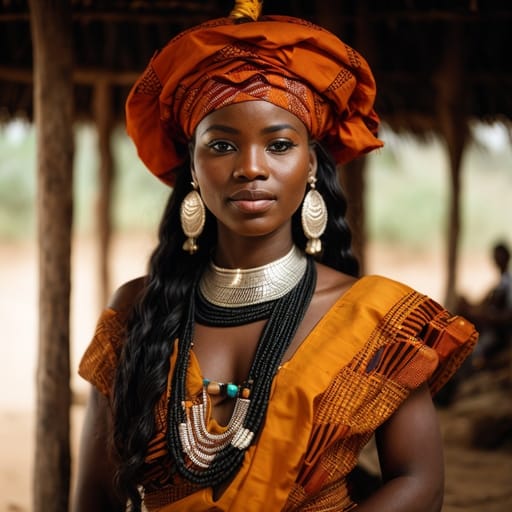
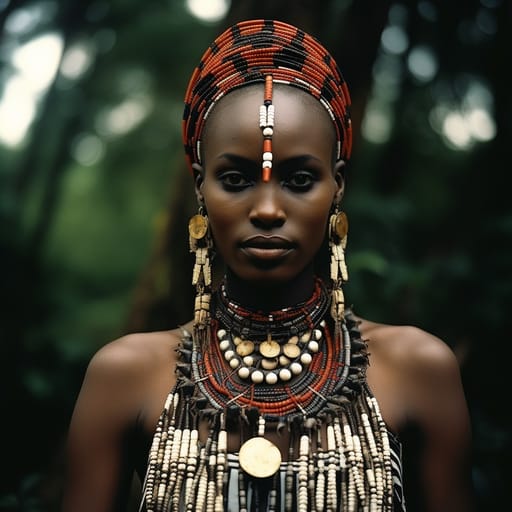
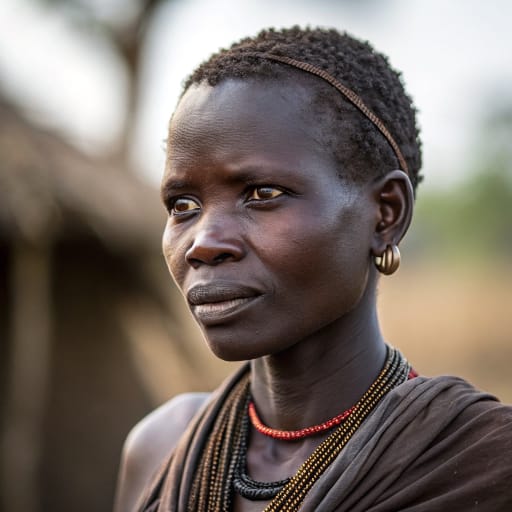
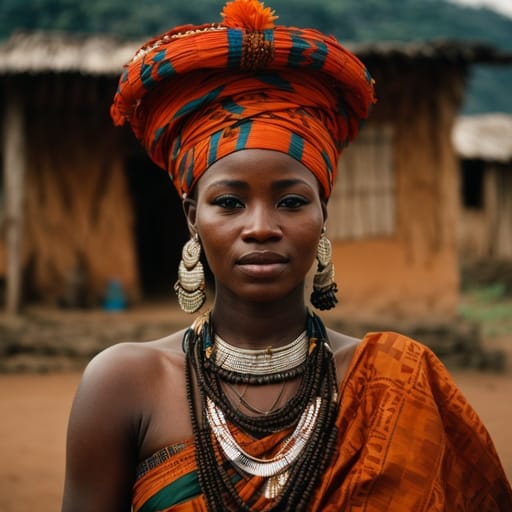
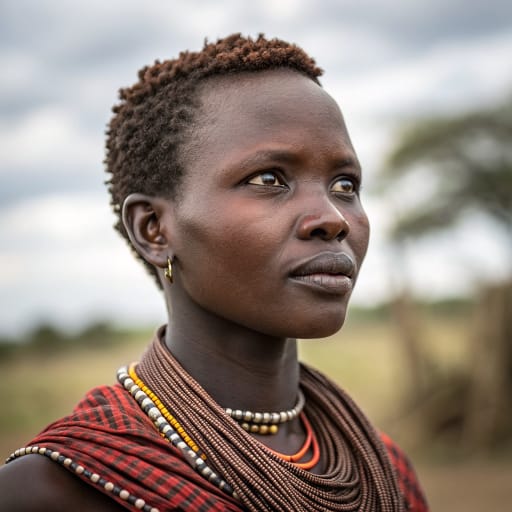
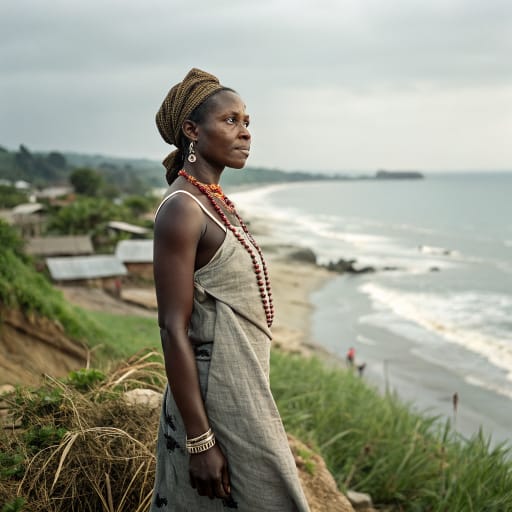
Geographic Distribution: Hutu populations across 1 country
Each row is ranked by the group's share of that country's population, with the source citation drawn from published census and demographic surveys. Click through for the full per-country phenotype profile.
| Country | Share | Source |
|---|---|---|
| Burundi | 85.0% | Burundi 2008 Census plus subsequent demographic estimates; Hutu (~85%, ~11M+ of ~13M+ total). Bantu / Kirundi language. Cross-border with Rwandan, DRC, and Ugandan Hutu populations |
Typical Hutu Phenotypes
Reference for AI generation: hair, eyes, skin, facial structure, build
The Hutu phenotype sits within the Bantu agriculturalist range of the African Great Lakes, and is best understood in contrast to the taller, narrower-built Tutsi who share the same homeland. Hutu populations tend toward a shorter, sturdier frame — typical adult male stature falls in the 165–172 cm range, with broader shoulders, a thicker waist, and more substantial muscle mass through the thighs and upper arms than their Nilotic-influenced neighbors. Women carry similar structural breadth: rounded hips, fuller bust line, and a softer overall silhouette rather than the elongated proportions associated with Tutsi pastoralists.
Skin tone runs Fitzpatrick V to VI, with deep brown to near-black coloration and warm reddish-brown undertones common in the Kivu and northern Rwandan highlands. The hill-country climate spares most Hutu the extreme sun-bleaching seen in lowland Bantu groups, so coloration tends to be even rather than mottled. Hair is uniformly Type 4 — tightly coiled, dense, with 4B and 4C textures predominating; natural color is jet-black with occasional warm-brown undertones in sunlight. Eye color is overwhelmingly dark brown to near-black, with no epicanthic fold; eye shape is moderately almond, set under a relatively flat brow ridge.
Facial structure is the clearest visual marker. The nose is broad with a low, wide bridge and full alar flare — distinctly platyrrhine, contrasting sharply with the narrower, higher-bridged Tutsi nose. Lips are full top and bottom with pronounced eversion. The jaw is square and substantial, cheekbones moderately prominent but not high-set, and the overall facial proportion is shorter and rounder than the elongated Tutsi face. The combination of broad nose, full lips, square jaw, and compact stocky build is the most reliable phenotype cluster.
Sub-regional variation is modest. Burundian Hutu and Rwandan Hutu are essentially indistinguishable; Congolese Hutu in North and South Kivu show slightly more admixture with neighboring Nande and Hunde populations, occasionally producing taller individuals or somewhat narrower nasal forms.
Hutu Body & Anatomy Reference
Per-feature anatomical profile for AI nude generation: Bantu / Central African Niger-Congo phenotype
Hutu Boobs & Breasts
Hutu boobs follow the Bantu / Central African Niger-Congo profile: medium-to-large cup, full, projecting. Areolar diameter is usually 32-48mm, and the coloring is deep-brown areolar pigmentation against the deep-brown skin tone. Breast shape tracks body composition (mesomorph with strong gluteal-femoral fat deposition, mean adult female BMI 23-26), so Hutu breasts tend to be fuller projection than East African; comparable to West African norm. Expect a forward-set shape, not the smaller East African conical profile.
Hutu Ass & Hips
Hutu ass and hip morphology presents as full, projected, wide-set glutes, distinctly different from the slim narrow-hip Cushitic East African profile. The Hutu pelvic profile shows broad iliac crests, gynoid pelvic pattern, anchored in the Bantu / Central African Niger-Congo skeletal pattern. Hutu butt shots in adult AI imagery should render the full, projected, wide-set glutes silhouette with the overall build (mesomorph with strong gluteal-femoral fat deposition) and the fat distribution typical of the Bantu / Central African Niger-Congo phenotype.
Hutu Vagina & Pussy
Hutu pussy anatomy typically shows deep-brown labial pigmentation, fuller labia minora. Pubic hair is usually tightly-coiled coarse texture, dense distribution. In AI-generated Hutu nudes, labial color should blend into the deep-brown skin with a gradual transition, and the hair should keep its tightly-coiled coarse texture.
Hutu Dicks & Penis
Penis reference for Hutu men: regional mean ~14cm erect, above-average girth. Coloring: deep-brown shaft pigmentation. An accurate Hutu cock in AI imagery matches the surrounding deep-brown skin rather than a generic porn default. Circumcision depends on religion and custom, not ancestry.
Hutu Body, Curves & Build
The Hutu figure is generally mesomorph with strong gluteal-femoral fat deposition, with mean adult female BMI 23-26, characteristic of Bantu / Central African Niger-Congo ancestry. AI image tools tend to flatten regional body types into a few stock shapes; here the Hutu build is kept as its own reference.
Hutu Skin Tone & Hair Texture
Skin: deep-brown (Fitzpatrick VI). Hair: tight 4A-4C coil. Both are typical of Bantu / Central African Niger-Congo ancestry. The most common mistake in AI nudes of Hutu women is a body rendered lighter than the face.
Data depth
0/100Coverage of image-grounded phenotype observations · drives AI generation diversity
- Sample size
- 0/40· 0 images
- Image quality
- 0/30· 0% high
- Confidence
- 0/20
- Source diversity
- 0/10
- ·No image observations yet
Explore phenotype categories
Structured taxonomy with peer-reviewed scales · 22 anatomical categories
Erotic Poses & Sex Positions
From the pose catalog: 219 named positions with reference skeletons
Frequently asked questions about Hutu people
Where is the Hutu homeland?
The Hutu homeland is Rwanda, Burundi, Kivu (Democratic Republic of the Congo) in Central Africa.
What countries do Hutu people live in?
Hutu populations are documented across 1 country: Burundi.
What language do Hutu people speak?
Hutu people primarily speak Niger-Congo / Bantu / Rwanda-Rundi (Kinyarwanda, Kirundi).
What religion do Hutu people practice?
The predominant religion among Hutu people is Christianity.






Make your own Hutu images
Five a day, free, no credits to buy. The studio starts from this group's phenotype data, so you can set body type, pose and style and keep the traits accurate.
Start with Hutu