Help us get this right
Does this portrait look right for Batanga?
Nobody has judged this one yet. You would be the first.
Batanga Erotic
Atlantic coast of southern Cameroon around Kribi (Océan department, South Region), from Londji to Campo; related communities on the coast of Equatorial Guinea and northern Gabon.
Batanga, with Banoho and Bapuku varieties (Niger-Congo, Bantu, coastal A.30 group, close to Benga and Yasa); French widely used
Christian, mainly Presbyterian and Catholic, alongside ancestor veneration and Sawa water spirit beliefs
Branches: Banoho, Bapuku, Batanga proper. Part of the Sawa coastal peoples of Cameroon; kin to the Ndowe peoples (Benga, Kombe and others) of Equatorial Guinea.
About Batanga People
The Batanga are a people of the beach. Their villages line the Atlantic shore of southern Cameroon around Kribi, from Londji down past Grand Batanga and the Lobé falls toward Campo, and their sense of themselves is tied to that strip of sand, surf and river mouth. They count themselves among the Sawa, the coastal peoples of Cameroon whose best known members are the Duala, and their close relatives across the border in Equatorial Guinea and Gabon go by the name Ndowe, the shore peoples of the Río Muni coast. Three branches are usually named, the Banoho, the Bapuku and the Batanga proper, each with its own stretch of coast and its own way of speaking. The language is Bantu, part of a small coastal cluster with Benga and Yasa, and plainly distinct from the Bulu and Ngumba spoken by inland neighbors. French is the language of school and the state, and in Kribi town Batanga has to compete with everything else a port brings in. Presbyterian and Catholic churches anchor village life, alongside respect for ancestors and for the water spirits that Sawa peoples share.
Living on the shore put the Batanga at the front of every arrival. They brokered trade between European ships and the forest interior well before Germany claimed Kamerun in 1884, and American Presbyterian missionaries settled among them in the later nineteenth century. The defining rupture came in 1914. When the First World War reached Cameroon, the German administration suspected the coastal population of siding with the Allies. The Batanga chief Madola was hanged at Kribi, and much of the population spent the war years in exile farther up the coast, around Mount Cameroon. The return came in 1916, the Banoho in February and the Bapuku in May, and both homecomings are still celebrated every year. The May festival, the Mayi, fills Kribi with canoe races, dancing and rites at the water's edge, and it works as the annual roll call of who is Batanga. Fishing remains the identifying trade, with crews taking dugout canoes out through the surf, but Kribi is now a resort town and, since a deep water port opened to the south in 2018, an industrial one. A small people holds some of the most coveted shoreline in the country, and the argument over who keeps that land is the Batanga question of the moment.
Related ethnic groups
Groups that share Batanga's homeland, region, language, or religious tradition. These are likely candidates for comparative phenotype reference.
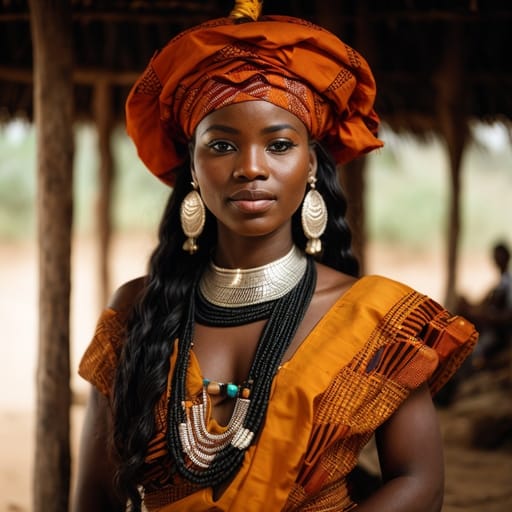
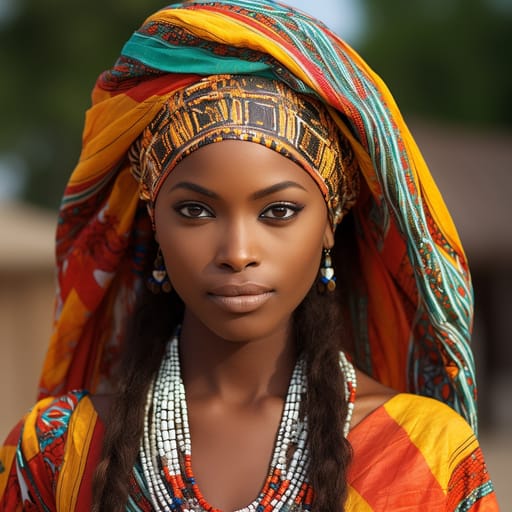
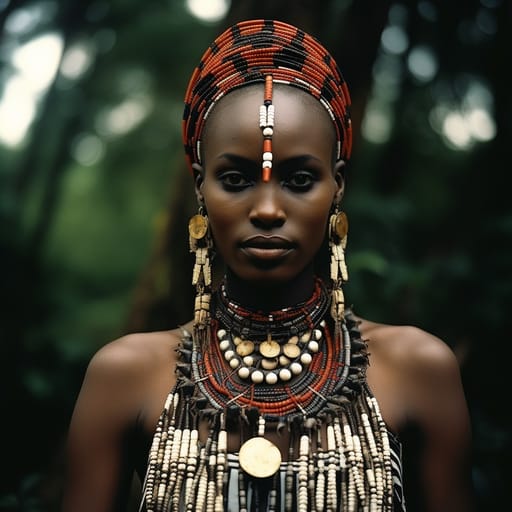
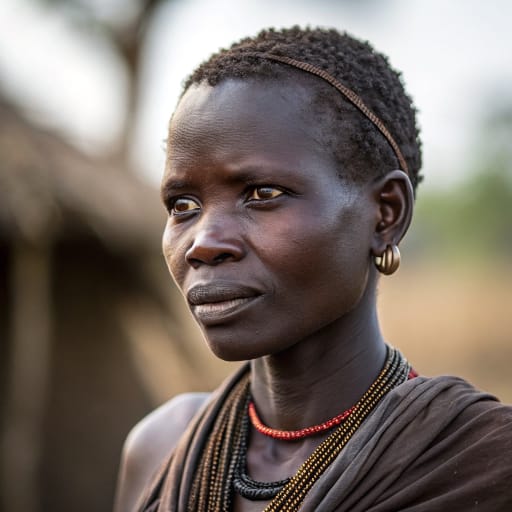
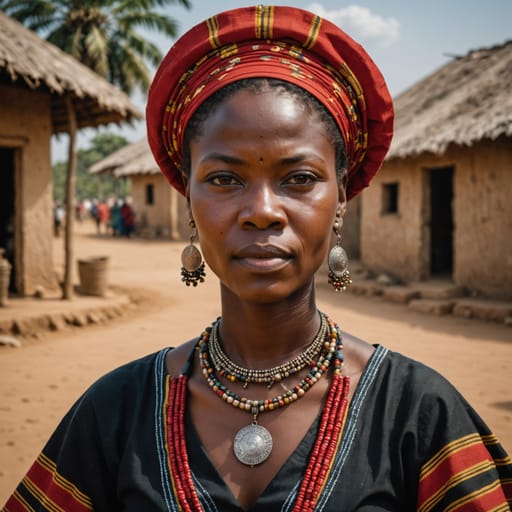
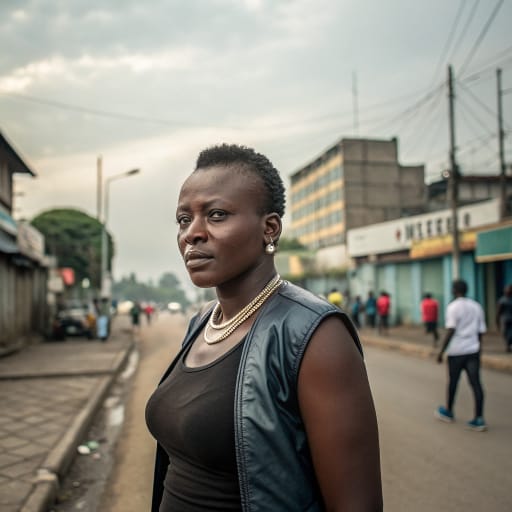
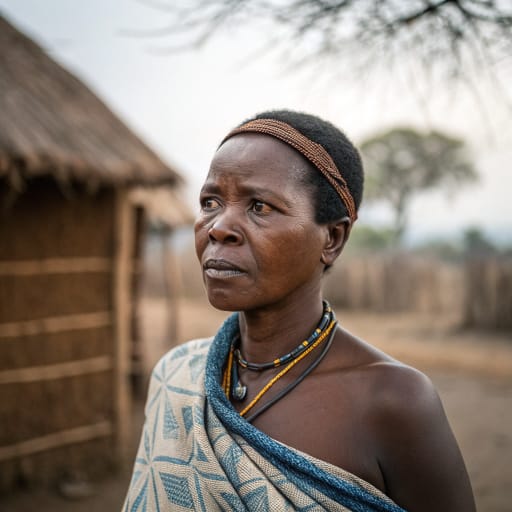
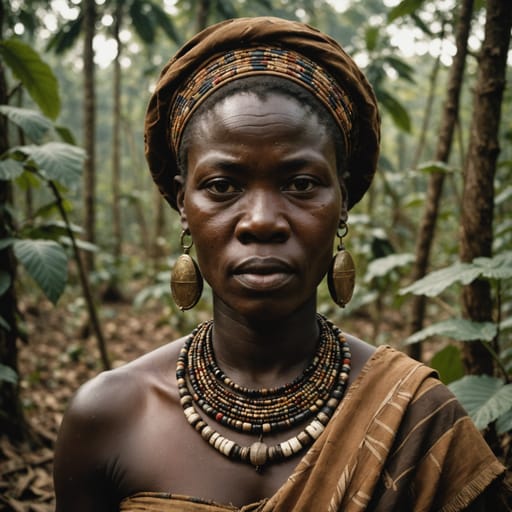
Typical Batanga Phenotypes
Reference for AI generation: hair, eyes, skin, facial structure, build
Batanga Body & Anatomy Reference
Per-feature anatomical profile for AI nude generation: Bantu / Central African Niger-Congo phenotype
Batanga Boobs & Breasts
Batanga tits and boobs run medium-to-large cup, full, projecting, the classic Bantu / Central African Niger-Congo bust profile. Batanga nipples and areolas show deep-brown areolar pigmentation against the deep-brown skin tone, with areolar diameter typically in the 32-48mm range and forward-set positioning rather than the smaller East African conical profile. Batanga breasts trend fuller projection than East African; comparable to West African norm, a function of the mesomorph with strong gluteal-femoral fat deposition body habitus and the mean adult female BMI 23-26. For anatomically accurate AI-generated Batanga nudes the render preserves the medium-to-large cup, full, projecting shape, 32-48mm areolas with deep-brown pigmentation, and the torso proportions of the Bantu / Central African Niger-Congo phenotype.
Batanga Ass & Hips
Batanga hips and butt usually read as full, projected, wide-set glutes. The skeletal base is broad iliac crests, gynoid pelvic pattern, the Bantu / Central African Niger-Congo pattern. Set against the slim narrow-hip Cushitic East African profile, the difference is easy to see, and the hip-to-waist ratio is often what identifies Batanga women in photos.
Batanga Vagina & Pussy
Expect deep-brown labial pigmentation, fuller labia minora on Batanga women, in keeping with Bantu / Central African Niger-Congo ancestry. The pubic hair is tightly-coiled coarse texture, dense distribution. Coloring should run evenly from the deep-brown skin of the thighs to the labia, and Batanga nude imagery should keep the hair's tightly-coiled coarse texture.
Batanga Dicks & Penis
Batanga dick and penile anatomy in adult AI generation should anchor on the regional reference data: regional mean ~14cm erect, above-average girth, and deep-brown shaft pigmentation. The Batanga cock profile reflects the Bantu / Central African Niger-Congo population's anthropometric measurements. The shaft pigmentation should track the surrounding deep-brown skin tone, and the pubic hair should keep its tightly-coiled coarse texture in the typical inverted-V escutcheon.
Batanga Body, Curves & Build
Batanga body type: mesomorph with strong gluteal-femoral fat deposition, with mean adult female BMI 23-26. This is the typical Bantu / Central African Niger-Congo build. Height range, shoulder-to-hip ratio and fat distribution all follow from it, which is what an accurate Batanga nude body should show.
Batanga Skin Tone & Hair Texture
Batanga skin tone falls in the deep-brown (Fitzpatrick VI) band, the surface signal most often miscalibrated by generic AI nude generators. Batanga hair texture is typically tight 4A-4C coil, characteristic of the Bantu / Central African Niger-Congo phenotype. In Batanga nude renders the skin should hold that band consistently across the body.
Explore phenotype categories
Structured taxonomy with peer-reviewed scales · 22 anatomical categories
Erotic Poses & Sex Positions
From the pose catalog: 219 named positions with reference skeletons
Frequently asked questions about Batanga people
Where is the Batanga homeland?
The Batanga homeland is Atlantic coast of southern Cameroon around Kribi (Océan department, South Region), from Londji to Campo; related communities on the coast of Equatorial Guinea and northern Gabon. in Central Africa.
What language do Batanga people speak?
Batanga people primarily speak Batanga, with Banoho and Bapuku varieties (Niger-Congo, Bantu, coastal A.30 group, close to Benga and Yasa); French widely used.
What religion do Batanga people practice?
The predominant religion among Batanga people is Christian, mainly Presbyterian and Catholic, alongside ancestor veneration and Sawa water spirit beliefs.






Make your own Batanga images
Five a day, free, no credits to buy. The studio starts from this group's phenotype data, so you can set body type, pose and style and keep the traits accurate.
Start with Batanga