Help us get this right
Does this portrait look right for Yombe?
Nobody has judged this one yet. You would be the first.
Yombe Erotic
The Mayombe forest hills inland from the Atlantic: Kongo Central in the Democratic Republic of the Congo, southwestern Republic of the Congo, and Cabinda province, Angola.
Kiyombe (Bantu, Niger-Congo, within the Kikongo cluster); Kituba as regional lingua franca, with French or Portuguese by country.
Predominantly Roman Catholic, with Kimbanguist and independent prophetic churches; Kongo ancestral practice persists alongside.
A branch of the Kongo (BaKongo) peoples, neighbors to the Woyo, Vili, Linji and Kotchi of the Cabinda and Loango coast.
About Yombe People
The Yombe and their country share a name: Mayombe, the belt of steep, rain-soaked forest hills that runs inland from the Atlantic behind the mouth of the Congo River. That homeland ignores three borders. Yombe villages sit in Kongo Central in the Democratic Republic of the Congo, across the line in the Republic of the Congo, and north into Cabinda, the Angolan province separated from the rest of Angola. They are Kongo people, one branch of the wide BaKongo family, and they have never been interchangeable with the rest of it. Kiyombe belongs to the Kikongo cluster, Bantu by descent, and sits at the divergent end of it, close to its neighbors without being simply the same. Most Yombe also use Kituba, the trade Kikongo that became the region's working tongue, plus French or Portuguese depending on which side of a colonial line they ended up on. Descent runs through mothers. The kanda, the matriclan, decides inheritance and succession, and a man's mother's brother matters more than his father in the arrangements that count.
Two things from this corner of Central Africa are famous well beyond it, and most people who have seen them do not know where they came from. Yombe carvers produced the pfemba mother-and-child figures, and the nkisi nkondi, the standing figures bristling with driven nails and blades. Museums file them as sculpture. They worked closer to legal instruments: a nail went in to seal an oath, register a grievance, or rouse the figure to act, and the object accumulated the history of the disputes it had handled. The Mayombe was also the heartland of Lemba, an institution that resists a one-word translation, part healing society, part marriage alliance, part guild for the men who moved goods and captives along the caravan roads to Loango, Cabinda and Boma. That trade is the region's hinge. It made the merchant class Lemba served, and it emptied villages. Later the Belgians drove the Matadi railway through these hills at a cost in lives the builders did not much publicize, and the colonial partition put Yombe families under three administrations. Today most Yombe are Catholic, with Kimbanguist and independent prophetic churches strong on the Congolese side; the older understanding of the ancestors, the water barrier between the living and the dead, and the question of who caused a misfortune has been layered under that rather than erased. Cabinda's oil and its long separatist quarrel run through Yombe ground, and so does the logging thinning the forest they are named for.
Related ethnic groups
Groups that share Yombe's homeland, region, language, or religious tradition. These are likely candidates for comparative phenotype reference.
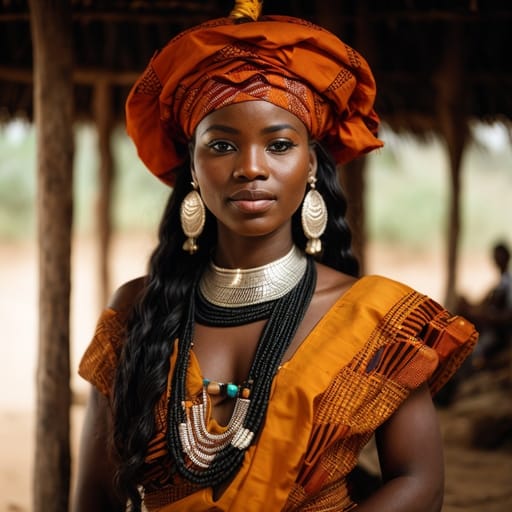
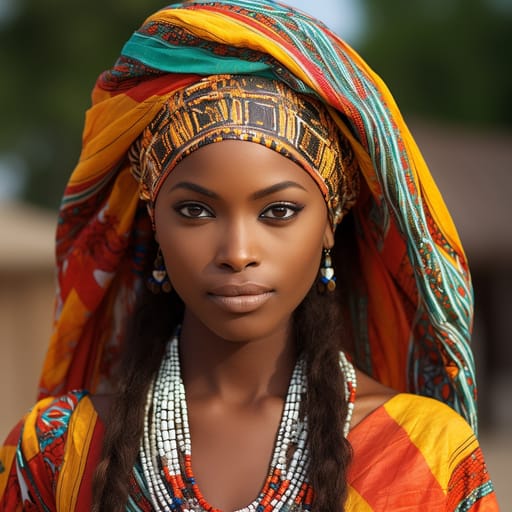
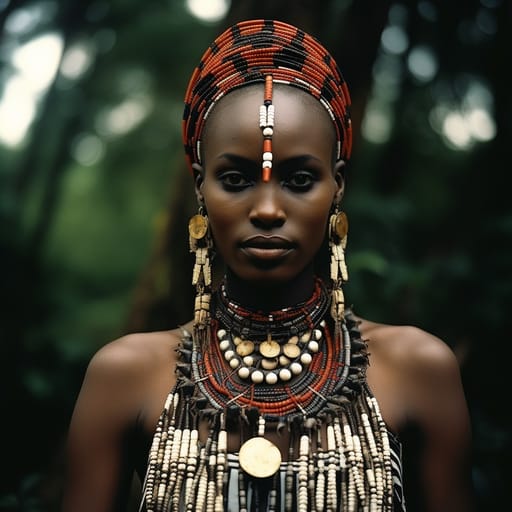
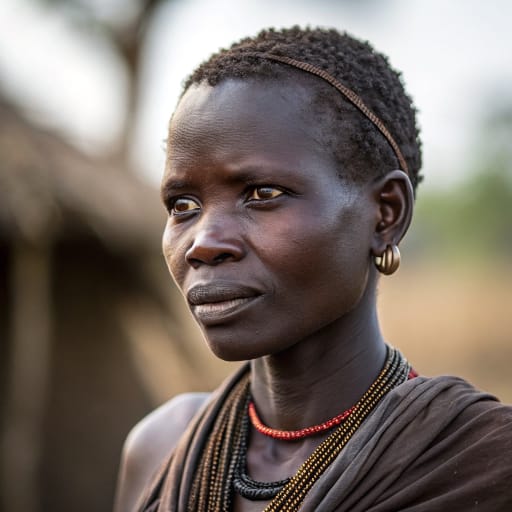
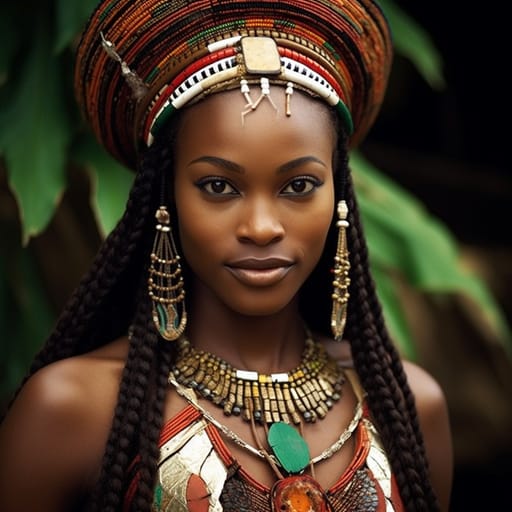
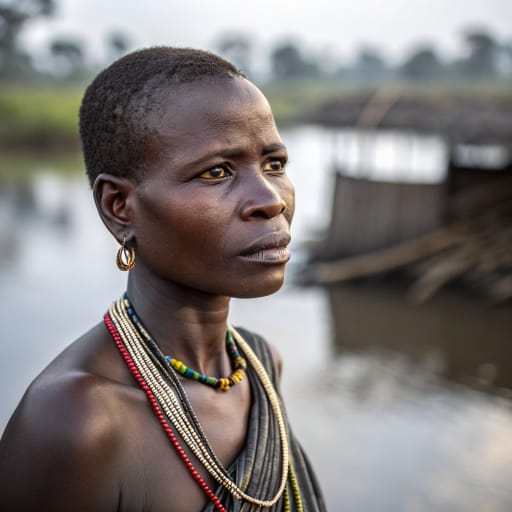
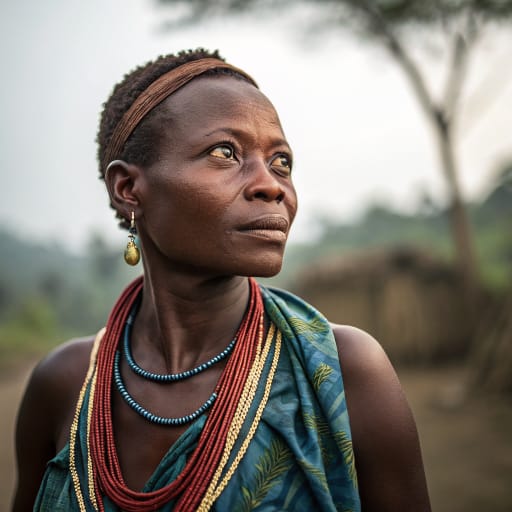
Typical Yombe Phenotypes
Reference for AI generation: hair, eyes, skin, facial structure, build
Yombe Body & Anatomy Reference
Per-feature anatomical profile for AI nude generation: Bantu / Central African Niger-Congo phenotype
Yombe Boobs & Breasts
Yombe boobs follow the Bantu / Central African Niger-Congo profile: medium-to-large cup, full, projecting. Areolar diameter is usually 32-48mm, and the coloring is deep-brown areolar pigmentation against the deep-brown skin tone. Breast shape tracks body composition (mesomorph with strong gluteal-femoral fat deposition, mean adult female BMI 23-26), so Yombe breasts tend to be fuller projection than East African; comparable to West African norm. Expect a forward-set shape, not the smaller East African conical profile.
Yombe Ass & Hips
Yombe ass and hip morphology presents as full, projected, wide-set glutes, distinctly different from the slim narrow-hip Cushitic East African profile. The Yombe pelvic profile shows broad iliac crests, gynoid pelvic pattern, anchored in the Bantu / Central African Niger-Congo skeletal pattern. Yombe butt shots in adult AI imagery should render the full, projected, wide-set glutes silhouette with the overall build (mesomorph with strong gluteal-femoral fat deposition) and the fat distribution typical of the Bantu / Central African Niger-Congo phenotype.
Yombe Vagina & Pussy
Yombe pussy anatomy typically shows deep-brown labial pigmentation, fuller labia minora. Pubic hair is usually tightly-coiled coarse texture, dense distribution. In AI-generated Yombe nudes, labial color should blend into the deep-brown skin with a gradual transition, and the hair should keep its tightly-coiled coarse texture.
Yombe Dicks & Penis
Penis reference for Yombe men: regional mean ~14cm erect, above-average girth. Coloring: deep-brown shaft pigmentation. An accurate Yombe cock in AI imagery matches the surrounding deep-brown skin rather than a generic porn default. Circumcision depends on religion and custom, not ancestry.
Yombe Body, Curves & Build
The Yombe figure is generally mesomorph with strong gluteal-femoral fat deposition, with mean adult female BMI 23-26, characteristic of Bantu / Central African Niger-Congo ancestry. AI image tools tend to flatten regional body types into a few stock shapes; here the Yombe build is kept as its own reference.
Yombe Skin Tone & Hair Texture
Skin: deep-brown (Fitzpatrick VI). Hair: tight 4A-4C coil. Both are typical of Bantu / Central African Niger-Congo ancestry. The most common mistake in AI nudes of Yombe women is a body rendered lighter than the face.
Explore phenotype categories
Structured taxonomy with peer-reviewed scales · 22 anatomical categories
Erotic Poses & Sex Positions
From the pose catalog: 219 named positions with reference skeletons
Frequently asked questions about Yombe people
Where is the Yombe homeland?
The Yombe homeland is The Mayombe forest hills inland from the Atlantic: Kongo Central in the Democratic Republic of the Congo, southwestern Republic of the Congo, and Cabinda province, Angola. in Central Africa.
What language do Yombe people speak?
Yombe people primarily speak Kiyombe (Bantu, Niger-Congo, within the Kikongo cluster); Kituba as regional lingua franca, with French or Portuguese by country..
What religion do Yombe people practice?
The predominant religion among Yombe people is Predominantly Roman Catholic, with Kimbanguist and independent prophetic churches; Kongo ancestral practice persists alongside..






Make your own Yombe images
Five a day, free, no credits to buy. The studio starts from this group's phenotype data, so you can set body type, pose and style and keep the traits accurate.
Start with Yombe