No portrait yet
Siletz Erotic
Siletz River valley on the central Oregon Coast, United States; today the Siletz Reservation in Lincoln County, Oregon, and communities across western Oregon
Siletz dialect of Tillamook (Salishan), no longer spoken; Siletz Dee-ni (Athabaskan) and Chinuk Wawa (Chinook Jargon, pidgin) on the reservation; English today
Mainly Christianity, alongside revived Dee-ni ceremonies such as the Nee-Dash (Feather Dance)
Southernmost of the Tillamook-speaking bands, with the Nestucca and Nehalem; the name now also covers the Confederated Tribes of Siletz Indians, some 27 bands including Tututni, Chetco, Coquille, Takelma, Shasta and Alsea
About Siletz People
Siletz started as the name of one river people and ended up as the name of a confederation. The original Siletz lived along the Siletz River on the central Oregon Coast. They were the southernmost of the Tillamook-speaking bands, which put them at the far southern edge of the Salish language family on the Pacific shore. Related bands held the Nestucca and Nehalem country to the north. To the south, around Yaquina Bay and the Alsea River, people spoke languages unrelated to theirs. The whole Tillamook branch was already an island, cut off from other Salishan languages by Chinookan speakers along the lower Columbia, and the Siletz spoke their own dialect within it. Life ran on salmon, shellfish, berries and game, with cedar plank houses near the water and canoes for travel.
The break came in 1855, when an executive order created the Coast Reservation, a long strip of shoreline that took in the Siletz valley. After the Rogue River Wars of 1855 and 1856, the government moved peoples from across western Oregon and northern California onto it: Tututni, Chetco, Coquille, Takelma, Shasta and more. Some were marched up the coast and some were carried north by steamer. Speakers of many unrelated languages were packed into one valley, and Chinuk Wawa, the old regional trade jargon, became their common tongue. The reservation was then whittled away, first to open Yaquina Bay to settlers and later through allotment. In 1954 Congress terminated federal recognition of the tribes of western Oregon, and the Siletz lost federal services along with most of what was left of their land. In 1977 they became the first Oregon tribe restored to federal status and the second in the nation, after the Menominee. A small reservation came back in 1980.
Today, Siletz usually means the Confederated Tribes of Siletz Indians, based in the small town of Siletz, with members living all over western Oregon. The old Tillamook dialect is no longer spoken. The language the tribe teaches is Siletz Dee-ni, which grew out of the Athabaskan speech of the southern bands and outlasted every other language on the reservation. A talking dictionary built with elders put thousands of its words and recordings online. Ceremony has come back too. The Nee-Dash, or Feather Dance, is danced again in the tribe's dance house, and the Nesika Illahee Pow-wow each August marks the restoration. Twined basketry is still made and taught.
Related ethnic groups
Groups that share Siletz's homeland, region, language, or religious tradition. These are likely candidates for comparative phenotype reference.

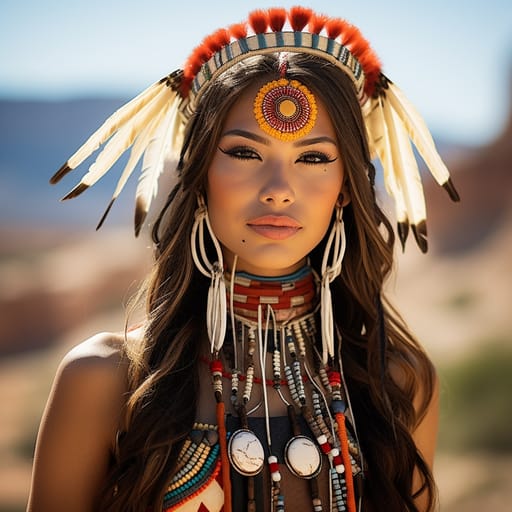
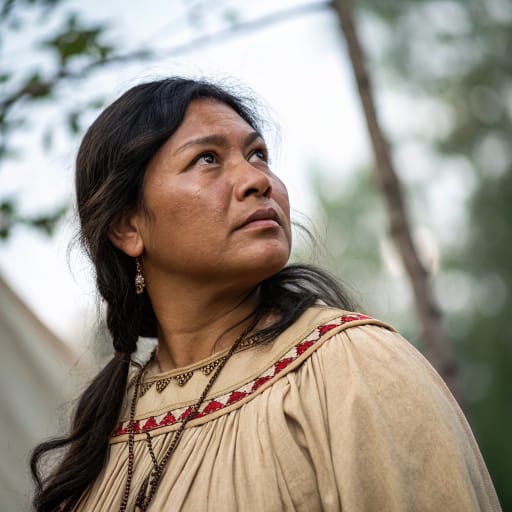
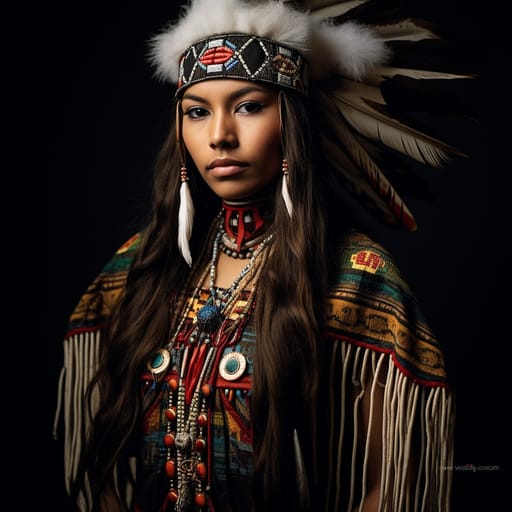
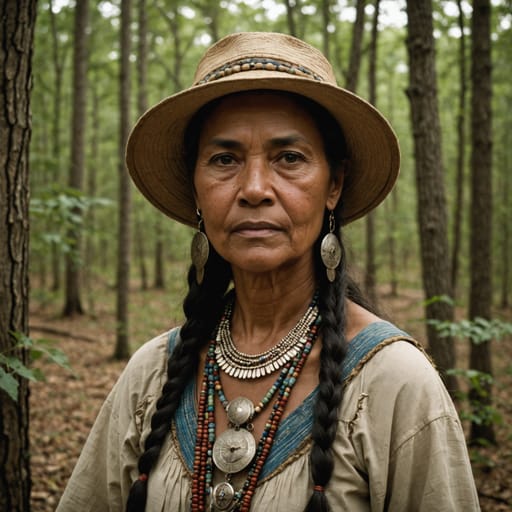
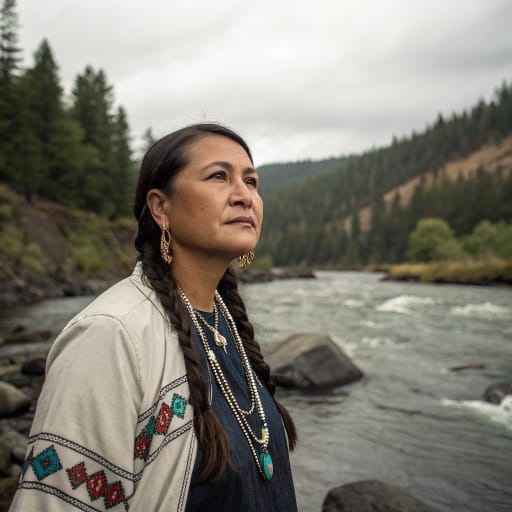

Typical Siletz Phenotypes
Reference for AI generation: hair, eyes, skin, facial structure, build
Siletz Body & Anatomy Reference
Indigenous Northern American / Algonquian-Iroquoian phenotype: anatomy reference for AI nude generation
Siletz Boobs & Breasts
Bust reference for Siletz women: medium cup, moderate projection, which is typical of Indigenous Northern American / Algonquian-Iroquoian ancestry. Areolas measure about 30-44mm across, with medium-brown pigmentation. Body type (mesomorph, broader frame in northern Indigenous populations) shapes the bust as well, so Siletz tits are usually full and moderate projection. In AI imagery, keep the forward-set shape rather than drifting toward the smaller East Asian bust.
Siletz Ass & Hips
The Siletz ass is typically medium, moderate-to-full projection, which sets it apart from the slim East Asian narrow-hip profile. Underneath, the pelvis shows medium iliac crests, part of the Indigenous Northern American / Algonquian-Iroquoian skeletal pattern. For Siletz butt pics and AI renders, match that silhouette and the overall build (mesomorph, broader frame in northern Indigenous populations).
Siletz Vagina & Pussy
Siletz pussy and vulvar anatomy presents medium-brown labial pigmentation, consistent with the Indigenous Northern American / Algonquian-Iroquoian phenotype's pigmentation pattern. Siletz pubic hair is typically straight medium-coarse texture, in the inverted-triangle pattern. For anatomically accurate Siletz pussy renders the labial coloration should match the surrounding copper to medium-brown skin tone with a continuous gradient, and the hair should keep its straight medium-coarse texture.
Siletz Dicks & Penis
Siletz dicks follow the Indigenous Northern American / Algonquian-Iroquoian reference data: regional mean ~13cm erect; moderate girth; medium-brown shaft pigmentation. Shaft color should track the copper to medium-brown skin tone with a smooth change toward the glans, and Siletz pubic hair keeps its straight medium-coarse texture.
Siletz Body, Curves & Build
Siletz body type and overall build presents as mesomorph, broader frame in northern Indigenous populations, with mean adult female BMI 25-28: the characteristic Indigenous Northern American / Algonquian-Iroquoian habitus. Siletz curves and proportions should keep the regional skeletal frame (height, shoulder-to-hip ratio, limb proportions) rather than a generic mesomorph default.
Siletz Skin Tone & Hair Texture
Siletz skin sits in the copper to medium-brown (Fitzpatrick III-V) band. Hair is typically straight 1A, dark-brown to black, often thick and dense, in keeping with the Indigenous Northern American / Algonquian-Iroquoian phenotype. In nude renders the skin should stay one even tone from face to body, and body, pubic and head hair should match.
Explore phenotype categories
Structured taxonomy with peer-reviewed scales · 22 anatomical categories
Erotic Poses & Sex Positions
From the pose catalog: 219 named positions with reference skeletons
Frequently asked questions about Siletz people
Where is the Siletz homeland?
The Siletz homeland is Siletz River valley on the central Oregon Coast, United States; today the Siletz Reservation in Lincoln County, Oregon, and communities across western Oregon in North America.
What language do Siletz people speak?
Siletz people primarily speak Siletz dialect of Tillamook (Salishan), no longer spoken; Siletz Dee-ni (Athabaskan) and Chinuk Wawa (Chinook Jargon, pidgin) on the reservation; English today.
What religion do Siletz people practice?
The predominant religion among Siletz people is Mainly Christianity, alongside revived Dee-ni ceremonies such as the Nee-Dash (Feather Dance).






Make your own Siletz images
Five a day, free, no credits to buy. The studio starts from this group's phenotype data, so you can set body type, pose and style and keep the traits accurate.
Start with Siletz