No portrait yet
Shatuo Erotic
First the desert east of Lake Barkol near Beiting in the eastern Tian Shan (Xinjiang, China); after 808, the Lingzhou area and northern Shanxi, China
A largely unrecorded Turkic language (Turkic); the ruling families later used Chinese (Sino-Tibetan)
Steppe traditions, poorly documented; the ruling families in China adopted Chinese state ritual and supported Buddhism
Branch of the Chuyue tribe of the Western Turkic Khaganate, led by the Zhuye clan; in northern Shanxi they took in Sogdian-descended and other frontier groups
About Shatuo People
The Shatuo were a Turkic people who lived from the 7th to the 10th century. They lived first on the desert edge of the eastern Tian Shan, in what is now Xinjiang, and later in northern China. There they founded three dynasties and then blended into the Han Chinese population they had ruled. Shatuo is a Chinese label meaning "sandy slopes," taken from a great sandy waste east of Lake Barkol near their early home. They came out of the Chuyue tribe of the Western Turkic Khaganate and were led by the Zhuye clan. Their own Turkic speech left almost no written trace.
Their history turns on a retreat. Tibet took the Tang outpost of Beiting around 790 and the Shatuo came under Tibetan rule. The Tibetans later suspected them of siding with the Uyghurs, so in 808 they broke east toward China and fought their pursuers the whole way. Their chief died on the march, and only a fraction of those who set out reached the frontier. The Tang settled them near Lingzhou on the Yellow River and then in northern Shanxi. There they became what a weakening dynasty needed most: hardened cavalry. Zhuye Chixin helped crush a mutiny in 869 and was given the imperial surname Li. His son Li Keyong, the "One-eyed Dragon," took the capital Chang'an back from the rebel Huang Chao in 883. His horsemen dressed in black and were called the Crow Army, and they made him master of Shanxi.
After the Tang fell, Li Keyong's son Li Cunxu proclaimed the Later Tang in 923. He destroyed the rival Later Liang that same year and presented himself as restoring the old dynasty, not as a foreign conqueror. He loved the theater and acted on stage himself, and he was killed in a mutiny three years later. Shatuo commanders went on to found the Later Jin in 936 and the Later Han in 947. What was left of the Later Han held out in Shanxi as the Northern Han until the Song took it in 979. Power passed through adopted sons and sworn followers, a steppe habit that tied men of Turkic, Sogdian and Chinese origin to one ruling family. To win Khitan support, Shi Jingtang of the Later Jin gave up the Sixteen Prefectures around present-day Beijing. China did not fully win them back until the Ming.
After the Song reunified China, the Shatuo disappear from the record as a separate people. Their families took Chinese names, offices and marriages. Their legacy is the Five Dynasties period itself, since three of its five courts are Shatuo in origin. Some historians trace the Ongud, a Nestorian Christian people of the Mongol era, partly to Shatuo roots, but that link is still debated.
Related ethnic groups
Groups that share Shatuo's homeland, region, language, or religious tradition. These are likely candidates for comparative phenotype reference.
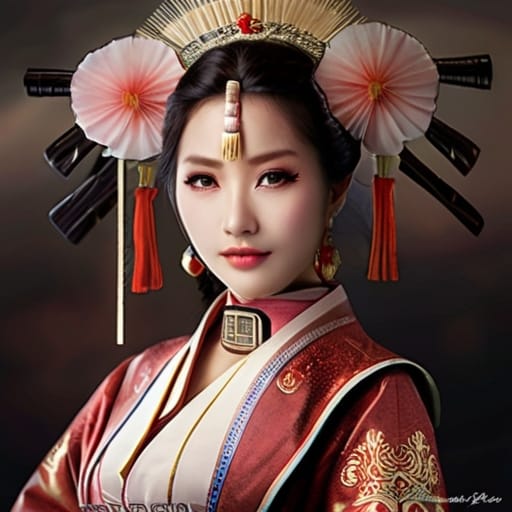
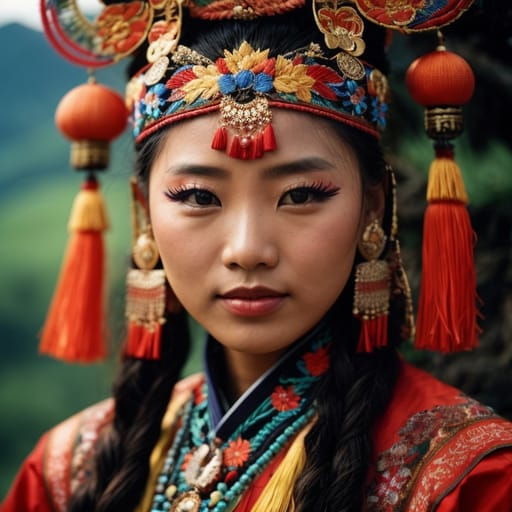
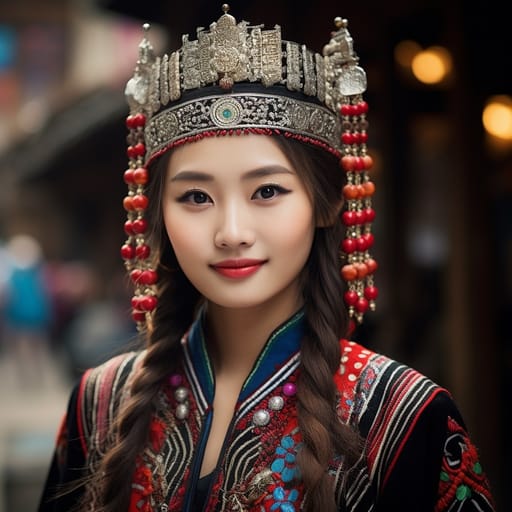
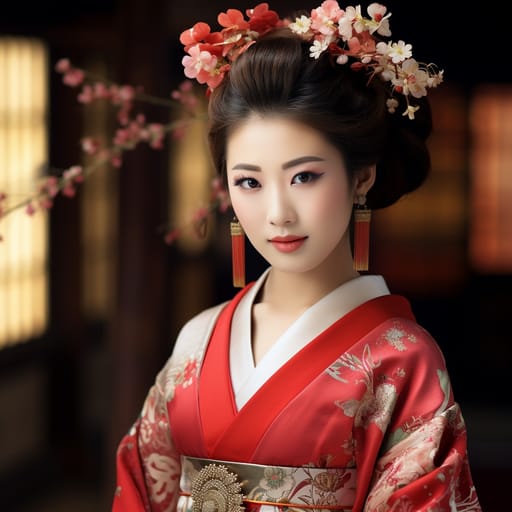
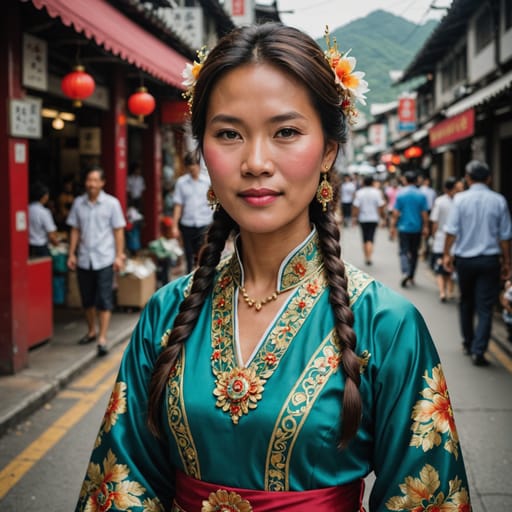
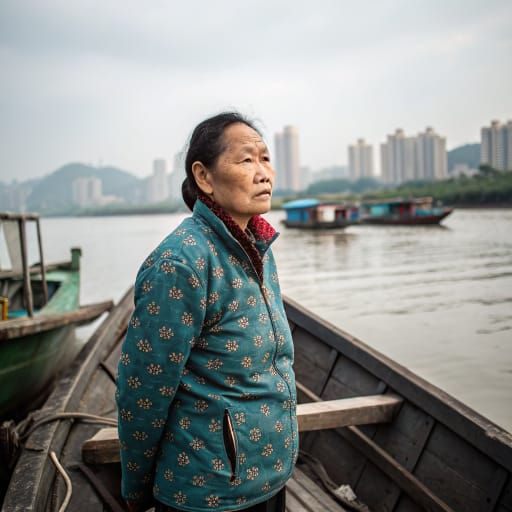
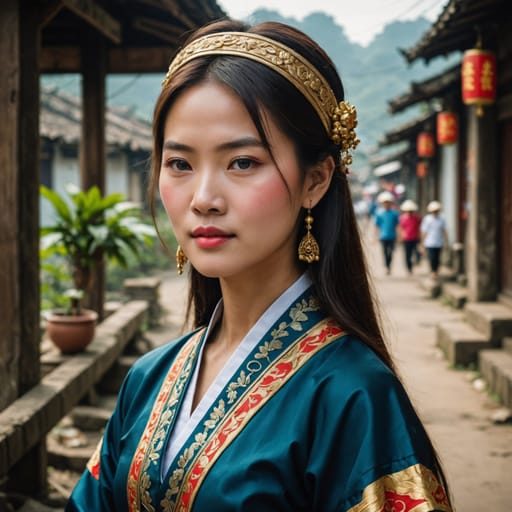
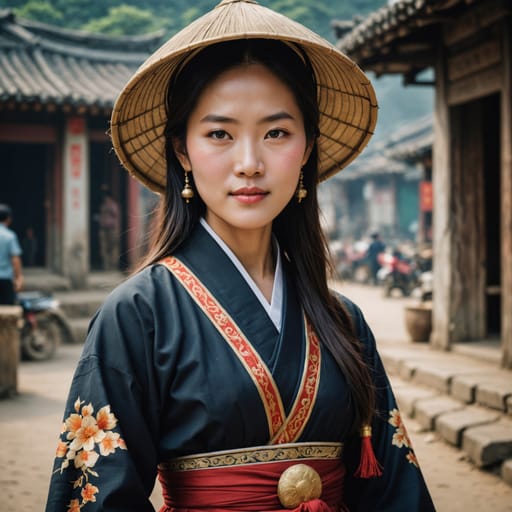
Typical Shatuo Phenotypes
Reference for AI generation: hair, eyes, skin, facial structure, build
Shatuo Body & Anatomy Reference
Per-feature anatomical profile for AI nude generation: East Asian Sinitic / Mongoloid phenotype
Shatuo Boobs & Breasts
Shatuo tits and boobs run small-to-medium cup, modest projection, the classic East Asian Sinitic / Mongoloid bust profile. Shatuo nipples and areolas show light-pink to medium-brown areolar pigmentation against the light-to-medium skin tone, with areolar diameter typically in the 26-36mm range and forward-set positioning rather than the fuller South Asian or Levantine bust profile. Shatuo breasts trend firm and modestly projecting; smaller cup size than the South Asian or Western Asian average, a function of the ectomorph-to-mesomorph, lean frame body habitus and the mean adult female BMI 20-23. For anatomically accurate AI-generated Shatuo nudes the render preserves the small-to-medium cup, modest projection shape, 26-36mm areolas with light-pink to medium-brown pigmentation, and the torso proportions of the East Asian Sinitic / Mongoloid phenotype.
Shatuo Ass & Hips
Shatuo hips and butt usually read as small-to-medium, modest projection, narrower hip profile. The skeletal base is narrower iliac crests, less gluteal-femoral fat deposition, the East Asian Sinitic / Mongoloid pattern. Set against the fuller projected glutes of the West African or Polynesian phenotype, the difference is easy to see, and the hip-to-waist ratio is often what identifies Shatuo women in photos.
Shatuo Vagina & Pussy
Expect light-pink to medium-brown labial pigmentation, smaller labia minora on Shatuo women, in keeping with East Asian Sinitic / Mongoloid ancestry. The pubic hair is straight fine texture, sparser distribution than the South Asian norm. Coloring should run evenly from the light to medium skin of the thighs to the labia, and Shatuo nude imagery should keep the hair's straight fine texture.
Shatuo Dicks & Penis
Shatuo dick and penile anatomy in adult AI generation should anchor on the regional reference data: regional mean ~11-12cm erect, moderate girth, and light-brown shaft pigmentation. The Shatuo cock profile reflects the East Asian Sinitic / Mongoloid population's anthropometric measurements. The shaft pigmentation should track the surrounding light to medium skin tone, and the pubic hair should keep its straight fine texture in the typical inverted-V escutcheon.
Shatuo Body, Curves & Build
Shatuo body type: ectomorph-to-mesomorph, lean frame, with mean adult female BMI 20-23. This is the typical East Asian Sinitic / Mongoloid build. Height range, shoulder-to-hip ratio and fat distribution all follow from it, which is what an accurate Shatuo nude body should show.
Shatuo Skin Tone & Hair Texture
Shatuo skin tone falls in the light to medium (Fitzpatrick II-IV) band, the surface signal most often miscalibrated by generic AI nude generators. Shatuo hair texture is typically straight 1A, fine-to-medium, predominantly black, characteristic of the East Asian Sinitic / Mongoloid phenotype. In Shatuo nude renders the skin should hold that band consistently across the body.
Explore phenotype categories
Structured taxonomy with peer-reviewed scales · 22 anatomical categories
Erotic Poses & Sex Positions
From the pose catalog: 219 named positions with reference skeletons
Frequently asked questions about Shatuo people
Where is the Shatuo homeland?
The Shatuo homeland is First the desert east of Lake Barkol near Beiting in the eastern Tian Shan (Xinjiang, China); after 808, the Lingzhou area and northern Shanxi, China in East Asia.
What language do Shatuo people speak?
Shatuo people primarily speak A largely unrecorded Turkic language (Turkic); the ruling families later used Chinese (Sino-Tibetan).
What religion do Shatuo people practice?
The predominant religion among Shatuo people is Steppe traditions, poorly documented; the ruling families in China adopted Chinese state ritual and supported Buddhism.






Make your own Shatuo images
Five a day, free, no credits to buy. The studio starts from this group's phenotype data, so you can set body type, pose and style and keep the traits accurate.
Start with Shatuo