No portrait yet
Samogitians Erotic
Žemaitija, the northwestern region of Lithuania, from the Baltic coast around Klaipėda inland to Telšiai, Šiauliai and the Dubysa valley.
Samogitian and standard Lithuanian (Baltic, Indo-European), with Samogitian variously classed as a distinct language or a dialect group of Lithuanian
Roman Catholic, with an unusually late conversion in 1413 and strong local pilgrimage traditions
One of the main ethnographic groups of Lithuanians, alongside the Aukštaičiai, Dzūkai and Suvalkiečiai; internally split into northern, western and southern Samogitian speech groups
About Samogitians People
Ask a Samogitian where they are from and you may get a correction before you get an answer: not Lithuania exactly, but Žemaitija, the northwestern quarter of the country, and the word for themselves is Žemaičiai, the low people. The name is relative rather than descriptive. It sets them against the Aukštaičiai, the high people upstream, and it has been doing that work for centuries. The land runs from the Baltic near Klaipėda inland across a rolling upland of clay, forest and small lakes, cut by the Venta, the Minija and the Dubysa. Speech is the sharpest marker. Samogitian shortens, swallows and re-pitches Lithuanian to the point that someone from Vilnius can lose the thread inside a sentence, and whether it counts as a dialect or a language of its own is an argument with no settled ending. Its speakers sort themselves by how they say the word for bread: dūnininkai, donininkai, dounininkai, three regional camps distinguished by a single vowel.
Samogitia was the last part of Europe to accept Christianity, and not for lack of visitors. The Teutonic Order wanted the region because it was the land bridge between Prussia and Livonia, and spent a hundred years failing to hold it against people who rose against them, burned the castles and went back to their own gods. Baptism came in 1413, after Grunwald, and the border was fixed by the Treaty of Melno in 1422. Arriving late did not make the Catholicism thin. Žemaičių Kalvarija, a pilgrimage town built around a circuit of chapels walked each July, has its own body of hymns sung in Samogitian, known by heart by people who would not otherwise sing in it. When the Russian empire banned Lithuanian printing in Latin script, Motiejus Valančius, bishop of the diocese and a Samogitian himself, organized the smuggling of books in from East Prussia, and the region became a spine of that forty-year traffic. Other things belong here and nowhere else: the žemaitukas, a small tough native horse bred since the Middle Ages, and klumpės, the wooden shoes still hauled out for festivals. Samogitians have a reputation, cheerfully self-administered, for stubbornness, flat delivery and a reluctance to say more than the situation requires. It is a stereotype, but the people who repeat it most often are Samogitians.
Related ethnic groups
Groups that share Samogitians's homeland, region, language, or religious tradition. These are likely candidates for comparative phenotype reference.
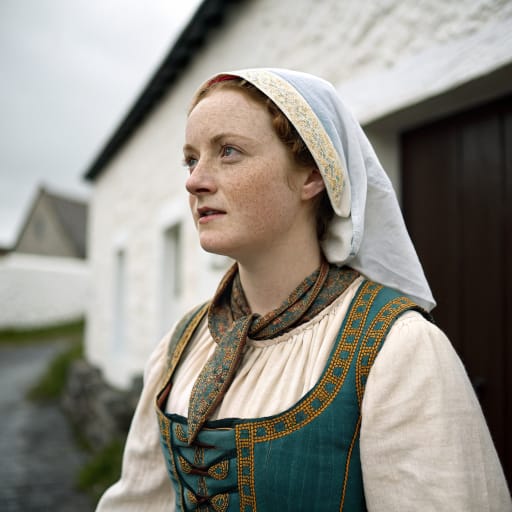
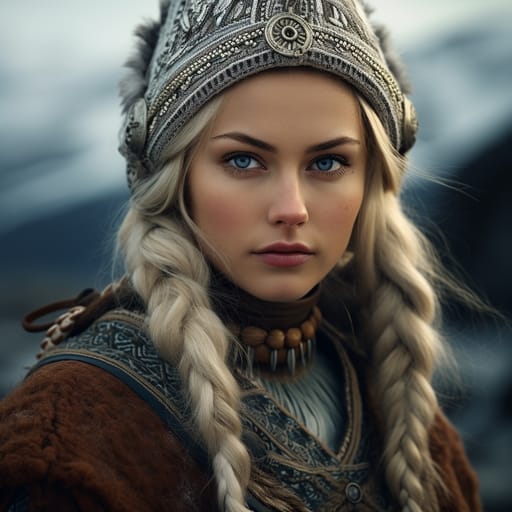
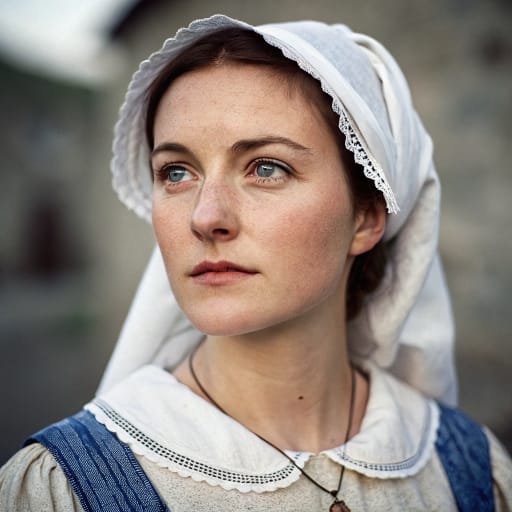
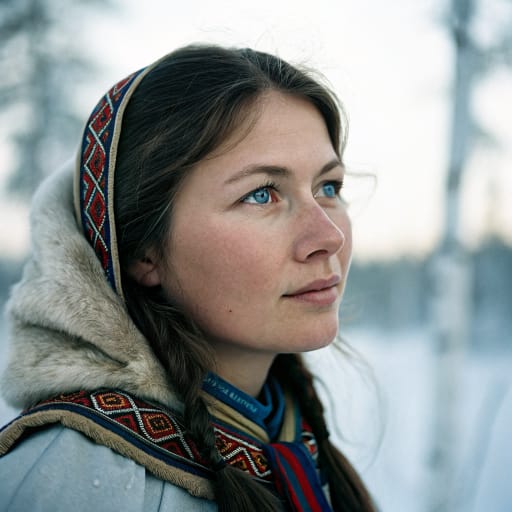
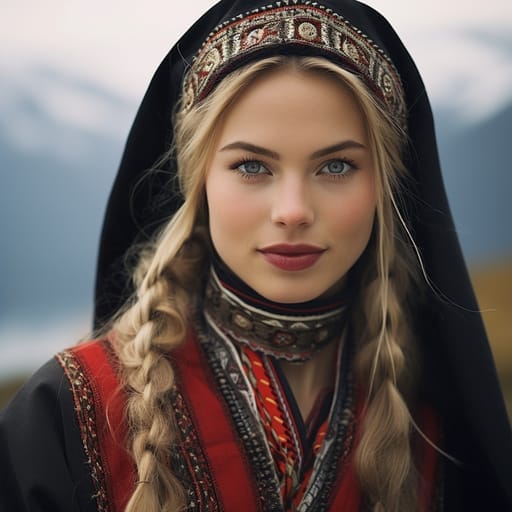
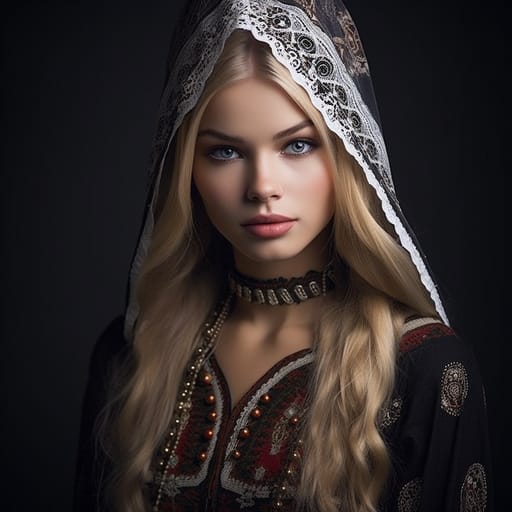
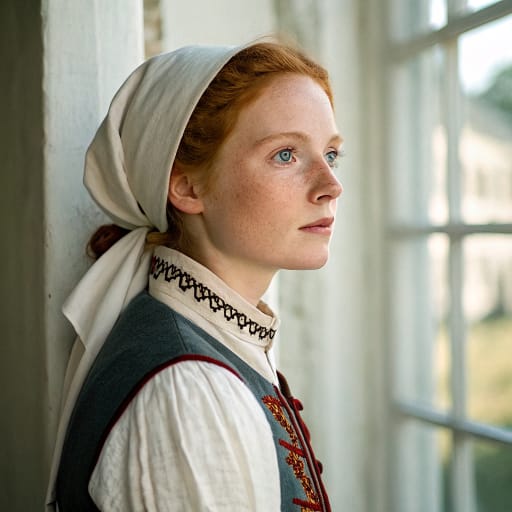
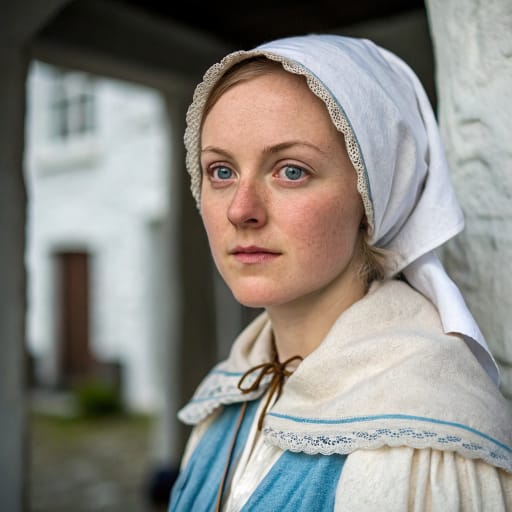
Typical Samogitians Phenotypes
Reference for AI generation: hair, eyes, skin, facial structure, build
Samogitians Body & Anatomy Reference
Northern European / Germanic-Scandinavian phenotype: anatomy reference for AI nude generation
Samogitians Boobs & Breasts
The typical Samogitians bust is medium-to-large cup, full, high projection, in line with the wider Northern European / Germanic-Scandinavian pattern. Areolas usually fall in the 32-48mm range, with light-pink to medium-pink areolar pigmentation against the fair skin tone. Compared with the smaller East Asian bust, Samogitians breasts sit forward and are generally full and projecting, often the largest cup-size band in regional comparisons. A faithful AI render of Samogitians tits keeps that shape and areola size.
Samogitians Ass & Hips
Butt shape among Samogitians women: medium-to-full, moderate-to-high projection, over medium-to-wide iliac crests. This follows Northern European / Germanic-Scandinavian ancestry and looks quite unlike the slim East Asian narrow-hip profile. An accurate Samogitians ass in adult AI imagery keeps both the silhouette and the overall build (mesomorph with taller stature; ectomorph-to-mesomorph split) instead of a generic average.
Samogitians Vagina & Pussy
Vulvar anatomy among Samogitians women: light-pink to medium-pink labial pigmentation, varied labia minora projection. Pubic hair tends to be fine-to-medium wavy texture, often lighter-pigmented (blond to dark-brown), in the usual inverted-triangle pattern. Both follow Northern European / Germanic-Scandinavian pigmentation, which is why Samogitians pussy renders should not fall back on a pale, sparse Western template.
Samogitians Dicks & Penis
The Samogitians cock profile, from Northern European / Germanic-Scandinavian anthropometric data: regional mean ~13-14cm erect; moderate-to-above-average girth; light-pink to light-brown shaft pigmentation. Pubic hair has a fine-to-medium wavy texture and forms the usual inverted-V pattern. Whether Samogitians men are circumcised follows religious and cultural practice rather than phenotype.
Samogitians Body, Curves & Build
Build and curves among Samogitians women follow the Northern European / Germanic-Scandinavian pattern: mesomorph with taller stature; ectomorph-to-mesomorph split, mean adult female BMI 24-27. Proportions matter as much as skin tone, so Samogitians figures should keep their regional height and limb ratios.
Samogitians Skin Tone & Hair Texture
The Samogitians skin range is fair (Fitzpatrick I-III), and hair tends to be straight-to-wavy 1A-2B, blond to medium-brown common. That combination marks the Northern European / Germanic-Scandinavian phenotype, and skin tone is the trait AI generators most often get wrong for Samogitians women.
Explore phenotype categories
Structured taxonomy with peer-reviewed scales · 22 anatomical categories
Erotic Poses & Sex Positions
From the pose catalog: 219 named positions with reference skeletons
Frequently asked questions about Samogitians people
Where is the Samogitians homeland?
The Samogitians homeland is Žemaitija, the northwestern region of Lithuania, from the Baltic coast around Klaipėda inland to Telšiai, Šiauliai and the Dubysa valley. in Northern Europe.
What language do Samogitians people speak?
Samogitians people primarily speak Samogitian and standard Lithuanian (Baltic, Indo-European), with Samogitian variously classed as a distinct language or a dialect group of Lithuanian.
What religion do Samogitians people practice?
The predominant religion among Samogitians people is Roman Catholic, with an unusually late conversion in 1413 and strong local pilgrimage traditions.






Make your own Samogitians images
Five a day, free, no credits to buy. The studio starts from this group's phenotype data, so you can set body type, pose and style and keep the traits accurate.
Start with Samogitians