Help us get this right
Does this portrait look right for Ancalites?
Nobody has judged this one yet. You would be the first.
Ancalites Erotic
Southern Britain in the 1st century BC, probably in or near the Thames valley, England, United Kingdom; exact territory unknown
Probably Common Brittonic (Celtic, Indo-European)
Presumably Iron Age British Celtic polytheism, with druids as the learned religious class
Celtic Britons; one of five tribes, with the Cenimagni, Segontiaci, Bibroci and Cassi, that surrendered to Caesar in 54 BC; probably later absorbed by larger neighbors
About Ancalites People
The Ancalites were a Celtic British people of the late Iron Age who lived somewhere in southern England in the first century BC. They vanish from the record after a single mention, most likely absorbed into the larger kingdoms that took shape in the region before the Roman conquest. Everything known about them by name comes from one sentence in Julius Caesar's account of his second expedition to Britain in 54 BC. That is the entire paper trail, and it is worth being honest about how thin it is.
The moment that sentence records mattered. Caesar had crossed the Channel with a large army and was pushing north of the Thames against Cassivellaunus, the war leader the Britons had put in overall command against him. The Trinovantes, whose king Cassivellaunus had killed, were the first to come over to Rome. Soon after, five more peoples sent envoys and surrendered: the Cenimagni, the Segontiaci, the Ancalites, the Bibroci and the Cassi. Those envoys did more than submit. They told Caesar where Cassivellaunus kept his stronghold, a fortified place protected by woods and marshes where many people and cattle had gathered. Caesar stormed it, and Cassivellaunus asked for terms not long after. Whatever the Ancalites were weighing when they chose Rome over him, the choice helped decide the campaign.
Where exactly they lived is unknown. Their name never turns up on a coin, an inscription or the later Roman geographies of Britain, and most suggestions place them in or near the Thames valley. That silence suggests a small community or a branch of a bigger people. Their separate identity probably faded as powers such as the Catuvellauni and the Atrebates grew over the following generations.
They would have spoken an early form of Brittonic, the Celtic language that gave rise to Welsh, Cornish and Breton. Their religion belonged to the wider world of Iron Age Britain: local gods, sacred groves, offerings left in rivers and lakes, and druids as its learned class. Daily life would have looked like their neighbors': roundhouses, farms growing wheat and barley and raising cattle and sheep, and enclosed settlements or hillforts where people gathered and took shelter. None of that is specific to them, and nothing more specific survives. The Ancalites live on as a name on a list, a reminder that the Britain Caesar marched into was crowded with small peoples whose names mostly did not outlast the next century.
Related ethnic groups
Groups that share Ancalites's homeland, region, language, or religious tradition. These are likely candidates for comparative phenotype reference.
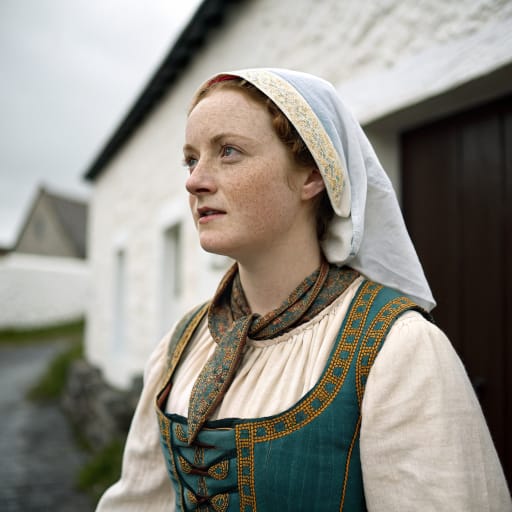
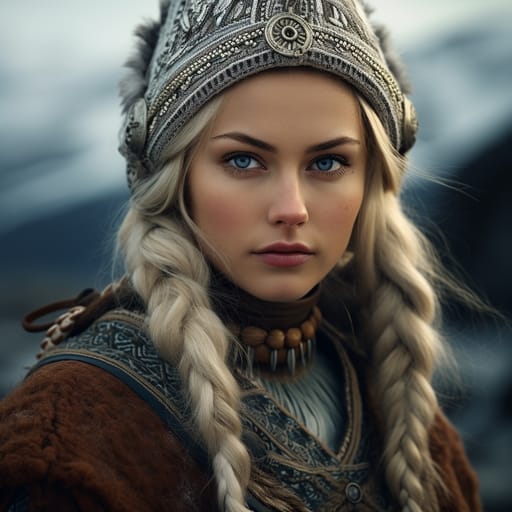
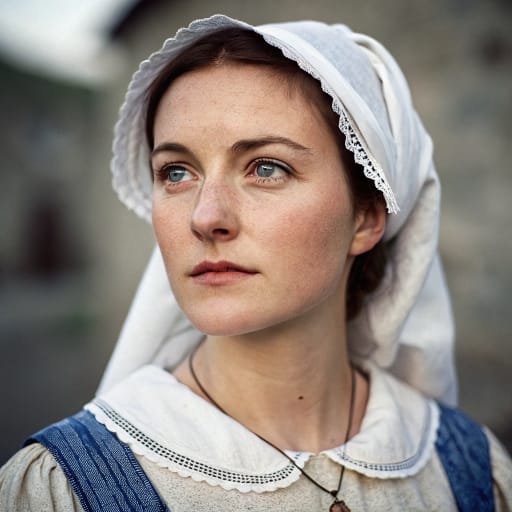
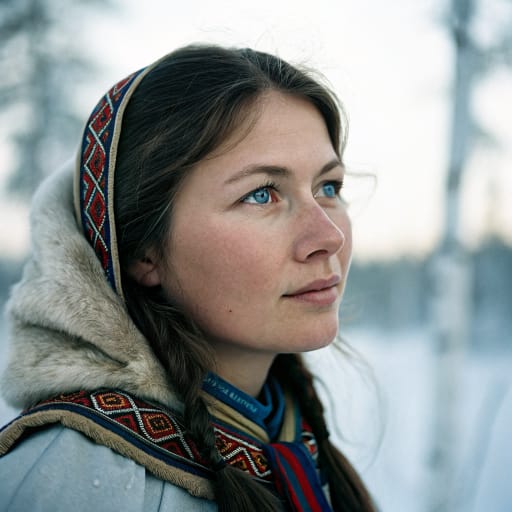
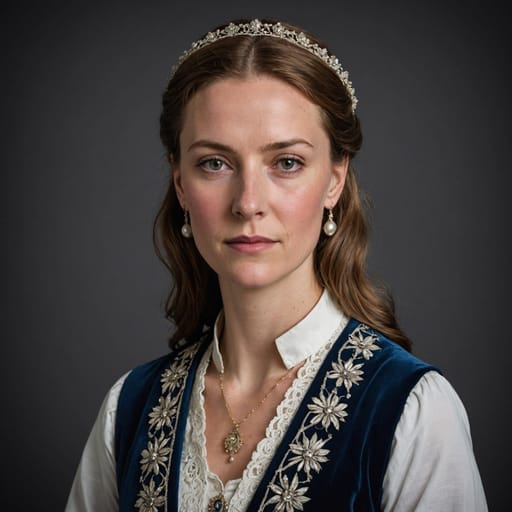
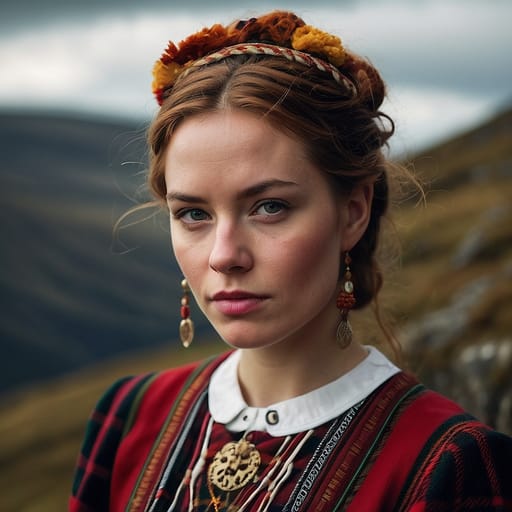
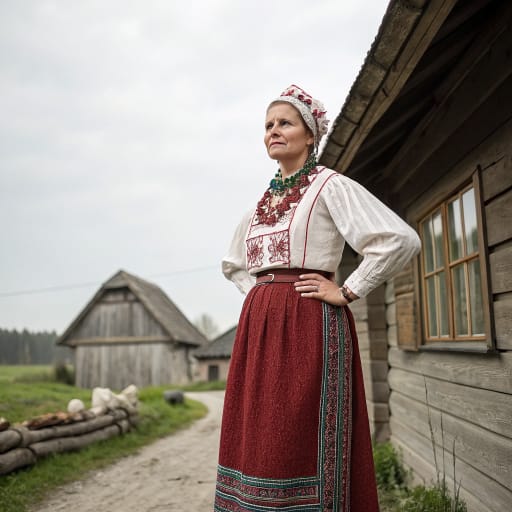
Typical Ancalites Phenotypes
Reference for AI generation: hair, eyes, skin, facial structure, build
Ancalites Body & Anatomy Reference
Anatomy by feature, Northern European / Germanic-Scandinavian phenotype
Ancalites Boobs & Breasts
Ancalites tits and boobs run medium-to-large cup, full, high projection, the classic Northern European / Germanic-Scandinavian bust profile. Ancalites nipples and areolas show light-pink to medium-pink areolar pigmentation against the fair skin tone, with areolar diameter typically in the 32-48mm range and forward-set positioning rather than the smaller East Asian bust. Ancalites breasts trend full and projecting, often the largest cup-size band in regional comparisons, a function of the mesomorph with taller stature; ectomorph-to-mesomorph split body habitus and the mean adult female BMI 24-27. For anatomically accurate AI-generated Ancalites nudes the render preserves the medium-to-large cup, full, high projection shape, 32-48mm areolas with light-pink to medium-pink pigmentation, and the torso proportions of the Northern European / Germanic-Scandinavian phenotype.
Ancalites Ass & Hips
Ancalites hips and butt usually read as medium-to-full, moderate-to-high projection. The skeletal base is medium-to-wide iliac crests, the Northern European / Germanic-Scandinavian pattern. Set against the slim East Asian narrow-hip profile, the difference is easy to see, and the hip-to-waist ratio is often what identifies Ancalites women in photos.
Ancalites Vagina & Pussy
Expect light-pink to medium-pink labial pigmentation, varied labia minora projection on Ancalites women, in keeping with Northern European / Germanic-Scandinavian ancestry. The pubic hair is fine-to-medium wavy texture, often lighter-pigmented (blond to dark-brown). Coloring should run evenly from the fair skin of the thighs to the labia, and Ancalites nude imagery should keep the hair's fine-to-medium wavy texture.
Ancalites Dicks & Penis
Ancalites dick and penile anatomy in adult AI generation should anchor on the regional reference data: regional mean ~13-14cm erect, moderate-to-above-average girth, and light-pink to light-brown shaft pigmentation. The Ancalites cock profile reflects the Northern European / Germanic-Scandinavian population's anthropometric measurements. The shaft pigmentation should track the surrounding fair skin tone, and the pubic hair should keep its fine-to-medium wavy texture in the typical inverted-V escutcheon.
Ancalites Body, Curves & Build
Ancalites body type: mesomorph with taller stature; ectomorph-to-mesomorph split, with mean adult female BMI 24-27. This is the typical Northern European / Germanic-Scandinavian build. Height range, shoulder-to-hip ratio and fat distribution all follow from it, which is what an accurate Ancalites nude body should show.
Ancalites Skin Tone & Hair Texture
Ancalites skin tone falls in the fair (Fitzpatrick I-III) band, the surface signal most often miscalibrated by generic AI nude generators. Ancalites hair texture is typically straight-to-wavy 1A-2B, blond to medium-brown common, characteristic of the Northern European / Germanic-Scandinavian phenotype. In Ancalites nude renders the skin should hold that band consistently across the body.
Explore phenotype categories
Structured taxonomy with peer-reviewed scales · 22 anatomical categories
Erotic Poses & Sex Positions
From the pose catalog: 219 named positions with reference skeletons
Frequently asked questions about Ancalites people
Where is the Ancalites homeland?
The Ancalites homeland is Southern Britain in the 1st century BC, probably in or near the Thames valley, England, United Kingdom; exact territory unknown in Northern Europe.
What language do Ancalites people speak?
Ancalites people primarily speak Probably Common Brittonic (Celtic, Indo-European).
What religion do Ancalites people practice?
The predominant religion among Ancalites people is Presumably Iron Age British Celtic polytheism, with druids as the learned religious class.






Make your own Ancalites images
Five a day, free, no credits to buy. The studio starts from this group's phenotype data, so you can set body type, pose and style and keep the traits accurate.
Start with Ancalites