No portrait yet
Anglo-Saxons Erotic
Lowland Britain, most of present-day England and southeastern Scotland (United Kingdom), 5th to 11th centuries
Old English (Indo-European, Germanic, West Germanic, Anglo-Frisian branch)
Germanic paganism, then Christianity under the Latin Church from the 7th century
Angles, Saxons and Jutes with Frisian and other North Sea Germanic elements; the kingdoms of Northumbria, Mercia, East Anglia, Kent, Essex, Sussex and Wessex; ancestral to the English
About Anglo-Saxons People
The Anglo-Saxons were the speakers of Old English who dominated lowland Britain from roughly 450 to 1066, and they did not vanish so much as get renamed: they are the direct ancestors of the English, and the country still carries their name, Engla land, the land of the Angles. They began as settlers and warbands from the North Sea coast of what is now northern Germany, Denmark and the Netherlands, arriving in a Britain that Rome had abandoned. Whether they came as invaders, hired muscle or farming families is still debated, and ancient DNA now shows a large migration that mixed with the Romano-British population rather than replacing it. What made them a people was not blood but a shared tongue, a warrior ethic built around the lord's hall and the exchange of gifts for loyalty, and later a shared church. By the 8th century they called themselves Englisc, though politically they were split among rival kingdoms: Northumbria, Mercia, East Anglia, Kent, Essex, Sussex and Wessex.
Their language was West Germanic, closest to Old Frisian, and it survives as the bedrock of modern English: house, bread, king, earth, and nearly every word a child learns first. They arrived worshipping Woden, Thunor, Tiw and Frige, gods who still name four days of the week, and the Sutton Hoo ship burial in Suffolk shows the scale of that pagan kingship, a whole vessel hauled inland and packed with gold and garnet. Conversion came in two waves, Roman missionaries landing in Kent in 597 and Irish monks working south from Iona, and the two traditions quarreled over the date of Easter until the Synod of Whitby settled it in 664. Once Christian, the Anglo-Saxons built monasteries such as Lindisfarne and Jarrow, home of Bede, and produced a body of vernacular writing with no parallel in Western Europe at the time: law codes in English from the early 600s, riddles, elegies, and Beowulf. Their embroidery was prized across the continent, and the Bayeux Tapestry was probably stitched in England.
Much of their machinery of government outlived them. Shires, hundreds, sheriffs, and the wergild system that put a fixed price on every injury and every rank were all theirs. Women could own land outright and leave it by will, and several of those wills survive. The Vikings nearly ended it all after 865, until Alfred of Wessex held the line at Edington in 878 and his grandson Æthelstan united the kingdoms in 927. Then in 1066 Harold Godwinson died at Hastings and a French-speaking aristocracy took the land, the titles and the upper register of the language. The people underneath kept speaking English, and within three centuries the conquerors were speaking it too.
Related ethnic groups
Groups that share Anglo-Saxons's homeland, region, language, or religious tradition. These are likely candidates for comparative phenotype reference.
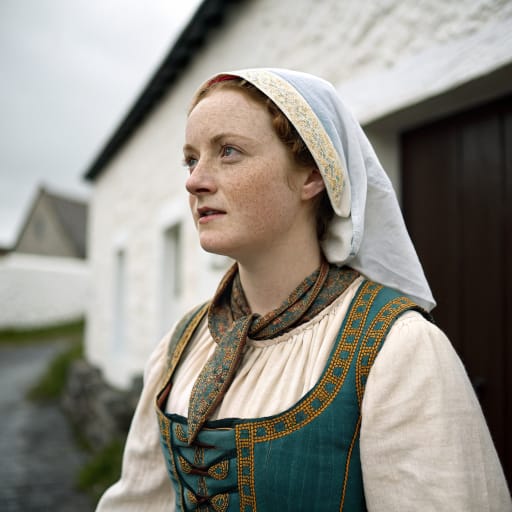
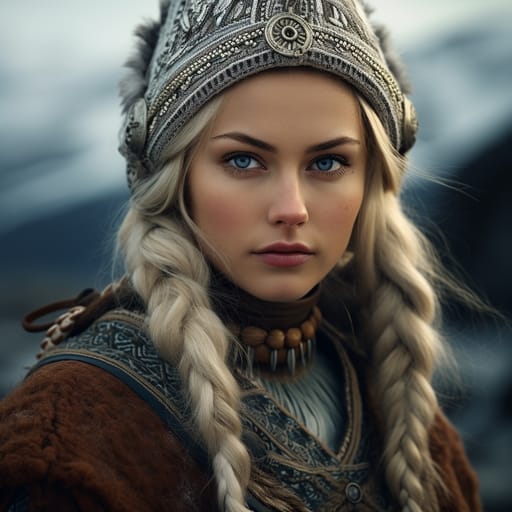
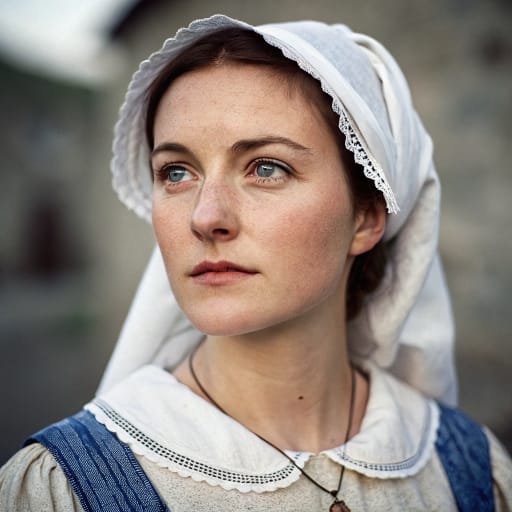
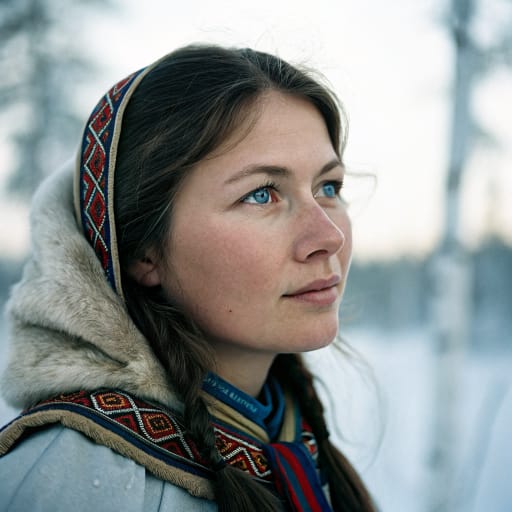
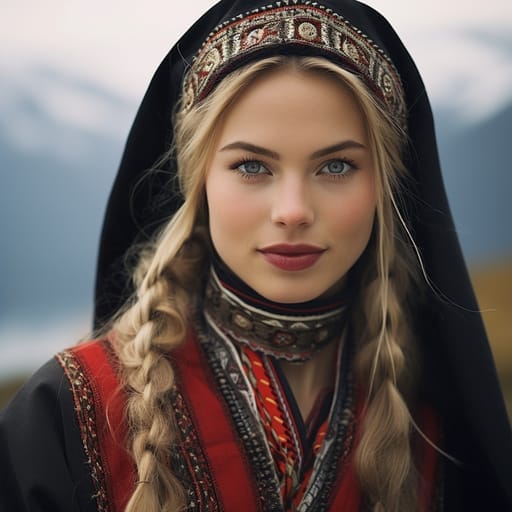
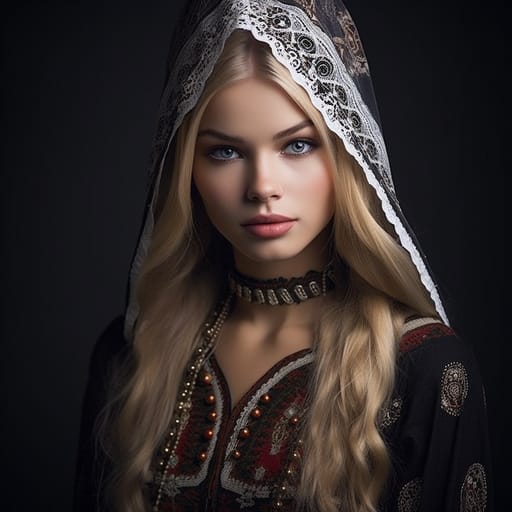
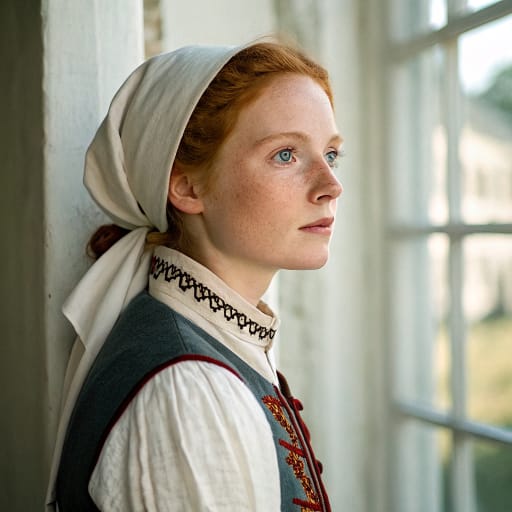
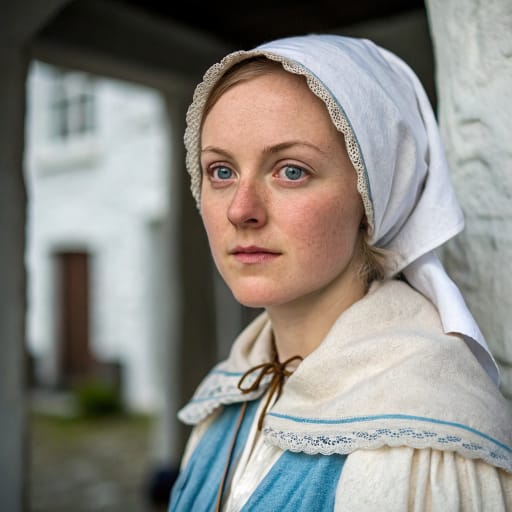
Typical Anglo-Saxons Phenotypes
Reference for AI generation: hair, eyes, skin, facial structure, build
Anglo-Saxons Body & Anatomy Reference
Northern European / Germanic-Scandinavian phenotype: anatomy reference for AI nude generation
Anglo-Saxons Boobs & Breasts
Anglo-Saxons tits and boobs run medium-to-large cup, full, high projection, the classic Northern European / Germanic-Scandinavian bust profile. Anglo-Saxons nipples and areolas show light-pink to medium-pink areolar pigmentation against the fair skin tone, with areolar diameter typically in the 32-48mm range and forward-set positioning rather than the smaller East Asian bust. Anglo-Saxons breasts trend full and projecting, often the largest cup-size band in regional comparisons, a function of the mesomorph with taller stature; ectomorph-to-mesomorph split body habitus and the mean adult female BMI 24-27. For anatomically accurate AI-generated Anglo-Saxons nudes the render preserves the medium-to-large cup, full, high projection shape, 32-48mm areolas with light-pink to medium-pink pigmentation, and the torso proportions of the Northern European / Germanic-Scandinavian phenotype.
Anglo-Saxons Ass & Hips
Anglo-Saxons hips and butt usually read as medium-to-full, moderate-to-high projection. The skeletal base is medium-to-wide iliac crests, the Northern European / Germanic-Scandinavian pattern. Set against the slim East Asian narrow-hip profile, the difference is easy to see, and the hip-to-waist ratio is often what identifies Anglo-Saxons women in photos.
Anglo-Saxons Vagina & Pussy
Expect light-pink to medium-pink labial pigmentation, varied labia minora projection on Anglo-Saxons women, in keeping with Northern European / Germanic-Scandinavian ancestry. The pubic hair is fine-to-medium wavy texture, often lighter-pigmented (blond to dark-brown). Coloring should run evenly from the fair skin of the thighs to the labia, and Anglo-Saxons nude imagery should keep the hair's fine-to-medium wavy texture.
Anglo-Saxons Dicks & Penis
Anglo-Saxons dick and penile anatomy in adult AI generation should anchor on the regional reference data: regional mean ~13-14cm erect, moderate-to-above-average girth, and light-pink to light-brown shaft pigmentation. The Anglo-Saxons cock profile reflects the Northern European / Germanic-Scandinavian population's anthropometric measurements. The shaft pigmentation should track the surrounding fair skin tone, and the pubic hair should keep its fine-to-medium wavy texture in the typical inverted-V escutcheon.
Anglo-Saxons Body, Curves & Build
Anglo-Saxons body type: mesomorph with taller stature; ectomorph-to-mesomorph split, with mean adult female BMI 24-27. This is the typical Northern European / Germanic-Scandinavian build. Height range, shoulder-to-hip ratio and fat distribution all follow from it, which is what an accurate Anglo-Saxons nude body should show.
Anglo-Saxons Skin Tone & Hair Texture
Anglo-Saxons skin tone falls in the fair (Fitzpatrick I-III) band, the surface signal most often miscalibrated by generic AI nude generators. Anglo-Saxons hair texture is typically straight-to-wavy 1A-2B, blond to medium-brown common, characteristic of the Northern European / Germanic-Scandinavian phenotype. In Anglo-Saxons nude renders the skin should hold that band consistently across the body.
Explore phenotype categories
Structured taxonomy with peer-reviewed scales · 22 anatomical categories
Erotic Poses & Sex Positions
From the pose catalog: 219 named positions with reference skeletons
Frequently asked questions about Anglo-Saxons people
Where is the Anglo-Saxons homeland?
The Anglo-Saxons homeland is Lowland Britain, most of present-day England and southeastern Scotland (United Kingdom), 5th to 11th centuries in Northern Europe.
What language do Anglo-Saxons people speak?
Anglo-Saxons people primarily speak Old English (Indo-European, Germanic, West Germanic, Anglo-Frisian branch).
What religion do Anglo-Saxons people practice?
The predominant religion among Anglo-Saxons people is Germanic paganism, then Christianity under the Latin Church from the 7th century.






Make your own Anglo-Saxons images
Five a day, free, no credits to buy. The studio starts from this group's phenotype data, so you can set body type, pose and style and keep the traits accurate.
Start with Anglo-Saxons