Help us get this right
Does this portrait look right for Aukštaitians?
Nobody has judged this one yet. You would be the first.
Aukštaitians Erotic
Aukštaitija, the northeastern and central region of Lithuania, around Panevėžys, Utena, Biržai, Rokiškis and Anykščiai
Lithuanian in its Aukštaitian dialects (Baltic, Indo-European); standard Lithuanian is based largely on West Aukštaitian
Predominantly Roman Catholic; a small Evangelical Reformed community centered on Biržai
An ethnographic group of Lithuanians, alongside Samogitians, Dzūkians, Suvalkians and the Lithuanians of Lithuania Minor; the Aukštaitian dialects divide into West, East and South (Dzūkian) branches
About Aukštaitians People
Ask an Aukštaitian where they are from and the answer is usually just "Lithuania," which tells you something. The aukštaičiai, the "uplanders," are the people of Aukštaitija, the largest of Lithuania's ethnographic regions. It spreads across the northeast and center of the country through Panevėžys, Utena, Biržai, Rokiškis and Anykščiai. Their Samogitian neighbors to the west hold on hard to a separate regional identity. Aukštaitians tend to treat theirs as simply the normal way of being Lithuanian. History explains part of that. This was Lithuania proper, the heartland of the medieval state, which old sources set apart from Samogitia. The name only makes sense next to its neighbor's. It usually refers to position along the Nemunas: upstream from Samogitia, the "lowlands," rather than on higher ground. Around Panevėžys the land is mostly flat farmland. Only in the east does the landscape earn the label, with moraine hills, pine forest and hundreds of glacial lakes. Part of that lake country became Lithuania's first national park in 1974.
The dialect reaches further than the region. Linguists divide Lithuanian speech into two main dialect groups, Samogitian and Aukštaitian. The Aukštaitian group is broad enough to take in the Dzūkians and Suvalkians of the south and southwest, who count as separate ethnographic groups but speak its southern and western varieties. When Jonas Jablonskis shaped standard Lithuanian around 1900, he drew largely on West Aukštaitian speech. As a result, the language of every Lithuanian classroom and newsroom leans toward this side of the dialect line. Lithuanian belongs to the Baltic branch of Indo-European, with Latvian as its closest living relative, and its old-fashioned grammar has long drawn historical linguists.
Aukštaitija was formally Christianized in 1387, twenty-six years before Samogitia. It is still mostly Roman Catholic, with carved wayside crosses and small roofed shrines on poles at farm gates and crossroads. The main exception is Biržai in the north, where the local branch of the Radziwiłł family backed the Reformation, and a Reformed Protestant congregation survives there today. The same northern corner is Lithuania's beer country, where farmhouse brewing around Biržai and Pasvalys long predates commercial breweries. The region's most distinctive tradition is the sutartinė, a song form from the northeast. Singers, mostly women, weave short melodic lines together so that they clash on purpose in close intervals. The same patterns were also played on panpipes called skudučiai. UNESCO recognized the tradition in 2010. Like the rest of Lithuania, the region has become more urban and has lost many young people to emigration. The rural northeast has thinned out, but folklore ensembles keep the old songs alive.
Related ethnic groups
Groups that share Aukštaitians's homeland, region, language, or religious tradition. These are likely candidates for comparative phenotype reference.
Irish
same region (Northern Europe)
Icelanders
same region (Northern Europe)
Welsh
same region (Northern Europe)
Sámi
same region (Northern Europe)
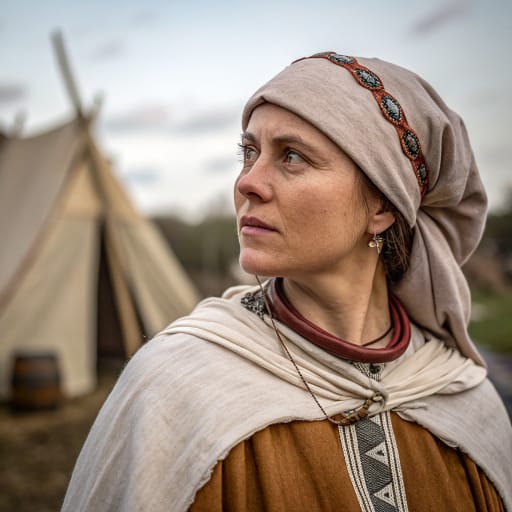
Corieltauvi
same region (Northern Europe)
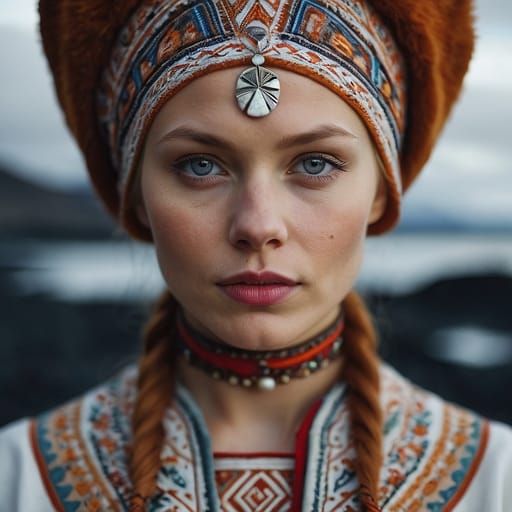
Icelandic
same region (Northern Europe)
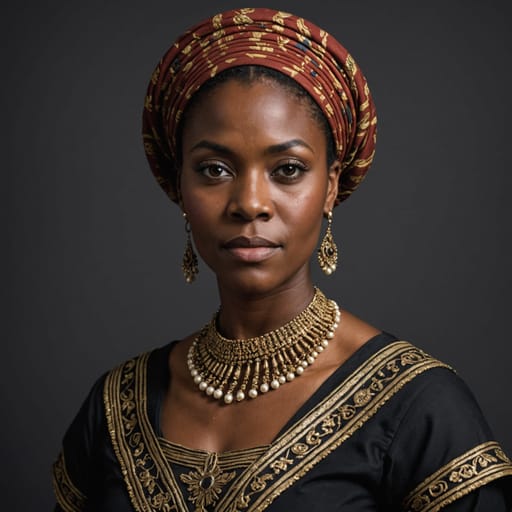
UK Black
same region (Northern Europe)
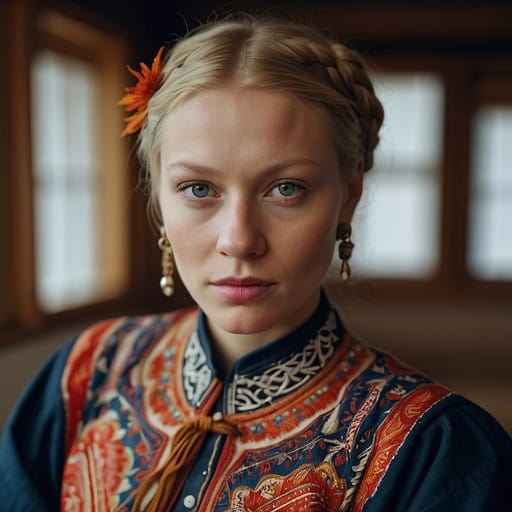
Finnish Immigrant
same region (Northern Europe)
Typical Aukštaitians Phenotypes
Reference for AI generation: hair, eyes, skin, facial structure, build
Aukštaitians Body & Anatomy Reference
Per-feature anatomical profile for AI nude generation: Northern European / Germanic-Scandinavian phenotype
Aukštaitians Boobs & Breasts
Bust reference for Aukštaitians women: medium-to-large cup, full, high projection, which is typical of Northern European / Germanic-Scandinavian ancestry. Areolas measure about 32-48mm across, with light-pink to medium-pink pigmentation. Body type (mesomorph with taller stature; ectomorph-to-mesomorph split) shapes the bust as well, so Aukštaitians tits are usually full and projecting, often the largest cup-size band in regional comparisons. In AI imagery, keep the forward-set shape rather than drifting toward the smaller East Asian bust.
Aukštaitians Ass & Hips
The Aukštaitians ass is typically medium-to-full, moderate-to-high projection, which sets it apart from the slim East Asian narrow-hip profile. Underneath, the pelvis shows medium-to-wide iliac crests, part of the Northern European / Germanic-Scandinavian skeletal pattern. For Aukštaitians butt pics and AI renders, match that silhouette and the overall build (mesomorph with taller stature; ectomorph-to-mesomorph split).
Aukštaitians Vagina & Pussy
Aukštaitians pussy and vulvar anatomy presents light-pink to medium-pink labial pigmentation, varied labia minora projection, consistent with the Northern European / Germanic-Scandinavian phenotype's pigmentation pattern. Aukštaitians pubic hair is typically fine-to-medium wavy texture, often lighter-pigmented (blond to dark-brown), in the inverted-triangle pattern. For anatomically accurate Aukštaitians pussy renders the labial coloration should match the surrounding fair skin tone with a continuous gradient, and the hair should keep its fine-to-medium wavy texture.
Aukštaitians Dicks & Penis
Aukštaitians dicks follow the Northern European / Germanic-Scandinavian reference data: regional mean ~13-14cm erect; moderate-to-above-average girth; light-pink to light-brown shaft pigmentation. Shaft color should track the fair skin tone with a smooth change toward the glans, and Aukštaitians pubic hair keeps its fine-to-medium wavy texture.
Aukštaitians Body, Curves & Build
Aukštaitians body type and overall build presents as mesomorph with taller stature; ectomorph-to-mesomorph split, with mean adult female BMI 24-27: the characteristic Northern European / Germanic-Scandinavian habitus. Aukštaitians curves and proportions should keep the regional skeletal frame (height, shoulder-to-hip ratio, limb proportions) rather than a generic mesomorph default.
Aukštaitians Skin Tone & Hair Texture
Aukštaitians skin sits in the fair (Fitzpatrick I-III) band. Hair is typically straight-to-wavy 1A-2B, blond to medium-brown common, in keeping with the Northern European / Germanic-Scandinavian phenotype. In nude renders the skin should stay one even tone from face to body, and body, pubic and head hair should match.
Explore phenotype categories
Structured taxonomy with peer-reviewed scales · 22 anatomical categories
Erotic Poses & Sex Positions
From the pose catalog: 219 named positions with reference skeletons
Frequently asked questions about Aukštaitians people
Where is the Aukštaitians homeland?
The Aukštaitians homeland is Aukštaitija, the northeastern and central region of Lithuania, around Panevėžys, Utena, Biržai, Rokiškis and Anykščiai in Northern Europe.
What language do Aukštaitians people speak?
Aukštaitians people primarily speak Lithuanian in its Aukštaitian dialects (Baltic, Indo-European); standard Lithuanian is based largely on West Aukštaitian.
What religion do Aukštaitians people practice?
The predominant religion among Aukštaitians people is Predominantly Roman Catholic; a small Evangelical Reformed community centered on Biržai.






Make your own Aukštaitians images
Five a day, free, no credits to buy. The studio starts from this group's phenotype data, so you can set body type, pose and style and keep the traits accurate.
Start with Aukštaitians